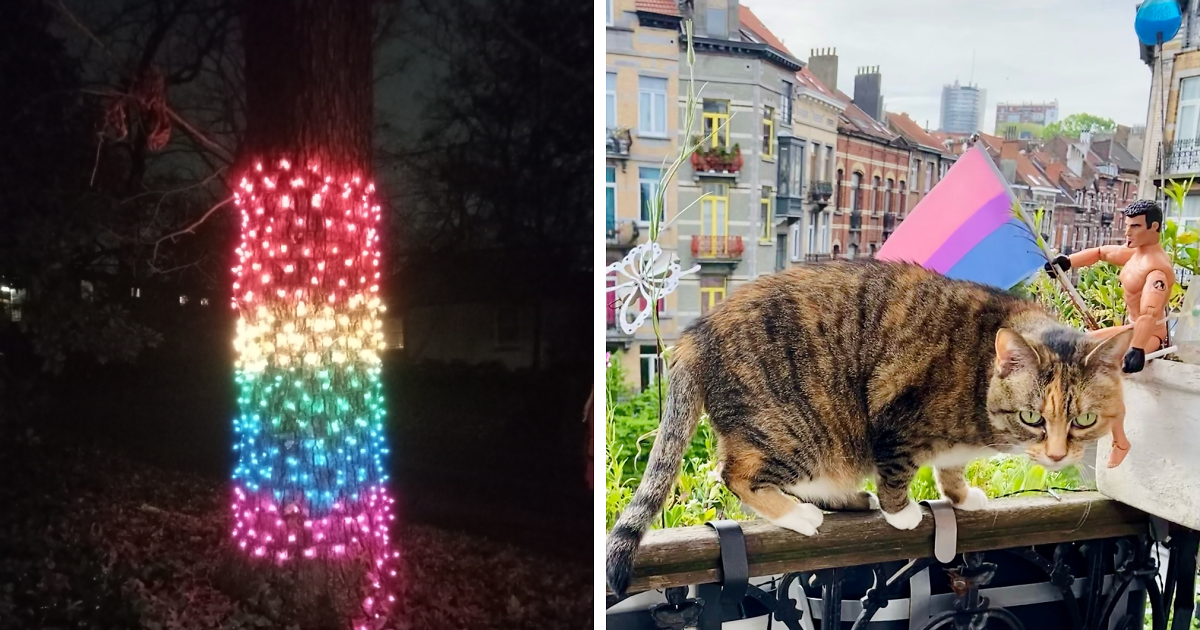
A Pride flag can be a bright curtain of color, a tiny magnet on the refrigerator, a hand-painted banner above a desk, or a well-loved piece of fabric that has survived three apartments and one cat with absolutely no respect for symbolism. Wherever it appears, it often says something larger than “I enjoy rainbows.” It can communicate identity, welcome, remembrance, solidarity, and the powerful message that LGBTQ+ people belong here.
So, Pandas, where does your flag live? Is it flying from the porch, tucked into a bookshelf, framed like art, or displayed in a quiet corner known only to trusted visitors? Let’s explore why people place Pride flags in their homes, what different designs represent, how to display one thoughtfully, and why the story behind the fabric usually matters more than perfect interior design.
A Pride Flag Is More Than Colorful Home Décor
At first glance, a Pride flag is visually cheerful. It adds instant color to a beige wall and can rescue a room from looking like the waiting area at a dentist’s office. Its deeper value, however, is symbolic. A visible flag may tell an LGBTQ+ resident, family member, friend, neighbor, or guest that the home is intended to be a place of dignity and respect.
LGBTQ+ support organizations frequently recommend visible symbolsincluding flags, stickers, posters, and pronoun pinsas ways to signal allyship. That signal becomes meaningful when it is supported by behavior: respecting names and pronouns, welcoming partners, challenging cruel jokes, protecting privacy, and refusing to tolerate harassment. A flag can open the door metaphorically. The people inside still have to make the room safe.
Visibility can feel deeply personal
For some people, displaying a Pride flag is simply a celebration. For others, it is a milestone marking the first home where they can decorate without hiding, the first apartment shared with a partner, or the first time a parent has made support visible rather than merely implied.
One person may hang an enormous flag that accidentally becomes a room divider. Another may keep a two-inch enamel pin beside a family photograph because subtlety is necessary for safety. Both displays are real, and neither needs to win the Interior Design Olympics.
How the Rainbow Became a Pride Symbol
The modern Pride flag emerged from LGBTQ+ activism in San Francisco in 1978. Although Gilbert Baker is most closely associated with its creation, historical accounts also recognize collaborators and volunteers, including Lynn Segerblom and James McNamara.
The original handmade flag used eight stripes: hot pink, red, orange, yellow, green, turquoise, indigo, and violet. These colors represented ideas including sexuality, life, healing, sunlight, nature, art or magic, harmony, and spirit.
The flag debuted during San Francisco’s Gay Freedom Day celebration on June 25, 1978. Production limitations and practical design decisions later resulted in the familiar six-stripe version featuring red, orange, yellow, green, blue, and violet. It eventually became one of the world’s most recognizable symbols of LGBTQ+ identity and solidarity.
Part of a larger civil-rights movement
The flag did not appear in a vacuum. The Stonewall Uprising began on June 28, 1969, after a police raid at the Stonewall Inn in New York City. The resistance became a major catalyst for modern LGBTQ+ activism. One year later, the first Pride march in New York was held on June 28, 1970.
That history gives a household flag an interesting double life. It can hang comfortably above a couch, yet it comes from a tradition of public protest. It is simultaneously soft furnishing and civil-rights symbolisma combination rarely achieved by throw pillows.
Which Pride Flag Should You Display?
There is no single correct flag for every LGBTQ+ person, family, or ally. Flags evolve because communities evolve, language changes, and people create symbols that make particular experiences more visible. Choosing one is not a final exam. It is more like choosing artwork that expresses your household’s identity, history, or values.
The six-color rainbow flag
The familiar rainbow remains a broad symbol of LGBTQ+ pride and community. It is historically significant, widely understood, and available in sizes ranging from “tasteful desk accessory” to “visible from low Earth orbit.”
The Progress Pride Flag
Designer Daniel Quasar introduced the Progress Pride Flag in 2018. It combines the traditional rainbow with a chevron containing light blue, pink, and white from the Transgender Pride Flag, along with black and brown stripes emphasizing marginalized LGBTQ+ people of color. The chevron points forward, representing movement while acknowledging that meaningful progress remains unfinished.
Quasar has explained that the design was not intended to erase every earlier Pride flag. Instead, it adds another symbol to a growing visual language and places greater attention on communities whose experiences have often been pushed to the margins.
Identity-specific and inclusive flags
People may also display lesbian, bisexual, transgender, nonbinary, pansexual, asexual, intersex, genderfluid, or other identity-specific flags. Some choose an intersex-inclusive Progress Pride design, which incorporates the yellow field and purple circle associated with intersex visibility.
Others arrange several small flags together because one symbol cannot fully summarize a household containing multiple identities, generations, and life stories. The respectful approach is simple: learn what a flag means, acknowledge its creator when relevant, and avoid treating identity symbols as interchangeable party decorations. Curiosity is welcome. Carelessness dressed as enthusiasm is less charming.
Creative Ways to Display a Pride Flag at Home
A flag does not have to be nailed flat to the largest wall, although that is an excellent option for anyone who owns both a hammer and optimism. Home displays can be bold, subtle, temporary, handmade, or integrated into existing décor.
- Hang it in a window: The colors can be enjoyed indoors while creating a visible neighborhood signal of welcome.
- Frame it as textile art: A smaller flag in a simple frame works well in bedrooms, offices, hallways, and living rooms.
- Create a gallery wall: Pair Pride art with family photographs, concert posters, travel memories, and work by LGBTQ+ artists.
- Use a miniature desk flag: This is ideal for renters, shared homes, small rooms, or anyone still hoping to recover a security deposit.
- Make one by hand: Crochet, quilting, painting, paper crafts, beadwork, and embroidery can turn a familiar design into a personal keepsake.
- Keep it up all year: June is important, but LGBTQ+ people continue existing during the other eleven months, despite what seasonal retail displays may suggest.
Families can also create Pride-themed crafts together. Making a flag opens natural conversations about kindness, identity, history, and the many ways families are formed. The finished creation may be slightly crooked. That merely proves humans made it instead of a suspiciously precise rainbow robot.
How to Display a Pride Flag Thoughtfully
Let actions match the message
A Pride flag should never become a substitute for actual support. In an affirming home, people can introduce their partners without awkward euphemisms, use their correct names and pronouns, dress in ways that feel authentic, and expect relatives to challenge prejudice rather than quietly change the subject.
Allies can strengthen the message by learning LGBTQ+ history, supporting community organizations, speaking up at schools and workplaces, and checking on LGBTQ+ loved ones when public debate becomes hostile. The most convincing allyship is consistent, especially when no camera is present and no rainbow merchandise is on sale.
Respect privacy and consent
Never use a household flag to announce another person’s identity. A teenager may appreciate a flag indoors but feel unsafe having it visible from the street. A roommate may be out to friends but not relatives. A partner may not want a social-media photograph to reveal an address or neighborhood.
Ask before posting pictures, tagging people, or turning a private symbol into public information. Pride and privacy are not opposites. People deserve control over when, where, and how their identities are shared.
Consider physical safety
Most Pride flag displays are joyful and uneventful, but anti-LGBTQ+ harassment and vandalism remain real concerns. Every household should make decisions based on its own circumstances rather than feeling pressured to be maximally visible.
A person displaying a small symbol inside is not less proud than someone flying a six-foot flag outdoors. Practical safety measures may include secure mounting hardware, exterior lighting, cameras where lawful, documenting damage, communicating with supportive neighbors, and reporting credible threats.
What a Pride Flag Can Say to Visitors
Imagine entering an unfamiliar home and spotting a Pride flag beside the coat rack. For a queer guest, that symbol may lower the volume of several anxious questions: Can I mention my partner? Will my pronouns be respected? Do I need to edit my life before dinner?
The flag cannot answer every question, but it creates an opening. Hosts can reinforce it with ordinary hospitality: introduce people correctly, avoid invasive questions, protect confidential information, and treat LGBTQ+ relationships with the same relaxed interest given to anyone else’s.
For children and teenagers, visible support can be especially memorable. They may never comment on the flag. They may simply store away one useful thought: this is a person I might be able to talk to. That quiet possibility is one reason a piece of fabric can matter.
Hey Pandas, What Is the Story Behind Your Flag?
The most interesting Pride displays are rarely the most expensive. They are the ones with stories. Perhaps your flag came from your first Pride parade. Maybe a sibling mailed it after you came out. Maybe your child gave it to you after you finally learned the difference between being “supportive in theory” and being supportive out loud.
Perhaps the flag was handmade, rescued from a rainstorm, signed by friends, or purchased on an ordinary Tuesday because you were tired of waiting for permission to feel at home.
When sharing a photograph, tell readers where the flag came from, why you chose that design, whether it stays up all year, and what reactions it has inspired. Mention the ridiculous moments too. Community history includes marches and legal battles, but it also includes bent curtain rods, flags ironed at the wrong temperature, and pets who believe every hanging textile is an invitation to climb.
Experiences From Homes Where Pride Has a Place
Note: The following are composite, illustrative experiences created from common themes in LGBTQ+ community stories. They are not quotations attributed to specific individuals.
The first flag after moving out
One familiar story begins with an empty apartment, two boxes, and a mattress on the floor. The new resident owns almost no furniture, but the Pride flag goes up first. It is not centered, and one corner is attached with painter’s tape because the proper hardware is buried beneath a saucepan and seven unidentified charging cables.
In the previous home, every clue about identity had to be hidden before relatives visited. Here, nobody needs to check the hallway before speaking honestly. The flag becomes the first decoration and, emotionally, the first proof that this space truly belongs to its resident.
The parent who decided silence was not enough
Another household displays a small Progress Pride flag near the front entrance. A parent bought it after realizing that private acceptance did not always feel like visible support to their child. The parent had never openly rejected anyone, but had frequently avoided uncomfortable conversations with extended family.
Hanging the flag was easy. The harder test arrived when a relative made a dismissive remark at dinner. This time, the parent responded clearly instead of allowing the comment to drift away. The child remembered that conversation more than the decoration. The flag mattered because the behavior finally matched it.
The subtle bookshelf signal
Not every home can safely place a rainbow in the window. In one shared apartment, a renter keeps a palm-sized bisexual flag between two novels. Most visitors overlook it. Friends who recognize the colors notice immediately.
The tiny display offers connection without exposing the resident to an unpredictable landlord or unsupportive relatives. It demonstrates that Pride does not need to be loud to be sincere. Sometimes courage is a parade. Sometimes it is a small object positioned exactly where the right person will see it.
The handmade family flag
In another home, the flag is made from construction paper, tape, and an enthusiastic quantity of glitter. A child created it after asking why a neighbor had a rainbow outside. The family discussed different kinds of families and why people celebrate Pride.
The resulting flag contains nine stripes, three stars, a dinosaur, and what appears to be a purple potato. Historically accurate? Not remotely. Emotionally accurate? Completely. It hangs on the refrigerator beside spelling tests and grocery coupons, showing that inclusion belongs in ordinary family life.
The flag that travels
Some flags collect geography. One has hung in a college dorm, a first apartment, a cramped rental with mysterious plumbing, and eventually a sunny home shared by two partners and an elderly rescue dog.
Its edges are frayed, and one stripe carries a faint coffee stain from an incident for which nobody accepts responsibility. Replacing it would be easy, but the owners keep it because it has witnessed their lives becoming larger. It moved from temporary spaces to a permanent home, and from uncertainty to routine.
The ally household with an open door
A straight couple displays a rainbow flag on the porch because several friends and relatives are LGBTQ+. They understand that the flag does not make them heroic. It simply makes their position visible.
One afternoon, a teenager from the neighborhood pauses to say, “That’s cool,” before continuing down the street. The couple never learns exactly what the moment meant, and they do not need to. Their responsibility is to keep the welcome genuine by protecting privacy, challenging prejudice, using respectful language, and remaining trustworthy after the rainbow fades in the sun.
These experiences share one lesson: the flag’s size is not the measure of its meaning. What matters is the freedom, memory, safety, humor, and commitment attached to it. A Pride flag can be a declaration, a promise, a keepsake, or a quiet signal. In the best homes, it is also an accurate preview of how people will be treated after they walk through the door.