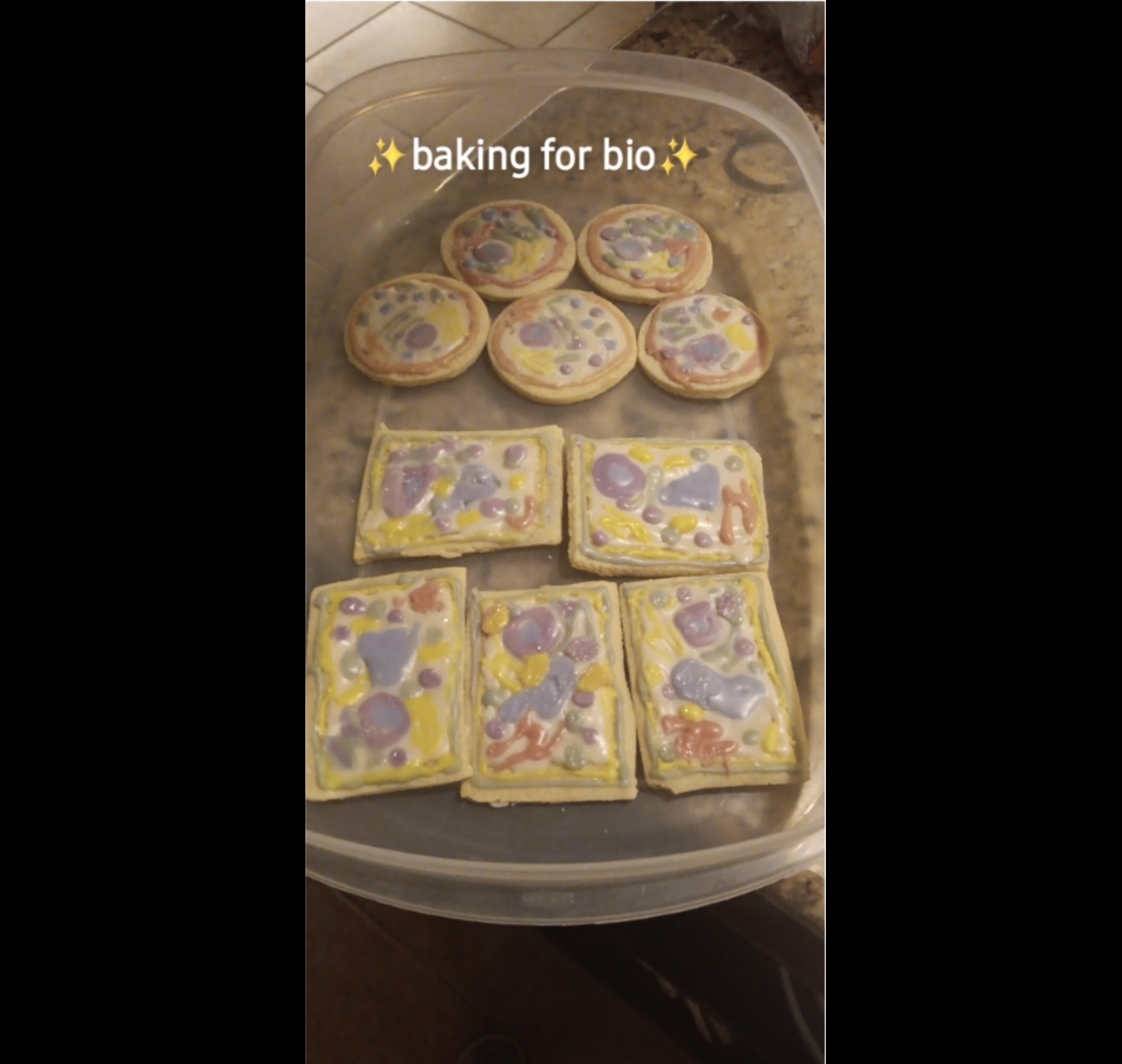
Every student has at least one school project that lives rent-free in their memory. Maybe it was a volcano that erupted with enough baking soda drama to qualify as a small weather event. Maybe it was a cardboard castle, a robot with exactly one working wheel, a documentary made on a phone, or a history presentation so theatrical that your teacher briefly looked worried about your future in Hollywood.
The coolest school project is not always the one with the shiniest poster board or the most expensive supplies. Sometimes it is the project that made everyone stop, stare, laugh, ask questions, and say, “Wait, you made that?” That is the magic zone. It is where creativity, research, problem-solving, and a little bit of chaos shake hands like old friends.
In today’s classrooms, school projects have moved far beyond “glue three facts to a board and hope the marker doesn’t run out.” Project-based learning, STEM challenges, digital storytelling, design thinking, art analysis, science fairs, and community service projects all give students the chance to build something real. A great project can teach science, history, writing, teamwork, public speaking, technology, and resilienceusually all before lunch.
So, hey Pandas: what is the coolest school project you have ever made? While you think about your masterpiece, let’s explore what makes a school project unforgettable, which creative school project ideas stand out, and why hands-on learning often sticks better than memorizing a textbook page like a sleep-deprived parrot.
Why Cool School Projects Stay With Us
A good school project does something a worksheet rarely does: it gives learning a body. Instead of only reading about gravity, you build a bridge and watch it collapse under the tragic weight of three textbooks. Instead of memorizing facts about the water cycle, you create a mini ecosystem and realize your plants are more dramatic than your group chat. Instead of writing a report about local history, you interview someone, record a podcast, and suddenly the past has a voice.
That is why the coolest school projects tend to have three things in common: they are personal, hands-on, and connected to the real world. Students remember them because they involve decisions, mistakes, revisions, and those tiny moments of victory when something finally works after failing seven times in a row.
Project-based learning encourages students to investigate meaningful questions, create public products, and explain what they learned. In other words, students are not just receiving information; they are doing something with it. That shift matters. When students design, test, revise, present, and reflect, they practice the same habits used by scientists, artists, engineers, journalists, entrepreneurs, and community leaders.
What Makes a School Project “Cool”?
“Cool” is subjective, of course. One student’s dream project is another student’s “please don’t make me touch glitter” nightmare. Still, memorable school projects usually share a few important features.
1. It Solves a Real Problem
A project becomes instantly more interesting when it answers a question people actually care about. How can we reduce food waste in the cafeteria? Can we design a low-cost water filter? What would make the school library more inviting? How can we teach younger students about internet safety without boring them into another dimension?
Real-world problems give school projects purpose. They make students feel like their work matters beyond the gradebook. Even a small solutionlike a recycling campaign, a garden design, or a student-made guide for new classmatescan feel powerful because it has an audience.
2. It Includes a Prototype, Model, or Product
Posters are fine. Posters have served humanity well. But the coolest projects usually involve something people can touch, test, watch, listen to, play, or explore. A model Mars rover. A handmade zine. A miniature city designed for clean energy. A short film. A playable math board game. A museum-style exhibit. A working app prototype. A student-created documentary.
The finished product does not have to be perfect. In fact, imperfect projects are often more interesting because they show the process. A wobbly robot that almost works may teach more than a flawless poster copied from ten websites and decorated with clip art from the Stone Age.
3. It Shows Original Thinking
The best school projects do not just repeat information. They interpret it. They ask, “What if?” They combine subjects. They connect science with art, history with technology, math with music, or literature with social issues.
For example, a student studying climate change could make a data visualization, write a fictional diary from the year 2100, build a model of a flood-resistant home, and present local weather trends. That is not just a project; that is an academic buffet.
4. It Tells a Story
Even science projects tell stories. There is a question, a hypothesis, a method, a problem, a result, and usually at least one “uh-oh” moment. A strong school project guides the audience through that journey clearly.
Storytelling helps people care. A project about minerals becomes more engaging when students connect minerals to everyday objects like phones, coins, lightbulbs, and cosmetics. A project about immigration becomes more meaningful when students use family interviews, maps, photos, and personal narratives. A project about art becomes more memorable when students explain how line, texture, color, and form create emotion.
Examples of Cool School Projects Students Actually Remember
The Cardboard Arcade
Imagine a classroom transformed into a mini arcade made entirely from cardboard, tape, rubber bands, markers, and pure determination. Students design games, calculate point systems, create rules, test mechanical parts, and invite other classes to play. Suddenly, math is not just numbers on a page. It is probability, measurement, geometry, pricing, and customer experience. Also, someone inevitably names a game “Mega Ball Blaster 9000,” because children understand branding.
The Miniature Sustainable City
A sustainable city project can bring together science, engineering, social studies, and art. Students design neighborhoods with solar panels, bike lanes, green roofs, water collection systems, public transportation, and parks. They must explain why each feature matters and how the city balances cost, environment, and quality of life.
This type of project is cool because it lets students think like urban planners. It also teaches a tough lesson: you cannot put a skate park, airport, farm, and wildlife sanctuary in the same tiny shoebox without consequences.
The NASA-Inspired Space Mission
Space projects are classics for a reason. They naturally invite big questions. How does a rocket launch? What would astronauts need on Mars? How could a rover collect samples? What happens when gravity changes? Students can build simple rockets, design mission patches, create rover models, calculate travel distances, or present a plan for a moon base.
Projects like these mix imagination with evidence. They let students dream dramatically while still learning physics, engineering, measurement, and scientific communication. Plus, anything involving space automatically feels 42 percent cooler. That number is not official, but emotionally, it feels correct.
The Living History Podcast
Instead of writing another traditional history report, students can create a podcast episode using primary sources, interviews, music, narration, and sound effects. A local history podcast might explore an old building, a community tradition, a civil rights event, a veteran’s story, or the history of a neighborhood.
This project builds research skills, writing skills, audio editing skills, and public speaking confidence. It also teaches students that history is not just dusty dates marching across a timeline. It is made of real people, real choices, and real consequences.
The Museum in a Box
Art and history projects become more exciting when students act as curators. A “museum in a box” can include miniature artifacts, labels, maps, timelines, images, QR codes, and short explanations. Students might create an exhibit about ancient inventions, women in science, American landscapes, modern art, endangered species, or the evolution of everyday objects.
The cool factor comes from the transformation. A cardboard box becomes a gallery. A student becomes a curator. A topic becomes a story people can walk through, even if the walking is mostly done by fingers.
The School Improvement Pitch
Some of the most powerful projects begin with one simple question: What would make our school better? Students might propose a quiet lunch zone, a mental health awareness campaign, a garden, a peer tutoring system, a better lost-and-found system, or a plan to reduce plastic waste.
To make the project strong, students collect data, survey classmates, study costs, build prototypes, and present their ideas to teachers or administrators. This is where school projects start to feel like civic engagement. Students learn that complaining is easy, but proposing a practical solution with evidence is a superpower.
How to Create a Cool School Project Without Losing Your Mind
Let’s be honest: school projects can become stressful. Somewhere between “I have a great idea” and “it is due tomorrow,” a student may find themselves surrounded by glue sticks, index cards, and the quiet panic of poor time management. The secret is to make the process simpler.
Start With a Strong Question
A strong project starts with a question that cannot be answered in one sentence. Instead of “What is pollution?” try “How can our school reduce plastic waste during lunch?” Instead of “Who was Amelia Earhart?” try “Why does Amelia Earhart’s story still influence how we talk about courage, risk, and women in aviation?”
A good question gives the project direction. It also keeps you from wandering into the wilderness of random facts, where many innocent students have disappeared beneath piles of printed articles.
Choose a Format That Fits the Idea
Not every project should be a slideshow. A science experiment may need a lab report and demonstration. A literature project may work better as a dramatic performance, illustrated journal, or short film. A social studies project might become a debate, museum exhibit, documentary, or interactive map.
The format should help the audience understand the idea. Technology can make a project more engaging, but only when it serves the learning. A flashy video with no research is just academic confetti.
Build, Test, Revise
The coolest school projects often improve through trial and error. That is normal. Engineers revise. Writers revise. Artists revise. Scientists revise. Even your favorite app probably went through versions that looked like a digital potato.
Keep notes about what changed and why. If your bridge collapsed, explain what you learned about weight distribution. If your survey results surprised you, talk about what you discovered. If your first design failed, show how you adjusted it. Teachers usually love evidence of thinking, not just evidence of a late-night craft emergency.
Practice the Presentation
A cool project deserves a confident explanation. Practice your opening line, main points, and conclusion. Do not read every word from the slide unless your goal is to gently hypnotize the room. Instead, explain the problem, your process, your product, and what you learned.
Bonus tip: prepare for questions. If someone asks, “Why did you choose this design?” or “What would you change next time?” you will sound prepared instead of looking like your soul briefly left your body.
Why Teachers Love Creative School Projects
Creative school projects give teachers a clearer view of how students think. A test may show whether a student remembers information, but a project can show how they apply it. Projects reveal planning, creativity, research skills, collaboration, communication, persistence, and problem-solving.
They also create more room for student choice. One student may explain learning through art. Another may prefer coding, building, writing, interviewing, or presenting. When students have options, they can connect schoolwork to their strengths and interests. That does not mean every project becomes easy. It means the challenge feels more meaningful.
Collaborative projects can also teach students how to work with different personalities. This is important because every group project contains at least one planner, one artist, one person who says “I’ll do the slides,” and one mysterious teammate who appears only on presentation day like a rare forest creature.
Common Mistakes That Make School Projects Less Cool
The first mistake is choosing a topic that is too broad. “Animals” is not a project; it is the entire kingdom of creatures judging you silently. “How do bees help local food systems?” is much stronger.
The second mistake is focusing too much on decoration and not enough on thinking. A beautiful display is nice, but glitter cannot replace research. It can, however, remain in your carpet until college.
The third mistake is waiting until the last minute. Some students claim they work best under pressure. Sometimes that is true. Sometimes “pressure” means crying into a trifold board at 1:13 a.m. while the printer refuses to cooperate. Start early enough to revise.
The fourth mistake is ignoring the audience. A project should be easy to understand. Use headings, visuals, examples, and clear explanations. If your classmates cannot tell what your project is about after one minute, simplify the message.
Bonus: of Real-Life Style Experiences About Cool School Projects
Almost everyone remembers a school project that felt bigger than an assignment. Maybe it started as a simple task and somehow turned into a personal mission. One student might remember building a solar oven from a pizza box, aluminum foil, plastic wrap, and optimism. At first, it looked like a snack container wearing a space blanket. But when it actually warmed a marshmallow, the entire project became unforgettable. It was not just about solar energy anymore. It was about proving that sunlight could be captured, redirected, and used in a practical way. Also, warm marshmallows are persuasive academic evidence.
Another student might remember creating a family history project. What began as a timeline turned into interviews with grandparents, old photographs, recipes, migration stories, and family sayings that nobody could translate perfectly but everyone understood emotionally. That kind of project teaches research, writing, and presentation skills, but it also teaches identity. It shows students that history is not only in museums. Sometimes it is in a kitchen drawer, a faded photo album, or a story told after dinner.
Then there are the legendary science fair projects. Some are elegant and controlled. Others are held together with tape and hope. A student testing which bridge shape holds the most weight may discover that triangles are not just shapes; they are tiny structural bodyguards. A student growing plants under different light conditions may learn about variables, data collection, and patience. A student building a water filter may realize that clean water is a scientific challenge and a human issue at the same time.
Creative projects can also reveal hidden talents. The quiet student becomes a brilliant narrator in a documentary. The student who dislikes essays creates an amazing comic explaining the Bill of Rights. The kid who doodles in the margins designs the best visual exhibit in the room. The student who always takes things apart becomes the hero of the robotics team because, finally, disassembly has a socially approved purpose.
The coolest school project experience is often not the final product. It is the moment something clicks. The moment a group stops arguing and starts collaborating. The moment the prototype works. The moment the audience asks a serious question. The moment a student realizes, “I can make things. I can explain ideas. I can solve problems.” That is why memorable school projects matter. They are not just assignments; they are rehearsals for real life.
Conclusion: The Coolest Project Is the One That Makes Learning Feel Alive
So, what is the coolest school project you have made before? Was it a robot, a film, a science experiment, a handmade book, a model city, a history exhibit, a business pitch, or something so strange and brilliant that even your teacher needed a minute?
The best school projects are not always perfect. They may wobble, glitch, lean sideways, or smell faintly of glue. But they invite curiosity. They turn students into builders, researchers, artists, designers, speakers, and problem-solvers. They make learning visible, memorable, and sometimes wonderfully ridiculous.
If you are planning your next project, aim for more than “done.” Aim for useful, surprising, personal, and clear. Ask a strong question. Build something. Test your idea. Tell a story. Show your process. And if things go wrong, congratulationsyou have officially entered the learning zone.
Because the coolest school project is not just the one that gets an A. It is the one you still talk about years later.