Note: This article is for educational publishing only. A homemade EDM machine can involve electricity, heat, sparks, dielectric fluids, fumes, and fire risk. It should not be treated as a beginner build project or a casual weekend experiment.
Some materials look innocent until a cutting tool touches them. Then the drill screams, the blade complains, the workpiece chips, and the shop suddenly feels like a tiny courtroom where physics is the judge. Magnets are a perfect example. Neodymium magnets, in particular, are strong, brittle, fussy about heat, and not especially kind to ordinary saws or drills. Try to force them with conventional cutting tools and they may crack, crumble, shed dust, lose magnetic performance, or simply make your day more dramatic than planned.
That is where EDM, short for electrical discharge machining, enters like the quiet specialist who does not need to flex. Instead of muscling through metal with a spinning cutter, EDM removes material through controlled electrical sparks. A homemade EDM setup, when designed with proper knowledge and safety controls, can demonstrate the same core principle used in professional shops: if the material conducts electricity, it can often be shaped by spark erosion regardless of how hard, brittle, or awkward it is.
The headline sounds almost like shop-floor magic: Homemade EDM can cut through difficult materials like magnets with ease. The truth is a little more interesting. EDM is not “easy” in the lazy sense. It is slow, precise, patient, and extremely particular about safety. But compared with grinding, drilling, or sawing a brittle conductive magnet, EDM can look wonderfully calm. No pushing. No cutting teeth. No wrestling match. Just controlled sparks doing tiny acts of material removal, again and again, until the impossible-looking cut becomes possible.
What Is EDM and Why Does It Work So Well?
Electrical discharge machining is a nontraditional machining process that removes material by generating rapid electrical discharges between an electrode and a conductive workpiece. The electrode never needs to physically cut like a drill bit or end mill. Instead, a tiny spark jumps across a small gap, creating intense localized heat that melts or vaporizes a microscopic amount of material. A dielectric fluid helps control the spark, cool the area, and flush away debris.
That “no contact” part is the secret sauce. Traditional machining depends on mechanical force: a tool edge presses into the workpiece and shears material away. That works beautifully for many metals and plastics, but it can become a circus when the material is extremely hard, brittle, magnetic, thin, or already heat-treated. EDM changes the question from “Can my cutter survive this?” to “Can this material conduct electricity?” If the answer is yes, EDM may have a path forward.
Industrial EDM is widely used for hardened tool steel, carbide, titanium alloys, nickel-based superalloys, mold cavities, sharp internal corners, micro holes, and complex profiles. These are not materials that ordinary cutting tools always enjoy. EDM does not care about hardness in the same way a milling cutter does. It cares about electrical conductivity, melting behavior, flushing, spark stability, electrode wear, and machine control.
Why Magnets Are So Annoying to Cut
Magnets create several practical headaches. First, many permanent magnets are brittle. Neodymium iron boron magnets, often called NdFeB magnets, can be strong enough to pinch fingers painfully but fragile enough to chip if handled roughly. That combination makes them feel like superhero glass: powerful, useful, and ready to punish carelessness.
Second, magnets do exactly what magnets do. They attract steel tools, metal chips, fixtures, dust, and nearby objects. A normal machining process can quickly become messy because magnetic particles cling where they are least welcome. Even cleanup becomes more complicated. Swarf that would normally fall away may decide to build a tiny metallic beard on the workpiece.
Third, heat matters. Many magnets lose strength when overheated, and some grades have stricter temperature limits than others. Abrasive cutting can generate enough heat to damage coatings, change magnetic behavior, or create dust that should not be inhaled. Cutting magnets is not only a geometry problem; it is also a material-handling and safety problem.
Finally, not all magnets are good EDM candidates. Conductive metallic magnets such as neodymium, samarium cobalt, and Alnico may be suitable for EDM under the right conditions. Ferrite or ceramic magnets, on the other hand, are generally not good candidates because EDM requires an electrically conductive workpiece. That distinction is important. EDM is clever, not supernatural.
How EDM Cuts a Magnet Without Bullying It
When EDM is used on a conductive magnet, the workpiece is shaped by spark erosion rather than cutting pressure. This is the major advantage. The electrode approaches the surface, controlled discharges occur, and tiny amounts of material are removed. Because the tool is not physically scraping or hammering the magnet, the process can reduce cracking, chipping, and mechanical stress.
In wire EDM, a thin electrically conductive wire acts as the moving electrode. The wire travels along a programmed path and cuts a narrow kerf through the workpiece. This is excellent for profiles, slices, slots, and precise outlines. In sinker EDM, a shaped electrode gradually erodes a cavity or form into the material. In hole-drilling EDM, small holes can be made in hard conductive materials where ordinary drills would struggle.
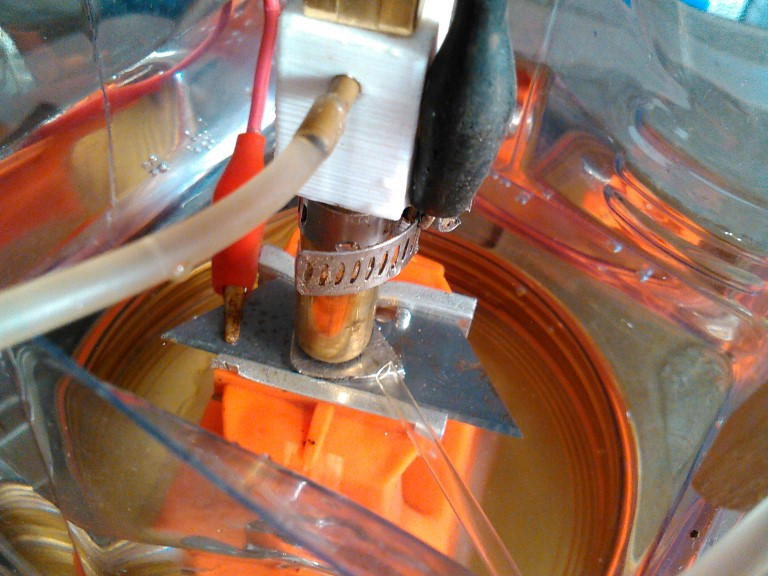
A homemade EDM project usually borrows the basic sinker EDM idea more than the full CNC wire EDM experience. The home-shop version may use a shaped electrode and a controlled feed mechanism to maintain a spark gap. The magic is not brute power; it is controlled repetition. One spark is tiny. Thousands and thousands of sparks become a cut.
The Beauty of Homemade EDM: Small Machine, Big Lesson
A homemade EDM machine is fascinating because it shows that advanced manufacturing is not only about giant factory equipment. The underlying principle can be demonstrated on a smaller scale: controlled electrical discharges can remove conductive material with remarkable precision. For makers, machinists, and curious engineers, that lesson is addictive.
However, “homemade” should not be confused with “simple” or “safe by default.” EDM involves electrical energy, moving parts, fluid handling, spark generation, and thermal effects. A poor design can create fire hazards, shock hazards, fumes, fluid contamination, or damaged parts. The responsible way to discuss homemade EDM is to focus on principles, applications, limitations, and safety awareness rather than casual build instructions.
That said, the concept is undeniably cool. A small EDM setup can cut or erode materials that would laugh at hobby-grade drills. It can create square-ish internal features that spinning tools cannot easily make. It can nibble through hard steel, carbide-like materials, broken taps, and conductive magnets. It feels less like cutting and more like persuading the material to leave, one spark at a time.
Why EDM Feels Like Cheating Against Hard Materials
Imagine trying to cut hardened tool steel with a dull hacksaw. That is not machining; that is a character-building exercise. Now imagine using EDM, where material hardness is not the main enemy. The spark does the work thermally, so the machine does not need a harder cutting edge than the workpiece. This is why EDM is so valuable in mold making, aerospace components, precision tooling, and repair work.
The same principle explains why a magnet can be a surprisingly good EDM demonstration. A neodymium magnet is difficult to treat gently with mechanical tools, but it is electrically conductive. Once the EDM process is stable, the machine can remove material without the aggressive tool forces that cause cracking or chipping. That does not mean every cut is perfect. Surface finish, heat-affected zones, edge quality, and magnetic strength still matter. But the process opens a door that ordinary tools may keep slamming shut.
What Materials Can EDM Handle?
EDM is commonly used for electrically conductive materials such as hardened steel, stainless steel, titanium, Inconel, copper, brass, aluminum, tungsten carbide, and certain conductive magnetic alloys. The workpiece must allow electrical discharge to occur. If the material is an insulator, standard EDM will not work in the usual way.
This makes EDM especially useful when the material is hard, tough, thin, delicate, or already heat-treated. It is also useful when the geometry is awkward. Sharp internal corners, deep narrow slots, fine profiles, and tiny holes can be difficult or impossible with conventional tools. EDM can approach these problems from a different angle.
Still, EDM is not the best answer for everything. It is typically slower than milling for bulk material removal. It requires careful setup. It consumes electrodes or wire. It may leave a recast layer or a heat-affected surface that matters in precision applications. It also requires proper flushing so debris does not ruin spark stability. EDM is a specialist, not a universal replacement for every saw, mill, or lathe.
Homemade EDM vs. Professional Wire EDM
A professional wire EDM machine is a highly controlled piece of equipment. It may include CNC motion, deionized water systems, wire tension control, automatic threading, precision guides, advanced power supplies, filtration, and safety enclosures. It can produce extremely accurate cuts and fine finishes in demanding materials.
A homemade EDM machine is usually more limited. It may be built to demonstrate the principle, remove broken tools, make simple cuts, or experiment with conductive materials. It may not have the speed, accuracy, reliability, or safety systems of a commercial machine. Expecting a homemade unit to perform like a modern industrial wire EDM is like expecting a bicycle with a basket to win a Formula 1 race. Charming? Yes. Same category? Absolutely not.
But homemade EDM has educational value. It teaches spark gap control, electrode wear, flushing, dielectric behavior, pulse energy, material response, and patience. It also teaches humility, which is perhaps the most underrated shop skill. EDM rewards careful observation and punishes sloppy assumptions.
Why Cutting Magnets Is a Great EDM Demonstration
Magnets make a memorable test piece because they reveal the benefits of non-contact machining quickly. A mechanical cutting tool can pull chips, heat the surface, and load the cut with stress. EDM avoids much of that drama. The electrode does not grab the magnet. It does not need a sharp edge. It simply erodes conductive material along the intended path.
For a web audience, this is the hook: EDM cuts the way a tiny controlled lightning storm would cut. That is not a technical specification, but it is a useful mental image. The spark appears at the small gap where electrical conditions are right. It removes a tiny bit of material. Fluid cools and clears the debris. The process repeats. Eventually, a slot, cavity, or separation appears.
With magnets, the result can feel especially satisfying because the material is so unpleasant to cut by ordinary means. Anyone who has watched brittle magnetic material chip or cling to every steel object nearby can appreciate a process that reduces mechanical force. EDM does not make magnets harmless, but it does make them more manageable under controlled conditions.
Safety Is Not Optional
EDM is a serious process even when the machine is small. Electrical shock, sparks, hot particles, flammable fluids, fumes, and poor ventilation can all become hazards. Dielectric fluid must be selected and managed correctly. The work area must be controlled. Fire safety matters. Personal protective equipment matters. So does knowing when not to run a machine.
This is especially important for homemade EDM. Commercial machines are designed with safety systems, enclosures, interlocks, fluid management, and tested electrical architecture. A homemade unit may lack those protections unless the builder truly understands the risks. Curiosity is wonderful; uncontrolled electricity is not.
For anyone writing, learning, or teaching about EDM, the safest framing is this: EDM is an advanced machining principle that should be studied carefully before being attempted. It belongs in a controlled shop environment, not on a cluttered desk next to a soda can and a pile of mystery wires.
Practical Uses for Small-Scale EDM
Small EDM setups are often discussed for jobs where normal tools struggle. One classic use is removing broken taps or drill bits from expensive parts. Since the broken tool is usually conductive, EDM can erode it without forcing a drill into hardened steel. Another use is creating small holes, slots, or cavities in hard conductive materials. For hobby machinists, the appeal is obvious: EDM can rescue parts that would otherwise go into the scrap bin with dramatic sighing.
For magnets, EDM can be useful when a precise cut is needed and mechanical cutting would create too much force or heat. It may also be useful for experimental shapes, fixtures, prototypes, or educational demonstrations. In professional contexts, wire EDM can help shape conductive magnetic materials with cleaner geometry than rough cutting methods.
But the process should be selected based on the job. If the part is nonconductive, EDM is not the answer. If the cut is crude and speed matters more than precision, another method may be better. If the material is expensive or hazardous when damaged, professional EDM service may be the smartest choice. Sometimes the most advanced shop skill is knowing when to outsource.
Common Misconceptions About EDM
“EDM cuts anything.”
Not quite. EDM works best on electrically conductive materials. Hardness is less of a problem than conductivity, but conductivity still matters.
“Homemade EDM is just a simple spark machine.”
That description is dangerously incomplete. Stable EDM requires controlled pulses, controlled motion, proper gap behavior, dielectric management, debris removal, and safety precautions. Random sparking is not machining; it is a warning sign with special effects.
“EDM is always faster.”
EDM is often slower than conventional cutting when bulk material needs to be removed. Its strength is precision and difficult materials, not speed for every job.
“Magnets are easy because EDM has no cutting force.”
No cutting force helps, but magnets still require care. Heat, brittleness, coating damage, dust, and magnetic behavior must be considered.
What Makes EDM So Satisfying to Watch?
Part of EDM’s charm is that it feels backwards. We are used to cutting tools that spin, scrape, bite, and throw chips. EDM looks quieter and stranger. The electrode approaches. Tiny sparks appear. Material vanishes slowly. The machine seems to be drawing with electricity.
That visual drama is why homemade EDM projects attract attention. They combine garage creativity with a process normally associated with precision manufacturing. There is also a wonderful underdog quality to it. A modest-looking homemade machine can nibble through a magnet or hardened part that would defeat ordinary tools. That contrast makes people lean closer and say, “Wait, it did what?”
For content creators, the topic has excellent SEO potential because it connects several search interests: homemade EDM, DIY machining, electrical discharge machining, cutting neodymium magnets, spark erosion, difficult materials, and maker engineering. It is technical enough to be interesting, but visual enough to be understandable.
Experience-Based Notes: What Working Around Homemade EDM Teaches You
After spending time studying EDM projects, shop discussions, and real machining use cases, one lesson stands out: EDM rewards patience more than confidence. The process looks simple from a distance, but the details matter. A stable spark is not the same as a dramatic spark. A clean cut is not the same as a burn mark. A useful machine is not the same as a dangerous science fair volcano with wires.
The first experience many people have with EDM is surprise. They expect force. They expect noise. They expect a cutter to chew through the material. Instead, EDM feels almost surgical. It does not attack the workpiece; it negotiates with it. This is especially noticeable with magnets. A brittle magnet that would make a drill bit miserable can be shaped by repeated spark erosion, provided the setup is controlled and the material is conductive. That gives EDM a calm, clever personality in the shop.
The second lesson is that magnets are more complicated than they look. A magnet is not just “a hard thing that sticks to metal.” It may have a coating, a preferred magnetization direction, temperature sensitivity, and brittle structure. Cutting it changes more than its shape. Edges may need attention. Heat may affect performance. Dust and debris need responsible handling. Even the act of holding the magnet can be annoying because it wants to grab nearby steel objects like a toddler grabbing candy at checkout.
The third lesson is that homemade EDM is best approached as a learning platform, not a shortcut to industrial precision. A small experimental machine can teach the principles beautifully, but professional EDM exists for a reason. Commercial machines manage wire feed, dielectric condition, spark energy, CNC motion, filtration, and safety in ways that are difficult to duplicate casually. The home-shop version can be impressive, but it should be respected as a controlled experiment rather than treated as a toy.
The fourth lesson is that EDM changes how you think about machining. Once you understand that material can be removed without mechanical cutting force, new possibilities appear. Broken tap stuck in a part? EDM may help. Hardened steel feature too sharp for a normal end mill? EDM may be the answer. Conductive magnet too brittle for a saw? EDM may offer a gentler route. It expands the mental toolbox.
The fifth lesson is safety. Anyone who writes about homemade EDM should keep repeating this point, because the excitement of sparks can distract from the seriousness of the process. Electricity, fluid, heat, fumes, and fire risk are not background details. They are central facts. The best EDM projects are not the ones with the biggest sparks; they are the ones with the most control. In machining, control is cooler than chaos. Chaos only looks exciting until it sends you shopping for replacement parts, replacement eyebrows, or a replacement workbench.
In the end, homemade EDM is compelling because it sits at the intersection of science, craft, and stubborn problem-solving. It shows that difficult materials are not always conquered by more force. Sometimes they are handled by changing the method entirely. When a homemade EDM setup cuts through a conductive magnet, the lesson is bigger than the cut itself: smart energy control can beat brute strength, and in the shop, that is a beautiful thing.
Conclusion
Homemade EDM can cut through difficult materials like magnets with surprising elegance because it uses controlled electrical discharges instead of mechanical cutting force. For conductive magnets such as neodymium, this can reduce the cracking, grabbing, and tool stress that make ordinary cutting methods so frustrating. The process is slow, precise, and deeply fascinating.
But EDM is not casual DIY. It is an advanced machining method with real hazards and real limitations. The best way to appreciate homemade EDM is to understand the principle, respect the risks, and recognize where professional equipment is the better choice. Used wisely, EDM is one of the most interesting examples of engineering creativity: it does not bully hard materials into submission. It sparks them into shape.