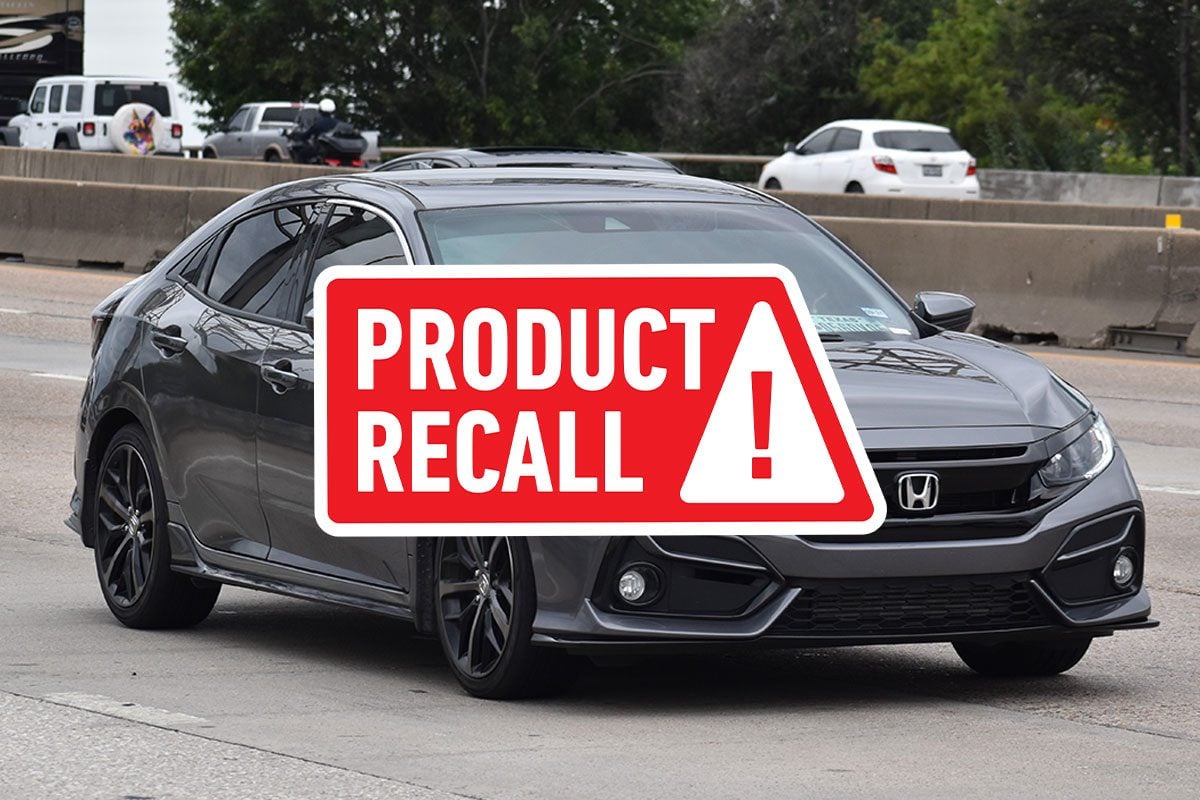
Nothing wakes up a car owner faster than a recall headline involving the phrase wheels might fall off. That is not subtle. It is not cute. It is not the kind of automotive drama anyone wants before coffee. And yet, Honda has recalled roughly 400,000 vehicles in the United States because a limited number of improperly manufactured accessory wheels could loosen, detach, and turn an ordinary commute into a deeply unwanted action scene.
Now for the important plot twist: this is not a case of every Honda Civic suddenly auditioning for a slapstick movie. The recall is broad, but the defect is narrower than the headline makes it sound. Honda’s action focuses on certain 18-inch aluminum alloy accessory wheels sold for specific 2016 through 2021 Honda Civic vehicles. In other words, this is a very real safety issue, but it is also a reminder that the scariest recall headlines often need a second sentence.
Still, “narrower than it sounds” is not the same thing as “no big deal.” When a wheel can separate from a vehicle, we are officially out of the land of mild inconvenience and into the territory of legitimate risk. That is why this Honda recall matters, why owners should pay attention, and why this story says a lot about how automakers handle safety when even a relatively small manufacturing mistake can create a very large recall footprint.
What the Honda Recall Is Actually About
The recall centers on certain 18-inch aluminum alloy accessory wheels that were available for 2016–2021 Honda Civic models. According to the reported defect description, steel lug seat inserts were not properly installed into the nut seating surface of some wheels during production. That missing insert is the kind of detail most drivers would never think about, which is fair, because most people have jobs and hobbies and would prefer not to spend Tuesday afternoon studying wheel hardware.
But in this case, that tiny missing piece matters a lot. Without the insert, the seating surface can deform during normal driving. Once that happens, the wheel nuts may loosen and detach. And once that happens, you are no longer discussing a cosmetic flaw or a mildly annoying rattle. You are dealing with a wheel separation risk, which can increase the chance of losing control and crashing.
That is why the recall language sounds so dramatic. It should. When a manufacturer uses wording that effectively translates to “your wheel could leave the chat while the car is still moving,” regulators and owners tend to pay attention.
Why the Recall Covers So Many Vehicles
The most interesting part of this story may be the math. Honda’s recall population is just over 406,000 potentially affected vehicles, which sounds massive, because it is. But the estimated defect rate reported publicly is tiny by comparison. Honda has also said the recall is meant to determine whether vehicles are equipped with a limited number of improperly manufactured accessory wheels.
That mismatch can confuse people, so here is the simple version. In many recalls, automakers cast a wide net because they must identify every vehicle that could have received the problematic component. The actual number of bad parts may be much smaller. That does not make the recall exaggerated; it makes it cautious. Safety recalls are not a game of “close enough.” If there is a real possibility that the defective wheel is on the car, the manufacturer has to treat that vehicle as part of the affected population until inspection proves otherwise.
So yes, the recall number is huge. No, that does not mean hundreds of thousands of Civics are actively rolling around on the brink of wheel ejection. It means Honda and regulators are accounting for every vehicle that may have received one of the suspect accessory wheels. In recall terms, that is the difference between scope and confirmed failure, and it is an important one.
What Caused the Problem
According to recall reporting, the root cause traces back to a supplier’s factory in Italy. During the installation of new equipment, a separation fence that distinguished finished products from unfinished products was removed. That may sound like a tiny manufacturing housekeeping detail. It was not. Some unfinished wheels were reportedly mixed into finished inventory, shipped out, and allowed to skip the press-fitting step and final inspection.
That last part is what makes this recall a classic manufacturing-control story. The problem was not that wheels are inherently mysterious or impossible to build. The problem was process discipline. One barrier disappeared, unfinished components got treated like completed ones, and a safety-critical defect slipped through. It is a reminder that modern manufacturing depends as much on process control as it does on engineering design. Remove the wrong checkpoint, and chaos clocks in for the day shift.
How Honda Discovered the Issue
Honda’s investigation reportedly began after the issue was first identified in the Japanese market in mid-2024, when missing lug seat inserts were found during a routine inspection of a customer vehicle. From there, the company continued analyzing the issue across markets, including the United States. It later determined that a safety defect existed and moved forward with a U.S. recall.
That timeline matters because it shows how many modern recalls unfold. Problems are often discovered far away from the market where the headline eventually lands. A supplier issue in one place, a customer inspection in another, a global component review after that, and then a recall once the manufacturer decides the defect meets the threshold for official action. It is not always quick, but it is usually layered.
As of the relevant reporting window, Honda said it had no U.S. reports of injuries or deaths related to this issue. That is obviously good news, though it should not lull owners into shrugging it off. The point of a recall is to fix the problem before the worst-case scenario becomes a statistic.
Which Honda Vehicles Are Affected?
The recall applies to certain 2016–2021 Honda Civic vehicles that may have these specific 18-inch accessory alloy wheels. That detail is crucial. This is not a blanket condemnation of every wheel installed on every Civic from those model years. It is tied to accessory wheels, not a general claim that the Civic lineup forgot how to stay attached to the road.
That distinction matters for both accuracy and panic control. If you own a Civic from those years, do not assume your car is automatically unsafe. But also do not assume you are fine just because the vehicle drives normally today. Recalls involving wheels and fasteners can remain invisible until wear, stress, and time create the exact conditions that turn a hidden defect into a dangerous one.
What Honda Will Do for Owners
Honda’s remedy is straightforward: dealers will inspect the wheels and replace the affected wheels and hubs as necessary, free of charge. That is the correct move and, frankly, the only move. No owner should be expected to pay out of pocket for a supplier-related manufacturing defect tied to wheel detachment risk.
Owner notification letters were scheduled to be mailed, and affected drivers can also check recall status through official Honda and NHTSA recall tools. That is worth repeating because recall news often spreads faster than recall paperwork. By the time a scary headline reaches social media, an owner may already be wondering whether their own vehicle is included. The smart move is to check the VIN, confirm the recall status, and book the inspection if needed.
What Owners Should Do Right Now
- Check whether your 2016–2021 Honda Civic has 18-inch accessory alloy wheels.
- Look up your VIN through Honda’s recall search or NHTSA’s recall database.
- Schedule a dealer inspection promptly if your vehicle is included.
- Do not ignore unusual vibrations, wheel looseness, clunking, or abnormal handling.
- If something feels wrong, stop driving and contact the dealer or roadside assistance.
That last point is plain common sense, but it matters. Cars are very good at making people delay unpleasant errands. Oil changes get postponed. Tire rotations get postponed. Weird dashboard lights get emotionally negotiated with. A wheel-related recall is not the moment for denial-based scheduling.
Why This Recall Is a Bigger Story Than It Looks
On the surface, this is a very specific Honda Civic recall involving accessory wheels. Underneath, it is a perfect example of how auto safety works in the real world. A seemingly tiny manufacturing omission can trigger a six-figure recall population. A supplier-side process lapse can ripple across model years. And a part many drivers think of as a style upgrade can become a safety liability when a hidden insert is missing.
It also highlights the weird tension in recall headlines. News outlets need a title people will click, and “wheels might fall off” certainly gets the job done. But consumers also need the nuance: not every car is defective, not every wheel is affected, and the recall exists precisely because automakers are expected to respond before a low-probability defect becomes a high-profile disaster.
That is the part many readers miss. Recalls are not always proof that a company failed to care. Sometimes they are proof that a defect was found, documented, traced, and acted on before the body count arrived. That does not erase the problem. It just means the safety system is doing what it is supposed to do, even if the headline sounds like it was written by a caffeine-fueled suspense novelist.
How This Affects Honda’s Reputation
Honda has long benefited from a reputation for reliability, practicality, and engineering sanity. That reputation does not disappear because of one recall, but it does mean stories like this land harder. When a brand is associated with dependable daily transportation, a wheel-detachment headline feels especially jarring. People expect quirks from exotic supercars and fragile startups. They do not expect a Civic recall to sound like the first sentence of a highway patrol report.
That said, the broader impact on Honda’s brand will depend less on the defect itself and more on the remedy experience. If owners can verify their recall status easily, get inspected quickly, and leave the dealership without paying a dime, this becomes a manageable safety event. If the process is slow, confusing, or parts are difficult to obtain, frustration will grow faster than a stripped lug nut.
The Real Lesson for Drivers
The biggest takeaway is not “be afraid of Honda.” It is “take recalls seriously, even when your car seems fine.” Safety defects are often invisible right up until they are not. A wheel can look normal in the driveway and still be one bad stretch of road away from becoming everybody else’s problem too.
Drivers should also stop thinking of accessory equipment as somehow less important than factory hardware. Wheels are not decorative dinner plates. They are load-bearing safety components. Once you bolt them to a moving vehicle, every detail matters: materials, inserts, torque, fitment, inspection, and quality control. Style may sell the wheel, but engineering keeps it attached.
Driver Experience: What a Recall Like This Feels Like in Real Life
If you have never been caught up in a recall like this, the experience usually begins with confusion, not panic. A driver sees a headline about Honda recalling 400,000 cars because the wheels might fall off, stares at their Civic in the driveway, and immediately starts performing emotional math. “I drove this thing yesterday. It felt normal. Does normal still count?” That is the strange thing about recall news: the danger is described in dramatic language, but the car often looks completely innocent while sitting there like it has never done anything wrong in its life.
For some owners, the next phase is detective work. They try to figure out whether their wheels are factory wheels or accessory wheels, which sounds simple until you realize most people did not keep a mental scrapbook of every option package ever installed on the car. If the Civic was purchased used, the mystery gets even better. Now the owner is squatting in the driveway, Googling wheel styles, comparing photos, and wondering whether the previous owner had excellent taste or accidentally handed down a rolling question mark.
Then there is the dealership experience. Some recall visits are pleasantly boring, which is honestly the dream. You show up, hand over the keys, drink coffee that tastes like it was filtered through a socket wrench, and get your answer. Other times, the visit feels like a graduate seminar in patience. There is the check-in line, the explanation, the paperwork, the waiting area television tuned to a channel no one would choose voluntarily, and the slow realization that every customer there has their own version of automotive heartbreak.
Emotionally, recalls like this create a weird blend of gratitude and annoyance. Gratitude, because the problem was caught before something worse happened. Annoyance, because no one enjoys discovering that a routine safety component may have skipped an important manufacturing step in another country years ago. It is hard to feel spiritually balanced when the phrase “missing steel lug seat insert” has suddenly entered your personal vocabulary.
There is also the trust factor. Owners want to believe that when they buy a car, the wheels are fully committed to the idea of staying attached. That is a pretty low and reasonable standard. So when a recall challenges that assumption, even in a limited subset of vehicles, it rattles confidence. You may still like the car. You may still love the brand. But for a while, every little vibration feels suspicious, and every pothole sounds like a tiny courtroom drama.
In the end, most recall experiences become stories people tell later with exaggerated hand gestures and a little nervous laughter. “Remember when I found out my car might be trying to shed a wheel?” It becomes a family anecdote, a group-chat moment, a reminder to check the VIN next time a recall headline appears. That is the best possible ending: inconvenience instead of injury, paperwork instead of disaster, and a car that goes back to being what it was supposed to be all along: boring, dependable transportation. In recall world, boring is beautiful.
Conclusion
Honda’s recall over possible wheel detachment sounds dramatic because it is dramatic. A wheel is one of those parts that should remain firmly committed to the vehicle at all times. But the deeper story is more precise than the headline. This recall involves certain accessory 18-inch wheels tied to 2016–2021 Civic vehicles, not every Civic on the road. The actual suspected defect pool appears limited, yet the safety implications are serious enough that Honda had no choice but to act broadly.
That is exactly how a recall system should work. Find the defect. Cast a wide enough net. Inspect the vehicles. Fix the problem for free. And remind every owner that even the smallest hidden manufacturing miss can become a very big deal once it meets speed, weight, and pavement.