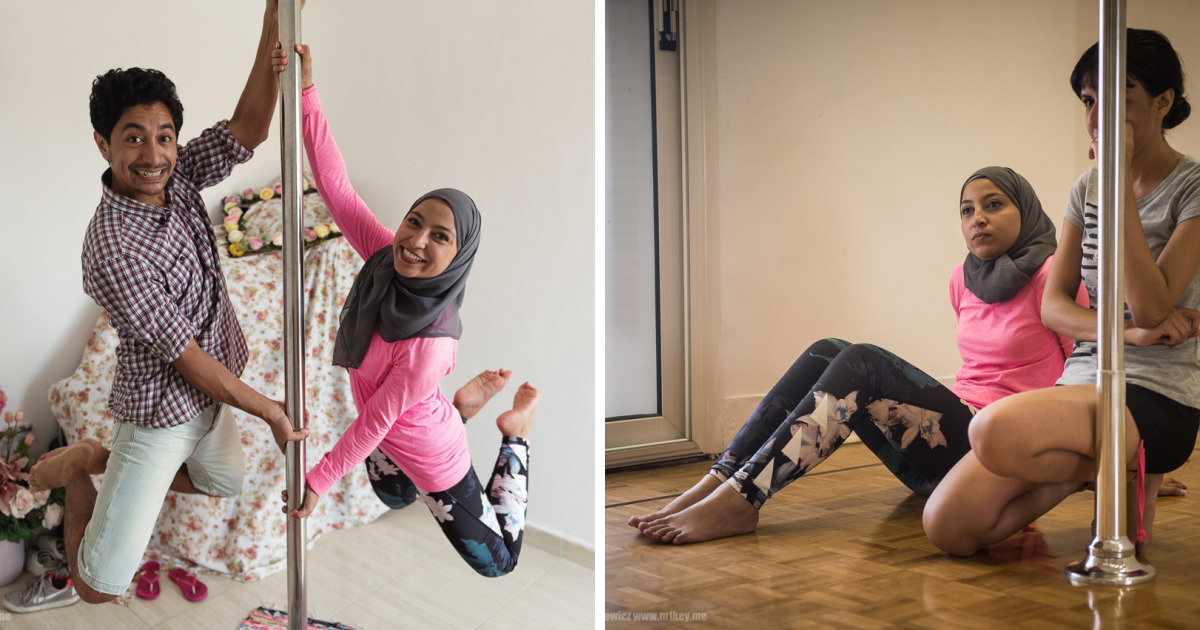
Pole dancing is not exactly the first activity many people associate with Muslim women. For some, the phrase sounds like a cultural typo, as if someone accidentally mixed a fitness studio flyer with a mosque community bulletin. But in women-only studios, private home gyms, and online fitness spaces, some Muslim women are using pole dancing not as a rebellion against faith, but as a surprisingly powerful way to build strength, body confidence, self-expression, and community.
The story is not about turning every Muslim woman into an aerial acrobat. It is about choice. It is about women finding a form of movement that lets them feel capable in bodies that are often judged, covered, misunderstood, politicized, or policed by everyone from strangers online to relatives with very loud opinions. Pole fitness, when practiced safely and respectfully, can become less about spectacle and more about self-trust.
For many Muslim women, confidence is not a slogan printed on a water bottle. It is something built rep by rep, bruise by bruise, spin by spin. One day you cannot lift your feet off the floor. A few weeks later, you climb the pole and realize your arms have been secretly training for superhero work. That moment can feel like discovering a hidden room in your own body.
Why Pole Dancing Appeals To Some Muslim Women
Pole dancing has evolved far beyond its narrow pop-culture stereotype. Today, many studios teach it as pole fitness, pole sport, aerial arts, or dance-based strength training. Classes may include conditioning, stretching, spins, floor work, choreography, and flexibility exercises. For beginners, the first lesson is usually humbling: the pole does not care about your aesthetic, your Instagram caption, or your delusions of instant grace. It demands grip, patience, coordination, and a sense of humor.
That combination can be deeply appealing. For Muslim women who want exercise that is challenging, creative, and emotionally freeing, pole fitness offers something different from treadmills and dumbbells. It is not just “burn calories and go home.” It is learning how to move with intention, how to trust your muscles, and how to enjoy progress without waiting for a perfect body to appear first.
In women-only classes, the experience can feel even more accessible. Some Muslim women prefer female-only fitness spaces because of modesty, comfort, religious boundaries, or personal privacy. In these spaces, women may feel more relaxed removing outer layers, adjusting workout clothing, receiving hands-on instruction from a female coach, or simply making mistakes without feeling watched. That privacy can turn a frightening first class into a safe experiment.
The Role Of Women-Only Studios
Women-only pole studios matter because environment shapes confidence. A beginner learning a spin may already be fighting nerves, sweaty palms, and the sudden realization that gravity has a personal vendetta. Add cultural judgment or unwanted attention, and the class becomes harder than it needs to be.
In cities such as Cairo, reports have described women-only pole dancing classes where students can practice away from male spectators. Some participants said the privacy allowed them to remove veils or train in clothing that helped them grip the pole more safely. For others, the most important part was emotional: the studio gave them a place to feel strong without having to explain themselves every five minutes.
This does not mean all Muslim women want the same thing. Some are comfortable in mixed gyms. Some are not. Some wear hijab while training. Some remove it in private. Some see pole as sport. Others see it as dance, art, or stress relief. The point is not to flatten Muslim women into one tidy narrative. The point is to recognize that confidence grows when women can choose the conditions under which they move.
Strength Changes The Conversation
Pole dancing looks smooth when performed by experienced dancers, which is very rude of them, frankly, because it hides how difficult it is. Behind every graceful spin are sore shoulders, core strength, grip training, flexibility drills, and many attempts that look less like flying and more like negotiating with a metal tree.
This physical difficulty is part of the confidence boost. Pole fitness teaches women that strength is not abstract. It is measurable. You can see it when you hold yourself up for one extra second, climb higher than last week, or finally nail a move that once seemed impossible. That evidence can be powerful for women who have been taught to see their bodies mainly through appearance, modesty rules, or outside judgment.
For Muslim women who deal with stereotypes of being passive, restricted, or fragile, pole fitness can offer a private counterargument. A woman may not be interested in proving anything to the world, but she may enjoy proving something to herself: “I am not weak. I am not decorative. I am capable.”
Confidence Without Abandoning Modesty
One common misunderstanding is that confidence must always look loud, revealing, or public. But confidence can be quiet. It can be a woman training in leggings, a long-sleeve top, and a sport hijab. It can be a woman practicing in a private studio with only female classmates. It can be a woman deciding that sensual movement belongs to her, not to public opinion.
Modesty is personal and interpreted differently among Muslim women. Some may decide pole dancing does not fit their values. Others may feel comfortable with it under specific boundaries: women-only classes, private practice, modest activewear, no public performance, or choreography focused on strength rather than sensuality. Still others may embrace sensual movement as part of reclaiming a body they were taught to hide from themselves.
The important distinction is consent. Confidence grows when a woman defines her own boundaries instead of having them defined by people who are not living in her body. Pole fitness can become a space where modesty and strength are not enemies. They are negotiated, adjusted, and lived with intention.
Body Image: From “How Do I Look?” To “What Can I Do?”
Many women enter fitness spaces carrying a mental checklist of insecurities. Too big. Too thin. Too stiff. Too old. Too covered. Too exposed. Too awkward. Pole dancing has a funny way of interrupting that inner committee because the body has a job to do. Can your hand grip? Can your leg hook? Can your core stabilize? Can you breathe while your brain is yelling, “Ma’am, we are sideways”?
This shift from appearance to ability is one reason pole fitness can improve body confidence. The body becomes an instrument rather than an ornament. A beginner may still care about how she looks, of course; everyone enjoys a good mirror moment. But over time, the deeper pride comes from function: stronger arms, better posture, more flexibility, improved balance, and the courage to try something difficult.
For Muslim women, this can be especially meaningful. Bodies in Muslim communities are often discussed through rules: cover this, do not show that, behave this way, avoid that gaze. Pole fitness can introduce a different conversation: your body can lift, stretch, hold, spin, and recover. It is not merely something to manage. It is something to respect.
Mental Health Benefits: Movement, Mood, And Self-Trust
Physical activity is strongly linked with mental well-being. Regular movement can reduce anxiety, support better sleep, improve mood, and help people feel more capable in daily life. Pole dancing adds another layer because it blends exercise with music, creativity, problem-solving, and social connection.
A pole class asks students to be present. You cannot successfully climb while mentally drafting tomorrow’s email or replaying a family argument. You must pay attention to grip, breath, shoulder position, and timing. That focus can create a break from overthinking. For one hour, the brain gets a new assignment: do not fall, point your toes if possible, and maybe stop apologizing to the pole.
Research on pole dance suggests it may improve mental well-being, body appreciation, and parts of sexual self-concept among women. While more research is needed, the early findings align with what many dancers describe: learning difficult movement can create pride, reduce shame, and build a more positive relationship with the body.
Community: The Secret Ingredient
The best pole studios are not just rooms with metal poles. They are small ecosystems of encouragement. Someone cheers when a beginner gets her first spin. Someone laughs when a move goes sideways. Someone reminds everyone to warm up because shoulders are precious and not sold in replacement packs.
For Muslim women who may feel isolated in mainstream gyms, a supportive women-only environment can be transformative. It offers sisterhood without pressure to be perfect. In a good class, different body types, fitness levels, and clothing choices can coexist. The shared goal is not to look identical. It is to become stronger together.
That community can also soften stigma. When a woman sees other Muslim women practicing pole fitness with confidence and boundaries, the activity becomes less mysterious. It becomes another form of movement, like martial arts, aerial yoga, belly dance, Pilates, or strength training. The fear does not disappear overnight, but it loses some of its power.
Facing Judgment And Misconceptions
Of course, judgment still exists. Some people hear “pole dancing” and immediately picture strip clubs, scandal, and dramatic background music. Others assume a Muslim woman who practices pole fitness must be rejecting her religion. These reactions say more about the viewer’s assumptions than the woman’s actual life.
Some Muslim pole dancers have spoken publicly about criticism from both inside and outside Muslim communities. The comments can be harsh, especially online, where people suddenly become experts in religion, fitness, and women’s bodies from the comfort of a snack-covered keyboard. But many women continue because the practice gives them something judgment cannot: lived confidence.
That does not mean criticism never hurts. It can. A woman may choose not to tell certain relatives or coworkers. She may keep her practice private. She may share only with trusted friends. Privacy is not always shame; sometimes it is strategy. Not every passion needs to be placed in front of an audience for debate.
Safety Comes First
Pole dancing is demanding, and confidence should never come at the cost of injury. Beginners should look for qualified instructors, proper warm-ups, clean equipment, progressive training, and clear spotting techniques. A good instructor will not throw students into advanced inversions on day one. That is not empowerment; that is a meeting with the floor.
Muslim women who prefer modest activewear may need to consider grip. Skin contact often helps with certain pole moves, but there are alternatives, including grip aids, silicone-coated leggings, specialized pole wear, and training modifications. The safest choice depends on the move, the studio, and the student’s comfort level.
Students should also listen to their bodies. Bruising can happen, especially early on, but sharp pain, shoulder strain, dizziness, or wrist discomfort should not be ignored. Strength builds gradually. The goal is not to become an upside-down legend by next Tuesday. The goal is sustainable progress.
Specific Examples Of Confidence In Action
1. The Beginner Who Learns To Be Seen
A woman enters class nervous, covered, and convinced everyone will notice her mistakes. Within minutes, she realizes everyone else is busy surviving their own beginner chaos. By the end of class, she has completed a basic spin. It is not perfect, but it is hers. She leaves with a tiny spark of confidence that says, “I tried something scary, and I did not disappear.”
2. The Hijabi Athlete Reframing The Sport
A hijabi woman practices pole fitness as strength training. She does not see a contradiction between faith and athleticism. She sets boundaries around clothing, space, and audience. Her confidence grows because she refuses to let stereotypes decide which sports belong to her.
3. The Private Practitioner Building Strength At Home
Some women prefer home practice with online coaching or a private pole setup. This route requires extra attention to safety, installation, and technique, but it can offer privacy and flexibility. For a woman balancing work, family, prayer, and community expectations, home practice may be the only realistic way to train consistently.
Experiences Related To Muslim Women, Pole Dancing, And Confidence
The experience of Muslim women using pole dancing to gain confidence often begins with hesitation. Many do not walk into the first class feeling fearless. They walk in with questions. Will this feel wrong? Will people judge me? Will I be the only covered woman in the room? Will my body cooperate, or will it file a formal complaint after warm-up? That nervousness is part of the story. Confidence rarely arrives before the first step; it usually shows up after the first awkward attempt.
One common experience is surprise at how athletic pole dancing is. Beginners may expect choreography and attitude, but they quickly discover conditioning drills, shoulder engagement, core control, and flexibility work. A simple climb can feel like solving a puzzle with your entire body. For Muslim women who have been told, directly or indirectly, to be smaller, quieter, or less physically expressive, this athletic challenge can feel revolutionary. The body is not being hidden from shame; it is being trained with respect.
Another experience is the emotional relief of women-only space. In a private class, students can laugh, sweat, adjust clothing, ask questions, and fail without the pressure of male attention. This can be especially important for women who observe hijab or who feel more comfortable exercising away from mixed settings. The studio becomes a temporary pause from public performance. No one has to represent all Muslim women. No one has to be the perfect modest athlete. She can simply be a beginner learning a spin.
Some women describe pole fitness as a way to reconnect with femininity on their own terms. That phrase can be misunderstood, so it deserves care. For some, femininity means softness, sensuality, and dance. For others, it means discipline, strength, and dignity. Pole can hold all of those meanings because it is flexible. A routine can be sporty, elegant, playful, powerful, modest, sensual, or artistic. The confidence comes from choosing the meaning rather than accepting the one society assigns.
There is also the experience of community defense. When outsiders criticize, classmates often become a shield. They remind each other that pole fitness is hard work, that Muslim women are not a monolith, and that personal boundaries matter. In supportive circles, women trade grip tips, celebrate bruises like tiny badges of effort, and cheer for progress that would look invisible to anyone else. Holding a pose for three seconds longer may not impress the internet, but in class, it can feel like winning a small Olympic medal.
Finally, many women experience confidence as a private transformation rather than a public announcement. They may never post a video. They may never perform. They may never tell extended family. Still, the confidence follows them out of the studio. They stand taller. They feel stronger carrying groceries, walking down the street, or entering other fitness spaces. Pole dancing becomes less about the pole itself and more about the lesson it teaches: your body can do difficult things, and you are allowed to be proud of that.
Conclusion
How Muslim women use pole dancing to gain confidence is not a simple story of rebellion, nor is it a glossy empowerment cliché. It is a layered story about movement, privacy, modesty, strength, stigma, and self-definition. Some Muslim women find in pole fitness a rare space where their bodies are not reduced to rules or stereotypes. They can train, laugh, struggle, improve, and decide what confidence means for themselves.
Pole dancing will not be for every Muslim woman, and it does not need to be. But for those who choose it, especially in respectful women-only spaces, it can become a powerful form of fitness and self-expression. It teaches patience. It builds muscle. It challenges shame. And occasionally, it reminds everyone that the most intimidating thing in the room is not judgmentit is a beginner spin with sweaty hands.
Note: This article is intended for cultural, lifestyle, and fitness education. Readers should choose exercise practices that align with their health needs, personal values, faith interpretations, and safety requirements.