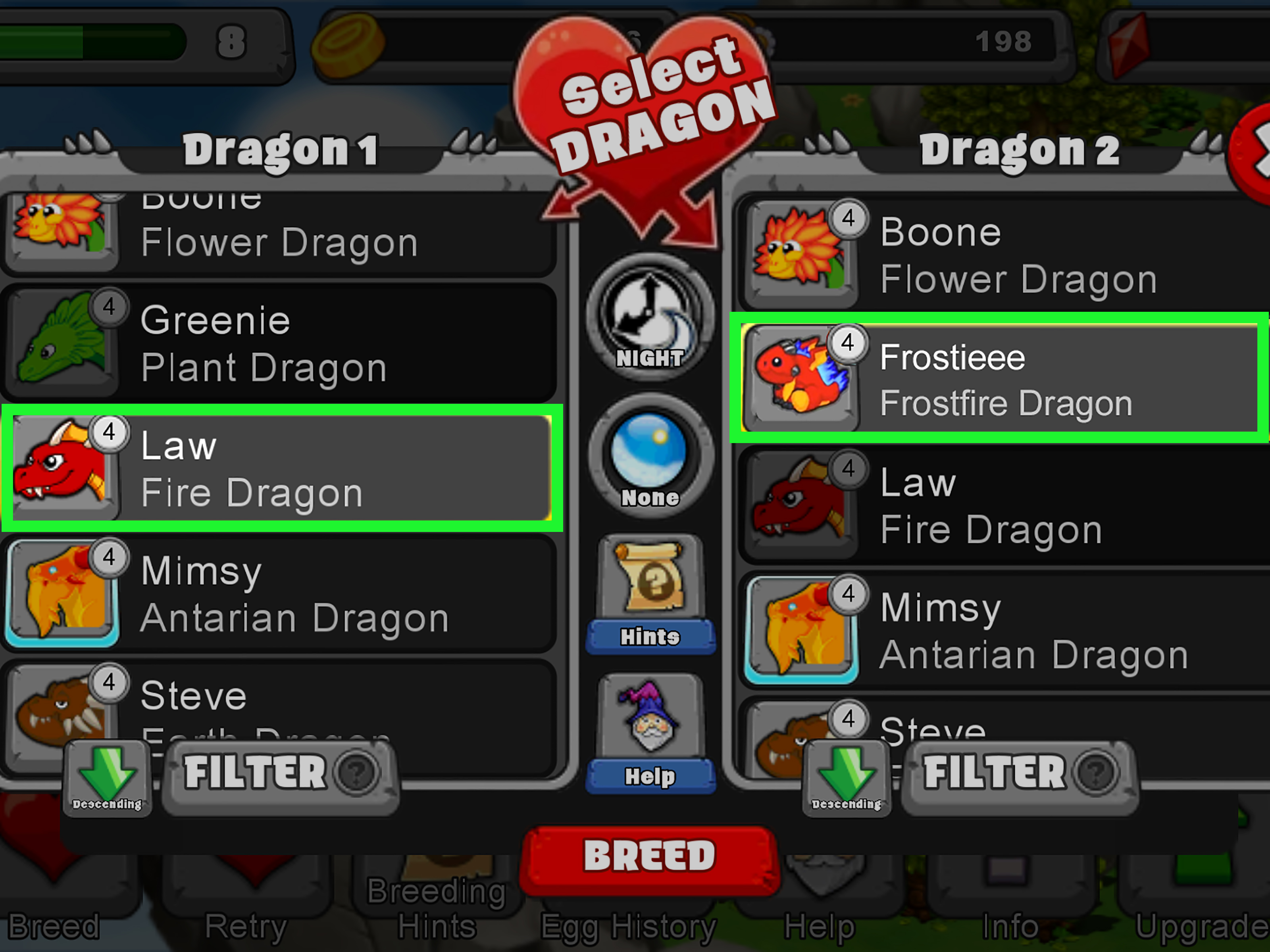
DragonVale is the kind of game that quietly turns “I’ll just check my caves” into a full lifestyle. The good news is that breeding rare dragons is not pure chaos: the game gives every breedable dragon a breeding hint, and the result depends on the cave you use, the parents you choose, their levels, and even how many copies of a dragon you already own.
That matters because DragonVale is now a huge collection game with over 500 mythical dragons, and the rarest ones often live behind special rules instead of simple “two dragons in, one dragon out” logic.
What Makes a Dragon “Rare” in DragonVale?
In DragonVale, “rare” usually means one of three things: the dragon is hard to pull from the normal breeding pool, it only appears during certain events or time windows, or it has a special breeding rule that narrows the odds. The breeding system itself is built around hints, element combinations, cave type, and parent level, so a rare dragon is often more about precision than luck.
That is why experienced players do not breed randomly. They plan for the dragon family they want, check the hint, and then choose the right cave for the job. The game’s own systems make this easier by showing breeding hints in the breeding toolbar and by separating normal breeding, cooperative breeding, and Rift breeding into different methods.
The Smartest Way to Breed Rare Dragons
1. Start with dragons that already cover the needed elements
Every breedable dragon has a hint, and that hint tells you what elements or conditions must be present. When you are chasing a rare dragon, the cleanest route is usually to use parents that match the hint as closely as possible, instead of flooding the pool with extra elements you do not need.
2. Level your parents before you breed
Higher-level dragons improve your chances of breeding rare, epic, or event dragons. That does not guarantee success, but it absolutely helps, which is why many veteran parks keep a few high-level “utility parents” on standby.
3. Use the right cave for the right dragon
Normal breeding works in the Breeding Cave, Enchanted Breeding Cave, Epic Breeding Island, or Epic Breeding Sanctuary. Rift dragons use the Rift Breeding Cave, and Rift breeding happens nearly instantly, but only dragons with Rift traits can breed there. Cooperative Breeding lets you breed with a friend’s dragons, which is especially useful for dragons that are easier to clone than to discover from scratch.
4. Respect time-of-day rules
Some dragons care about the clock. The in-game hint can require day or night breeding, and the Twilight Tower can override that timing restriction. That makes time-based dragons much less annoying than they sound, but only if you remember to check the hint first.
5. Use special events to your advantage
Runic Breeding Caves are one of the best event tools because they reduce breed times, reward event currency, and let you keep one egg from each activated cave. During these events, longer breed times can earn more currency, and breeding a new dragon type gives an extra bonus.
50+ Rare Dragons Worth Chasing
Availability changes by event, season, and re-release schedule, but these are the kinds of rare or hard-to-breed dragons that collectors usually target. Some are gemstone dragons, some are hidden or chrysalis dragons, and others are rare-limited favorites that appear in special breeding windows.
Gemstone and crystal-style rares
- Garnet
- Jade
- Jet
- Lapis
- Opal
- Ovalith
- Pearl
- Peridot
- Ruby
- Sapphire
- Topaz
- Turquoise
- Emerald
- Quartz
- Tourmaline
- Labradorite
- Mesolite
- Okenite
- Pyrite
- Sanguinite
Gemstone dragons are especially special because they earn Gems instead of DragonCash, and each one has a specific breeding combo. In normal play, only one combo can breed a gemstone dragon, unless a special mini-event is active.
Hidden, chrysalis, and seasonal targets
- Seasonal
- Fomhar
- Autumn
- Moon
- Rainbow
- Tansy
- Stoneshell
- Cumulus
- Tulip
- Chrysalis
- Duskwing
- Lacewing
- Swallowtail
- Marbletail
- Glowwing
- Pearlescent
- Bogberry
- Pouke
- Cherrie
- Pollenizer
Seasonal dragons have a clear core rule: the Seasonal Dragon itself uses Plant, Fire, and Air elements at any breeding cave. Hidden dragons and Chrysalis dragons are more event-driven, and the first Hidden dragons included Tansy, Stoneshell, Cumulus, and Tulip, while the first Chrysalis dragons included Chrysalis, Duskwing, Lacewing, Swallowtail, and Marbletail.
Rare-limited and collector favorites
- Hakahaka
- Halo
- Hanno
- Harvest
- Hidden Bolt
- Holly
- Honeybrew
- Honuhonu
- Glimmer
- Gourd
- Grandeur
- Greenty
- Grimoire
- Grove
- Gryphus
- Andromedan
- Luminous
- Meadow
- Magnetic
- Ivy
These dragons are the ones that keep collectors checking event calendars, Dragon’s Week lists, and limited re-release windows. DragonVale’s event system routinely brings back selected limited dragons, so a “rare” dragon can be common one month and stubbornly elusive the next.
Practical Breeding Tips That Actually Save Time
Use your best parents first. If a dragon is a known prerequisite for another rare dragon, keep at least one strong version around. Many players regret selling the dragon they later need for a second-step combo.
Keep a co-op partner ready. Cooperative breeding is especially useful for clones, repeats, and dragons that are painful to re-farm from scratch. If a friend already owns the dragon you are chasing, co-op can turn a long hunt into a manageable one.
Do not ignore the Rift. Since Rift breeding is instant, it is ideal for fast testing and high-volume attempts, especially when you are chasing a dragon whose hint is already known. Just remember that only Rift-trait dragons can breed there.
Track what you fail into. A “failed” breed is not always wasted, because it can still produce a useful hybrid parent for future attempts. That is how many parks slowly build a breeding bench that makes rare dragons easier over time.
What to Breed When You Are Trying to Catch Rare Dragons
If you want a simple routine, use this one: identify the dragon family, check the hint, choose the most direct parent pair you own, level those parents, and breed in the cave that gives you the strongest odds for that category. If the dragon is event-limited, wait for its return instead of burning gems on blind attempts. If it is a gemstone dragon, use the exact combo. If it is a galaxy dragon, move to Cooperative Breeding. If it is a Rift-only opportunity, go instant and keep testing. That is the whole game plan, and it is much more effective than asking the cave for “vibes.”
50+ Different Types, One Habit: Patience
The easiest mistake in DragonVale is treating rare breeding like a one-click purchase. It is not. Rare dragons are a long game, and the parks that do well are usually the parks that breed with a plan, save useful parents, and use event windows aggressively instead of emotionally. The upside is that the game rewards that patience with a genuinely satisfying collection loop. Every new rare dragon feels earned, not handed out. That is why the hunt stays fun even when the odds are unkind.
Experience Notes From the Breeding Grind
Anyone who has spent serious time in DragonVale knows the emotional cycle. At first, every breeding timer feels exciting because even an ordinary hybrid might still be the one you need. Then comes the middle stretch, when you start recognizing timers on sight and can tell from the clock alone whether the result is probably useful or just another bench warmer. After that comes the strange calm of a mature park: you stop chasing every shiny thing and start breeding with intent. That is usually when rare dragons begin to show up more often, because your park finally has the right parents in the right levels, spread across the right caves.
Players also learn that rare breeding is part science, part memory game. You remember which dragons were event-only, which ones came back during a Dragon’s Week list, and which families were easier to clone than to discover. You learn to keep at least one copy of a dragon that looks disposable today but becomes essential tomorrow. You also learn that co-op friends are worth their weight in gems, because a good co-op partner can rescue you from a long dry spell. The best parks are not just lucky; they are organized. They keep notes, rotate parents, and never assume that “one more random try” is a strategy.
Another common experience is discovering that event breeding changes everything. A dragon that felt impossible in a normal cave suddenly becomes realistic in a Runic Breeding Cave because the timer is shorter and the event economy gives you more reasons to keep breeding. That is when the game gets deliciously dangerous: one cave leads to another, a small pile of event currency turns into a target list, and before you know it, you are planning your entire evening around one more shot at a limited dragon. It is goofy, but it works.
There is also a quieter kind of satisfaction in DragonVale that only shows up after repeated failure. A tough dragon finally lands, and suddenly the whole collection around it makes sense. The breeder parents that looked mediocre on their own become valuable because they unlocked a difficult branch of the Dragonarium. That feeling is why players keep going. It is not just about filling habitat space. It is about building a system that slowly turns chaos into order.
And that is the real secret behind breeding rare dragons: the more deliberate you become, the more the game starts to feel fair. You still need luck, but luck is much friendlier when it is aimed in the right direction. Keep strong parents, use the correct cave, respect timing rules, and lean on events when they appear. Do that long enough, and the list of impossible dragons starts to shrink.
Conclusion
Breeding rare dragons in DragonVale is not about guessing harder. It is about reading the hint, using the right cave, leveling smart parents, and taking advantage of special systems like Cooperative Breeding, the Rift, and Runic Breeding Caves. Once you build a disciplined routine, 50+ rare dragons stop feeling like a wall and start feeling like a checklist.
Keep your target list short, your parents strong, and your expectations realistic. DragonVale rewards the patient breeder every time.
Note: Breeding in DragonVale is chance-based, so the best results usually come from consistency, not superstition.