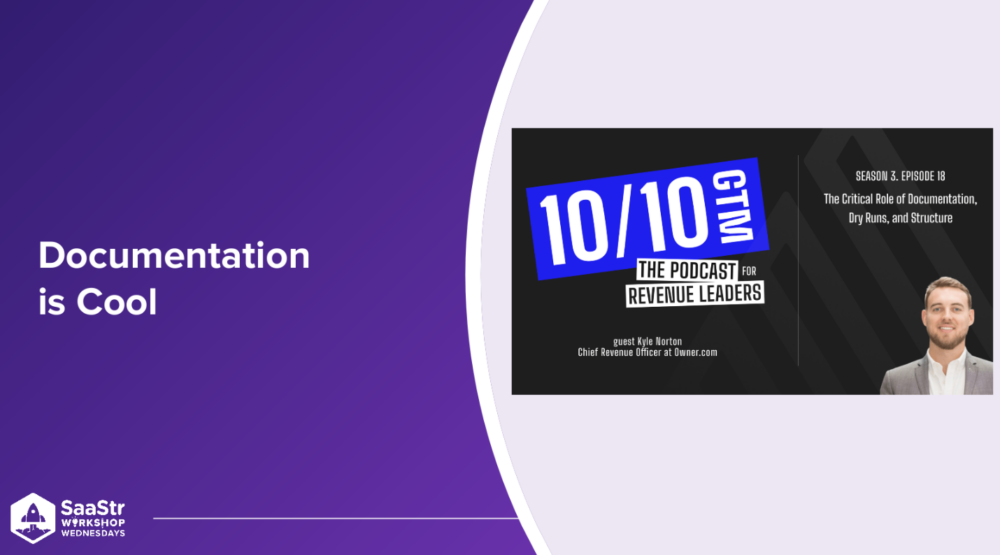
Go-to-market efficiency in SMB sales is the art of growing revenue without hiring an army, burning cash like a campfire, or asking sales reps to become part-time spreadsheet monks. Owner.com CRO Kyle Norton has become a useful case study for modern revenue leaders because his team sells into one of the toughest segments in software: independent small businesses, specifically restaurants.
SMB sales looks simple from the outside. Small deal, short sales cycle, fast yes-or-no, right? Not quite. The reality is more like trying to run a Formula 1 pit crew inside a food truck during lunch rush. You need speed, precision, focus, clean data, strong messaging, and a product that creates value quickly. Otherwise, customer acquisition cost climbs, rep productivity drops, churn bites, and the board deck starts looking like a weather report: cloudy with a chance of awkward questions.
Kyle Norton’s approach at Owner.com points to a better path: narrow the ICP, build operational excellence early, use AI where it creates real leverage, centralize repetitive work, and measure every GTM motion by whether it puts the team closer to qualified customer conversations and profitable revenue.
Why SMB Sales Efficiency Matters More Than Ever
For SaaS companies, especially vertical SaaS companies serving small businesses, growth alone is no longer enough. Investors, founders, and operators now care about efficient growth: how much revenue a team can generate per dollar of sales and marketing spend, per rep, per lead source, and per customer segment.
That shift is not just finance-team fussiness. SMB customers have smaller budgets, less patience, and fewer internal resources than enterprise buyers. A restaurant owner does not want a six-month implementation plan, a 42-tab onboarding spreadsheet, or a “strategic transformation journey.” They want more direct orders, fewer painful fees, stronger repeat business, and technology that does not require them to become the CTO of tacos.
This is where Owner.com’s market is interesting. The company helps independent restaurants compete online with tools such as websites, online ordering, branded mobile apps, email and text marketing, loyalty, reviews, SEO, and analytics. The product is built around a practical promise: help local restaurants drive more direct digital sales and rely less on third-party channels that may own the customer relationship.
In SMB sales, efficiency begins when the product promise is concrete. “Grow direct online orders” is easier to sell than “digitally transform your hospitality ecosystem.” The first sounds like money. The second sounds like a conference badge.
The Kyle Norton Playbook: Focus Before Force
One of the clearest lessons from Kyle Norton’s public discussions is that SMB GTM efficiency starts with focus. Many early-stage sales teams try to solve growth by saying yes to every possible customer. That feels productive until support tickets, churn, discounting, implementation drag, and messy pipeline data reveal the truth: not all revenue is good revenue.
A strong SMB sales motion needs a sharp ideal customer profile. For Owner.com, the core buyer is the independent restaurant operator who cares deeply about profitable online growth, direct customer relationships, and simple execution. That does not mean every restaurant is a perfect fit. A business that wants maximum design customization, does not care about online ordering, or refuses to change old workflows may create more drag than value.
Say No to Protect the Machine
Great GTM teams learn to say no before the market forces them to. Saying no to bad-fit accounts protects onboarding capacity, customer success bandwidth, marketing accuracy, sales morale, and retention metrics. It also sharpens messaging. When reps know exactly who wins with the product, they stop delivering mushy pitches and start having useful conversations.
For SMB sales leaders, this means building disqualification criteria directly into the funnel. A restaurant may be disqualified because it lacks enough order volume, has no willingness to invest in digital growth, has a poor operational foundation, or simply does not feel the pain strongly enough. This is not snobbery. It is math wearing sensible shoes.
Build the Revenue Operating System Early
Many companies delay revenue operations until the sales team becomes chaotic. That is like waiting to install traffic lights until after the city has invented rush hour. RevOps should arrive early, especially in SMB sales, because small inefficiencies multiply quickly across high-volume motions.
SMB sales teams need clean account data, clear lead scoring, reliable routing, consistent sales stages, accurate attribution, and fast feedback loops. Without these basics, leaders cannot tell whether pipeline is growing because the market is responding or because the CRM has become a haunted house full of duplicate accounts and optimistic close dates.
The Metrics That Actually Matter
Go-to-market efficiency should be measured with a small set of practical metrics:
- CAC payback: How long it takes to recover the cost of acquiring a customer.
- ARR per rep: How much annual recurring revenue each seller produces.
- Pipeline conversion: How many qualified opportunities become closed-won revenue.
- Ramp time: How quickly new reps reach productivity.
- Logo churn and revenue retention: Whether customers stay, expand, or leave.
- Source-level efficiency: Which channels produce profitable customers, not just impressive lead volume.
The trick is not to track everything. The trick is to track the few numbers that explain whether the GTM system is healthy. A dashboard with 83 metrics is not a dashboard. It is a cry for help in chart form.
Use AI for Leverage, Not Theater
Kyle Norton’s AI philosophy is useful because it avoids the most common trap: treating AI as a toy box for every employee to rummage through separately. Decentralized experimentation can improve literacy, but it rarely creates durable GTM advantage on its own. A few reps build prompts, RevOps builds a side project, a manager creates a chatbot, everyone claps in Slack, and two weeks later nobody knows where the files went.
The more efficient model is centralized intelligence. Ideas can come from anywhere, but production workflows should be built, tested, improved, and maintained by a small team with technical skill, data access, and responsibility for measurable outcomes.
Buy Infrastructure, Build Intelligence
A smart GTM team should not build everything. Buy the infrastructure that already works: CRM, dialer, call recording, enrichment plumbing, workflow systems, and other tools where uptime and reliability matter. Build the intelligence that is specific to your market, your customer, and your sales motion.
For a restaurant-focused platform, proprietary intelligence might include signals about a restaurant’s online ordering experience, review profile, local SEO visibility, menu structure, delivery presence, mobile experience, and customer retention opportunities. That kind of intelligence can make outbound far more relevant. Instead of calling a restaurant owner with “just checking in,” a rep can call with a specific observation: “Your customers are searching for you on mobile, but the ordering path has friction.” That is not a pitch. That is a useful opening.
Keep Reps Selling
One of the biggest efficiency unlocks in SMB sales is removing low-value work from reps. Prospect research, list building, account scoring, CRM field updates, and generic email drafting can consume enormous amounts of time. AI and centralized data teams can handle much of that work, but the goal is not to make reps lazy. The goal is to make reps spend more time on the human parts of selling: discovery, urgency creation, objection handling, negotiation, and trust.
A good test for every AI initiative is simple: did it create more qualified customer conversations, improve conversion, increase revenue per rep, or reduce avoidable churn? If not, it may be AI performance theater. And theater is lovely, but it should not be funded from the sales productivity budget.
Design the Funnel Around Buyer Reality
SMB buyers are busy. Restaurant owners are especially busy. They are managing staff, inventory, customer complaints, delivery issues, food costs, rent, reviews, payroll, and the occasional mystery leak behind the soda machine. A sales process that assumes they will attend four discovery calls and read a 19-page proposal is not ambitious. It is fictional.
Efficient SMB sales requires a funnel built around speed and clarity. The buyer should quickly understand the pain, the promised outcome, the proof, the price, and the next step. The more cognitive load you add, the more deals leak out of the funnel.
Make the Value Proposition Concrete
Owner.com’s positioning works because it connects product features to business outcomes. A website is not just a website; it is a discovery engine. Online ordering is not just a checkout page; it is a margin and customer-data strategy. A branded app is not just a nice-to-have; it is a repeat-order channel. Email and SMS marketing are not “engagement tools”; they are ways to bring customers back without waiting for an algorithm to be generous.
This lesson applies to any SMB SaaS company. Do not sell the feature. Sell the job it does. Then prove that the job matters financially.
Build a High-Performance Sales Team Without Bloat
Headcount is not a strategy. It is a cost structure with LinkedIn profiles. In efficient SMB sales, hiring must be tied to repeatable demand, clear onboarding, strong enablement, and proven unit economics. Scaling before the system works only makes the mess louder.
Kyle Norton has emphasized talent density: hiring people who raise the operating bar, not merely fill seats. In SMB sales, this is especially important because the work is high-volume and emotionally demanding. Reps hear “no” constantly. They need resilience, curiosity, coachability, and enough business acumen to connect with owners who measure value in very practical terms.
Ramp Fast or Revisit the System
If new reps take too long to ramp, the problem may not be the reps. It may be unclear messaging, weak training, poor lead quality, inconsistent manager coaching, or a product story that only veterans know how to tell. Efficient sales teams turn tribal knowledge into playbooks, call libraries, objection maps, demo flows, competitive notes, and onboarding milestones.
Documentation is not glamorous. Nobody joins sales because they dream of naming folders correctly. But documentation is how a team stops relearning the same lesson every month, which is the business equivalent of stepping on the same rake and calling it strategy.
Operational Cadence: The Unsexy Advantage
Go-to-market efficiency is built through cadence. Weekly pipeline reviews, monthly business reviews, win-loss analysis, cohort retention reviews, channel performance check-ins, and hiring retrospectives turn scattered activity into learning. The magic is not the meeting itself. Meetings are not magic; some are actually mild weather events. The magic is the discipline of comparing expectations against reality.
For example, if outbound pipeline rises but close rates fall, the team may be targeting too broadly. If close rates are strong but churn is high, sales may be overpromising or selling to weak-fit accounts. If demos are high but conversion is low, messaging or qualification may be broken. If ramp times vary wildly, onboarding and manager coaching need inspection.
Efficient CROs do not wait for quarterly surprises. They build systems that surface small problems while they are still small enough to fix without a company-wide “all hands” featuring nervous smiles.
Specific Example: Turning Restaurant Data Into Outbound Relevance
Imagine a sales team targeting independent pizza shops in suburban markets. A low-efficiency outbound motion would give reps a generic list and ask them to “personalize.” The rep visits a website, scans reviews, checks delivery apps, guesses at pain points, writes an email, logs notes, and repeats the process until their coffee develops legal rights.
A high-efficiency motion centralizes that research. The company enriches accounts with data points such as online ordering availability, mobile checkout friction, Google review trends, menu quality, website speed, loyalty presence, third-party marketplace dependency, and local search visibility. Accounts are scored based on fit and likely pain. Reps receive prioritized lists with concise talking points and proof-backed hypotheses.
The rep’s job changes from “find something interesting” to “start a relevant conversation.” That difference matters. It improves call quality, increases confidence, reduces wasted research time, and makes coaching easier because managers can inspect patterns across many conversations.
Retention Is Part of GTM Efficiency
Many teams treat customer retention as a post-sale issue. In SMB sales, that is dangerous. Churn is not just a customer success problem; it is often a targeting problem, a promise problem, an onboarding problem, or a value-realization problem that began before the deal closed.
Efficient GTM teams connect sales, onboarding, and customer success around the same definition of a good customer. They ask: Which customers activate fastest? Which customers see measurable value within 30, 60, or 90 days? Which customers expand? Which customers churn for reasons we could have predicted?
For Owner.com, that connection is especially relevant because restaurants operate in a volatile environment shaped by food costs, labor pressure, changing consumer habits, and competition from large chains with sophisticated digital systems. The faster a restaurant sees practical value, the stronger the relationship becomes.
What Revenue Leaders Can Steal From the Owner.com Approach
You do not need to sell restaurant software to apply the lessons. Any SMB SaaS team can adapt this playbook:
- Narrow the ICP: Define who wins fastest and who creates drag.
- Centralize data work: Keep reps focused on selling, not scavenger hunts.
- Build intelligence: Use proprietary market insights to improve targeting and messaging.
- Buy reliable infrastructure: Do not reinvent tools that already work.
- Measure rep productivity: Track revenue output, not just activity volume.
- Connect sales to retention: Efficient acquisition means acquiring customers who stay.
- Make AI accountable: Every AI workflow should move a real business metric.
The biggest lesson is that efficiency is not one tactic. It is a system. It lives in hiring, data, messaging, tooling, onboarding, leadership cadence, compensation, and customer fit. Remove one piece and the machine may still run, but it will sound like a blender full of forks.
Field Notes: Real-World Experiences From Building SMB GTM Efficiency
In practical SMB sales environments, the first efficiency breakthrough often comes from admitting that the team is confusing motion with progress. I have seen teams celebrate hundreds of calls, thousands of emails, and packed calendars while the actual revenue story stayed flat. The activity looked impressive, but the inputs were not connected to the right accounts, the right message, or the right urgency. It was like watching someone sprint on a treadmill and then wonder why they had not arrived in Chicago.
A better experience starts with account quality. In one common SMB scenario, a sales team may import a huge list of potential customers and distribute it evenly across reps. That feels fair, but fair is not always efficient. Some accounts have strong fit signals, while others are barely alive, already locked into contracts, too small to afford the product, or simply not feeling the pain. When leadership adds scoring criteria, even basic ones, the work changes. Reps stop treating every account like a lottery ticket and start treating the best accounts like opportunities that deserve preparation.
The next improvement usually comes from simplifying talk tracks. SMB buyers do not reward complexity. They reward relevance. A restaurant owner, salon owner, contractor, or local retailer wants to know three things quickly: Do you understand my problem? Can you help me make or save money? Will this be painful to implement? When reps answer those questions clearly, sales cycles compress. When they hide behind feature tours, buyers politely disappear into the witness protection program known as “circle back next quarter.”
Another hard-earned lesson is that managers must coach from real conversations, not vibes. Call recordings, transcripts, CRM notes, and lost-deal reasons help leaders identify patterns. Maybe reps are strong at opening calls but weak at creating urgency. Maybe they are discounting too early. Maybe demos are too long. Maybe the best reps are asking one question everyone else should copy. Without conversation data, coaching becomes motivational confetti. With data, it becomes a performance system.
AI can accelerate all of this, but only when it is grounded in workflow reality. The strongest AI use cases are boring in the best possible way: summarizing calls, enriching accounts, flagging buying signals, drafting follow-ups, identifying churn risk, and creating manager coaching notes. These workflows save time every day. They do not need to wear a cape. They just need to remove friction.
Finally, the team culture matters. Efficient SMB sales teams are not robotic. They are disciplined. They protect focus, share learning quickly, document what works, and avoid hero-based selling where only two reps know how to win. The best culture says: if one person figures out a better way, the whole team should benefit. That is how efficiency compounds. Not through one magical script, but through hundreds of small improvements that turn selling from chaos into a repeatable craft.
Conclusion: GTM Efficiency Is Built, Not Hoped For
Building go-to-market efficiency in SMB sales requires more than motivational slogans and a bigger outbound sequence. Kyle Norton’s work at Owner.com shows the power of disciplined focus: choose the right customers, build strong RevOps foundations, centralize data, deploy AI against measurable bottlenecks, hire for talent density, and make every part of the funnel accountable to customer value.
The modern SMB buyer is demanding, distracted, and practical. They do not want software homework. They want outcomes. The winning GTM teams will be the ones that reduce buyer friction, increase rep productivity, and connect acquisition to retention. In other words: less noise, more revenue, fewer spreadsheets crying quietly in the corner.
For SaaS leaders, the takeaway is clear. Efficiency is not the enemy of growth. It is the operating system that makes growth sustainable.