Note: This article is written in publication-ready HTML, based on real Animal Crossing: New Horizons gameplay mechanics, and contains no source-link placeholders.
Clay in Animal Crossing: New Horizons is one of those humble little materials that quietly becomes a big deal the moment you need it. At first, you might think, “It’s just dirt with confidence.” Then Tom Nook asks for furniture, a DIY recipe needs several pieces, and suddenly you are sprinting across your island like a tiny archaeologist with a shovel and a mission.
The good news is that clay is not rare in the dramatic, legendary-treasure sense. You do not need a secret villager handshake, a five-star island, or a suspiciously expensive raccoon subscription. You mostly need rocks, the right tool, good timing, and a little patience. This guide explains how to get clay in Animal Crossing: New Horizons, how to farm it faster, what mistakes to avoid, and how to build a steady supply without turning your island into a crater museum.
What Is Clay in Animal Crossing: New Horizons?
Clay is a crafting material used in many DIY recipes throughout Animal Crossing: New Horizons. Like stone and iron nuggets, it comes mainly from rocks. Each piece of clay can be stacked in your inventory, stored at home, sold for Bells, or used for crafting furniture, tools, decorative items, and island-building essentials.
Players often need clay early in the game when preparing furniture for new villagers. Later, it becomes useful for making rustic, natural, and pottery-themed decorations. If your island design includes cozy yards, garden corners, outdoor kitchens, or craft-room chaos that looks intentional, clay will probably sneak onto your shopping list.
The Main Way to Get Clay: Hit Rocks
The most reliable way to get clay in Animal Crossing: New Horizons is to hit rocks with a shovel or an axe. Every island has rocks, and when you strike them, they can drop several materials, including clay, stone, iron nuggets, gold nuggets, and sometimes Bells from the daily money rock.
Step-by-Step: How to Get Clay from Rocks
- Find a rock on your island.
- Equip a shovel or axe.
- Make sure you have not eaten fruit or food before hitting the rock.
- Stand next to the rock.
- Hit the rock repeatedly as fast as possible.
- Pick up the materials that drop around it.
Clay drops randomly, so one rock might give you several pieces, while another may hand you mostly stone and iron. The game is not personally insulting you. It just has a random drop system, which sometimes feels like Tom Nook hired a tiny chaos manager.
Use the Rock Trick to Get More Clay
If you hit a rock normally, your character gets pushed backward after each strike. That knockback wastes precious time. Since rocks only produce materials for a short window, getting pushed away can mean fewer drops. The famous rock trick solves this problem.
How to Do the Rock Trick
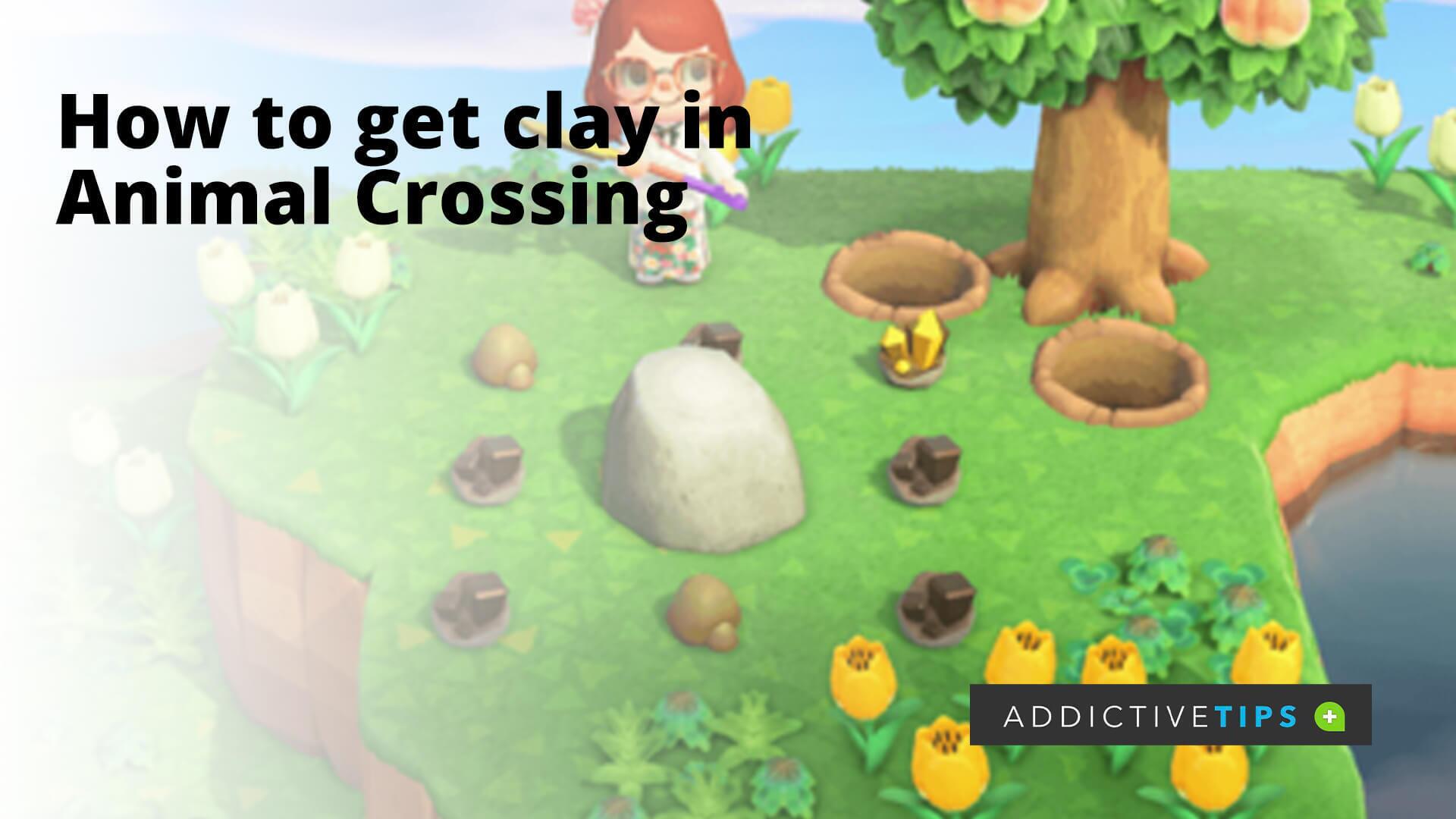
Before hitting the rock, dig two holes behind your character in a corner shape. Stand between the holes and the rock, then start hitting. The holes stop your character from sliding backward, allowing you to strike the rock quickly and collect the maximum number of drops.
With good timing, each regular rock can produce up to eight items. Those items may include clay, stone, iron nuggets, and occasionally gold nuggets. The money rock works similarly, except it drops Bells instead of normal materials. If you are farming clay, focus on the non-money rocks first.
Why the Rock Trick Matters
Without the rock trick, many players only get three or four drops from a rock. With the trick, you can often get the full eight. More hits mean more chances for clay. It does not guarantee that every rock will shower you with clay like a pottery-themed parade, but it dramatically improves your odds over time.
Do Not Eat Fruit Before Farming Clay
This is one of the most important tips for beginners: do not eat fruit before hitting rocks if your goal is to collect clay. Eating fruit or food gives your character stamina. When you hit a rock with stamina, you may break the rock instead of harvesting multiple materials from it.
Breaking rocks is useful only when you intentionally want to move them to another location. For normal clay farming, it is bad news. A broken rock does not keep giving materials that day, and only one destroyed rock generally respawns per day in a new location. In other words, fruit-powered enthusiasm can turn your clay hunt into a waiting game.
Visit Mystery Islands for More Clay
If you have already hit every rock on your own island, the next best way to get more clay is to use a Nook Miles Ticket and visit a Mystery Island. These islands usually have additional rocks you can harvest. Bring a shovel, a backup tool if possible, and enough empty inventory space.
Mystery Islands are especially helpful early in the game, when you need materials for villager homes or important DIY recipes. Since rocks on your home island only reset daily, Mystery Island Tours give you extra chances to collect clay without waiting until tomorrow.
Clay Farming Checklist for Mystery Islands
- Bring a shovel or axe.
- Empty your pockets before leaving.
- Do not eat fruit before hitting rocks.
- Use the two-hole rock trick.
- Collect clay, stone, iron nuggets, and other useful materials.
- Leave behind weeds or common items if your inventory gets full.
If your island airport trip turns into a clay jackpot, congratulations. If it gives you mostly stone, remember that stone is also useful. This is the kind of positive thinking that keeps Animal Crossing players from shouting at decorative rocks.
Can You Get Clay from Balloon Presents?
Yes, balloon presents may contain clay. Balloons drift across your island carrying wrapped gifts, and you can shoot them down with a slingshot. Their rewards vary, including DIY recipes, clothing, furniture, Bells, and crafting materials.
However, balloons are not the fastest way to farm clay. Think of them as a bonus. If you see one floating by, shoot it down. Maybe you will get clay. Maybe you will get a shirt your villager wears once and then silently judges. Either way, it is free stuff from the sky, and free stuff from the sky deserves respect.
How Many Rocks Are on Your Island?
Your island can have several rocks available for daily harvesting. Most players eventually work with six rocks on their island, though early-game access may depend on your tools, bridges, inclines, vaulting pole, or ladder. Some rocks may be tucked away on higher cliffs or across rivers before your island is fully opened up.
Each rock can be harvested once per day for materials. After it has produced its drops, it will not produce more until the next daily reset. Because of that limit, the best clay strategy is simple: harvest every rock efficiently each day, then use Mystery Islands if you need more right away.
Best Tools for Getting Clay
You can use either a shovel or an axe to hit rocks. Many players prefer the shovel because it feels faster and keeps axes available for wood gathering. A flimsy axe can work, but it may break sooner, especially during a long resource run. If you have access to stronger tools, bring them.
Recommended Tool Setup
- Shovel: Best everyday choice for hitting rocks.
- Axe: Useful backup if your shovel breaks.
- Slingshot: Optional, but helpful for balloon presents.
- Vaulting pole and ladder: Useful if rocks are across rivers or on cliffs.
Early in the game, tools break often, so carrying a spare can save time. Nothing ruins a resource run quite like standing next to an untouched rock while your shovel disappears into the void like it had other career plans.
Common Mistakes That Stop Players from Getting Clay
If you are struggling to find clay, you may not be doing anything wrong. Clay drops randomly, and some days are simply stingy. Still, a few common mistakes can reduce your chances.
1. Hitting Rocks Too Slowly
Rocks only drop items for a limited time after the first hit. If you pause, reposition, or get pushed back too far, you lose potential drops. Use the rock trick and hit quickly.
2. Standing in the Wrong Position
Stand diagonally or directly beside the rock with holes behind you. If your holes are too close or too far away, they may not stop knockback correctly.
3. Eating Fruit First
Fruit stamina can break rocks. Unless you want to relocate rocks, keep your stamina counter at zero before mining for clay.
4. Forgetting Hidden Rocks
Check cliffs, river-separated areas, and the back of your island. A hidden rock is basically free clay potential wearing camouflage.
5. Expecting Clay Every Time
Clay is random. Some rocks drop none. Others drop several pieces. The trick is to increase the number of total hits you get each day.
What Is Clay Used For?
Clay is used in a variety of DIY recipes, especially items with pottery, garden, brick, or natural themes. Depending on the recipes you have unlocked, clay may be needed for furniture, decorative objects, fences, and musical or craft items. It is also useful for creating outdoor spaces that feel handmade and cozy.
For example, players often use clay-based items when designing pottery areas, rustic kitchens, farm corners, zen gardens, and villager yards. If your dream island includes warm earth tones, handmade details, and “I totally did not spend four hours arranging this corner” energy, clay will be your quiet best friend.
How to Store Clay Efficiently
Once you start collecting clay, do not sell all of it immediately. Even if you do not need it today, future DIY recipes may ask for it. Store extra clay in your home storage when possible. Keeping a small reserve prevents that familiar crafting-table tragedy where you have every material except the one item the recipe demands.
A smart approach is to keep at least one stack of clay in storage. If you enjoy decorating heavily, keep more. Clay does not sell for a huge amount of Bells, so saving it is usually more valuable than cashing it in.
Fast Clay Farming Strategy
For the fastest results, combine daily island mining with Mystery Island trips. Start by checking every rock on your home island. Use the two-hole trick, collect all drops, and store what you need. If you still do not have enough clay, spend Nook Miles on a ticket and farm rocks on a Mystery Island.
Best Daily Clay Routine
- Empty your pockets.
- Check that your fruit stamina is zero.
- Carry a shovel and backup tool.
- Harvest every rock using the rock trick.
- Store clay at home.
- Visit Mystery Islands if you need more.
- Shoot down balloons when they appear.
This routine keeps clay farming simple and efficient. It also gives you plenty of stone, iron nuggets, and occasional bonus materials along the way.
Beginner Tips for Players Who Need Clay Early
New players often need clay for early housing projects. If you are stuck waiting for enough clay, do not panic. First, make sure you have found every accessible rock on your island. Second, use the rock trick instead of hitting rocks casually. Third, spend Nook Miles on Mystery Island Tours if you need more materials today.
If you have friends who play Animal Crossing: New Horizons, trading is another option. Many experienced players have extra clay sitting in storage. A polite request can save you a day of rock-hitting. Just remember to bring a thank-you gift, even if it is fruit, flowers, or a deeply unnecessary but charming hat.
Should You Break Rocks to Get Clay?
Usually, no. Breaking rocks gives very little immediate benefit when your goal is clay farming. A broken rock must respawn later, and you lose that rock’s daily material output until it returns. You should only break rocks when redesigning your island or building a dedicated rock garden.
If you accidentally break a rock, do not panic. It should come back in a valid open spot on your island. Still, breaking multiple rocks can slow down your daily material farming, so keep fruit snacks away from mining sessions unless you are intentionally landscaping.
Extra Experience: What Clay Farming Feels Like in Real Gameplay
In actual Animal Crossing: New Horizons gameplay, clay farming has a funny rhythm. You start the day with a simple plan: hit a few rocks, craft one item, move on with your peaceful island life. Ten minutes later, you are rearranging flowers, digging strategic holes, counting rock drops, and wondering why your island has become a tiny mining operation with better music.
The most useful experience is learning that clay farming is less about luck and more about routine. Yes, the drops are random, but your habits decide how many chances you get. The first time I tried to gather clay casually, I hit each rock a few times, got pushed backward, missed several swings, and walked away with barely enough material to craft anything interesting. It felt like the rocks were being difficult on purpose. Once I started using the two-hole trick, the difference was immediate. Suddenly, each rock gave a full spread of materials, and clay showed up much more often simply because I was getting more total drops.
Mystery Islands also change the experience. When your home island runs dry for the day, a Nook Miles Ticket feels like opening a bonus level. You arrive with empty pockets, scan the island for rocks, clear the space around them, and start mining. Some trips are amazing. Other trips give you three coconuts, a questionable layout, and enough stone to build emotional resilience. But over multiple tours, clay adds up quickly.
Another practical lesson is to avoid selling clay too early. In the beginning, it is tempting to sell every material for Bells, especially when house loans are staring at you like a raccoon-shaped invoice. But clay becomes useful again and again. Keeping extra stacks in storage makes future DIY projects much easier. There is a special kind of satisfaction in walking up to a workbench, choosing a recipe, and realizing you already have everything. That is peak island adulthood.
Clay also becomes more exciting when you start decorating with a theme. A rustic outdoor kitchen, pottery studio, garden workshop, or natural campsite can use clay-based items beautifully. Even if clay feels boring at first, it supports the cozy, handmade look that makes many islands feel warm and lived-in. It is not flashy like gold nuggets or dramatic like star fragments, but it quietly helps your island look intentional.
My best advice is to make clay farming part of your daily routine instead of treating it like an emergency. Hit every rock, use the hole trick, keep your stamina empty, and store your materials. Do that for a few days, and you will usually have enough clay for most projects. And if you ever feel unlucky, remember: in Animal Crossing, even rocks have moods. Some days they are generous. Some days they are basically decorative potatoes.
Conclusion
Getting clay in Animal Crossing: New Horizons is simple once you understand the system. Hit rocks with a shovel or axe, avoid eating fruit before mining, use the two-hole rock trick to get up to eight drops, and visit Mystery Islands when your home island runs out of daily resources. Balloons can also provide clay, but they are better treated as a bonus rather than your main farming method.
Clay may not look exciting at first, but it is one of the most useful crafting materials in the game. Whether you are building early villager furniture, decorating a cozy yard, or stocking up for future DIY recipes, a steady clay supply makes island life smoother. So grab your shovel, respect the rocks, and mine like your pottery dreams depend on it. Because honestly, they might.