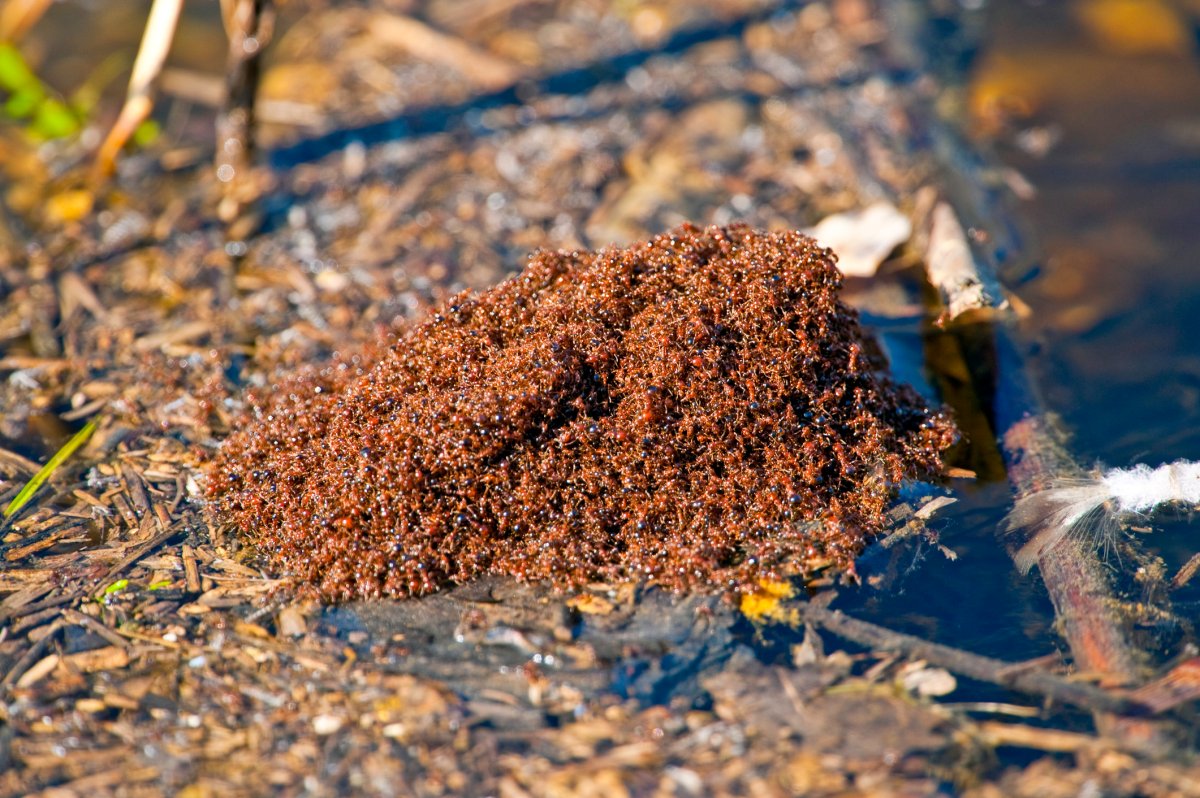
Fire ants do not simply move into a lawn. They occupy it like an extremely organized army with no respect for property lines, picnic blankets, or bare ankles. One day the grass looks peaceful; the next, several reddish-brown mounds have appeared beside the driveway, play area, or vegetable garden.
Learning how to get rid of fire ants requires more than knocking down the visible mound. Most of the colonyincluding the queen, developing ants, and thousands of workersmay be hidden underground. A successful fire ant treatment must reach that colony rather than merely annoy the workers standing near the surface.
The most reliable approach is usually a combination of slow-acting bait and targeted mound treatment. This strategy controls colonies across the yard while providing faster relief where ants create an immediate hazard. The five methods below explain how to use that approach safely, when a nonchemical option may help, and which popular home remedies belong in the internet’s junk drawer.
Important note: Pesticide products, approved treatment sites, application rates, and safety restrictions vary. Read the entire product label before every application and follow it exactly. The label determines where and how a pesticide may legally be used. Keep children and pets away for the period specified on the label.
Make Sure You Are Dealing With Fire Ants
Before launching a full-scale lawn campaign, confirm the pest’s identity. Imported fire ants are typically reddish-brown, although workers within the same colony vary noticeably in size. Their nests often form loose, dome-shaped soil mounds without an obvious central entrance. After a mound is disturbed, ants rapidly swarm up nearby objects and may sting repeatedly.
Do not test a suspected colony by kicking it, poking it with your hand, or standing directly over it. Observe from a safe distance. When identification is uncertain, photograph the ants and mound and contact a county Cooperative Extension office or licensed pest management professional. Other ant species may require different baits or control techniques.
Choose Treatment Based on the Infestation
A few isolated mounds can often be managed with individual mound treatments. A lawn dotted with colonies generally requires broadcast bait over the entire affected area. Large or recurring infestations usually respond best to the two-step method: broadcast bait first, then treat dangerous or surviving mounds approximately one to two weeks later.
Fire ant control is suppression, not a one-time eviction with a lifetime warranty. Colonies can return from neighboring land, flood-prone areas, or newly mated queens. Monitoring and occasional retreatment are normal parts of managing fire ants in regions where they are established.
Method 1: Broadcast Fire Ant Bait Across the Yard
Broadcast bait is usually the best starting point when numerous mounds are scattered across a lawn. Unlike a contact insecticide that kills ants immediately, bait works slowly. Foraging workers collect the granules, carry them into the nest, and distribute the active ingredient through the colony. Depending on the active ingredient and environmental conditions, noticeable control may take several days or several weeks.
How to Apply Broadcast Bait
- Choose a product specifically labeled as fire ant bait for the site being treated.
- Use fresh, properly stored bait. Oil-based bait can become rancid or lose attractiveness after exposure to heat or moisture.
- Apply it when the ground and grass are dry and no rain or irrigation is expected during the label’s required interval.
- Confirm that ants are actively foraging before treating.
- Distribute the exact labeled amount evenly across the treatment area.
A quick foraging test can prevent a wasted application. Place a small piece of oily food, such as a potato chip, nearnot onthe mound. Check it after several minutes. If fire ants are feeding, conditions may be suitable for baiting. Extension guidance commonly identifies warm periods, often with temperatures between roughly 70 and 95 degrees Fahrenheit, as favorable for foraging, although the product label remains the final authority.
Do not water bait into the soil unless the label specifically directs you to do so. Bait must remain attractive long enough for workers to collect it. Applying extra product will not make it work twice as fast; it may simply waste pesticide and increase environmental risk.
Best for: Large lawns, numerous colonies, preventive seasonal control, and properties where treating every mound individually would require the patience of a saint.
Method 2: Treat Individual Mounds With Fire Ant Bait
Individual mound bait uses the same colony-sharing principle as broadcast bait but concentrates the application around a specific nest. This method is useful when only a few mounds are present or when a colony appears between scheduled yard-wide applications.
How to Use Mound Bait Correctly
Do not disturb the mound before baiting. If the nest is kicked, flattened, or soaked, the workers may shift from foraging to emergency repair mode. Apply the labeled amount around the mound where ants naturally travel rather than dumping a large pile directly on top. Some labels call for a circular distribution around the nest; others provide different instructions.
Because mound bait is slow acting, it is not ideal beside a doorway, sandbox, utility box, or other location requiring immediate control. In those situations, use a properly labeled fast-acting mound treatment or contact a professional. For less urgent colonies, mound bait can provide good control with less pesticide than a broad contact treatment.
Best for: Small properties, isolated colonies, follow-up treatment, and homeowners who prefer a targeted application.
Method 3: Use a Liquid Mound Drench
A liquid mound drench is one of the fastest ways to control a dangerous fire ant colony. The diluted insecticide is poured over and around the mound so it travels through the nest’s underground tunnels. Unlike bait, a drench depends on direct contact, which means thorough saturation is essential.
Steps for Drenching a Fire Ant Mound
- Select a pesticide specifically labeled for fire ant mound drenching in the treatment area.
- Wear the protective clothing and equipment listed on the label.
- Mix only the amount required, using the exact labeled dilution.
- Apply some solution around the mound’s outer perimeter to intercept escaping ants.
- Slowly soak the mound without creating excessive runoff.
Many extension recommendations note that one or more gallons of finished solution may be needed to penetrate a mature nest, but the correct volume depends on the product label, mound size, and soil conditions. A quick splash on the mound’s peak may kill visible workers while leaving the queen and most of the colony untouched.
Avoid treating immediately after disturbing the mound. Do not pour pesticide into storm drains, ponds, wells, vegetable beds, or other sites that are not listed on the label. Never combine products unless the labels explicitly permit that mixture. Chemistry experiments belong in laboratories, not beside the hydrangeas.
Best for: Mounds beside walkways, patios, play spaces, gates, mailboxes, pet areas, and other high-traffic locations requiring faster control.
Method 4: Apply a Labeled Dry Mound Treatment
Dry mound treatments include contact granules, dusts, and certain products that must be watered into the nest after application. These products can act faster than bait, but they should not be confused with bait granules. The packages may look similar while the application methods are completely different.
Know Which Product You Purchased
A bait is food that workers carry into the colony. A contact granule is an insecticide intended to release its active ingredient into the soil, often after watering. A dust generally works when ants contact the dry material. Applying one product as though it were another can reduce effectiveness and violate the label.
For a granular mound treatment, measure the amount specified for one mound and distribute it exactly as directed. If watering is required, use the stated volume and apply it gently enough to avoid washing the product away. Dust products should be applied only in the quantity and location allowed by the label; more dust does not necessarily improve penetration.
Keep treatments away from edible crops unless the product is specifically approved for that use. A fire ant product labeled for lawns may not be legal or appropriate in a vegetable garden, pasture, playground, or around livestock.
Best for: Fast, targeted treatment when a drench would be inconvenient and the product label allows application at the site.
Method 5: Drench an Isolated Mound With Very Hot Water
Very hot water is one of the few nonpesticide home treatments supported by at least some research and extension experience. However, it is less dependable than properly applied bait or a labeled insecticide. Studies and extension recommendations commonly report elimination rates ranging from about 20 to 60 percent, meaning surviving ants may rebuild or relocate.
How Hot-Water Treatment Works
Approximately 2 to 3 gallons of very hot or boiling water are slowly poured onto the mound. The treatment is more likely to reach ants and brood when they are relatively close to the surface, such as during cool, sunny morning conditions.
This method carries serious disadvantages. Transporting several gallons of near-boiling water creates a scald hazard. The water can kill turf, flowers, roots, and soil organisms. It should never be attempted where children, pets, unstable footing, electrical equipment, irrigation controls, or valuable plants are nearby.
Wear closed-toe footwear, long pants, and heat-resistant gloves. Use a sturdy container that can be carried safely, approach without standing on the mound, and pour slowly. Expect to retreat surviving colonies or switch to another control method.
Best for: One or two isolated mounds in open ground where temporary turf damage is acceptable and pesticide use is undesirable.
The Most Effective Overall Plan: Use the Two-Step Method
For a heavily infested lawn, the five methods above are not equally useful as stand-alone solutions. The most widely recommended management strategy is the two-step method:
- Broadcast fire ant bait over the affected lawn while ants are actively foraging.
- Wait approximately 7 to 14 days, or follow the interval specified by the product guidance.
- Treat surviving nuisance mounds with an individual bait, drench, contact granule, dust, or another labeled mound treatment.
The broadcast application reaches colonies that are visible as well as young nests that have not formed obvious mounds. The second step provides faster control of colonies near areas used by people or pets. Spring and fall are often favorable treatment periods in the southern United States, but local weather, ant activity, and label restrictions matter more than the date printed on the calendar.
Fire Ant Home Remedies That Do Not Work
The internet offers enough fire ant remedies to stock a very confused pantry. Grits, cornmeal, baking soda, vinegar, coffee grounds, cinnamon, molasses, wood ash, club soda, and mixtures from neighboring mounds are commonly promoted as colony killers. Research-based extension guidance does not support these materials as reliable ways to eliminate fire ant colonies.
Repelling or killing a few workers is not the same as killing the queen. A disturbed colony may simply relocate and build another mound several feet away, giving the impression that the treatment workeduntil the tiny empire reappears beside the patio.
Never pour gasoline, kerosene, diesel fuel, bleach, motor oil, or other flammable or contaminating liquids onto a mound. These substances can injure people, damage plants, pollute soil and groundwater, and create fire hazards without reliably controlling the colony.
How to Prevent Fire Ants From Taking Over Again
No treatment permanently prevents reinvasion, but several practices can reduce surprises and catch new colonies before they become large.
- Inspect the lawn regularly, especially after warm rain or soil disturbance.
- Check sod, mulch, hay, soil, landscape equipment, and potted plants before moving them.
- Follow federal and state quarantine rules when transporting regulated materials from infested areas.
- Use fresh bait preventively when local extension guidance and the label recommend seasonal treatment.
- Coordinate treatment with neighbors when colonies repeatedly move across property lines.
- Seal exterior cracks and gaps if ants are entering the home.
- Clean spilled pet food, grease, and other accessible food that attracts foraging ants near structures.
Imported fire ants can hitchhike in soil, plants, hay, and soil-moving equipment. USDA quarantine programs regulate movement of certain materials from infested areas to help slow their spread. Homeowners purchasing plants or landscaping materials should use reputable suppliers and inspect items before bringing them home.
When to Hire a Pest Control Professional
Professional help is sensible when a property has dozens of mounds, infestations repeatedly return, or the ants occupy sensitive locations. Never pour liquids or apply ordinary lawn pesticides into electrical equipment, air-conditioning units, utility boxes, well housings, or irrigation controls. Fire ants can damage electrical components, but treating those areas incorrectly can create a much larger emergency.
Consider professional treatment when:
- Colonies are inside walls, equipment, or utility housings.
- A family member has a known severe insect-sting allergy.
- Fire ants are established around a school, playground, kennel, or public area.
- The infestation covers a large property or extends into neighboring land.
- Repeated do-it-yourself treatments have failed.
- You cannot identify a product labeled for the intended site.
A licensed pest management professional can identify the species, select products approved for the site, calculate treatment rates, and establish a monitoring schedule.
What to Do After a Fire Ant Sting
Brush ants off immediately because they can sting more than once. Wash the affected skin with soap and water and apply a cool compress. Avoid scratching or breaking the small pustules that often develop, since damaged skin can become infected.
Seek emergency medical assistance immediately if the person develops difficulty breathing, throat or facial swelling, widespread hives, dizziness, fainting, vomiting, or other signs of a severe allergic reaction. Multiple stings may also require prompt medical evaluation, particularly in children, older adults, and people with existing health conditions.
Practical Experiences: What Homeowners Learn About Fire Ant Control
The following scenarios are illustrative composites based on common homeowner experiences and research-based extension recommendations. They show why the details of fire ant treatment matter as much as the product chosen.
Experience 1: Treating Only the Mounds You Can See
A homeowner notices six mounds after a weekend rain and drenches every one. By the next week, the visible mounds appear inactive, so the problem seems solved. Two weeks later, eight smaller mounds emerge across the lawn.
The drench may have eliminated some colonies, but other nests were too young or too deep to be noticed. Newly established colonies also may have moved in from adjacent land. Adding a broadcast bait application would have allowed foraging workers from hidden colonies to collect treatment. This is why yard-wide bait is usually more efficient than playing an endless game of mound whack-a-mole.
Experience 2: Applying Bait Before Heavy Rain
Another homeowner checks the forecast, sees only a small chance of rain, and applies bait in the afternoon. A thunderstorm arrives that evening and soaks the yard. Several weeks later, the fire ants remain active.
Most fire ant baits contain an oil-based food attractant. Moisture can reduce their appeal or spoil the granules before workers collect them. The better approach is to wait for a dry treatment window that satisfies the product label. Testing ant activity with a small food item near a mound can also confirm that workers are foraging before the entire yard is treated.
Experience 3: Disturbing a Mound Before Treatment
A person decides to flatten a mound with a shovel and then sprinkle bait over the damaged soil. The ants rush out, but they show little interest in carrying away the bait.
Disturbance triggers a defensive response. Workers focus on protecting brood, repairing tunnels, or relocating the colony rather than gathering food. Bait works best when the nest is left undisturbed and workers are following their ordinary foraging routine. When using a drench or dry contact treatment, disturbing the mound beforehand can also encourage ants to escape before the product penetrates the colony.
Experience 4: Confusing Contact Granules With Bait
A homeowner purchases a bag of granular fire ant killer and assumes all granules work the same way. The product is scattered across dry grass but is not watered in, even though its label requires irrigation after application. The treatment produces disappointing results.
Granular appearance does not reveal how a product works. Bait must be carried away by ants and generally should not be watered. Contact granules may need moisture to release their active ingredient into the soil. Reading the application directionsnot merely the marketing language on the front of the bagprevents this expensive mix-up.
Experience 5: Expecting Permanent Elimination
After a successful spring treatment, a yard remains nearly mound-free through summer. New colonies appear in fall, and the homeowner assumes the original product failed.
In reality, reinvasion is expected in fire ant territory. Queens can establish new nests, while established colonies can expand from untreated neighboring properties. Fire ant management is closer to mowing or weed control than replacing a broken appliance: occasional maintenance is part of the job.
The most satisfying results usually come from setting realistic goals. Instead of expecting every ant to disappear forever, aim to reduce colony numbers, remove mounds from high-traffic areas, and prevent large infestations from becoming established. Monitor after treatment, record the application date and product used, and retreat only as permitted by the label.
Conclusion
The best way to get rid of fire ants is to treat the colony rather than attack only the visible mound. For widespread infestations, broadcast a fresh fire ant bait when workers are actively foraging. Follow with an individual mound treatment for colonies that survive or create an immediate safety risk.
Liquid drenches and dry contact products provide faster control when used exactly as labeled. Individual mound bait offers a more targeted, slower-acting option. Very hot water may eliminate an isolated nest without pesticide, but its uneven success rate, burn risk, and potential plant damage make it a limited solution.
Skip the grits, gasoline, club soda, vinegar, and other improvised remedies. A dry-weather application, accurate measurement, realistic expectations, and regular monitoring will do far more for your lawnand far less damage to everything around it.