A tight throat can turn a favorite song into a wrestling match. You aim for a clean note, but your jaw locks, your shoulders creep upward, and your neck starts doing work that should be shared by your breath and voice. Anxiety can create a similar feeling even when you are not singing: pressure, dryness, a “lump,” or the sense that the throat will not relax.
Many temporary cases improve with gentle breathing, posture changes, vocal rest, and more efficient technique. The key word is gentle. Your larynx is not a stuck jar lid, so forcing it open usually creates more tension. This guide explains how to relax throat muscles safely, protect your singing voice, calm anxiety-related tightness, and recognize symptoms that need professional care.
Medical note: This article is educational and cannot diagnose the cause of throat tightness. Sudden trouble breathing, noisy breathing, rapidly increasing swelling, fainting, blue lips, drooling, or severe difficulty swallowing requires urgent medical care.
Why Your Throat Feels Tight
Voice begins when air from the lungs passes through the vocal folds inside the larynx, or voice box. Muscles in the larynx coordinate pitch and vocal-fold closure, while the jaw, tongue, neck, ribs, and breathing muscles influence how efficiently you speak and sing.
When breath, vibration, and resonance share the workload, the voice can feel free. When they do not, the outer throat muscles may squeeze in an attempt to help. The result may be vocal fatigue, reduced range, hoarseness, a pressed tone, or the feeling that every note must be pushed uphill.
Singing-Related Tension
Singers often tighten the throat when they sing too loudly, reach beyond a comfortable range, rehearse while hoarse or sick, skip warming up, lift the chin, clench the jaw, or try to manufacture “support” by pushing harder. Persistent excessive muscle activity may be associated with muscle tension dysphonia, which can occur alone or as compensation for another vocal problem.
Anxiety-Related Tension
Anxiety activates the stress response. Breathing may become faster and higher in the chest, while the jaw, neck, and shoulders brace. Some people notice a lump-like sensation even though they can still breathe and swallow. Repeatedly checking the throat can intensify the feeling and create a loop: tension causes worry, and worry creates more tension.
Reflux, allergies, infection, asthma, medication-related dryness, thyroid problems, and vocal-fold injuries can cause similar symptoms. Relaxation may help, but persistent or worsening symptoms should not automatically be blamed on anxiety.
A 10-Minute Throat Relaxation Routine
Use this routine before singing, after a stressful event, or when your voice feels overworked. Nothing should hurt. Stop if you develop pain, dizziness, breathing difficulty, or a sudden voice change.
1. Reset Your Posture
Sit or stand with both feet supported. Keep your knees soft, chin level, and neck long. Roll your shoulders up, back, and down, then let them hang. Good posture does not mean standing like a nervous toy soldier; it means giving your ribs, jaw, and neck room to move.
2. Release Your Jaw and Tongue
Place the tongue tip behind the lower front teeth and leave a small space between the molars. Massage the chewing muscles at the sides of the face with slow circles. Silently mouth “yah-yah-yah,” allowing the jaw to swing easily. Then let the tongue rest wide and forward rather than pulling backward.
3. Breathe Low and Quietly
Place one hand on the lower ribs and one on the upper chest. Inhale softly through the nose for about four counts, allowing the lower ribs and abdomen to expand. Exhale through lightly pursed lips for roughly six counts. Keep the shoulders quiet and avoid oversized breaths. Repeat five times.
4. Try a Small Yawn-Sigh
Imagine the beginning of a gentle yawn. Let the jaw release and the back of the mouth widen without forcing it. Exhale on a soft, descending “haa” or “hoo” three to five times at a comfortable pitch. The sound should feel lazy, not breathy, scratchy, or dramatic.
5. Hum with Easy Resonance
Hum lightly on “mm” near your speaking pitch. Aim for a mild buzz around the lips instead of pressure in the throat. Make a few small glides up and down. Keep the volume modest; humming is an efficiency exercise, not a competition with the refrigerator.
6. Add a Lip Trill or Straw Exercise
Let the lips flutter gently while adding an easy pitch, or vocalize through a regular drinking straw using sustained notes and small glides. You may also place the straw in a cup with a little water and make light bubbles. These semi-occluded vocal tract exercises can help the vocal folds work with less collision and effort. Stop if you feel pressure or become lightheaded.
7. Rest for One Minute
Finish with silence. Do not whisper, test your highest note, or immediately repeat the phrase that caused trouble. Notice whether your jaw, tongue, shoulders, and breathing feel easier.
How Singers Can Prevent Throat Tension
Warm Up Gradually
Start with easy breathing, humming, lip trills, straw exercises, and midrange patterns. Increase pitch, volume, and complexity slowly. A warm-up prepares the instrument; it is not an early-morning trial proving that your highest note still exists.
Use Steady Breath Instead of Throat Force
Think of breath as continuous fuel, not a blast of air. Let the ribs stay comfortably open during a phrase without clamping the abdomen. If a note requires a raised chin, rigid tongue, or squeezed neck, lower the key, reduce the volume, or shorten the session. A qualified singing teacher can help with technique, while a voice-specialized speech-language pathologist can assess persistent strain or fatigue.
Hydrate and Respect Dry Air
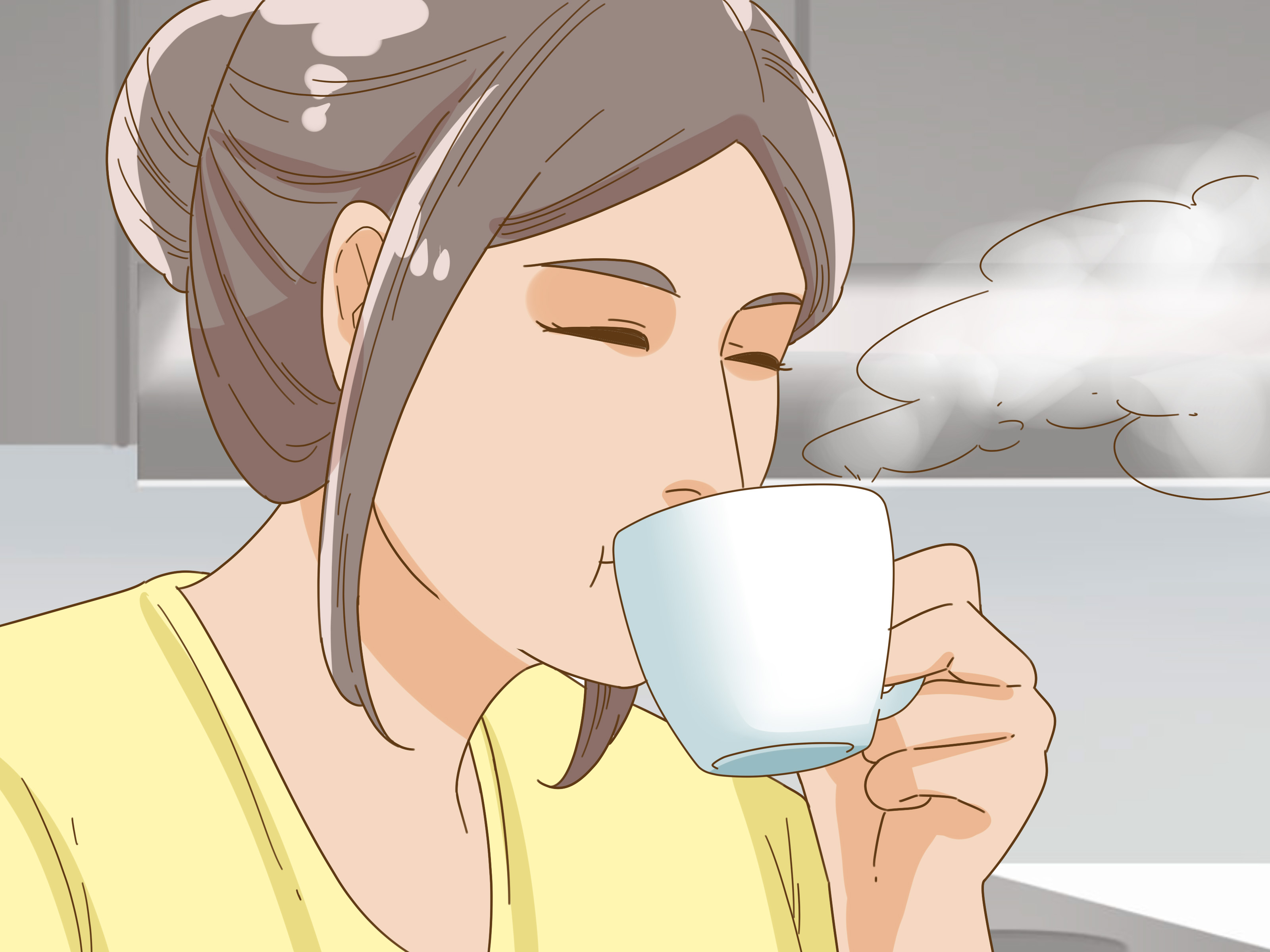
Drink water regularly throughout the day. A humidifier may help when indoor air is dry. Warm, nonirritating drinks can soothe the mouth and throat, but they do not directly coat the vocal folds because the airway closes when you swallow.
Be cautious with numbing sprays and lozenges. Reduced sensation may hide warning signs and encourage overuse. Some medications, including certain decongestants, may increase dryness; ask a clinician or pharmacist before changing prescribed treatment.
Clear Your Throat Less Aggressively
Repeated hard throat clearing brings the vocal folds together forcefully. Try swallowing, sipping water, or using a gentle breathy “huff” instead. If mucus, coughing, reflux symptoms, or the urge to clear your throat continues, seek an evaluation to identify the cause.
Schedule Recovery
Build quiet breaks into rehearsals and workdays. Use amplification instead of competing with background noise. Do not sing through significant hoarseness, laryngitis, or pain. Whispering is not always restful; easy speech or true silence is generally kinder to a tired voice.
How to Relax an Anxiety-Tightened Throat
Name What Is Happening
Try saying, “My body is bracing, and I can help it settle.” This is more useful than repeatedly checking whether your throat is open. It does not mean ignoring warning signs; it means recognizing a familiar stress pattern after urgent causes have been ruled out.
Lengthen the Exhale
Inhale quietly through the nose and exhale slowly through pursed lips. Keep each breath comfortable. Overbreathing can cause tingling, dizziness, and more alarm, so five calm cycles are better than twenty heroic gulps of air.
Use Progressive Relaxation
Gently tense and release the hands, arms, shoulders, face, abdomen, and legs. Hold each light contraction for a few seconds, then let go. Do not forcefully tense the throat. Simply notice the area and invite it to soften as you exhale.
Ground Your Attention
Name five things you see, four you feel, three you hear, two you smell, and one you taste. Grounding interrupts constant symptom monitoring. Walking slowly, letting the arms swing, or reading one paragraph in an easy voice may also help.
Treat Recurring Anxiety
Breathing exercises are tools, not a complete treatment for every anxiety disorder. If panic, avoidance, health worries, or throat sensations interfere with daily life, consult a licensed mental health professional. Treatment may include psychotherapy, medication, or both.
What Not to Do
- Do not press or aggressively massage the front of your neck. The area contains sensitive structures.
- Do not repeatedly test difficult notes. Constant checking can reinforce tension and overuse.
- Do not sing through sharp pain. Pain is a stop signal, not a motivational quote.
- Do not use numbing products to push through a performance.
- Do not assume every tight throat is anxiety. New, severe, or persistent symptoms need evaluation.
When to See a Doctor or Voice Specialist
See an ear, nose, and throat physician, ideally a laryngologist, when hoarseness or a major voice change lasts more than a few weeks, repeatedly returns, or affects work or singing. Seek care sooner for pain when speaking or swallowing, coughing up blood, a neck lump, unexplained weight loss, frequent voice breaks, loss of range, or a problem following neck injury or surgery.
Singers should also get help when the speaking voice seems normal but the upper range, endurance, flexibility, or control changes noticeably. A voice-care team may include a laryngologist, speech-language pathologist, and singing voice specialist. Looking at the vocal folds matters because muscle tension can be the main problem or a compensation for swelling, lesions, weakness, or another condition.
Experiences: What Throat Relaxation Can Feel Like in Real Life
The following are illustrative composite experiences, not personal medical histories. They show common patterns without suggesting that every person has the same cause.
The Singer Who Kept “Supporting” Harder
One amateur singer noticed that rehearsals became uncomfortable whenever a song moved above her usual range. Her response was to inhale more, tighten her abdomen, raise her chin, and push. The louder she tried, the smaller the sound felt. By the third run-through, her throat felt scraped and her jaw barely moved.
Her turning point was surprisingly unglamorous: she lowered the song by a whole step, practiced the melody on a lip trill, and marked difficult phrases at half volume. She stopped treating breath support as an abdominal contest. With steadier airflow and a looser jaw, the notes became clearer. No single trick “opened” her throat; reducing the demand allowed coordination to return.
The Anxious Presenter with a Lump Sensation
A project manager often felt a lump in his throat before presentations. He could breathe and swallow, but he tested both every few seconds. Each check made the sensation more noticeable. He began arriving early, releasing his shoulders, and taking quiet nasal inhales with longer exhalations. Instead of repeatedly clearing his throat, he took small sips of water and deliberately slowed his first sentence.
The sensation did not always disappear before he spoke. What changed was his interpretation. He learned that a familiar tension feeling could be uncomfortable without being dangerous. Because it kept returning, he discussed it with his clinician and worked with a therapist on performance anxiety. The combination helped more than breathing alone.
The Weekend Vocalist Who Ignored Fatigue
A weekend vocalist could sing comfortably for forty minutes but regularly rehearsed for two hours. When his voice became husky, he whispered between songs and drank very hot tea, assuming both counted as recovery. By Monday, his speaking voice was rough.
He changed to shorter rehearsal blocks with silent breaks, used a microphone instead of competing with the band, and stopped when hoarseness appeared. Warm drinks still felt pleasant, but he no longer treated them as armor. After one persistent episode, an ENT ruled out a serious problem, and a voice therapist helped him reduce neck effort. His largest improvement came from respecting fatigue earlier.
The High-Note Checker
Another singer became anxious after one cracked note. For several days, she tested it every hour to see whether it had “returned.” The repeated checking increased tension and reduced confidence. She finally took a day of relative voice rest, resumed with gentle midrange exercises, and avoided the target note until the rest of her voice felt easy.
When she returned to the phrase, she approached it through a straw exercise and then sang the words at moderate volume. The note was not perfect, but it was no longer a crisis. Her experience highlighted a useful principle: monitoring can become overuse. Sometimes the quickest route back to a comfortable voice is to stop interrogating it.
The Shared Lesson
Across these situations, improvement came from lowering effort, reducing repeated checking, improving breath and posture, and seeking help when symptoms persisted. Throat relaxation is usually less about commanding one tiny muscle to behave and more about reorganizing the whole system: breath, jaw, tongue, neck, attention, and workload.
Conclusion
To relax throat muscles affected by singing or anxiety, release the jaw and shoulders, breathe quietly into the lower ribs, lengthen the exhale, and use gentle sounds such as humming, lip trills, or straw phonation. Stay within a comfortable range, hydrate consistently, take vocal breaks, and stop when you feel pain or significant hoarseness.
For anxiety-related tightness, reduce symptom checking and calm the wider stress response with breathing, grounding, and progressive relaxation. Persistent voice changes, swallowing problems, pain, or breathing symptoms should be evaluated. Your throat should participate in singingnot carry the entire production on its back.