Note: This HTML article is ready for web publishing and intentionally excludes inline source links, while being based on current, real horticultural guidance.
Eggshells are the tiny white helmets of breakfast: fragile in your hand, surprisingly useful in the garden, and always showing up in the compost pile like they pay rent. If you grow tomatoes, peppers, herbs, houseplants, flowers, or container vegetables, you may have wondered whether eggshells for plants are truly helpful or just another gardening hack wearing muddy boots.
The honest answer is: eggshells can be useful, but they are not magic fairy dust. They are mainly valued because they contain calcium carbonate, a mineral that can contribute calcium to soil over time. Calcium helps plants build strong cell walls and supports healthy growth, but plants cannot instantly sip calcium from a chunk of eggshell like it is a smoothie. Eggshells must break down first, and that process can be slow unless you prepare them correctly.
This guide explains how to use eggshells in the garden or in pots the smart way: cleaned, dried, crushed, composted, and applied with realistic expectations. We will cover what eggshells do, what they do not do, how to use them for garden beds and container plants, and how to avoid the most common mistakes. Your omelet leftovers are about to get a second career.
Why Gardeners Use Eggshells for Plants
Gardeners love eggshells because they are free, easy to save, and naturally rich in calcium. Instead of tossing shells into the trash, you can turn them into a slow-release soil amendment. This makes them especially appealing for gardeners who enjoy composting, low-waste living, organic gardening, or simply squeezing one more use out of kitchen scraps.
Calcium is important for plant structure. It supports cell wall development, helps growing tips function properly, and plays a role in fruit quality. Crops like tomatoes, peppers, eggplants, squash, cucumbers, lettuce, cabbage, and many ornamentals all need calcium as part of balanced nutrition. However, most garden soils already contain some calcium. The bigger issue is often whether the plant can access and move that calcium efficiently.
That is why eggshells should be viewed as a long-term soil booster rather than an emergency fertilizer. They work best when used before planting, mixed into compost, or added to potting mix in modest amounts. Used well, they become part of a healthy soil routine. Used poorly, they become crunchy garden confetti.
What Eggshells Actually Add to Soil
Eggshells are mostly calcium carbonate, the same general type of compound found in agricultural lime. This is why people often connect eggshells with calcium-loving plants. But unlike a fast-acting liquid fertilizer, eggshells release nutrients slowly as they weather, dissolve, and decompose.
Calcium for Stronger Plant Growth
Calcium helps plants develop firm tissues. In fruiting crops, poor calcium movement can contribute to problems such as blossom-end rot in tomatoes and peppers. In leafy crops, calcium-related stress can show up as tip burn. But here is the big tomato-shaped warning sign: adding eggshells today will not fix a calcium disorder tomorrow.
Plants need consistent moisture to move calcium from the soil into roots and through plant tissues. If the soil swings from bone-dry to swampy, calcium transport suffers even when calcium is present. That is why good watering practices, healthy roots, proper soil pH, and balanced fertilizing matter just as much as calcium supply.
Small Amounts of Other Minerals
Eggshells may contain trace amounts of other minerals, but calcium is the headline act. They are not a complete fertilizer. They do not supply meaningful nitrogen, phosphorus, or potassium in the way compost, manure, fish emulsion, or balanced organic fertilizer might. Think of eggshells as a calcium-supporting amendment, not a full plant meal.
How to Prepare Eggshells for Plants
Preparation makes the difference between useful eggshell fertilizer and a garden bed that looks like a breakfast crime scene. Whole shells break down very slowly. Finely ground shells break down faster because more surface area touches soil microbes, moisture, and natural acids.
Step 1: Rinse the Shells
After cracking eggs, rinse the shells under water to remove leftover egg white or yolk. This reduces odor and helps avoid attracting pests. You do not need to scrub them like fine china, but do not leave them gooey. A clean shell is a polite shell.
Step 2: Dry Them Completely
Spread rinsed shells on a towel, tray, or plate and let them air-dry. You can also dry them in a low oven for several minutes if you want them extra brittle. Dry shells crush more easily and store better. Moist shells can smell unpleasant and may clump when ground.
Step 3: Crush or Grind
For the fastest breakdown, grind eggshells into a powder using a blender, food processor, mortar and pestle, or coffee grinder reserved for garden use. If you only crush them by hand, they will still work eventually, but they may sit in the soil for many months. Powder is best for pots, seedling mixes, and vegetable beds where you want better contact with soil.
Step 4: Store in a Dry Jar
Once dry and crushed, keep eggshell powder in a labeled jar or container. Store it in a cabinet, shed, or pantry until planting time. A simple jar of eggshell powder is one of the easiest homemade garden amendments to keep on hand.
How to Use Eggshells in Garden Beds
Garden beds are the easiest place to use eggshells because outdoor soil has more microbial activity, weather exposure, and room for gradual breakdown. Still, moderation matters. More eggshells do not automatically mean healthier plants.
Mix Eggshell Powder Before Planting
Before planting tomatoes, peppers, eggplants, broccoli, cabbage, kale, or flowers, sprinkle a small amount of finely ground eggshell powder into the planting area and mix it into the top few inches of soil. A practical amount is one to two tablespoons per planting hole for larger vegetables, or a light dusting over a square foot of garden soil.
Do not dump a mountain of eggshells into one hole. Roots prefer balanced soil, not a calcium cave. Mixing the powder through the soil helps it break down more evenly and avoids creating concentrated pockets.
Add Eggshells to Compost
Compost is one of the best places for eggshells. Add rinsed, crushed shells to your compost pile along with vegetable scraps, leaves, coffee grounds, grass clippings, and garden trimmings. Over time, the shells become part of the finished compost and contribute minerals back to the garden.
For best results, crush the shells before adding them. Large pieces may remain visible even after the compost looks finished. This is not harmful, but it can be annoying if you prefer smooth, dark compost instead of compost with crunchy polka dots.
Use Eggshells in Worm Bins
Pulverized eggshells are useful in vermicomposting because worms need grit to help process food. A small handful of finely ground eggshells added occasionally to a worm bin can help provide that grit while also contributing calcium. The key word is “finely.” Worms do not want to wrestle a half shell like it is a tiny ceramic bathtub.
How to Use Eggshells for Potted Plants
Container gardening is different from in-ground gardening. Pots have limited soil volume, faster drying, and less natural buffering. That means you should use eggshells more carefully in pots than in garden beds.
Mix a Small Amount Into Potting Mix
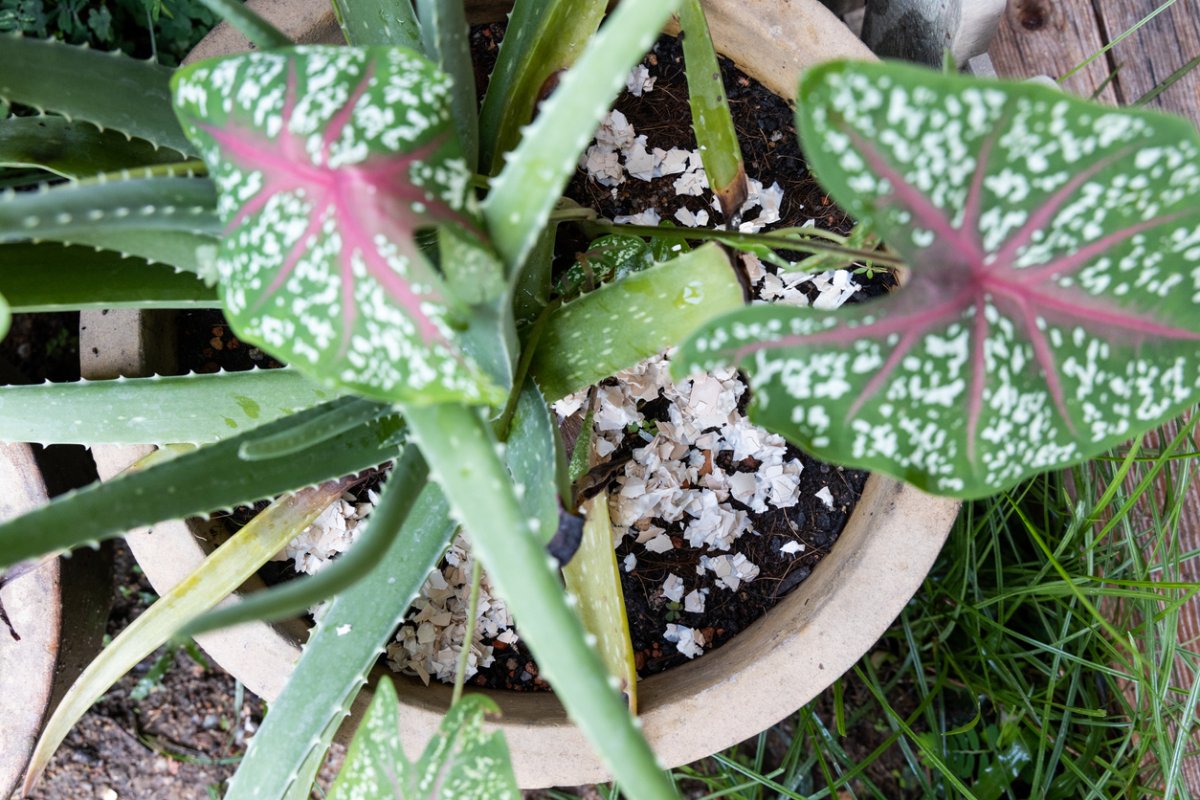
For potted vegetables, herbs, and flowers, mix about one teaspoon of finely ground eggshell powder per gallon of potting mix. Blend it thoroughly before planting. This small amount supports long-term calcium availability without overwhelming the container.
Eggshells are especially reasonable for potted tomatoes, peppers, basil, geraniums, and leafy greens, but they should not replace regular container fertilizer. Most potting mixes need balanced feeding because nutrients wash out through drainage holes over time.
Top-Dress Lightly
You can sprinkle a very thin layer of eggshell powder around the surface of a potted plant, then gently scratch it into the top half-inch of mix. Water afterward. Avoid leaving large shell pieces sitting on top, especially indoors, because they can look messy and may attract curiosity from pets, children, or that one roommate who asks too many questions.
Avoid Overuse With Acid-Loving Plants
Because eggshells are calcium carbonate-based, they are not ideal as a regular amendment for plants that prefer acidic conditions, such as blueberries, azaleas, camellias, and some rhododendrons. In pots, where soil chemistry changes faster, be especially cautious. If you grow acid-loving plants, use amendments designed for them instead.
Eggshell Water: Does It Work?
Eggshell water is made by steeping cleaned eggshells in water, sometimes after boiling. The idea is that some calcium may move into the water and become easier to apply around plants. It is simple, safe when prepared cleanly, and may offer a mild mineral boost, but it should not be treated as a powerful fertilizer.
How to Make Simple Eggshell Water
Crush four to six clean, dry eggshells and place them in a pot with about one quart of water. Bring it to a boil, turn off the heat, and let it steep overnight. Strain out the shells and use the cooled water around outdoor plants or container plants. Apply it to the soil, not the leaves.
This method is best used as a gentle supplement. It will not rescue a severely deficient plant, and it will not replace soil testing, proper watering, or balanced fertilization. Still, if you enjoy homemade garden routines, eggshell water is easy and low-risk when used moderately.
Do Eggshells Prevent Blossom-End Rot?
This is the big question, especially for tomato growers. Blossom-end rot appears as a dark, sunken, leathery patch on the blossom end of tomatoes, peppers, squash, and related crops. It is connected to calcium problems in developing fruit, but the cause is often not a simple lack of calcium in the soil.
In many gardens, blossom-end rot happens because plants cannot move calcium properly. Irregular watering, drought stress, damaged roots, high salts, excessive nitrogen, or rapid growth can all interfere with calcium uptake and transport. Adding eggshells at planting may help support long-term calcium levels, but sprinkling shells around a stressed tomato plant in July is unlikely to stop blossom-end rot already in motion.
Better Ways to Reduce Blossom-End Rot
Keep soil consistently moist, especially during flowering and fruiting. Use mulch to reduce moisture swings. Avoid over-fertilizing with high-nitrogen products, which can push lush leafy growth at the expense of fruit stability. Do not cultivate deeply around tomato roots. Test your soil if blossom-end rot happens year after year.
Eggshells can be part of the prevention plan, but they should be the backup singer, not the lead vocalist.
Do Eggshells Stop Slugs and Snails?
Many gardeners have heard that crushed eggshells create sharp barriers that slugs and snails refuse to cross. Unfortunately, this claim is shaky. Slugs are soft-bodied, yes, but they are also determined little slime tractors. Coarse eggshells may annoy them, but they are not a reliable control method.
If slugs are eating your seedlings, use proven methods: remove hiding spots, water in the morning, handpick at dusk, use traps carefully, encourage natural predators, and consider iron phosphate slug bait according to label directions. Eggshells may add texture to the soil surface, but they should not be your main slug defense.
Best Plants to Use Eggshells Around
Eggshells are most useful around plants that appreciate steady calcium availability and balanced soil conditions. Good candidates include tomatoes, peppers, eggplants, broccoli, cabbage, kale, lettuce, beans, peas, squash, cucumbers, roses, geraniums, and many common houseplants.
For vegetables, apply eggshell powder before planting or mix it into compost. For flowers, add it lightly around the root zone or blend it into soil during bed preparation. For houseplants, use tiny amounts and avoid frequent applications. Indoor pots are not the place to conduct a calcium avalanche.
Common Mistakes When Using Eggshells for Plants
Using Whole Shells
Whole eggshells take a long time to break down. If you bury half shells in a garden bed, do not be surprised if you find them again next season looking smug and unchanged. Crush or grind them first.
Expecting Instant Results
Eggshells are slow-release. They support long-term soil health, especially when composted or powdered, but they are not a fast fertilizer. If a plant is actively struggling, diagnose watering, light, pests, roots, pH, and nutrient balance before blaming calcium alone.
Skipping Soil Testing
A soil test tells you what your garden actually needs. Without one, adding amendments is partly guesswork. If your soil already has plenty of calcium or has a high pH, eggshells may not help much. Testing every few years is a smart habit for productive vegetable gardens and perennial beds.
Using Too Much in Pots
Containers are sensitive. A small amount of eggshell powder is enough. Too much can alter the balance of the potting mix and create buildup. When in doubt, use less.
A Simple Eggshell Routine for Gardeners
Here is an easy routine that works for most home gardeners. Rinse shells after cooking. Let them dry in a bowl or tray. Once you have enough, bake them briefly on low heat or air-dry them fully. Grind them into powder. Store in a jar. In spring, mix a small amount into planting holes, compost, or potting mix. During the season, focus on watering consistently and feeding plants with a balanced fertilizer or compost as needed.
This routine keeps eggshells useful without turning them into garden superstition. The goal is simple: waste less, feed the soil slowly, and avoid expecting a breakfast by-product to solve every plant problem from yellow leaves to existential dread.
Gardener’s Field Notes: Real-Life Experience With Eggshells
The first time I used eggshells in the garden, I did what many enthusiastic gardeners do: I crushed them roughly by hand, sprinkled them around tomato plants, stood back, and waited for agricultural greatness. The garden did not burst into applause. The tomatoes grew, but the eggshell pieces stayed stubbornly visible. Months later, while cleaning the bed, I found familiar shell fragments still sitting in the soil like tiny archaeological artifacts from the Age of Breakfast.
That experience taught me the most important eggshell lesson: size matters. The next season, I changed the method. Instead of tossing shells directly into the garden, I rinsed them, dried them on a tray, and ground them into a fine powder. The difference was immediate in terms of usability. The powder mixed into soil cleanly, disappeared into compost, and did not make the garden look like a diner had exploded near the tomatoes.
In raised beds, I found eggshell powder easiest to use during planting. For tomatoes and peppers, I mixed a tablespoon or two into the soil around the planting area, not as a magic cure, but as part of a broader routine that included compost, mulch, and steady watering. The plants performed well, but the biggest improvement came from moisture management. Once I started mulching with straw and watering deeply instead of randomly, blossom-end rot became less frequent. That was the “aha” moment: eggshells were helpful background support, but watering was the real garden boss.
In pots, I became more cautious. A container tomato has less room for error than a tomato in the ground. I used only a small pinch to a teaspoon of eggshell powder per gallon of potting mix, then relied on quality potting soil and regular feeding. For herbs like basil and parsley, I used eggshells sparingly. They did not need much, and overdoing amendments in pots can create more problems than it solves.
Compost turned out to be my favorite eggshell destination. When shells were crushed before going into the compost bin, they blended in much better. Whole shells lingered forever, but powdered shells practically vanished into the pile. I also noticed that adding shells to compost felt more balanced than applying them directly everywhere. Composting lets kitchen scraps, leaves, coffee grounds, and garden waste transform together into something plants truly appreciate.
My least successful experiment was using eggshells as a slug barrier. The slugs were not impressed. They crossed the shells with the confidence of tiny villains in a nature documentary. After that, I stopped pretending eggshells were security guards and used better slug-control habits instead: less evening watering, fewer damp hiding spots, and regular checks around tender seedlings.
The practical takeaway from experience is simple. Eggshells are worth saving if you prepare them well and use them realistically. They are not a complete fertilizer, not a guaranteed pest barrier, and not an instant fix for blossom-end rot. But as a free, low-waste, slow-release calcium amendment, they earn their place in the gardening toolkit. Treat them like a helpful sidekick, and they will not disappoint you. Treat them like a superhero, and your tomatoes may ask for better management.
Conclusion
Eggshells can be good for plants when they are cleaned, dried, finely ground, and used in moderation. They are most valuable as a slow-release calcium source, a compost ingredient, and a gentle mineral addition for garden beds or container mixes. The best results come when eggshells are paired with healthy gardening basics: soil testing, compost, mulch, consistent watering, good drainage, and balanced fertilization.
If you want to use eggshells in the garden, do it thoughtfully. Grind them into powder, mix them into soil before planting, add them to compost, or use a small amount in potting mix. Do not expect them to instantly cure blossom-end rot or scare off every slug in the neighborhood. Eggshells are useful, but they are not tiny white miracle helmets. They are simply one more smart way to turn kitchen waste into garden value.