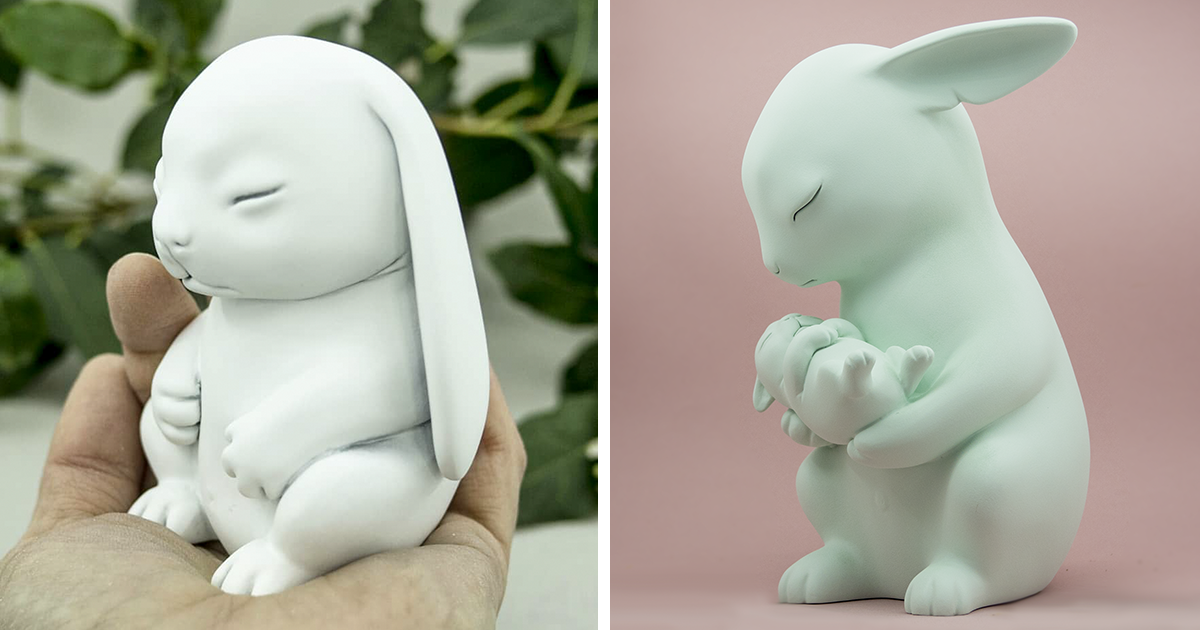
Some animals live in forests, oceans, deserts, and suspiciously cozy laundry baskets. Mine live in sketches first. Then they migrate into resin, get sanded until they are smoother than a polite apology, and finally emerge as small imaginary creatures with quiet faces, round bellies, odd horns, sleepy eyes, and personalities that appear to know your secrets but promise not to tell.
Creating resin sculptures of imaginary animals is part craft, part character design, part chemistry experiment, and part emotional babysitting. The process begins with a question: What would a creature look like if it grew from a mushroom, borrowed ears from a fox, learned patience from a turtle, and then decided to become a tiny household guardian? That is where the fun begins.
Resin sculpture has become especially popular among contemporary artists, art toy makers, fantasy collectors, and DIY creators because it allows delicate shapes, smooth surfaces, translucent effects, and durable finished pieces. Unlike traditional clay or stone, resin can capture tiny details while still feeling modern and dreamlike. For imaginary animal sculptures, that quality is perfect. Resin can look like porcelain, candy, bone, moonlight, river glass, or the shell of a creature that has spent 300 years napping under a fern.
The Charm Of Imaginary Animal Sculptures
Imaginary animals work because they feel both familiar and impossible. A viewer may recognize the curve of a rabbit’s back, the alertness of a deer, the tail of a fox, or the stillness of a frog, but the final creature refuses to belong to any one species. That little refusal is where the magic lives.
Many artists who design fantasy creatures borrow from real-world anatomy. A believable imaginary animal usually needs a body that makes visual sense. Even the strangest creature benefits from practical questions: How does it stand? Where is its weight? Could those wings lift it, or are they purely decorative, like tiny opera capes? Does it look shy, wise, mischievous, sleepy, or mildly disappointed in humanity?
For my resin creatures, I often begin with nature. Seed pods, lizards, moth wings, rounded stones, mushrooms, rabbits, cats, deer, fish, and birds all become ingredients in the visual soup. The goal is not to copy nature but to remix it gently. Think of it as evolution with a sketchbook and fewer survival consequences.
Why Resin Is Such A Powerful Material For Creature Art
Resin is loved by sculptors because it can hold detail, cure into a durable form, and accept many finishes. Depending on the type used, resin can be cast in molds, layered, tinted with pigments, painted with acrylics, polished to a glossy shine, or sealed with matte varnish. For small sculptures, this flexibility is a gift.
Epoxy resin and casting resin are common choices for art projects. Casting resin is often used when an artist needs to pour into a mold and create a solid three-dimensional object. Epoxy resin is also used for coating, sealing, and decorative effects. Some artists use polyurethane resin for fast casts, while others prefer epoxy systems for clarity or slower working time. The right choice depends on the size of the piece, the desired finish, the mold, and the amount of detail needed.
For imaginary animals, resin offers a beautiful contradiction. It is synthetic, yet it can be made to look organic. It starts as liquid, but it becomes solid. It can look fragile while being surprisingly tough. That makes it ideal for creatures that seem like they wandered out of a fairy tale, took one look at the real world, and asked for a quiet shelf.
From Sketch To Strange Little Being
1. Finding The Creature’s Personality
Before I think about materials, I think about mood. Every sculpture needs a personality. A creature with closed eyes may feel meditative. A long-necked creature may seem elegant or awkward, depending on whether it looks like a forest spirit or a sock puppet with ambition. A wide body can create a sense of comfort. Tiny feet can make a sculpture feel vulnerable and funny at the same time.
I usually start with loose sketches. Nothing too precious. The first drawings are allowed to be weird. In fact, they are encouraged to be weird. One may look like a potato with antlers. Another may look like a seal pretending to be a cloud. Somewhere in that chaos, one creature raises its tiny imaginary paw and says, “Excuse me, I exist now.” That is the one worth sculpting.
2. Building The Original Form
Many resin sculptures begin with an original model. This may be sculpted from clay, polymer clay, wax, epoxy putty, or another modeling material. The original is often called the master. It is the first physical version of the creature and the source from which molds or casts may be made.
At this stage, shape matters more than polish. I build the body in simple volumes first: head, belly, legs, ears, horns, tail, wings, or whatever appendages the creature insists on having. A good imaginary animal needs a strong silhouette. If it looks interesting as a shadow, it will probably look interesting on a shelf.
Small adjustments can completely change the character. Move the eyes lower and the animal becomes innocent. Raise the head and it becomes alert. Shorten the legs and suddenly it looks like it needs emotional support crossing a rug. Creature design is full of these tiny decisions.
3. Sanding, Smoothing, And Negotiating With Dust
Sanding is where patience enters the room wearing work gloves. Resin and sculpting materials often need careful smoothing between stages. The surface must be refined so the final piece feels intentional rather than accidentally gnawed by a nervous raccoon.
Fine sanding helps remove rough marks, seams, bubbles, and imperfections. For a soft creature sculpture, touch is important. The viewer may not always handle the work, but the eye can sense smoothness. A polished curve makes the animal feel gentle. A rough texture can suggest bark, stone, scales, or ancient mischief.
Safety matters here. Resin dust should not be inhaled, and uncured resin should not touch bare skin. A responsible studio setup includes gloves, good ventilation, eye protection when needed, and a respirator or dust mask appropriate to the task. Art is romantic, yes, but lungs are also charming and worth keeping.
Mold Making And Casting: The Creature Multiplier
If the sculpture will be reproduced, the next step is mold making. Silicone molds are common because they are flexible and capture fine detail. A mold can be simple or complex depending on the shape. A smooth little blob creature may only need a basic mold. A winged animal with antlers, curled tail, and dramatic ears may require a multi-part mold and a brief conversation with your own life choices.
Once the mold is ready, resin can be mixed and poured. Accurate measuring is crucial. Most resin systems require specific ratios of resin and hardener. Guessing is not recommended unless your artistic goal is “sticky sadness.” Improperly mixed resin may remain soft, cloudy, tacky, or structurally weak.
Bubbles are another classic resin challenge. They can appear during mixing or pouring, especially in detailed molds. Slow stirring, careful pouring, pressure pots, heat tools, or other bubble-reduction techniques may help depending on the resin type. Sometimes a tiny bubble lands in the perfect place and looks like a beauty mark. Usually, however, it parks itself directly on the nose, because resin has comedic timing.
Painting Imaginary Animals
Painting is when the sculpture becomes emotionally specific. A white creature may feel ghostly or peaceful. Soft pastels can suggest childhood memories, candy-colored dreams, or a creature that definitely lives near a moonlit pond. Earth tones make the animal feel ancient and forest-born. Bright colors can make it playful, surreal, or slightly radioactive in the most fashionable way.
Acrylic paint is often used for resin sculptures because it adheres well to prepared surfaces and offers excellent color control. Some artists also use airbrush techniques, pastels, mica powders, inks, or pigments sealed under varnish. The finish matters as much as the color. Gloss makes the creature look wet, magical, or toy-like. Matte finishes feel softer and more natural. Satin finishes sit happily in the middle, like a diplomat with a tiny brush.
Details such as eyelids, blush, claws, spots, stripes, and tiny markings can transform a sculpture. However, restraint is powerful. Not every creature needs elaborate decoration. Some imaginary animals feel most alive when their forms are simple and their expressions are quiet.
The Emotional Language Of Small Sculptures
Imaginary animal sculptures are not just decorative objects. At their best, they create emotional connection. A tiny resin creature can feel protective, lonely, hopeful, sleepy, brave, or tender. Viewers often respond to them as if they were companions rather than objects. That is part of the appeal.
Many fantasy sculptures succeed because they invite care. Their small scale makes people want to hold them. Their soft expressions make people project stories onto them. A creature with closed eyes may seem like a guardian of dreams. A round animal with tiny horns may feel like a forest deity that forgot to be intimidating. A hybrid creature with rabbit ears and a fish tail might look like it knows a secret about the rain.
This emotional quality is why imaginary animal art has such a devoted audience. Collectors are not only buying resin, paint, and craftsmanship. They are adopting a little myth.
Design Principles For Believable Fantasy Creatures
Use Real Anatomy As A Starting Point
Even the most unusual creature should have a sense of structure. Study real animals. Notice how cats carry weight, how birds fold their wings, how frogs sit, how deer hold their necks, and how turtles look permanently unimpressed. These observations help imaginary animals feel grounded.
Keep The Silhouette Clear
A strong silhouette makes a sculpture memorable. If the outline is confusing, the creature may feel unfinished. Horns, ears, tails, and posture should all contribute to the overall shape.
Choose One Main Emotion
A sculpture does not need to express everything. In fact, it should not. One clear feeling is stronger than five competing ones. A creature can be curious, peaceful, nervous, proud, mysterious, or sleepy. Sleepy is always a respectable option.
Balance Cute And Strange
The best imaginary animals often live between adorable and odd. Too cute, and the piece may feel generic. Too strange, and it may lose emotional warmth. But when cute and strange shake hands, the creature becomes memorable.
Common Resin Sculpture Challenges
Resin is wonderful, but it is not a magical pudding that always behaves. Artists must manage curing time, temperature, humidity, mixing ratios, surface preparation, and finishing. Resin may yellow over time if it lacks UV resistance or is exposed to harsh sunlight. Thick pours can trap bubbles or generate heat. Thin details can break if the design is not strong enough.
Painting resin also requires preparation. Smooth resin surfaces may need sanding or primer so paint can grip properly. Sealing is important, especially for pieces that will be handled, displayed near sunlight, or shipped. A final protective coat can preserve color and surface texture.
Then there is shipping. A resin creature with delicate ears must be packed like royalty. Bubble wrap, foam, sturdy boxes, and calm breathing are all recommended. Nothing tests an artist’s nervous system like mailing a sculpture named “Moon Rabbit With Emotional Baggage” across the country.
Why Collectors Love Imaginary Resin Animals
Collectors are drawn to imaginary resin animals because they combine sculpture, fantasy, design, and storytelling. They fit beautifully into modern art collections, shelves, desks, nurseries, studios, and cozy corners. Unlike mass-produced figurines, handmade resin sculptures often carry visible signs of the artist’s process: subtle brush marks, sculpted curves, tiny asymmetries, and expressions that feel personal.
In a world full of fast images and disposable trends, a small sculpture offers something slower. It asks to be viewed from different angles. It casts a shadow. It occupies real space. It does not refresh, autoplay, or demand that you enable notifications. Honestly, heroic behavior.
These pieces also appeal to fans of art toys, fantasy illustration, fairy-tale aesthetics, nature-inspired decor, and character design. They can feel whimsical without being childish and emotional without being dramatic. A good imaginary animal sculpture makes a room feel watched over, but in a friendly way.
Adding Of Personal Experience: What Making Resin Creatures Has Taught Me
Making sculptures of imaginary animals out of resin has taught me that every creature has an awkward teenage phase. No matter how graceful the final piece looks, there is always a moment when it resembles a damp dumpling with ears. This is normal. In fact, it may be required by art law. The early stage is where doubt walks in, looks at the sculpture, and says, “Are we sure this is not a decorative root vegetable?” The trick is to keep going.
One of the biggest lessons is that personality arrives slowly. I used to think the expression should be decided at the beginning. Now I know the face often reveals itself near the end. A slight curve of the eyelid, a tiny tilt of the head, or the placement of a mouth can change everything. I have made creatures that began as cheerful forest sprites and somehow became shy little philosophers. I have also made creatures that were supposed to look majestic but ended up looking as if they had just remembered they left soup on the stove.
Resin has also taught me respect for preparation. The glamorous part is the finished sculpture. The less glamorous part is measuring, mixing, sanding, cleaning, checking cure times, labeling materials, testing paints, and discovering that dust has the survival instincts of a cockroach. A clean workspace makes better art. So does patience. So does not touching wet resin “just to check.” That last one is a lesson most resin artists learn once, dramatically.
I have learned to design with gravity in mind. Drawings are forgiving. A sketch will happily support antlers the size of umbrellas on a body the size of a plum. Resin is less forgiving. If a creature has thin legs, large ears, or a heavy tail, the structure must be planned carefully. Sometimes I adjust the pose, thicken the limbs, or add a base that feels like part of the world. A rock, puddle, leaf, stump, cloud, or tiny hill can support the sculpture while also adding story.
Color has become one of my favorite parts of the process. A creature painted pale blue feels completely different from the same creature painted moss green. Warm blush on the cheeks can make it feel alive. Darker shading under the belly can give it weight. Tiny speckles can suggest eggshells, stars, freckles, or unknown biology. I try not to overdo the details, because small sculptures need room to breathe. The viewer’s imagination should have a place to sit down.
Another experience I treasure is watching people react. Some viewers immediately invent names. Others ask what kind of animal it is. My favorite answer is: “Yes.” These sculptures are not meant to be classified like textbook specimens. They are meant to feel discovered. If someone looks at a creature and says it reminds them of a childhood dream, a pet, a forest walk, or a tiny god of snacks, then the sculpture has done its job.
Finally, making imaginary resin animals has taught me that softness can be powerful. A small, quiet creature can hold a surprising amount of emotion. It can be funny, protective, strange, and comforting all at once. In a loud world, creating something gentle feels meaningful. It is a way of saying that fantasy still matters, handmade objects still matter, and tiny beings with sleepy faces absolutely deserve a place on the shelf.
Conclusion
Making sculptures of imaginary animals out of resin is a blend of art, craft, design, and storytelling. The process begins with observation and imagination, then moves through sculpting, mold making, casting, sanding, painting, and finishing. Along the way, each creature becomes more than a decorative object. It becomes a character with its own mood, posture, and quiet little soul.
Resin is an ideal material for this kind of work because it can preserve detail, support smooth organic forms, and create durable sculptures with a polished finish. But the real magic is not only in the material. It is in the decisions: the tilt of an ear, the curve of a back, the sleepy expression, the colors, the balance between familiar animal anatomy and complete invention.
Imaginary resin animals remind us that art does not always need to shout. Sometimes it can simply sit there with closed eyes, tiny horns, and a mysterious expression that says, “I came from a dream, and I would like a nice place near the window.”
Note: This publication-ready article is fully rewritten in original language and synthesized from real information about resin art, sculpture methods, creature design, mold making, finishing, and studio safety.