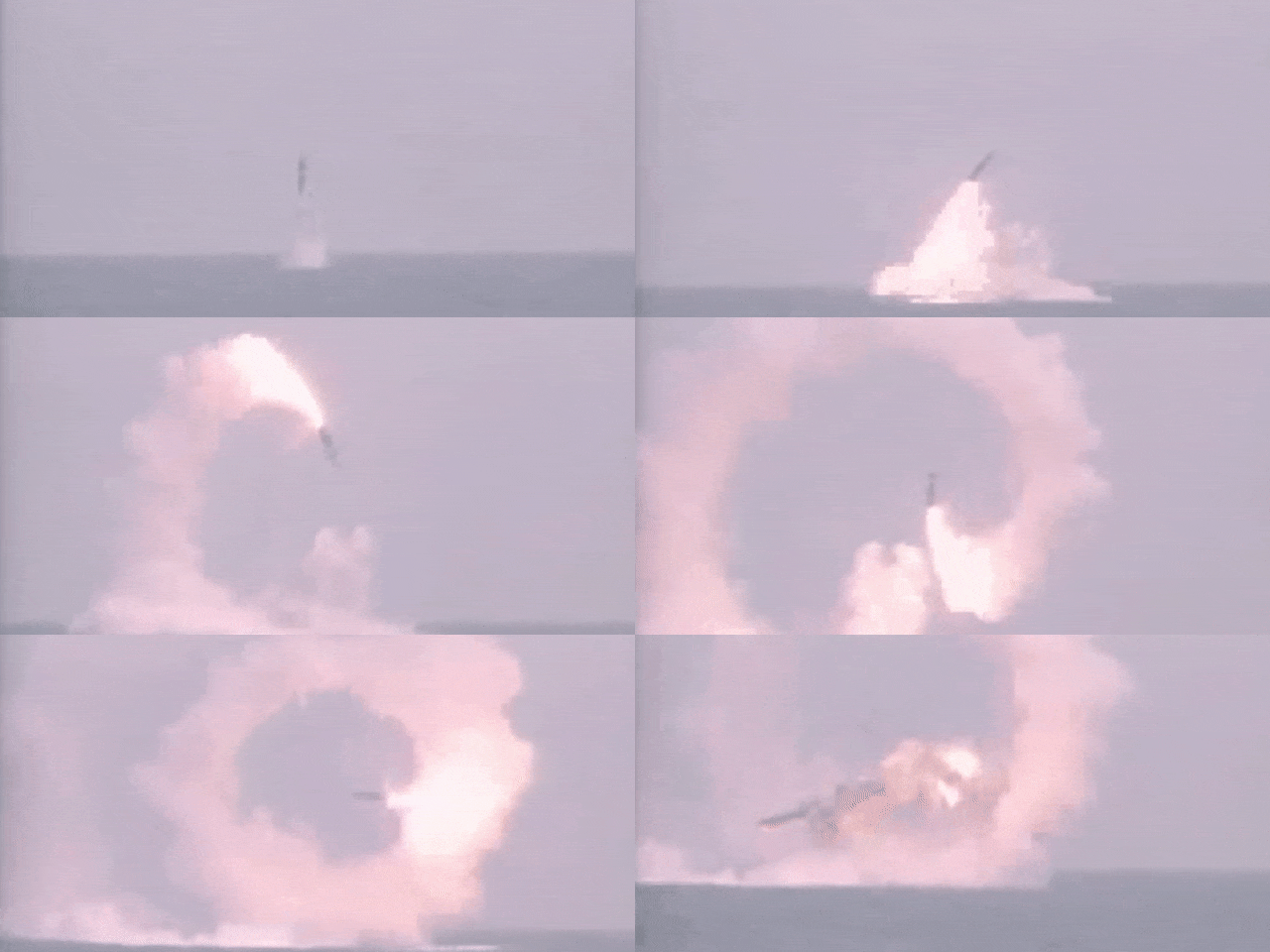
Launching a missile from a submarine sounds simple if your imagination was trained by action movies: captain gives a dramatic order, somebody turns a key, the ocean bubbles, and a huge missile leaps from the sea like Poseidon just got a defense contract. In reality, submarine missile launch technology is one of the most complicated engineering achievements ever put inside a steel tube and sent beneath the waves.
The challenge is not just “make rocket go up.” Rockets already find that difficult enough on land, where the ground is firm, the air is predictable, and nobody is trying to remain hidden under thousands of tons of seawater. A submarine-launched ballistic missile has to begin its journey from a moving, submerged platform surrounded by water pressure, silence requirements, strict safety rules, and strategic consequences so serious that the paperwork probably has paperwork.
This article explores why launching a missile from a submarine is harder than most people think, using public, non-operational information about submarine-launched ballistic missiles, fleet ballistic missile submarines, and the broader sea-based deterrent mission. We will keep things high-level, because this is an engineering and history article, not a supervillain internship manual.
Why Submarine Missile Launching Is a Unique Engineering Problem
A land-based missile launch begins from a stable site. A ship-launched missile has to deal with waves, but at least the launcher is usually in air. A submarine missile launch begins in one of the least convenient environments imaginable: underwater, in a vessel designed to be quiet, hidden, pressure-resistant, and extremely careful with space.
The missile cannot simply ignite like a backyard bottle rocket, because a submarine is not a backyard and nobody wants “underwater rocket exhaust barbecue” on the day’s maintenance schedule. Modern submarine-launched ballistic missiles are generally discussed in public as using a “cold launch” concept, meaning the missile is first pushed clear of the submarine before its flight systems take over above the water. That broad idea is easy to say and very difficult to make reliable.
Every part of the process has to survive an environment where water is heavy, unforgiving, and aggressively interested in getting inside places it does not belong. The submarine must maintain stability. The missile tube must stay sealed until it is meant to open. The vessel must remain safe. The crew must follow strict command and control procedures. And the missile must transition from underwater movement into atmospheric flight without turning into a very expensive science fair mistake.
The Ocean Is Not a Launchpad
One of the biggest reasons submarine missile launching is so difficult is that the ocean refuses to behave like concrete. A submerged submarine moves with currents, depth changes, trim adjustments, and the subtle motion of a massive vessel in a three-dimensional environment. Even a small change in orientation matters when the object being launched must travel from water to air and then follow a precise flight path.
Water is also far denser than air. That means the forces acting on the missile during its initial rise are completely different from the forces acting on a rocket leaving a launch tower. Engineers must account for hydrodynamic loads, turbulence, bubbles, shock effects, pressure, and the sudden transition between two mediums. The missile begins in water, enters air, and then continues through the atmosphere. That is not a launch; that is a physics obstacle course wearing a Navy uniform.
Pressure Changes Everything
Submarines are built to withstand pressure, but a missile tube adds a special kind of complexity. It has to protect the missile during patrol, isolate it from seawater, interface with the submarine, and still support a launch event when required. The tube is not just a container. It is a sealed, integrated part of a larger strategic weapons system.
Public descriptions of systems like the Trident II D5 show why reliability matters so much. The missile is part of a sea-based deterrent system that is designed to remain credible over decades. The U.S. Navy’s Ohio-class ballistic missile submarines and the future Columbia-class submarines represent long-term investments in survivability, patrol endurance, maintenance cycles, and operational readiness.
Submarines Must Stay Hidden Before They Can Do Anything Else
Ballistic missile submarines, often called SSBNs, exist because stealth changes strategy. Their job is not to be flashy. In fact, being flashy is usually a career-limiting choice in submarine culture. Their mission is to remain hidden, survive, and provide a credible sea-based deterrent.
That stealth requirement shapes everything. Machinery must be quiet. Crew routines must be disciplined. Communications are carefully managed. Maintenance has to be exact. Even routine patrol operations involve layers of planning that most people never see. A submarine is not simply carrying missiles; it is carrying a national security mission inside a vessel where mistakes are not allowed to enjoy a long social life.
This is why submarine missile launching is not only a rocket problem. It is a submarine problem, a navigation problem, a communications problem, a safety problem, and a human reliability problem. The weapon system must be maintained for years, tested without using nuclear payloads, certified through controlled events, and integrated with national command authority. The glamorous part is the missile breaking the ocean surface. The hard part is everything that happens before that moment.
A Short History: From Polaris to Trident
The United States’ modern sea-based deterrent story began in the Cold War, when the Navy pursued ways to place ballistic missiles aboard submarines. The Polaris program became a landmark. In July 1960, the USS George Washington successfully launched Polaris missiles from a submerged position during full-scale tests. That achievement was not just a dramatic photo opportunity; it changed nuclear strategy by making the sea a major leg of deterrence.
Polaris was followed by later systems, including Poseidon, Trident I, and Trident II. Each generation reflected improvements in range, accuracy, survivability, reliability, and integration with submarines. The Trident II D5, first deployed in 1990, remains central to U.S. and U.K. sea-based deterrent forces and has undergone life-extension efforts to remain in service into the 2040s.
What is remarkable is not only that these missiles work. It is that they must remain reliable after years of storage, patrol cycles, environmental stress, maintenance intervals, and modernization. A missile that sits quietly inside a submarine tube for a long time must still be ready if called upon. That is like expecting your emergency flashlight to work after decades in a drawer, except the flashlight is a multi-stage strategic missile and the drawer is under the ocean.
Why Testing Matters So Much
Because these systems are designed for deterrence, testing is essential. Publicly announced tests of unarmed Trident II D5 Life Extension missiles are used to evaluate reliability, accuracy, and continued readiness. These tests are planned, monitored, and conducted under strict conditions. They are not casual demonstrations. Nobody wakes up and says, “Nice weather, let’s yeet a strategic missile.”
Testing helps confirm that aging components, updated systems, submarine integration, and crew procedures continue to function as expected. It also supports confidence among military planners and civilian leadership. A deterrent that is not trusted is not much of a deterrent. The entire point is that the system is credible enough that no adversary wants to test it in a real crisis.
Reliability Is the Real Star of the Show
Missile launches look spectacular, but the real achievement is reliability. A successful system is not one that works once under perfect conditions. It is one that works after years of patrols, upgrades, inspections, training, and environmental exposure. Reliability must be engineered into hardware, software, crew training, maintenance culture, and command procedures.
That is why submarine missile systems are maintained through massive institutional networks. Shipbuilders, missile contractors, Navy technical commands, nuclear security agencies, test ranges, logistics teams, and trained crews all play roles. The launch moment may last a short time, but the support system behind it is measured in decades.
The Human Factor: Crews, Training, and Discipline
Technology gets the spotlight, but people make the system work. Ballistic missile submarines operate with highly trained crews who must master navigation, engineering, watchstanding, maintenance, emergency response, and strict procedural discipline. The U.S. Navy’s Blue and Gold crew model for Ohio-class SSBNs helps keep submarines available for patrol while allowing crews to train, rest, and rotate.
Life aboard a submarine is not exactly a luxury cruise, unless your dream vacation includes fluorescent lighting, limited personal space, and the constant awareness that a steel hull is separating you from a very large ocean. Yet crews maintain complex systems while staying quiet and alert for weeks at sea. That kind of work requires trust, repetition, and professionalism.
The human side also includes restraint. Strategic systems exist under civilian control and formal command authority. The idea is not to make launch easy. It is to make unauthorized, accidental, or careless action extremely difficult, while preserving the ability to respond if national leadership lawfully orders it. In other words, the system is designed to be ready but not reckless.
Why Size and Space Make Everything Harder
Submarines are big from the outside and cramped from the inside. Every cubic foot has a job. Missile compartments must coexist with propulsion systems, crew spaces, navigation systems, sonar, control rooms, life-support systems, storage, electrical systems, and machinery. If your bedroom feels crowded with a laundry chair, imagine designing a submarine where the “laundry chair” is a strategic weapons compartment.
The missile itself must be protected, supported, monitored, and integrated. The submarine’s structure must account for weight distribution and hull strength. Designers must also consider maintenance access, shock resistance, safety, and long-term modernization. The Ohio-class submarines were designed during the Cold War, while the Columbia-class program is intended to replace them with a new generation of ballistic missile submarines for decades of service.
Submarine-Launched Ballistic Missiles vs. Cruise Missiles
It is helpful to separate submarine-launched ballistic missiles from submarine-launched cruise missiles. Ballistic missiles follow a high-arching trajectory after boost and are associated with strategic deterrence. Cruise missiles fly more like pilotless aircraft, often at lower altitude and along more flexible routes. Both can be launched from submarines, but they serve different missions and involve different engineering requirements.
Ohio-class submarines show this distinction clearly. Some Ohio-class boats serve as ballistic missile submarines, while others were converted into guided-missile submarines carrying cruise missiles. The labels may look similar to casual readers, but the missions are very different. One is about strategic nuclear deterrence. The other supports conventional strike and special operations roles.
Why the Launch Looks Effortless
The strangest thing about submarine missile launches is that when they work correctly, they look almost graceful. A column of water erupts, a missile rises, and then it disappears upward. The visible part seems clean and almost simple. That is the magic trick.
Good engineering often hides difficulty. Bridges do not advertise every stress calculation. Airplanes do not print “millions of equations are currently helping you not fall” on the safety card. A submarine missile launch looks controlled because thousands of design choices, tests, inspections, and procedures have already done their jobs.
The apparent simplicity is the result of complexity successfully managed. That is why the title is true: launching a missile from a submarine is harder than you think. It is hard because the ocean is hard. It is hard because rockets are hard. It is hard because stealth is hard. It is hard because nuclear deterrence is serious. And it is hard because the system must work when failure is not an acceptable personality trait.
The Strategic Purpose: Deterrence, Not Drama
Submarine-launched ballistic missiles are often discussed as part of the nuclear triad, which includes land-based missiles, strategic bombers, and submarine-based forces. The sea-based leg is valued because submarines are difficult to find and can survive even if other forces are threatened. That survivability supports second-strike capability, which is central to deterrence.
This is not about movie-style drama. It is about preventing war by making aggression too risky. The logic is grim but important: if an adversary believes a country can respond even after being attacked, the incentive to attack first is reduced. Ballistic missile submarines are designed to make that response capability credible.
That is also why public tests are sometimes announced. They show readiness without revealing sensitive operational details. They reassure allies, signal capability to adversaries, and validate that decades-old systems remain dependable after modernization.
Experience-Based Lessons From the Topic
Studying submarine missile launches offers several useful lessons even for people who will never set foot on a submarine. The first lesson is that difficult systems are usually difficult because many smaller systems must work together. A missile launch is not one invention; it is a stack of inventions. Materials science, pressure engineering, navigation, electronics, hydrodynamics, quality control, human training, logistics, and command policy all overlap. When people say “technology,” they often imagine a gadget. In reality, major technology is usually an ecosystem.
The second lesson is that the environment always gets a vote. Engineers may design elegant systems on paper, but the ocean does not care about elegance. Water pressure, corrosion, vibration, temperature, space limits, and stealth requirements all create problems that cannot be solved with optimism. This is a useful reminder for any complex project. Whether building software, designing a bridge, planning a hospital, or running a school system, real-world conditions will expose weak assumptions. The environment is the world’s most honest reviewer, and it leaves spicy comments.
The third lesson is that reliability is more impressive than flashiness. A spectacular launch video can grab attention, but the real accomplishment is making sure the system stays safe, controlled, and dependable across many years. That principle applies far beyond defense technology. The best systems are often boring in the right way. They start when needed, stop when required, fail safely when something is wrong, and do not demand applause every five minutes.
The fourth lesson is that human discipline matters as much as hardware. Advanced machines do not remove the need for judgment; they increase the need for it. Submarine crews train repeatedly because high-stakes systems require calm people, clear roles, and practiced routines. The same idea applies to aviation, medicine, emergency response, and cybersecurity. Tools are powerful, but procedures and culture keep power from becoming chaos.
The fifth lesson is humility. A submarine missile launch is a reminder that modern life depends on systems most of us barely understand. We see the surface momentthe splash, the plume, the headlinebut not the decades of research, testing, maintenance, and decision-making underneath. That hidden complexity should make us curious, not careless. The more powerful a technology becomes, the more society needs transparency where possible, secrecy where necessary, ethical restraint, and serious public discussion.
Finally, the topic teaches that “hard” does not simply mean technically complicated. It means consequential. Launching from a submarine is hard because the physics are unforgiving, but it is also hard because the stakes are enormous. The best way to write about it, learn from it, or teach it is to respect both sides: the astonishing engineering and the sobering purpose behind it.
Conclusion
Launching a missile from a submarine is far more difficult than the dramatic clips suggest. It requires a missile that can survive long storage, a submarine that can remain hidden, a launch system that can handle water pressure and motion, crews trained to exacting standards, and a strategic framework built around control and deterrence. The result is one of the most complex systems ever placed at sea.
The next time a video shows a missile bursting from the ocean, remember that the impressive part is not just the launch. It is the decades of science, discipline, testing, and restraint behind it. The ocean may look calm on the surface, but underneath, engineering is doing cartwheels while wearing a very serious uniform.