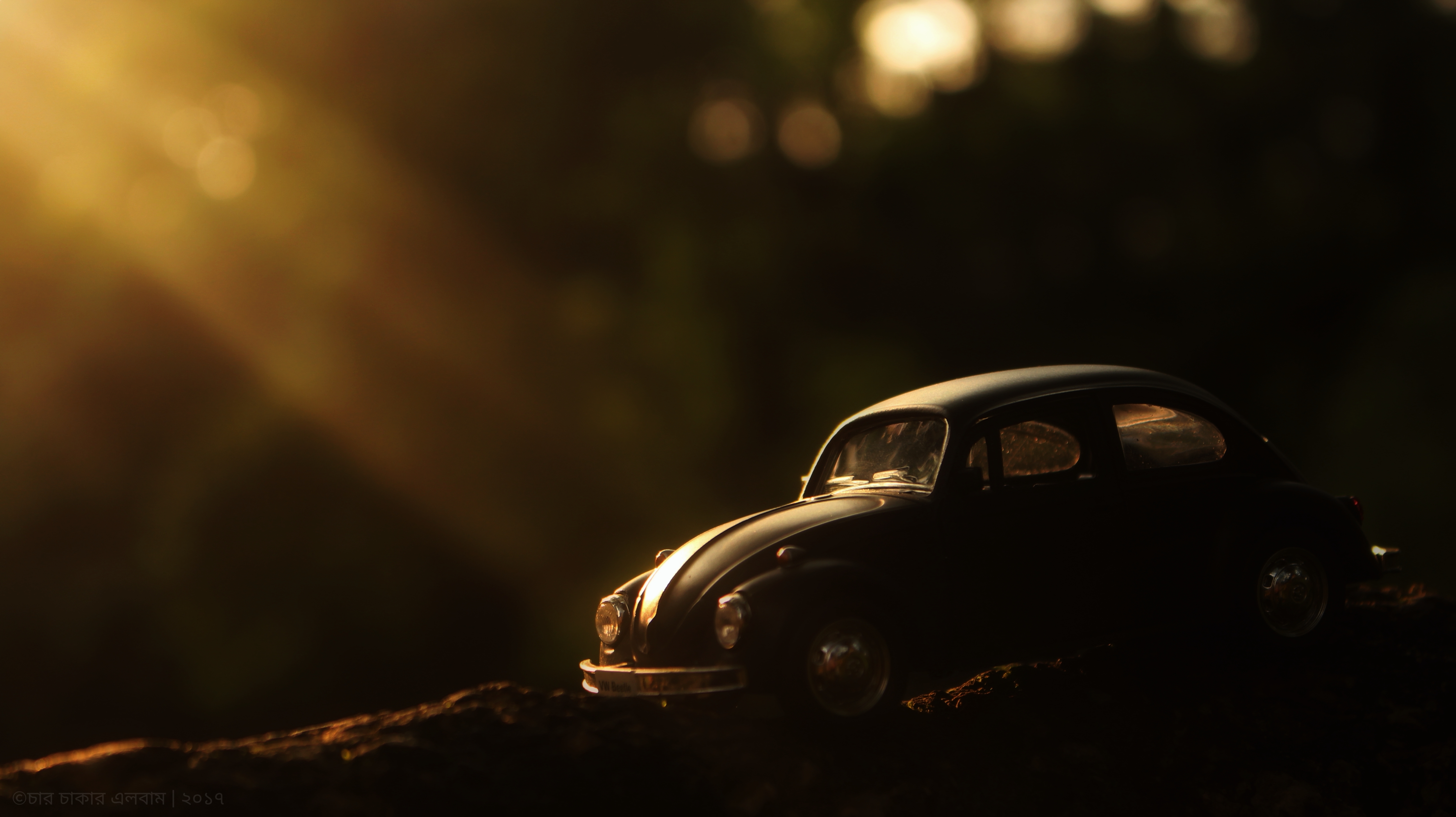
Note: Publication-ready body HTML only; unnecessary placeholder citation elements have been removed.
Some cars are admired. A few are respected. The Volkswagen Beetle, meanwhile, gets adopted like a slightly noisy family pet that happens to have fenders. People do not simply own a Beetle. They name it, wave at other Beetles, defend its odd little shape with suspicious enthusiasm, and tell stories about it years after it has left the garage. That is the magic of the Bug: it turns transportation into attachment.
The Volkswagen Beetle is one of the most recognizable cars ever built, and not because it shouted the loudest. It won hearts with a rounded silhouette, sensible engineering, approachable pricing, and a personality that made even non-car people smile. It was never the fastest car in the room, never the flashiest, and certainly never the one trying to impress the valet. Yet the Beetle became a global icon and a genuine American favorite. For generations of drivers, it represented thrift, independence, counterculture cool, and simple fun on four tiny wheels.
That affection is not blind, though. The Beetle has a complicated history, and any honest look at the car has to acknowledge that. But its long afterlife in the United States tells a bigger story about design, reinvention, and the strange power of an object that feels almost alive. The Bug is not just a classic car. It is proof that practical things can become beloved things, and that a humble machine can leave a giant mark on culture.
How the Beetle Became More Than a Car
The Beetle’s story began in 1930s Germany, where the idea of an affordable “people’s car” was tied to a deeply troubling political era. That origin matters, and it should never be polished away with nostalgic wax. Still, the car that eventually reached everyday drivers after World War II became something very different from the ideology that first commissioned it. Series production began after the war, and the Beetle slowly transformed from a politically burdened concept into one of the most successful civilian cars ever built.
When the car came to the United States in 1949, it was not greeted like a rock star. Americans were used to big chrome-heavy cruisers, and the Beetle looked like it had arrived from another planet carrying a packed lunch. It was small. It was rounded. It had the engine in the rear. Its shape made some people laugh before it made them curious. Yet the very things that made it odd also made it memorable. In an era obsessed with size and sparkle, the Beetle offered a different kind of confidence. It did not need fins, swagger, or a hood long enough to land a small aircraft.
By the late 1950s and early 1960s, the Beetle had found its American voice. Instead of pretending to be glamorous, it leaned into honesty. The famous advertising approach around the car made smallness feel smart, modesty feel stylish, and consistency feel refreshing. That message landed because many consumers were growing tired of the annual “new and improved” parade. The Beetle was not chasing trends every five minutes. It looked like itself, year after year, and that steadiness became part of its charm.
Why People Fell in Love With the VW Bug
It was simple in the best possible way
The classic Volkswagen Beetle earned loyalty because it was built around simplicity. Its air-cooled engine, compact dimensions, and straightforward mechanical layout made it easier to understand than many cars of its time. Owners appreciated that the Bug felt less like a sealed mystery box and more like a machine you could actually get to know. For do-it-yourself drivers, that mattered. For budget-conscious families, it mattered even more.
The Beetle was also inexpensive to run and maintain compared with many larger American cars. It did not promise luxury. It promised usefulness. That difference is huge. A car that quietly starts every morning, squeezes into absurdly small parking spaces, and does not punish the wallet tends to become beloved very quickly. The Bug was the automotive version of the friend who always shows up with jumper cables, snacks, and no interest in drama.
Its design was unforgettable
Let’s be honest: the Beetle looked like a sketch somebody would doodle when asked to draw “car” from memory. And that is precisely why it worked. The curved roofline, rounded fenders, and cheerful proportions made it feel friendly in a way most cars never do. Even children could identify it instantly. Plenty of cars are handsome. Very few are lovable at a glance.
The design was not just cute. It was practical, aerodynamic for its era, and tied closely to the car’s engineering. The shape followed the purpose. That authenticity gave the Beetle an integrity many fashion-driven vehicles lacked. It did not seem dressed up. It seemed born that way.
It became a cultural symbol
Once the Beetle gained traction in the United States, it stopped being merely transportation and started collecting meanings. For some buyers, it was the smart import that dodged waste and excess. For others, it was a college-town badge of independence. It became associated with youthful rebellion, thrift, and anti-establishment cool, even as it remained practical enough for ordinary daily life. That is a rare trick. Most cars either become style statements or useful appliances. The Beetle managed to be both.
Pop culture helped push the car even further into legend. The Bug became the kind of movie car people remembered by personality, not just by sheet metal. Herbie, the white Beetle with racing stripes and a mind of its own, gave the model a new level of emotional visibility. By then, the Volkswagen Beetle was no longer just a successful car. It was a character.
Driving a Beetle: Slow, Loud, and Weirdly Wonderful
Modern drivers climbing into an old Beetle for the first time often go through three stages. First comes surprise: “Wow, this is tiny.” Then confusion: “Wait, where is everything?” Then delight: “Okay, I get it now.” The classic Beetle is not polished in a modern sense. It can be noisy. Early versions were slow enough to make merging feel like a philosophical exercise. The controls can feel charmingly old-fashioned, and the cabin layout reminds you that automotive ergonomics once involved a lot of optimism.
And yet the Beetle has an honesty that many newer cars cannot match. You hear the engine. You feel the road. You notice the steering effort, the body motion, the little mechanical habits that modern insulation has trained us to ignore. The car asks for participation, not passive consumption. It turns even a short drive into an event.
That is a big reason why vintage Volkswagen enthusiasts stay loyal. Driving a Bug is not about crushing lap times or flexing horsepower figures. It is about connection. The Beetle has a cheerful, earnest quality that makes ordinary driving feel strangely memorable. It is the sort of car that can turn a trip for groceries into a tiny parade.
The Beetle’s American Glow-Up
One of the smartest things about the Beetle’s U.S. success is that it happened against the odds. Early reception was lukewarm. But once Americans began to appreciate the car’s efficiency, personality, and value, the Bug became a phenomenon. By the end of the 1950s, it had firmly planted itself in American culture. It was visible on campuses, in suburbs, in city streets, and later in beach towns and road-trip photos that now look like instant nostalgia.
The Beetle also benefited from being endlessly adaptable. Coachbuilders experimented with variations on the platform. Enthusiasts transformed Beetles into dune buggies, Baja racers, customs, and quirky personal statements. The platform was flexible, forgiving, and inexpensive enough to invite creativity. The Bug may have started as a people’s car, but owners quickly turned it into a people’s canvas.
That adaptability is one reason the Beetle still feels alive in enthusiast culture. Some classics survive because they were rare and pampered. The Beetle survives because it was everywhere, because parts were available, and because people kept finding new ways to love it. It can show up at a concours event, a surf town car meet, a desert race, or a neighborhood garage with equal credibility. That kind of cultural range is almost unfair.
From Original Beetle to New Beetle to Farewell Tour
The original Beetle’s production life became the stuff of legend. In 1972, it famously surpassed the Ford Model T’s production record, a milestone that turned the car from successful to historic. Production of the first-generation Beetle eventually stretched into the early 2000s, with the last classic example rolling off the line in Mexico in 2003. That alone tells you something about the car’s staying power. Entire generations were born, learned to drive, and grew nostalgic while the Bug was still being built somewhere in the world.
Then came the revival act. The New Beetle, launched in the late 1990s, traded rear-engine air-cooled simplicity for modern front-engine hatchback bones wrapped in retro styling. Purists had opinions, naturally, because purists are one of the few renewable energy sources on Earth. But the New Beetle succeeded at doing what revivals are supposed to do: it made people feel something. It reintroduced the shape to a new audience and brought the Beetle name back into everyday American conversation.
The later 2012 redesign gave the car a slightly less cartoonish, more grounded personality while keeping the essential Beetle spirit intact. And when Volkswagen sent the model off with Final Edition trims for the U.S. market in 2019, it felt like more than a discontinued product line. It felt like a curtain call for one of the industry’s most emotionally durable nameplates.
Why Beetle Enthusiasts Are Still Everywhere
The classic VW Bug remains approachable in a way many collector cars simply are not. You do not need mansion money or museum-level nerves to enjoy one. Later classic Beetles, in particular, have long been seen as a relatively attainable entry point into vintage-car ownership. That accessibility has kept the community broad, enthusiastic, and refreshingly un-snobbish.
There is also the social side. Beetle people tend to talk to one another. They compare model-year quirks, swap parts, trade restoration stories, and happily debate whether stock purity beats custom flair. The Beetle community is one of the friendlier corners of car culture because the car itself encourages a less serious kind of seriousness. Owners care a lot, but they also know they are obsessing over a machine affectionately nicknamed the Bug. That helps keep the ego level manageable.
And then there is off-road culture. The Beetle’s toughness, simple running gear, and rear-engine traction helped it develop a whole second life beyond pavement. Baja Bugs and near-stock Class 11 racers prove that the little car’s charm is not limited to leisurely Sunday drives. The Beetle can be cute, yes, but it can also be shockingly game when the terrain gets rough. Underestimate it at your own embarrassment.
The Complicated Truth Makes the Story Stronger
Loving the Beetle does not require ignoring where it came from. In fact, the car’s long legacy makes more sense when viewed honestly. Its early history is inseparable from a dark chapter in Europe. Its later story, however, became one of repurposing, reinvention, and global civilian life. In the United States especially, the Beetle was reinterpreted through design, advertising, pop culture, and personal experience until it stood for ideas far removed from its political origins.
That transformation helps explain why the Beetle still fascinates people. It is not just a cute old car. It is a machine layered with contradiction: practical yet charismatic, humble yet iconic, simple yet emotionally powerful. The best classic cars are never only about transportation. They reflect the eras that made them and the people who remade their meaning. The Volkswagen Beetle does that better than almost any car on the road.
Experiences That Explain the Love for the Bug
To understand why people adore the Volkswagen Beetle, you almost have to experience the rituals that come with it. A Beetle changes the social mood around a car. Park one at a gas station and somebody will walk over. Not maybe. Not occasionally. Somebody will walk over. They will tell you about the one their aunt drove in college, the one their grandfather restored, the one they learned to drive with, or the yellow convertible they still regret selling. The Beetle does not sit quietly in public. It starts conversations on contact.
Then there is the first drive. For many people, it begins with laughter. Not mocking laughter, but delighted laughter. The seating position feels different. The windshield frames the road in a very specific old-car way. The sound of the engine coming from the rear feels a little backwards at first, like the car is sneaking up on itself. But within minutes, the oddness becomes character. You stop expecting modern refinement and start appreciating old-school charm. Every click, hum, and vibration feels like part of the Beetle’s vocabulary.
Owning one also changes the pace of your relationship with driving. In a modern car, you can forget the machine is even there. In a Bug, you remain aware of it. You listen. You smell the cabin on a warm day. You notice the steering, the gear changes, the way the car leans into a corner with all the urgency of a polite house cat. It makes ordinary errands feel intentional. A coffee run becomes an outing. A wrong turn becomes a story instead of a problem.
For hobbyists, the experience often deepens in the garage. The Beetle has inspired generations of amateur mechanics because it feels approachable. Owners talk about weekends spent learning one system at a time, getting their hands dirty, making mistakes, fixing them, and slowly developing confidence. There is a particular pride in understanding a machine well enough to keep it alive yourself. The Bug rewards that kind of relationship. It invites tinkering without making you feel like you need an engineering degree and three laptops to change your mood, your spark plugs, or both.
Road trips in a Beetle are their own category of memory. Nobody chooses a classic Bug for speed or cargo capacity, which is exactly why the trip feels different. You pack lighter. You plan more. You wave more. You stop more often, partly because older cars appreciate kindness and partly because every scenic overlook somehow looks better with a Beetle parked in it. The car slows the journey down in a way that can be deeply satisfying. It makes travel feel less like consuming miles and more like collecting moments.
And perhaps the most telling experience is what happens after ownership. People rarely talk about a former Beetle the way they talk about a former appliance. They remember its quirks. They remember the smell of the seats in summer, the odd rattle that appeared only on Tuesdays, the way strangers smiled at traffic lights, the way kids pointed, the way the car seemed to have a face. Even when owners move on to faster, safer, more comfortable machines, the Bug remains oddly hard to replace in memory. It lingers.
That lingering affection is the real answer to the question of why the Beetle matters. People do not keep talking about the Bug because it was perfect. They keep talking about it because it was personal. It made them feel resourceful, cheerful, independent, nostalgic, or simply seen. It turned a mass-produced machine into an emotional keepsake. For a car built in the millions, that is one heck of a trick.
Conclusion
The Volkswagen Beetle earned its legend the old-fashioned way: by showing up, staying useful, and charming the socks off generations of drivers. It survived changing tastes, crossed continents, conquered pop culture, inspired hobbyists, and became one of the rare cars people love with both their heads and their hearts. Yes, its history is complicated. Yes, it is mechanically quirky. Yes, you may hear every pebble on the road. But that is part of the point. The Bug never tried to be everything. It just became unforgettable.
For classic car fans, casual nostalgia seekers, and anyone who believes personality still matters in automotive design, the Beetle remains a giant little icon. Love for the Bug is not really about perfection. It is about connection. And for a car shaped like a rolling exclamation point, that feels exactly right.