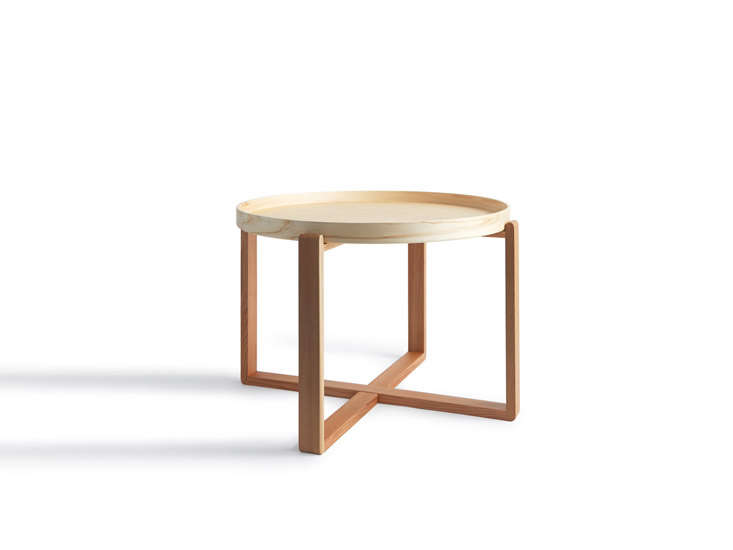
The Magewa Tray Table – Low ‘540’ is the kind of furniture that quietly walks into a room, fixes the layout, holds your coffee, becomes a tray, then pretends it did not just solve three problems before breakfast. Designed by Makoto Koizumi for Asahineko, this low Japanese tray table blends traditional craft thinking with a modern need: furniture that works hard without looking like it is trying too hard.
At first glance, it is simple: a round low table with a warm wooden surface and an airy base. Look closer and the cleverness appears. The tabletop can detach and be used as a portable tray. The legs separate. The structure comes together without hardware. It arrives compactly, assembles easily, and serves as a coffee table, bedside table, floor-side companion, serving tray, tea station, or tiny command center for anyone who believes a book, a cup, and a snack deserve a throne.
In a world full of bulky furniture and mystery screws labeled “Part G,” the Magewa Tray Table feels refreshingly calm. It is not chasing trends. It is chasing usefulness, proportion, and quiet beautythe holy trinity of good small-space design.
What Is the Magewa Tray Table – Low ‘540’?
The Magewa Tray Table – Low ‘540’ is a compact, low-profile wooden tray table made in Japan. It is associated with the Japanese design sensibility of making everyday objects both useful and emotionally satisfying. The Low ‘540’ version is especially suited for relaxed living spaces where furniture sits close to the floor: beside a lounge chair, near a futon, in front of a sofa, next to a reading nook, or in a minimalist apartment where every piece must earn its square footage.
The current hinoki version is listed with dimensions of approximately 23 inches wide by 23 inches long by 15 inches high, or about 578 mm by 578 mm by 387 mm. It weighs about 8.5 pounds, making it sturdy enough to feel substantial but light enough to move without making dramatic gym noises.
The table is composed of three main parts: two legs and one tabletop. The tabletop works as a removable tray, while the legs detach for storage or transport. No tools or metal hardware are required for assembly, which is a small miracle if you have ever spent a Saturday arguing with an Allen wrench.
Design Background: Makoto Koizumi and Asahineko
Makoto Koizumi is known for designing across scales, from architecture and furniture to small household tools. His work often emphasizes local craft, ordinary routines, and the idea that beautiful design should not be locked away for “special occasions.” The Magewa Tray Table follows that philosophy. It is not a display object pretending to be furniture. It is furniture that wants to be used.
Asahineko, the maker behind the piece, is connected to Japanese softwood craft and everyday household objects. The brand name refers to a group of local coniferous woods, including hinoki, used for practical tools that develop character over time. This matters because the Magewa Tray Table is not merely styled to look natural; it is built around the personality of natural wood.
That relationship between designer, maker, and material gives the table its charm. It is compact, but not flimsy. Minimal, but not cold. Elegant, but not the kind of elegance that makes guests afraid to set down a mug.
Why Hinoki Wood Matters
The hinoki version of the Magewa Tray Table is especially appealing because hinoki cypress is one of Japan’s most beloved woods. It is known for its soft fragrance, pale tone, fine grain, and traditional use in baths, temples, and household items. Hinoki has a clean, calming character that makes a room feel less like a storage unit with Wi-Fi and more like an intentional living space.
Hinoki is also appreciated for its natural resistance to moisture and mildew. That does not mean you should treat the table like a pool float. It simply means the wood has qualities that make it well suited for domestic life, especially when cared for properly. A quick wipe after spills, protection from standing water, and reasonable placement away from harsh direct sunlight will help preserve its look.
One of the best things about hinoki is how it ages. Instead of screaming for attention with glossy finishes, it develops a quieter beauty. Small marks, soft changes in tone, and the gentle deepening of the grain can become part of the table’s story. In other words: it is allowed to live a little.
The Magic of the Removable Tray
The main feature of the Magewa Tray Table – Low ‘540’ is its convertible tabletop. Use it as a table when it is seated on the legs. Lift the top and it becomes a tray. That sounds simple, but simple ideas are often the ones that survive daily life.
Imagine morning coffee. Instead of making three trips from kitchen to sofa, you load the tray with a mug, toast, fruit, and perhaps a book you optimistically believe you will read before checking your phone. Carry it to the living room, place it back on the legs, and suddenly breakfast has a proper landing zone.
In the evening, the same surface can hold tea, a candle, a remote control, and a small dessert. During a gathering, it can move snacks from kitchen to living room. In a bedroom, it can function as a bedside table for a lamp, glasses, and phone. The removable tray changes the object from static furniture into a small household tool.
Low Furniture, Big Impact
The Low ‘540’ format works beautifully in interiors that value comfort, flexibility, and grounded proportions. Low tables visually open up a room because they do not block sightlines. That makes them useful in small apartments, studio layouts, and rooms where you want furniture to feel present but not bossy.
A low tray table also encourages a softer style of living. It pairs naturally with floor cushions, low lounge chairs, futons, and compact sofas. It can sit in front of a reading chair without overwhelming the space. It can also work beside a bed where a taller nightstand might feel too formal or bulky.
The Magewa Tray Table is not trying to replace a full dining table or executive desk. It is better than that. It knows its role: a flexible surface for daily rituals. Coffee. Tea. Books. Flowers. Keys. Snacks. A laptop for light browsing. A bowl of popcorn during a movie. The essentials of civilization, basically.
How to Style the Magewa Tray Table – Low ‘540’
1. Use It as a Minimalist Coffee Table
Place the table in front of a small sofa or loveseat. Keep the surface edited: one ceramic cup, one small vase, one book, and perhaps a coaster. The rounded shape softens square rooms and creates a more relaxed flow than a rectangular table.
2. Pair It With Floor Cushions
The low height makes it ideal for casual tea, reading, journaling, or quiet evenings close to the floor. Add two floor cushions and the setup becomes instantly inviting. It is the design equivalent of saying, “Relax, we are not doing formal dining tonight.”
3. Make It a Bedside Table
If your bedroom leans minimalist or Japanese-inspired, the Magewa Tray Table can work beautifully beside a low bed or platform bed. Use the tray surface for a lamp, water glass, book, and small catchall dish. Bonus: the removable top makes cleaning and rearranging easier.
4. Create a Tea or Coffee Station
Because the tabletop functions as a tray, it is perfect for serving. Use it to carry a teapot, cups, small plates, or breakfast items. Once placed back on its base, it becomes a stable serving table. This is where the design really earns applause.
5. Use It as a Flexible Side Table
In a compact home, furniture often needs to move. The Magewa Tray Table can shift from living room to bedroom to guest area without feeling out of place. It has enough character to stand alone and enough restraint to blend with other pieces.
Who Should Consider This Tray Table?
The Magewa Tray Table – Low ‘540’ is best for people who appreciate handcrafted design, natural materials, and flexible furniture. It is especially useful for small-space living, Japanese-inspired interiors, minimalist homes, and anyone who likes furniture with a little intelligence built in.
It may not be the right choice for someone who wants a large coffee table with hidden storage, heavy drawers, or a surface for full family board-game warfare. It is also not ideal for people who want ultra-glossy, wipe-anything-with-anything synthetic furniture. Hinoki wood deserves care, and the table rewards people who enjoy that relationship.
But for the right home, it is a strong choice. It is practical without being ordinary, beautiful without being precious, and compact without feeling like a compromise.
Care and Maintenance Tips
Natural wood furniture lasts longer when treated with basic respect. For the Magewa Tray Table, use a soft dry cloth for regular dusting. For minor cleaning, use a lightly damp cloth and dry the surface immediately. Avoid soaking the tray, leaving wet cups directly on the wood, or using harsh chemical cleaners.
Coasters are your friends. Trivets are your backup dancers. Together, they prevent heat marks, water rings, and tiny domestic tragedies. Keep the table away from prolonged direct sunlight if possible, since strong UV exposure can alter the wood tone over time. Also avoid placing it directly next to heating vents or damp areas.
If the wood begins to feel dry, check the maker or retailer’s care recommendations before applying any oil or wax. Different finishes require different treatment, and guessing wildly is how beautiful furniture becomes a cautionary tale.
Magewa Tray Table vs. Ordinary Tray Tables
Many tray tables are purely functional. They fold, wobble, hold a plate, and disappear into a closet. There is nothing wrong with that. Utility has its place. But the Magewa Tray Table belongs to another category. It is a design object with daily usefulness.
Its advantage is not just that the tray detaches. Plenty of tables can do that. The difference is in proportion, material, and craft. The Magewa design feels intentional from every angle. The legs are not an afterthought. The removable top does not look like a gimmick. The whole piece has the calm confidence of something that was designed slowly and carefully.
That is why it works in styled interiors but still makes sense in real homes. It does not need a museum spotlight. It just needs a corner, a cup of tea, and someone who appreciates furniture that can multitask without developing an ego.
Buying Considerations
Before buying the Magewa Tray Table – Low ‘540’, check current availability, price, material version, and return policy. Earlier and current listings have shown different pricing and material notes, and handcrafted or imported design pieces can sell out quickly. If you are buying online, confirm whether the model is the hinoki version and review the exact dimensions to make sure it fits your room.
Measure your intended spot before ordering. A 23-inch round table is compact, but it still needs breathing room. In front of a sofa, leave enough space to walk comfortably. Beside a chair, check that the height works with the seat. As a bedside table, make sure it aligns with your mattress height and nighttime habits.
Also think about lifestyle. If your home includes energetic pets, toddlers with grape juice, or adults who treat coasters as decorative myths, you may need to be extra mindful with care. The table is functional, but it is still a natural wood piece. It deserves better than becoming a landing pad for mystery liquids.
Experiences With the Magewa Tray Table – Low ‘540’
Living with a table like the Magewa Tray Table – Low ‘540’ is less about dramatic before-and-after photos and more about small daily improvements. The first thing you notice is how easily it fits into routines. It does not demand a room redesign. It simply appears where you need it and quietly becomes useful.
In a small apartment, the table can become the center of a flexible living area. In the morning, it holds coffee and breakfast. By midday, it becomes a surface for notes, a tablet, or a small laptop. In the evening, it turns into a serving tray for tea and fruit. When guests arrive, the removable top makes it easy to bring out snacks without carrying five separate dishes like a circus act.
The low height also changes the mood of a room. Taller furniture can make a small space feel crowded, especially when every item competes for attention. The Magewa table sits lower and calmer. It creates a grounded point in the room while allowing the eye to move freely. That makes the space feel more open, even when the square footage is not exactly mansion material.
Another pleasant experience is the tactile quality of the wood. Hinoki has a softness and warmth that metal or plastic tray tables cannot imitate. When you lift the tray, you feel the lightness. When you set down a cup, the surface feels natural rather than industrial. Even simple tasksserving tea, arranging fruit, placing a book beside a chairfeel slightly more intentional.
The table is especially satisfying for people who enjoy slow mornings or evening rituals. A cup of coffee on a quiet wooden tray feels different from a mug abandoned on a cluttered desk. A small vase on the tabletop can make the room feel finished. A candle, coaster, and paperback can turn an unused corner into a reading spot. The Magewa table does not create these rituals by itself, of course. It is furniture, not a life coach. But it does make good habits easier to stage.
Guests tend to notice the table because it looks familiar and unusual at the same time. Everyone understands a tray. Everyone understands a table. But the smooth transition between the two creates a small moment of delight. Someone will eventually ask, “Wait, does the top come off?” Then you lift it, and suddenly you are performing furniture magic. No cape required.
The detachable construction is also useful for people who move often or rearrange rooms seasonally. Since the piece breaks down into simple parts, it is easier to store or transport than a fixed table of similar size. That makes it appealing for renters, studio dwellers, and anyone who changes layouts more often than they admit.
Over time, the most meaningful experience may be watching the wood age. Natural materials collect subtle evidence of use. The table may develop a richer tone, a smoother touch, or tiny marks from daily life. For some people, that is a flaw. For others, it is the whole point. The Magewa Tray Table feels designed for the second groupthe people who want objects that mature with them rather than remain frozen in showroom perfection.
In practical terms, the table encourages editing. Its surface is generous enough for essentials but not so large that clutter takes over. You may find yourself keeping only what matters: a cup, a book, a small bowl, a flower, a lamp. That kind of restraint can improve the whole room. Sometimes good design does not add more; it gently asks you to remove the nonsense.
The Magewa Tray Table – Low ‘540’ is ultimately an experience of balance. It balances craft and function, tradition and modern living, table and tray, beauty and usefulness. It is not loud. It does not need to be. The best pieces often work that way: quiet at first, indispensable later.
Conclusion
The Magewa Tray Table – Low ‘540’ is a thoughtful example of Japanese furniture design that proves small pieces can have big influence. Designed by Makoto Koizumi for Asahineko, it combines a removable tray top, hardware-free assembly, compact storage, and the natural warmth of hinoki wood. It is ideal for people who want a low coffee table, bedside table, serving tray, or flexible side table without crowding their space.
Its appeal is not based on flash. It comes from proportion, material, and usefulness. The table makes everyday rituals feel smoother, whether you are serving tea, reading beside a chair, eating breakfast on the sofa, or creating a calm corner in a compact home. In short, it is the rare piece of furniture that looks beautiful, behaves intelligently, and never once asks you to download an app.