If you’ve ever stared at a history textbook and thought, “This would be way better if someone photobombed it,”
then congratulations: you are exactly the target audience for Stelfie.
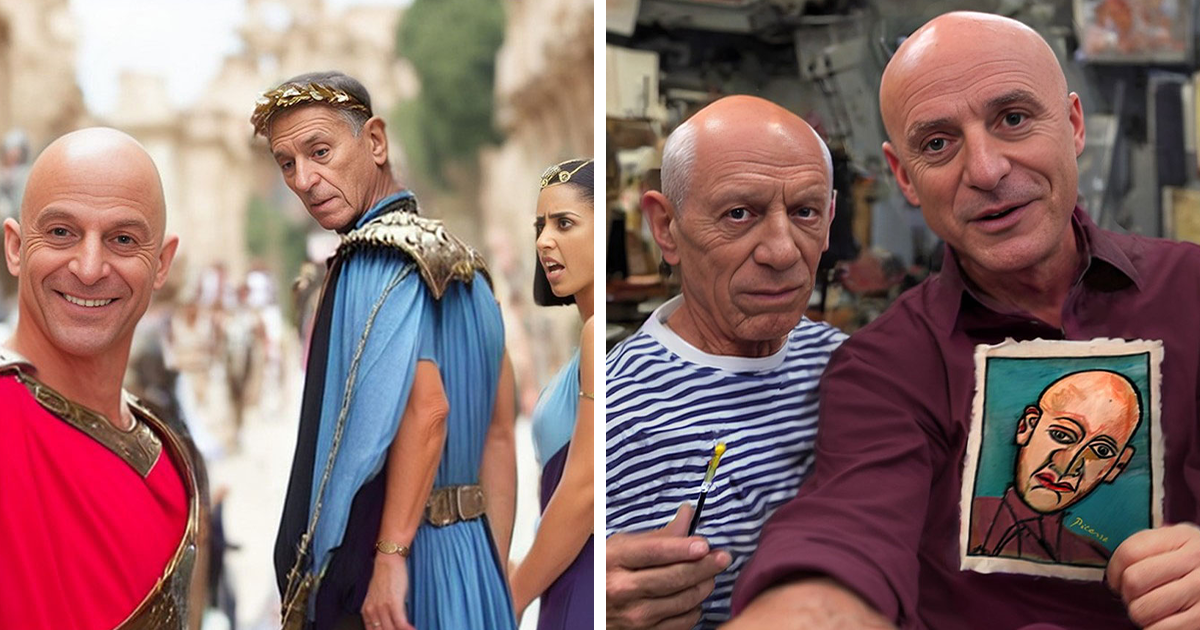
Stelfie is a fictional, AI-powered “time traveler” who pops into famous moments of the past and snaps
modern-style selfies with legendary people and scenes. The joke is simple and oddly brilliant:
he treats history’s biggest events like they’re just another weekend tripcomplete with awkward angles,
accidental flash glare, and captions that sound like your friend who overshares on Instagram.
The result is a series of 28 comedic, hyper-real “photos” that feel like they were taken by a guy who can’t decide
whether he’s documenting history or collecting clout. And somehow… it works.
Who (and What) Is Stelfie?
Stelfie isn’t a real personat least not in the literal, “can legally stand in line at the airport” sense.
He’s a character created as a parody of life, social media, and our obsession with turning everything into content.
The project leans into the absurdity of dropping a modern selfie culture into eras where nobody asked for it,
needed it, or could possibly understand it.
The “mysterious time traveler” persona is part of the fun. Stelfie has his own “time machine” vibe, a running
storyline, and a consistent visual identity across wildly different historical settings. That consistency is the
secret sauce: it’s not just random AI imagesit’s serialized visual storytelling with an ongoing main character.
The Hook: History, But Make It Social
Stelfie’s humor lands because it uses a familiar modern languageselfies, memes, influencer captions
and shoves it into moments that are supposed to be serious, epic, or sacred.
It’s like watching someone do a TikTok dance at the signing of a treaty.
You’re not sure whether to laugh, cringe, or file a formal complaint with the Time Police.
The 28 “Stelfies”: A Highlight Reel of Time-Travel Chaos
The series spans a bunch of erasprehistory, ancient civilizations, Renaissance art, exploration, and modern genius moments
but the comedic formula stays consistent:
Stelfie shows up, acts like he belongs, and frames the moment as if it’s just another entry in his camera roll.
Here are some of the most iconic types of Stelfie moments (with examples) that capture why the concept went viral:
1) Ancient World: When “Historic” Meets “Hold My Phone”
- Prehistory panic: Stelfie running for his life from Ice Age danger like it’s a cardio session he didn’t sign up for.
- Ancient engineering flex: casually appearing during the construction of monumental wonders, as if he’s there for “behind-the-scenes content.”
- Mythology and legend energy: inserting himself into legendary war stories and heroic tales like he’s an unpaid intern for destiny.
2) Renaissance & Art History: The Ultimate Museum Photobomb
- Art studio hangouts: Stelfie acting like a buddy who “knows the artist” while a masterpiece is being made.
- Creative genius moments: showing up at the exact second inspiration strikes, then immediately making it about himself (in a selfie, of course).
3) Exploration & “Discovery”: Group Selfies with People Who Did Not Ask
- Voyage vibes: Stelfie wedged into a ship crew photo like the guy who claims he’s “just documenting the journey.”
- Historic firsts: appearing at pivotal moments and casually implying he helped… because why not rewrite the timeline for engagement?
4) Modern Icons: “Bro, That’s Literally Einstein”
- Genius meetups: Stelfie posing next to famous thinkers as if they’re collaborators on a content series.
- Artistic legends: showing up with world-famous painters, then dropping captions that sound like he’s negotiating an NFT deal.
The running gag across the 28 images is that Stelfie isn’t a respectful observerhe’s a participant.
He’s the friend who can’t watch history happen without stepping into the frame.
Why These Selfies Are So Funny (and Weirdly Smart)
It Turns the Past into “Content,” Which Is Uncomfortably Familiar
We live in an era where experiences sometimes feel incomplete unless they’re documented.
Stelfie takes that impulse and pushes it to its most ridiculous extreme:
if the pyramids are being built, why wouldn’t you get a selfie?
If a genius is changing the world, why not jump in the shot?
It Uses Meme Logic Across Centuries
One of the funniest tricks is when Stelfie recreates modern meme templates inside historical settings.
It’s a reminder that memes aren’t just jokesthey’re visual storytelling shortcuts.
When you recognize the setup instantly, your brain does the rest of the comedic work.
It’s Satire with a High Production Value
The images aren’t “funny because they’re sloppy.” They’re funny because they look plausible at first glance.
The realism is what sells the punchlinelike a straight-faced comedian delivering an absurd sentence with total confidence.
How Stelfie Is Made: Not “One Click,” More Like “One Espresso-Fueled Marathon”
The creator’s process (as described in published interviews and workflow breakdowns) is a reminder that strong AI art
is often more craft than shortcut. The core approach blends multiple steps:
concept, character consistency, scene planning, generation, and a lot of polishing.
Step 1: Build a Consistent Character
Consistency is the hardest part of recurring AI characters.
Stelfie keeps a recognizable “face” across drastically different lighting, clothing, camera angles, and centuries.
That requires a character pipeline rather than random prompting.
Step 2: Plan the Scene Like a Director
Each selfie has to work like a miniature movie scene:
Who’s in the background? What props must exist? What’s the “selfie angle”?
What lighting makes the scene believableand what lighting makes it funny?
Step 3: Generate, Then Fix (Then Generate Again)
The most important thing to understand: the images aren’t just generated once and posted.
The workflow often involves looping between an image generator and editing software.
Techniques like inpainting (fixing specific regions) and outpainting (extending the image) help sculpt the final result.
Step 4: Polish Until the Joke Lands
Comedy is timing, but visual comedy is also details.
A slightly wrong hand position, a weird blur, or a mismatched shadow can ruin the “this is a real selfie” illusion.
The polish is what allows the satire to hit at full force.
Is This “History”? Nope. And That’s the Point.
Stelfie is parody, not documentary. The images are intentionally anachronistic and designed for humor.
Still, they’re also a great example of a modern challenge:
the more realistic AI imagery gets, the easier it is for fictional visuals to be mistaken for truth.
How to Enjoy It Without Getting Fooled
- Treat it like satire: It’s closer to a comedy sketch than a history lesson.
- Watch for “too perfect” realism: Hyper-real images can trigger your “this looks legit” instincts.
- Use it as a gateway: If an image makes you curious, go read about the real event afterward.
Why Stelfie Works as SEO-Friendly Pop Culture (Yes, Really)
From a content strategy perspective, Stelfie sits at the intersection of multiple high-interest topics:
AI-generated art, social media culture, meme formats, and historical figures.
That blend is a search magnet because people come in through different doors:
some search for “AI selfies,” others for “funny history art,” and others for “Stable Diffusion time traveler.”
It also encourages dwell time because readers want to scroll and see “the next one.”
That’s the same psychological loop that powers short-form video platforms:
curiosity + surprise + fast payoff.
How to Make Your Own “Stelfie-Style” Time-Travel Selfie
Want to try the vibe without copying the exact character? Here’s a safer, more original approach:
create a new persona and a new set of moments, then focus on consistent storytelling.
Pick a Persona With a Clear Comic Angle
- A chronically confused tourist who time-travels by mistake
- A “history influencer” who insists every era has a “fit check”
- A well-meaning assistant who keeps almost ruining major events
Choose Moments That Read Instantly
The best scenes are recognizable at a glance: iconic clothing, landmarks, or cultural cues that don’t require a caption.
Then add one modern detail (the selfie framing, the pose, the casual expression) to trigger the comedic contrast.
Remember the Golden Rule: The Past Should Look Real, The Behavior Should Look Wrong
That contrast is the whole joke. If the background looks fake, the humor collapses.
If the character behaves too “period accurate,” the joke disappears.
FAQ
Is Stelfie a real time traveler?
NoStelfie is a fictional character. The images are created using AI image generation plus editing tools.
Are the selfies “historically accurate”?
They’re designed to feel believable in lighting and composition, but they are intentionally anachronistic for comedy.
Why do people love this series so much?
Because it combines two things the internet cannot resist: history and a guy acting like history is his personal photo booth.
Conclusion: A Time Machine Built for Laughs (and a Little Reflection)
Stelfie is funny on the surface28 ridiculous selfies that reframe history as if it’s a social feed.
But underneath the humor is something sharper: a commentary on our need to document, to perform, and to insert ourselves
into stories bigger than us.
It’s a reminder that technology doesn’t just change what we can createit changes how we see ourselves in the world.
And if we’re going to mess with history at all, at least do it with good lighting and a caption that knows it’s a joke.
Extra: 500+ Words of Experiences Inspired by Stelfie
Imagine walking into a museum with a friend who treats every exhibit like a backdrop for their personal brand.
You’re standing in front of a centuries-old artifact, carefully lit, respectfully labeled, guarded by silent rules
and your friend leans in and whispers, “Okay, but where’s the best angle?”
That’s the exact emotional flavor Stelfie bottles: the tension between awe and absurdity.
The “experience” isn’t just looking at history; it’s watching history get processed through the modern brain,
where everything can be a post, a joke, or a moment that needs a caption.
You don’t have to actually time travel to feel it. You can feel it the next time you see a famous landmark and notice
that half the crowd is facing the monument… and the other half is facing their front camera.
A fun way to experience Stelfie’s concept (without copying it) is to play a simple creative game:
pick a historical moment, then ask, “What would the most modern, slightly annoying version of me do here?”
Not the heroic version. Not the respectful documentary version. The version that’s a little too comfortable,
a little too casual, and a little too eager to be included.
The humor usually appears instantly. For example:
- At a royal court: you’re not bowingyou’re asking if the lighting is “natural enough for portraits.”
- In a Renaissance workshop: you’re not admiring the paintingyou’re requesting a “progress pic” together.
- On an expedition ship: you’re not helpingyou’re filming a “Day 3: still no Wi-Fi” update.
What’s surprising is how quickly this turns into real reflection. The joke starts as “look how ridiculous we’d be,”
and then it becomes, “Wait… are we already like that?”
The Stelfie vibe highlights a modern habit: we sometimes experience life in two layersliving it and documenting it.
Sometimes that documentation is beautiful, connective, and meaningful.
Other times it’s a performance that makes the moment smaller than it should be.
If you want a more hands-on experience connected to the theme, try creating a “time traveler journal” for a week
no AI required. Each day, write a short, comedic “log entry” as if you’re visiting your own life from the future.
Describe ordinary scenes like they’re historical events:
“Log #12: The Great Coffee Spill of 8:47 AM. Casualties: one shirt, two napkins, my dignity.”
It’s silly, but it also trains you to notice details, context, and cause-and-effectexactly what history does,
just without the powdered wigs.
That’s why Stelfie resonates: it’s not only a punchline generator.
It’s an invitation to see the present as future historyand to laugh at how desperately we try to be in the frame.
The best takeaway isn’t “I wish I could selfie with legends.”
It’s “I should probably enjoy the moment I’m in… before some fictional time traveler shows up and turns it into content.”