Money has a funny way of turning family dinners into courtroom dramas. One minute someone is passing the mashed potatoes, the next minute Aunt Linda is cross-examining your hotel budget like she works for the IRS. That is basically the energy behind a viral family conflict about a childfree woman who planned a $9,000 vacation and ended up being called “disgusting” by her cousin, a mother who believed that money could have been used for something more “responsible.”
The story hit a nerve because it was not only about one expensive trip. It was about parenthood, childfree choices, resentment, disposable income, family boundaries, and the ancient human habit of treating other people’s bank accounts like community property. In the original viral discussion, a 26-year-old woman had been planning a dream vacation. When her cousin asked her to babysit, she declined because she had travel plans. The conversation went downhill after the cousin learned the trip would cost around $9,000. Suddenly, the vacation was not a vacation anymore. It was evidence. Exhibit A: How dare you spend your own money on joy?
But is a $9,000 vacation automatically irresponsible? Is the mother wrong for feeling shocked? And why do childfree adults so often become the emergency babysitters, emotional punching bags, or budget villains in family stories like this? Let’s unpack the drama without throwing anyone into the volcano of internet outrage. Although, honestly, the volcano has excellent lighting.
The Viral Vacation Drama: What Actually Happened?
The conflict began with a practical request: babysitting. The childfree cousin said no because she was preparing for a major vacation. That alone should have been the end of the conversation. People are allowed to decline unpaid labor, even when the labor is wrapped in family ribbon and sprinkled with guilt glitter.
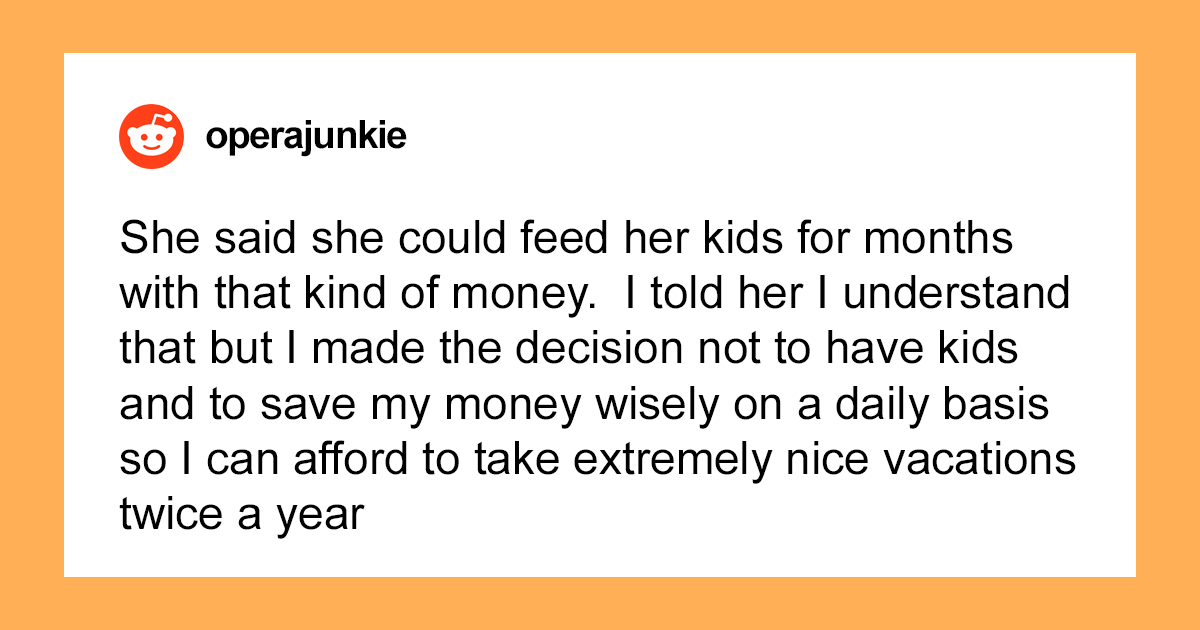
Then came the follow-up question: how much was the vacation? When the woman answered that she was spending about $9,000, her cousin reacted with outrage. To the mother, that amount sounded obscene. She reportedly argued that the money could support children for months and treated the trip as a selfish waste. Other family members were pulled into the argument, and what started as a private disagreement became a full family referendum on one woman’s travel budget.
There are two emotional realities here. First, $9,000 is a lot of money for most people. That is not pocket change unless your pockets are owned by a yacht. Second, adults who earn and save their own money are not obligated to justify every dollar to relatives. A vacation can be expensive and still be valid. A parent can feel financially stressed and still have no right to insult someone else’s life choices.
Why This Story Hit Such A Big Nerve Online
This viral story spread because it sits at the intersection of several modern tensions: rising costs, changing family expectations, and the growing visibility of childfree adults. Many Americans are rethinking what adulthood should look like. The classic script once sounded simple: grow up, get married, buy a house, have kids, become exhausted, repeat family recipes, and pretend you enjoy folding tiny socks. Now, more adults are asking whether that script fits them at all.
Research shows that adults without children are not a tiny fringe group whispering in the corner with plane tickets and quiet homes. Pew Research Center has reported a growing share of adults under 50 without children saying they are unlikely to ever have kids. Common reasons include simply not wanting children, wanting to focus on other things, concerns about the world, and the cost of raising a child.
That context matters because the cousin’s anger was not only about travel. It seemed to reflect a deeper cultural assumption: if you do not have children, your extra time and money are somehow suspicious. You are either selfish, immature, or secretly available to help everyone else. That assumption is exactly why these stories go viral. Many childfree adults recognize the pattern immediately.
Is Spending $9,000 On A Vacation Actually “Disgusting”?
No, not automatically. A $9,000 vacation can be irresponsible if the person is going into high-interest debt, ignoring rent, skipping medical bills, or expecting someone else to rescue them afterward. But if the traveler saved for it, paid their obligations, maintained an emergency fund, and made the choice freely, then the number alone does not make the trip immoral.
Think of it this way: one person may spend $9,000 on travel, another on a used car, another on fertility treatments, another on private school tuition, another on a wedding, another on home renovation, and another on a gaming setup that looks like NASA lost a control room. People attach different meanings to money. For some, travel is not a frivolous luxury. It is rest, adventure, culture, romance, healing, or the reward for years of work.
Of course, the cousin’s shock is understandable on a human level. Parents face relentless expenses: housing, food, childcare, clothing, school supplies, medical costs, activities, transportation, and the mysterious disappearance of snacks within 12 minutes of grocery shopping. A parent under financial pressure may hear “$9,000 vacation” and think, “That could cover daycare, summer camp, braces, or three months of groceries.” The feeling may be real. The insult is still not justified.
The Real Issue: Different Lives Create Different Budgets
Childfree adults and parents often build budgets around very different priorities. Parents may center spending around children: bigger housing, safer neighborhoods, school districts, childcare, medical appointments, sports fees, birthday parties, and family-friendly vacations. Childfree adults may spend more on travel, hobbies, dining, pets, education, career development, early retirement, or simply living in a home where nobody has drawn on the wall with yogurt.
Neither lifestyle is automatically superior. Parenthood is not a moral trophy, and being childfree is not a cheat code for happiness. Both paths involve trade-offs. Parents may experience deep meaning, family connection, and the joy of watching a child grow. They may also face financial strain and limited personal time. Childfree adults may enjoy flexibility, savings potential, and freedom. They may also face social judgment, assumptions, and pressure to explain a deeply personal decision.
The problem begins when one group treats the other’s trade-offs as an insult. A childfree person’s vacation is not an attack on a parent’s grocery bill. A parent’s child-related expenses are not proof that they made a bad choice. They are different lives, not competing PowerPoint presentations.
Why Parents May React Strongly To Childfree Spending
Let’s be fair to the mother for a moment, without excusing her behavior. Parenting in the United States can be financially intense. Major estimates have placed the cost of raising a child through age 17 in the hundreds of thousands of dollars, depending on income, region, inflation, and what expenses are included. Even if families spend less than national estimates, the monthly pressure can be very real.
When someone is living inside that pressure, seeing another adult spend thousands on pleasure can trigger envy, panic, or resentment. The emotional math goes like this: “I am struggling to pay for my kids’ needs, and you are spending what feels like a fortune on yourself.” The mind can quickly turn envy into moral judgment because judgment feels stronger than sadness.
But envy is not evidence. It is a signal. It may signal exhaustion, financial fear, lack of support, or resentment about sacrifices that feel invisible. Instead of saying, “You are disgusting,” the healthier sentence might be, “I am overwhelmed, and hearing that number made me feel jealous and frustrated.” That sentence is less dramatic, yes, but it also does not require a family group chat to become a crime scene.
Why Childfree Adults Get Tired Of Being Treated Like A Backup Plan
Many childfree adults have heard some version of this: “You do not have kids, so you must have time.” Or: “You do not have kids, so you must have money.” Or the classic: “You do not have kids, so why are you tired?” As if exhaustion checks birth certificates at the door.
In family systems, childfree relatives can become the default helpers. They are asked to babysit, cover shifts, travel at inconvenient times, adjust holiday plans, or contribute more because they supposedly have fewer responsibilities. Sometimes the requests are reasonable and loving. Families help each other. But help becomes resentment when it is expected, not requested.
The woman in the viral story was not wrong to decline babysitting. Saying no to childcare does not mean someone hates children. It means they are unavailable, unwilling, or simply not the right person for the job. Babysitting is work. Important work. Work that should be respected enough to require consent.
The $9,000 Question: Luxury, Savings, Or Personal Freedom?
A $9,000 trip can mean different things depending on the person. For one traveler, it could be a reckless splurge. For another, it could be the result of two years of saving. It might include international flights, a long itinerary, upgraded lodging, guided tours, travel insurance, special meals, museum visits, and once-in-a-lifetime experiences. It may also be a milestone celebration after grief, burnout, graduation, a promotion, or simply surviving adulthood without becoming a haunted houseplant.
Online, people often judge spending without context. But personal finance is personal because context changes everything. Someone earning $45,000 with no savings and credit card debt is in a very different position from someone earning $120,000, living below their means, and saving responsibly. The same $9,000 can be reckless in one budget and planned in another.
The better question is not, “Is $9,000 too much?” The better question is, “Does this spending align with the person’s income, values, obligations, and financial safety?” If yes, the moral panic can take a seat. Preferably an economy seat, since we are budgeting now.
Family Boundaries: The Missing Ingredient
This story also shows why families need boundaries around money. Asking someone how much their vacation costs is not automatically rude, but it becomes rude when the answer is used as ammunition. If a relative shares financial information, that is not an invitation to audit their life.
A healthy boundary might sound like this: “I am not discussing my vacation budget anymore.” Or: “I understand that you disagree, but I am comfortable with my decision.” Or: “I cannot babysit, and I need you to respect that.” Boundaries do not have to be dramatic. They just need to be clear.
For the parent, a healthier response might have been: “Wow, that is more than I expected. I could never spend that right now, but I hope you have a good trip.” That sentence costs zero dollars and saves approximately 14 family arguments.
The Bigger Cultural Fight: Is Self-Spending Selfish?
One reason this debate feels so heated is that American culture sends mixed messages. On one hand, people are told to work hard, chase dreams, practice self-care, travel while young, and collect experiences instead of things. On the other hand, they are judged when those experiences look expensive, especially if they are women, childfree adults, or relatives who are perceived as having “extra” money.
Women in particular often face moral judgment around self-spending. A man’s expensive hobby may be framed as passion. A woman’s expensive vacation may be framed as vanity or selfishness. Add childfree status to the mix, and the criticism can become sharper: “How dare you use your life for yourself?”
But choosing not to have children does not create a debt to everyone who did. It does not mean your savings belong to nieces, nephews, cousins, or overwhelmed relatives. Generosity is beautiful when freely given. It becomes entitlement when demanded.
What Both Sides Could Learn From The Blowup
For The Childfree Cousin
She has every right to spend her money on a vacation if her financial house is in order. She also has every right to decline babysitting. However, language matters. In many online childfree spaces, harsh terms for parents can appear casually, but those words can deepen conflict and make legitimate boundaries look like contempt. If the goal is to be respected, using respectful language helps.
For The Mother
Her financial stress may be understandable, but calling someone disgusting for taking a vacation crosses the line. If she needs childcare, she should ask directly, accept no gracefully, and avoid turning someone else’s budget into a moral failure. Parenthood is demanding, but it does not grant veto power over relatives’ dreams.
For The Rest Of The Family
Dragging the whole family into a money dispute rarely improves anything. It usually creates teams, screenshots, and Thanksgiving tension thick enough to slice with a pie server. Families should encourage direct conversations, not group outrage.
Practical Advice For Similar Family Money Conflicts
If you are the person spending money on a big trip, you do not have to disclose the cost. A simple “I budgeted for it” is enough. If someone presses, try: “I am not looking for feedback on my spending.” Calm, boring, effective. Be the beige wall of boundaries.
If you are the person feeling jealous or shocked, pause before speaking. Ask yourself whether the other person has actually harmed you or simply made a choice you cannot currently afford. Those are different things. You can feel envy without turning it into accusation.
If childcare is involved, make the request early, politely, and with an exit ramp. Try: “Would you be willing to babysit on Saturday? No pressure if you cannot.” And if they say no, believe them. Do not demand a court-admissible explanation.
Experiences Related To This Topic: What This Kind Of Drama Feels Like In Real Life
Many people have experienced a quieter version of this vacation fight. Maybe they did not spend $9,000, and maybe nobody called them disgusting, but they know the feeling of having a personal choice turned into a family debate. It might be a solo trip, a luxury handbag, a new gaming computer, a pet surgery bill, a concert weekend, or a decision to live alone instead of saving money with roommates. The moment relatives hear the price, the comments begin.
One common experience is the “must be nice” comment. It sounds small, but it often carries a backpack full of resentment. “Must be nice to travel.” “Must be nice to sleep in.” “Must be nice to spend money on yourself.” The phrase pretends to be casual, but it often means, “I am comparing your freedom to my stress, and I do not like the result.” That comparison can damage relationships because it turns joy into something people feel guilty for sharing.
Another common experience is being expected to help because you are perceived as having fewer obligations. Childfree relatives may be asked to babysit during weddings, holidays, emergencies, or vacations. Sometimes they are happy to help. The problem appears when help is treated as automatic. A person without children may still have work, health issues, friendships, pets, rest needs, school, bills, and plans. Their calendar is not empty just because there are no soccer practices on it.
Parents also have their own difficult experience: watching money disappear into necessities while others spend on fun. A parent may skip vacations for years, buy secondhand clothes, compare daycare prices like a detective, and still feel behind. When they see a cousin booking a dream trip, the feeling can sting. It may not be logical or fair, but it is human. The key is what they do with that feeling. Turning pain into insults creates distance. Turning pain into honesty can create understanding.
The best real-life solution is not for everyone to make the same choices. That would be impossible and boring. The solution is to stop treating different choices as personal attacks. A childfree person’s trip does not mock parenthood. A parent’s exhaustion does not invalidate childfree freedom. A cousin’s financial priorities do not need to match yours to be legitimate.
In families, peace often comes from shorter conversations and clearer limits. You do not need to reveal every price tag. You do not need to defend every decision. You do not need to attend every argument you are invited to. Sometimes the healthiest response is, “I understand you feel differently, but this is my decision.” Then change the subject to dessert, because pie has solved fewer conflicts than therapy but more than group texting.
Ultimately, this viral vacation story is not about whether everyone should spend thousands on travel. Most people cannot, and many people would not want to. It is about the right to build a life around your own values without being drafted into someone else’s definition of adulthood. For some, that life includes children, school runs, bedtime stories, and family vacations with enough luggage to supply a small nation. For others, it includes quiet mornings, flexible plans, and expensive trips saved for over time. Both can be meaningful. Both can be responsible. And neither requires calling your cousin disgusting.
Conclusion
The uproar over a childfree woman’s $9,000 vacation reveals something bigger than one family feud. It shows how easily money becomes a symbol for sacrifice, freedom, envy, and identity. The mother in the story may have been shocked because parenting is expensive and emotionally demanding. But shock does not justify shaming. The childfree cousin may have chosen a costly trip, but personal spending is not automatically selfish when it is planned, affordable, and paid for by the person enjoying it.
Families do not have to agree on every lifestyle choice. They do need to respect boundaries. Nobody should be pressured into childcare, and nobody should have to submit their vacation budget for moral approval. In the end, the healthiest takeaway is simple: spend according to your values, respect other people’s choices, and never let jealousy drive the family minivan.