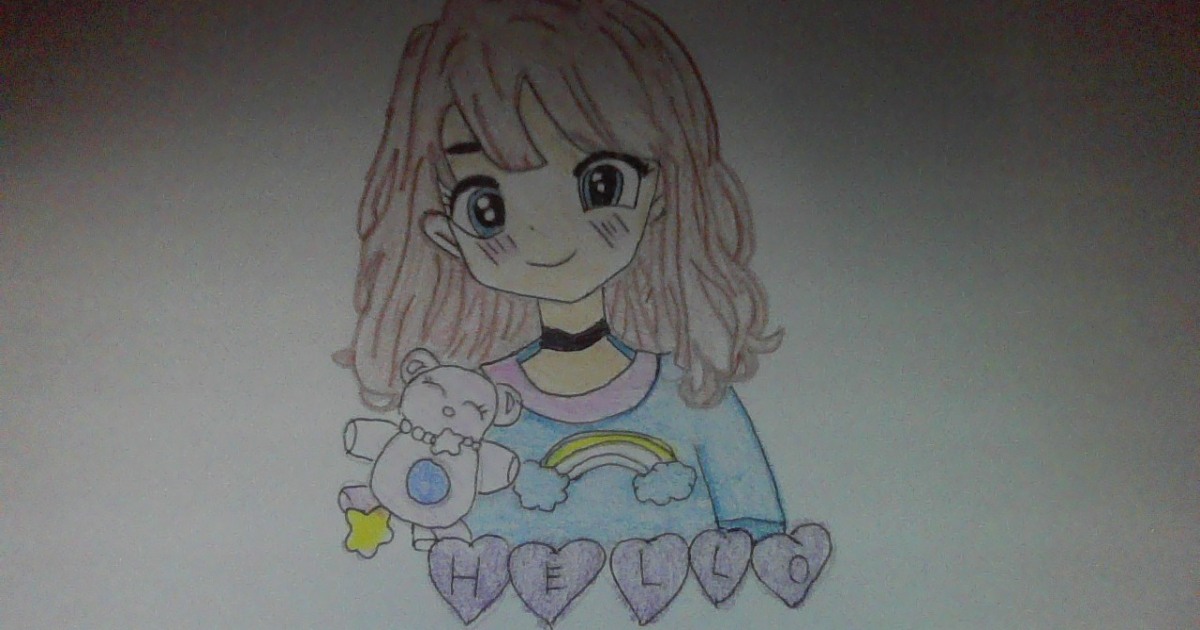
Some internet challenges ask for talent. Others ask for courage. “Pandas, Draw The Best Anime Character You Can” asks for both, plus a pencil, a mildly chaotic imagination, and the emotional strength to draw the other eye after the first one turns out perfect.
At first glance, this sounds like a friendly art prompt for Bored Panda readers, anime fans, hobby sketchers, and brave notebook doodlers everywhere. But underneath the playful title is a surprisingly useful creative exercise: design an anime character that feels original, expressive, readable, and alive. Not just “person with giant eyes and hair that has clearly ignored gravity’s legal department,” but a character with personality, story, silhouette, emotion, and style.
Anime character drawing has become a global visual language. Its roots are tied to Japanese animation and manga traditions, but its influence now appears in fan art, webcomics, game design, avatars, stickers, social media challenges, animation schools, and digital illustration portfolios. Whether you love shonen heroes, magical girls, cozy slice-of-life characters, sci-fi pilots, elegant villains, or tiny mascots with the confidence of a CEO, the best anime character designs usually share one thing: they communicate instantly.
This guide explores how to approach the prompt like an artist, storyteller, and slightly overcaffeinated panda with a sketchbook. We will cover anime drawing fundamentals, character design principles, expression, clothing, color, poses, reference sheets, digital tools, and the joyful weirdness that makes community art challenges so addictive.
What Makes an Anime Character “The Best”?
The best anime character is not always the most complicated one. In fact, overdesigned characters can look like they fell into a craft store and lost a fight with every ribbon, buckle, zipper, and glowing sword in aisle seven. Strong anime character design is usually built on clarity.
A memorable character can be recognized from a silhouette. Their face suggests emotion before they speak. Their clothes hint at their world. Their pose tells us whether they are shy, arrogant, exhausted, dangerous, dreamy, heroic, or about to steal the last dumpling. Good character design is not decoration first. It is communication first.
Start With a Simple Idea
Before drawing, ask one question: who is this character? A young dragon courier? A sleepy sword student? A panda café witch? A futuristic botanist who grows flowers on abandoned spaceships? The idea does not have to be dramatic, but it should be specific.
“Cool anime girl” is too vague. “A cheerful mechanic who repairs battle robots but is afraid of butterflies” is much better. Specific ideas produce stronger drawings because they give you visual clues. A mechanic may need gloves, tools, oil stains, sturdy boots, tied-back hair, and practical pockets. Fear of butterflies might inspire a tiny butterfly charm, a nervous expression, or a comedic sidekick.
Anime Style Basics: Eyes, Hair, Faces, and Expressive Chaos
Anime is known for expressive faces, stylized proportions, bold hair shapes, simplified noses and mouths, and dramatic visual emotion. The style is flexible. Some anime characters look soft and rounded; others look angular, intense, or almost realistic. The fun is not in copying one formula but learning which features to exaggerate.
Eyes: The Emotional Megaphone
Anime eyes often carry the emotional weight of the whole face. Large eyes can suggest innocence, wonder, vulnerability, or comic intensity. Narrow eyes can suggest mystery, confidence, suspicion, or a character who definitely knows more than they are admitting.
When drawing eyes, think beyond size. Shape matters. Round eyes feel open and youthful. Sharp eyes feel focused or intimidating. Droopy eyes can feel relaxed, tired, gentle, or secretly brilliant. Highlights add life, but do not sprinkle them randomly like glitter at a birthday party. Place highlights consistently so the eyes feel lit by the same source.
Hair: Shape First, Strands Later
Anime hair is legendary because it behaves like fabric, flame, architecture, weather, and personal branding all at once. The trick is to draw hair in large shapes first. Do not begin with individual strands. Sketch the overall silhouette: spiky, fluffy, smooth, wavy, bobbed, braided, wild, or gravity-defying enough to require its own postal code.
After the main shape works, add clumps. Hair clumps should follow direction and rhythm. Bangs can frame the face, reveal personality, or hide one eye for maximum mysterious energy. Use details sparingly. Too many lines can make hair look crunchy instead of stylish.
Faces: Small Features, Big Feeling
Anime faces often simplify the nose and mouth so the eyes and expression can shine. A tiny mouth can still communicate surprise, annoyance, joy, embarrassment, or the universal pain of realizing you saved your drawing file as “final_final_really_final_7.”
Practice expressions separately. Draw the same face happy, furious, sleepy, confused, smug, terrified, and emotionally destroyed by a fictional backstory. Expression sheets help you understand the character and make your final drawing more believable.
Build the Character With Shape Language
Shape language is one of the most powerful tools in character design. Circles often feel friendly, soft, youthful, or harmless. Squares feel sturdy, reliable, grounded, or stubborn. Triangles feel sharp, energetic, dangerous, clever, or unstable. These are not strict rules, but they are useful visual shortcuts.
A gentle healer might use rounded hair, soft sleeves, circular accessories, and curved poses. A rival swordsman might have triangular hair spikes, sharp sleeves, pointed boots, and narrow eyes. A loyal bodyguard might use broad shoulders, rectangular armor, and a stable stance.
If your anime character looks dull, simplify the design into basic shapes. Can you recognize them as a black silhouette? Would their outline still be interesting without colors and details? If not, strengthen the shape before adding accessories.
Design a Character People Can Read in Three Seconds
Online art challenges move fast. Viewers scroll quickly, and your character has only a moment to say, “Hello, I am worth stopping for.” That does not mean your drawing must be loud. It means the main idea must be clear.
Choose Three Focus Points
A good rule for character design is to limit the strongest details to a few focus points. Maybe your character has striking eyes, a moon-shaped hairpin, and oversized sleeves. Or maybe the focal points are a scar, a glowing backpack, and a ridiculous heroic cape. Three strong details are usually more memorable than twenty tiny ones fighting for attention like cats in a laundry basket.
Background details can support the design, but they should not steal the show. If every part of the outfit is equally detailed, the viewer does not know where to look. Let quiet areas exist. Simplicity gives the eye a place to rest.
Use Accessories as Story Clues
Accessories should reveal character. A cracked compass suggests travel. Ink-stained fingers suggest writing or drawing. A bandaged sword suggests recent battle or poor weapon maintenance. A tiny plush panda tied to a backpack suggests either sweetness or emotional blackmail. Both are useful.
Instead of adding random cool items, ask what the character carries because of their job, fear, dream, or habit. The best accessories feel earned.
Give Your Anime Character a Strong Pose
A stiff pose can flatten even a beautiful design. Gesture drawing helps you create movement, attitude, and life. Start with a line of action: a simple curve that shows the energy of the pose. A confident character may lean forward. A shy character may curl inward. A tired character may sag. A chaotic trickster may twist like they just heard the word “consequences” and chose not to participate.
Avoid the Default Standing Pose
The front-facing “paper doll” pose is useful for reference sheets, but it is not always the most exciting final artwork. Try a three-quarter angle. Turn the shoulders. Bend one knee. Tilt the head. Let the hands do something. Hands are famously difficult, yes, but hiding them behind the back forever is how artists accidentally create a species with suspicious pocket habits.
Pose should match personality. A disciplined fighter stands differently from a dreamy musician. A villain sits differently from a nervous student. A magical chef might hold a glowing soup ladle like Excalibur. That is not overthinking. That is storytelling.
Clothing: Where Worldbuilding Sneaks In Wearing Boots
Anime outfits are not just fashion. They tell us where the character lives, what they do, what they value, and what kind of world they belong to. A school uniform suggests structure and youth. Armor suggests danger. Oversized hoodies suggest comfort, secrecy, or a heroic commitment to snacks. Futuristic jackets, traditional robes, streetwear, fantasy cloaks, and work aprons all create different expectations.
Mix Familiar and Unique Elements
A design becomes more original when it blends something recognizable with something surprising. For example, a shrine maiden with cyberpunk headphones, a samurai baker, a space pirate with cottagecore embroidery, or a panda-themed detective who solves crimes using tea stains. The familiar element gives viewers a way in; the twist makes them remember it.
Be careful not to overload the design. If your character is a magical knight, robot gardener, vampire influencer, and underwater chef all at once, the audience may need a spreadsheet. Pick the strongest concept and let everything support it.
Color Palette: Mood, Contrast, and Instant Identity
Color can make an anime character feel cheerful, eerie, elegant, fiery, peaceful, royal, rebellious, or suspiciously good at card games. Start with a limited palette. Choose one dominant color, one supporting color, and one accent color. This keeps the character cohesive.
Warm colors like red, orange, and yellow can feel energetic, passionate, dangerous, or sunny. Cool colors like blue, green, and purple can feel calm, mysterious, magical, or lonely. Neutrals can make bright accents pop. A single unusual accent, such as neon green earrings or a red scarf, can become the character’s visual signature.
Use Color to Direct the Eye
Place the highest contrast near the focal point, often the face. If the brightest color is on the boots, viewers may stare at the boots first, which is fine only if the boots are the main character. Keep important color accents near the head, hands, weapon, mascot, or object that matters most.
Create a Character Reference Sheet
If you want your anime character to feel polished, create a simple reference sheet. This is especially useful for webcomics, animation, game art, or repeated drawings. A reference sheet typically includes front, side, back, and three-quarter views, along with expressions, color swatches, important accessories, and notes about height or personality.
You do not need a professional studio layout. Even a clean page with a full-body drawing, head close-ups, color palette, and three expressions will help. Reference sheets prevent accidental design drift, such as when your character’s jacket grows five extra belts between drawings because your hand got ambitious.
Digital Tools vs. Pencil: Use What Keeps You Drawing
You can draw anime characters with pencil, ink, markers, watercolor, tablet, vector software, or digital painting apps. Tools matter less than consistency and practice. A pencil sketch can be full of charm. A digital illustration can be polished and flexible. Many artists begin with rough pencil thumbnails, scan or photograph them, and finish digitally.
Digital art makes layers, color edits, symmetry checks, and undo buttons very convenient. Traditional art teaches line confidence, patience, and the ancient discipline of not spilling coffee on the only good sketch. Both approaches are valid. The best tool is the one that helps you finish, learn, and start again.
How AI Fits Into Anime Character Drawing
Modern image tools and research systems can assist with colorization, pose generation, and sketch-to-finished-image workflows. But for artists, the most valuable skill is still decision-making. AI can generate options, but it does not know your character’s emotional history, favorite snack, secret fear, or why their left boot has a star sticker on it.
Use technology as a helper, not a replacement for taste. If a tool suggests a color palette, ask whether it supports the story. If it cleans line art, check whether it preserves energy. If it creates variations, choose the one that best matches your intent. The artist remains the director.
Common Anime Drawing Mistakes and How to Fix Them
Mistake 1: Starting With Details Too Soon
Many beginners start with eyelashes, hair strands, jewelry, or clothing folds before the head, body, and pose are stable. This is like decorating a cake before baking it, except the cake is anatomy and now everyone is stressed. Start with simple shapes, gesture, and proportions. Details come later.
Mistake 2: Copying Style Without Understanding Structure
Anime is stylized, but stylized does not mean random. Learn basic anatomy, perspective, and facial structure. Even exaggerated characters need believable construction. The better you understand real forms, the more confidently you can bend them.
Mistake 3: Using Too Many Colors
A rainbow palette can work, but only with control. Beginners often choose too many saturated colors, making the design feel noisy. Limit the palette, then add one bold accent. Your character will look more intentional.
Mistake 4: Forgetting Personality
A technically clean character can still feel empty if they do not express anything. Give them a habit, goal, flaw, or contradiction. Maybe the fearless warrior is terrible at public speaking. Maybe the sweet mascot is secretly the team accountant. Personality creates charm.
A Step-by-Step Prompt for Pandas Ready to Draw
Here is a practical process for tackling “Pandas, Draw The Best Anime Character You Can.” First, write a one-sentence concept. Second, sketch five tiny silhouettes. Third, choose the strongest silhouette and refine the pose. Fourth, design the face and hair. Fifth, add clothing that supports the story. Sixth, select a limited color palette. Seventh, draw three expressions. Eighth, clean the line art. Ninth, add simple shading. Tenth, give the character a name and a short description.
For example, imagine “Mika, a panda-themed night courier who delivers letters between dream worlds.” Her silhouette could include a hood with rounded panda ears, a messenger bag, moon-shaped pins, soft boots, and long scarf ribbons that trail like clouds. Her palette might be black, ivory, lavender, and a tiny gold accent. Her expressions could include sleepy determination, panic after losing a letter, and proud joy after completing a delivery.
That is already more interesting than “anime girl with cute hair.” Specificity wins.
Why Community Art Challenges Are So Addictive
Prompts like this are fun because they lower the pressure. You are not being asked to create the greatest character in animation history. You are being invited to participate. The word “Pandas” makes it feel like a friendly crowd is sketching together: beginners, professionals, shy doodlers, fan artists, and people who swear they “can only draw stick figures” but somehow produce a dragon with excellent cheekbones.
Community challenges also reveal how differently people interpret the same idea. One artist may draw a heroic panda samurai. Another may draw a cyberpunk idol. Another may draw a tiny anime villain who looks adorable but taxes everyone heavily. The prompt becomes a creative mirror. Everyone brings their favorite genres, jokes, fears, and visual habits.
Experience Notes: What It Feels Like to Draw Your Best Anime Character
The first experience most artists have with anime character drawing is a dramatic confrontation with the eyes. You draw one eye and it looks perfect. It sparkles. It sings. It has hopes, dreams, and possibly a side quest. Then you draw the second eye and suddenly your character appears to be looking at two different plotlines. This is normal. Every anime artist has met the “other eye” monster. The solution is not despair; it is construction lines, flipping the canvas, measuring angles, and remembering that even professional artists sketch lightly before committing.
The next big experience is discovering that hair is not a hat. Beginners often place hair on top of the head like a helmet, but anime hair needs volume. Once you draw the skull shape first and let the hair sit around it, the whole character improves. It feels like unlocking a secret door. Suddenly bangs make sense. Ponytails have roots. Spikes feel designed instead of attached by windstorm.
Another memorable moment is realizing that the outfit can change everything. You may begin with a generic school-uniform character, then add a patched sleeve, a lucky charm, muddy shoes, and a bag full of mechanical parts. In five minutes, the character becomes someone. You start asking questions. Why are the shoes muddy? Why is the charm broken? Why does the bag have a tiny warning label? This is where drawing becomes storytelling, and storytelling is where characters start breathing.
Color brings its own emotional roller coaster. A sketch may look great in black and white, then collapse under the weight of seven neon colors and one tragic shade of brown. But when the palette clicks, it feels magical. A soft blue can make a character feel lonely. A red scarf can make them feel brave. A gold accent can suggest importance. A limited palette is not boring; it is confidence wearing a seatbelt.
Posting the finished drawing is another experience entirely. There is always a tiny voice whispering, “What if everyone notices the hand?” They might. The hand might look like a philosophical crab. Post it anyway. Art challenges are not only about showing perfection. They are about joining the conversation, learning from others, and building the habit of finishing. Every completed character teaches something: better proportions, cleaner lines, stronger poses, smarter colors, or simply the courage to try again.
The best part is that your “best anime character” changes over time. Today’s best drawing may look awkward next year, and that is not failure. That is proof of growth. The sketch you are proud of now becomes a stepping stone. The character you invent today may inspire a comic, a game avatar, a sticker pack, or just a happy afternoon. That is enough. Sometimes the most valuable drawing is not the one that impresses the internet; it is the one that makes you want to pick up the pencil tomorrow.
Conclusion: Draw Boldly, Pandas
“Pandas, Draw The Best Anime Character You Can” is more than a cute challenge title. It is an invitation to practice design, storytelling, anatomy, expression, color, and creative courage. A great anime character does not need to be perfect. It needs to be readable, expressive, and specific. Start with a clear idea, build a strong silhouette, use shape language, choose meaningful details, control the color palette, and let the pose reveal personality.
Most importantly, enjoy the process. Draw the dramatic hair. Fix the wandering eye. Give the villain a tiny cat. Add the scarf. Remove three unnecessary belts. Name the character something memorable. Then share it, learn from it, and draw another one. That is how artists grow: one brave, funny, imperfect, personality-packed character at a time.