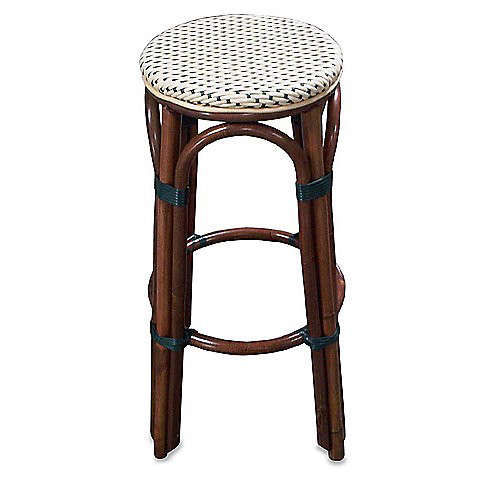
Some furniture pieces whisper. A Paris bistro barstool strolls into the room wearing stripes, carrying espresso energy, and acting like it has opinions about butter quality. That is the charm. A great Paris bistro barstool is not just a seat. It is a shortcut to that casually polished, café-inspired look that makes a kitchen island, breakfast bar, or patio feel a little more cinematic and a lot more inviting.
The best versions blend elegance and practicality: woven seats, airy frames, easy-to-clean materials, and proportions that work in real homes instead of only in fantasy apartments occupied by stylish people who somehow never spill coffee. The appeal comes from the balance. A Paris bistro barstool feels classic without being stuffy, decorative without becoming fussy, and playful without looking like it is trying too hard. That sweet spot is exactly why homeowners, designers, and retailers keep returning to this look.[1]
In this guide, we will break down what a Paris bistro barstool actually is, what features matter most, how to choose the right height, which materials make sense for your space, and how to style one without making your kitchen look like a themed movie set. We will also close with a longer, real-world experience section so you can picture how this style actually lives day to day, not just how it photographs.
What Is a Paris Bistro Barstool, Exactly?
A Paris bistro barstool is the taller cousin of the classic French café chair. It usually borrows the same visual language: woven texture, curving lines, a lightweight frame, and an unmistakably relaxed European attitude. Many of today’s versions are described as being inspired by vintage French chairs or the iconic silhouette of Parisian bistro seating, often with frames bent and shaped by hand.[1]
Visually, this style tends to lean on a few familiar cues. You will often see woven cane, wicker, rattan, or synthetic rattan patterns; black-and-white or blue-and-white striping; bamboo-look frames; and a profile that feels open rather than bulky. Some models have backs, some are backless, and some include a curved backrest that makes lingering over breakfast much easier. In other words, this is not the type of stool that looks like it belongs in a sports bar next to a neon sign and a pile of chicken wings. It belongs near croissants, candlelight, and very strong opinions about tile.
That said, the style works surprisingly well in American homes because it plays nicely with many interiors. It can soften modern kitchens, add personality to minimalist spaces, and bring texture to coastal, traditional, transitional, and even eclectic rooms. It is decorative, yes, but not precious. That is the trick.
Why the Paris Bistro Look Works So Well
It Adds Instant Character
A lot of barstools do their job and then stop there. The Paris bistro barstool actually contributes to the room. The woven pattern introduces movement. The frame adds shape. The overall silhouette brings a little charm to hard-working spaces full of stone, steel, and cabinetry. If your kitchen feels solid but slightly serious, these stools can loosen it up in the best way.
It Feels Light, Not Heavy
Compared with chunky upholstered stools, bistro-style seating usually looks lighter and airier. That matters in kitchens, where visual clutter can build fast. Open frames and woven surfaces let the eye move around the room, which helps smaller kitchens feel less crowded.
It Mixes Beauty and Usefulness
Retailers regularly highlight these stools as strong, light, durable, and comfortable, especially when they are handcrafted with woven surfaces and supportive frames.[1] Some designs even emphasize a taller back for comfort or an overall look that makes guests feel like they have stepped into a Parisian café.[7] Translation: they are not just pretty; they are meant to be sat on by actual humans with actual snacks.
How to Choose the Right Paris Bistro Barstool Height
This is the part people skip, and then suddenly everyone at the counter is eating dinner with their knees in their ears. Measuring matters.
Standard counter height is typically about 34 to 36 inches, and stools for that surface are generally about 24 to 27 inches high. Standard bar height is usually around 40 to 42 inches, and stools for that setup are typically about 28 to 33 inches high. A good rule is to allow roughly 10 to 12 inches between the seat and the underside of the counter or tabletop for comfortable leg room.[4]
Many retailers simplify this even further. House Beautiful notes that counter stools are roughly 25 inches at seat height for counters around 36 inches tall, while West Elm recommends measuring from the floor to the countertop and keeping 10 to 12 inches of clearance. Crate & Barrel gives similar guidance and notes that short or counter-height stools are often around 24 inches, while taller barstools are commonly around 30 inches.[4]
Quick Sizing Cheat Sheet
If your surface is around 36 inches high, start with a counter stool. If it is around 42 inches high, start with a bar stool. If you are shopping online and the product page sounds vague, look for the actual seat height. That number is your truth serum.
Real product dimensions back this up. Room & Board lists examples of counter stools with seat heights around 24 to 25 inches and bar stools with seat heights around 30 inches.[6] So if you are staring at a “Parisian-inspired” stool and wondering whether it is a charming café accent or a very stylish mistake, the dimensions will settle the argument.
Spacing Rules Nobody Should Ignore
Even beautiful stools become annoying when they are crammed together like subway commuters at rush hour. For a kitchen island or counter, plan enough room so people can sit, shift, and get up without elbow-jousting.
A practical benchmark is about 22 to 24 inches of width per seat, though some design guides suggest 24 to 30 inches per person depending on counter height and layout. West Elm also recommends leaving around 6 to 10 inches between seats for elbow room, while The Spruce notes that spacing can vary with stool size, often landing around 6 to 8 inches for smaller stools and about 11 inches for larger ones.[5]
Clearance behind the stools matters too. Better Homes & Gardens recommends generous aisle space around islands, while The Spruce notes that kitchen seating often needs roughly 32 to 44 inches from chair back to wall or counter depending on traffic needs.[8] In plain English: if people have to perform a sideways crab-walk every time someone sits down, the layout needs help.
Best Materials for a Paris Bistro Barstool
Natural Rattan and Bamboo-Look Frames
This is where the Paris bistro barstool gets much of its personality. Natural-looking woven materials give the stool warmth, texture, and that unmistakable café vibe. Pottery Barn describes one of its Parisian woven stools as being made with rattan and bamboo elements, which explains why the look feels organic and collected rather than cold or industrial.[3]
Indoors, natural materials can look especially rich because they add softness to stone countertops, painted cabinetry, and metal hardware. They are ideal for anyone who wants a kitchen to feel layered and lived-in rather than glossy and over-rehearsed.
Performance Wicker and Aluminum for Outdoor Spaces
If you want the Paris bistro look on a patio or covered outdoor bar, weather-friendly materials matter. Frontgate’s French café stools, for example, feature weather-resistant wicker woven over aluminum frames, which makes the classic look more practical for outdoor use.[2]
This is an important distinction. A stool that looks like French café seating is not always built like French café seating. Some are decorative indoor pieces. Others are made to handle sun, moisture, and frequent use. If your barstool will live outdoors, do not assume “woven” means weather-ready. It might just mean “pretty until the first thunderstorm.”
Backed vs. Backless Designs
Backless stools tuck neatly under counters and look less visually busy. Stools with backs tend to be more comfortable for long sits and give the room a more anchored look. Houzz notes that the scale and taller back of some bistro-style stools can make them comfortable for just about everyone, which is good news if your kitchen island doubles as dining room, office, homework station, and emotional support center.[7]
How to Style Paris Bistro Barstools at Home
In a Modern Kitchen
Paris bistro barstools are excellent in modern kitchens because they interrupt hard lines. If your space has slab cabinets, quartz counters, and minimal hardware, a woven stool introduces texture and personality without wrecking the clean look. Think of it as adding a little jazz to a room that has been listening to spreadsheets.
In a Coastal or Casual Space
This style also thrives in breezy interiors. Blue, white, green, black, and natural woven finishes feel right at home with light woods, linen textures, and airy color palettes. That is one reason the look appears so often in coastal-inspired collections from American home brands.[1]
On a Patio or Balcony
Outdoor French café-style stools can turn a simple bar ledge or café table into a more polished entertaining spot. They work especially well with checkerboard floors, striped cushions, potted herbs, globe lights, or a small marble-look table. Just keep the styling restrained. One baguette basket is charming. Twelve baguette baskets is performance art.
Mistakes to Avoid When Buying One
Buying for Looks Only
Yes, the aesthetic matters. That is why you are here. But a gorgeous stool with the wrong height is still the wrong stool. Measure first, flirt with the stripes second.
Ignoring Comfort Details
Look for a footrest, a supportive seat, and a reasonable back height if the stool will be used often. Comfort is not a boring detail. It is what separates “beautiful kitchen moment” from “nobody wants to sit there.”
Forgetting the Room Around the Stool
Remember seat width, space between stools, and the clearance behind them. The stool is not just an object; it is part of a traffic pattern. If the layout is awkward, the room will feel awkward no matter how pretty the weave looks.
What It’s Really Like to Live With a Paris Bistro Barstool
Living with a Paris bistro barstool is one of those home upgrades that sounds small on paper and feels weirdly transformative in practice. At first, it just seems like a style choice. You swap in a woven stool, maybe something with a curved back and a striped seat, and suddenly the kitchen starts behaving differently. People linger. Coffee lasts longer. The island stops feeling like a work surface and starts feeling like a place.
In the morning, the stool has an easy, casual usefulness. You pull it out with one hand, sit down with coffee, and check your messages while sunlight hits the woven pattern just enough to make you think you are a more organized person than you really are. It does not scream for attention, but it makes the room feel finished. That is the magic. The stool contributes personality without demanding a speech.
During the day, it earns its keep in practical ways. A backless version slides neatly under the counter and keeps a tight kitchen from feeling cluttered. A backed version gives you enough support to answer emails, supervise homework, or eat lunch without shifting around every 30 seconds like you are trapped in a waiting room chair. And because many Paris bistro-style stools are visually lighter than oversized upholstered options, they make the kitchen feel more breathable. The room looks open, but not empty.
Then evening rolls around, and this is where the stool really shows off. Friends come over. Someone opens wine. Somebody else leans on the island and starts talking about a restaurant they loved once in New York, which somehow turns into a twenty-minute debate about butter boards, Paris travel fantasies, and whether olives are a snack or a personality type. The stools help create that atmosphere because they feel social. They are not formal dining chairs. They are invitation chairs. Sit here. Stay a while. Have another little nibble.
There is also something satisfying about how these stools age into a room. They are not trend pieces in the flimsy sense. Even when they are new, they often look like they have a story. The woven surfaces, the bent lines, the café referencesall of that gives them a collected quality. They can sit next to polished marble, butcher block, brass hardware, matte black fixtures, or old oak floors and still make sense. Few furniture pieces are that flexible without becoming bland.
Of course, daily life is still daily life. Crumbs happen. Spills happen. Someone will absolutely sit down with tomato sauce on the plate and confidence in the heart. But that is another reason the Paris bistro barstool is appealing: many versions are easier to wipe down than fully upholstered stools, and the woven look tends to hide minor wear better than smooth, precious finishes. It is stylish, yes, but not too delicate for a real home.
In the end, that is the best argument for this style. A Paris bistro barstool brings charm, texture, and a little romance into spaces that can otherwise feel purely functional. It makes everyday routines feel a bit more atmospheric. Not fake-fancy. Not costume-drama dramatic. Just warmer, more personal, and slightly more enjoyable. And honestly, if a stool can make toast and coffee feel one notch closer to a Paris café fantasy, it has done excellent work.
Final Thoughts
The right Paris bistro barstool is part style statement, part practical seating solution, and part mood booster disguised as furniture. It works because it combines timeless design cues with everyday usefulness: smart proportions, woven texture, visual lightness, and enough versatility to move between kitchens, bars, breakfast nooks, and patios.
If you choose the correct height, leave enough spacing, and pick materials that match your lifestyle, this style can elevate a room without making it feel overdesigned. It is elegant, but approachable. Stylish, but not stiff. French in spirit, but fully at home in an American kitchen. Which, frankly, is a very chic résumé for a stool.