Note: This article is based on verified historical reporting, official episode information, and public interviews about the making of Saturday Night. It is written as original SEO content with no embedded source links.
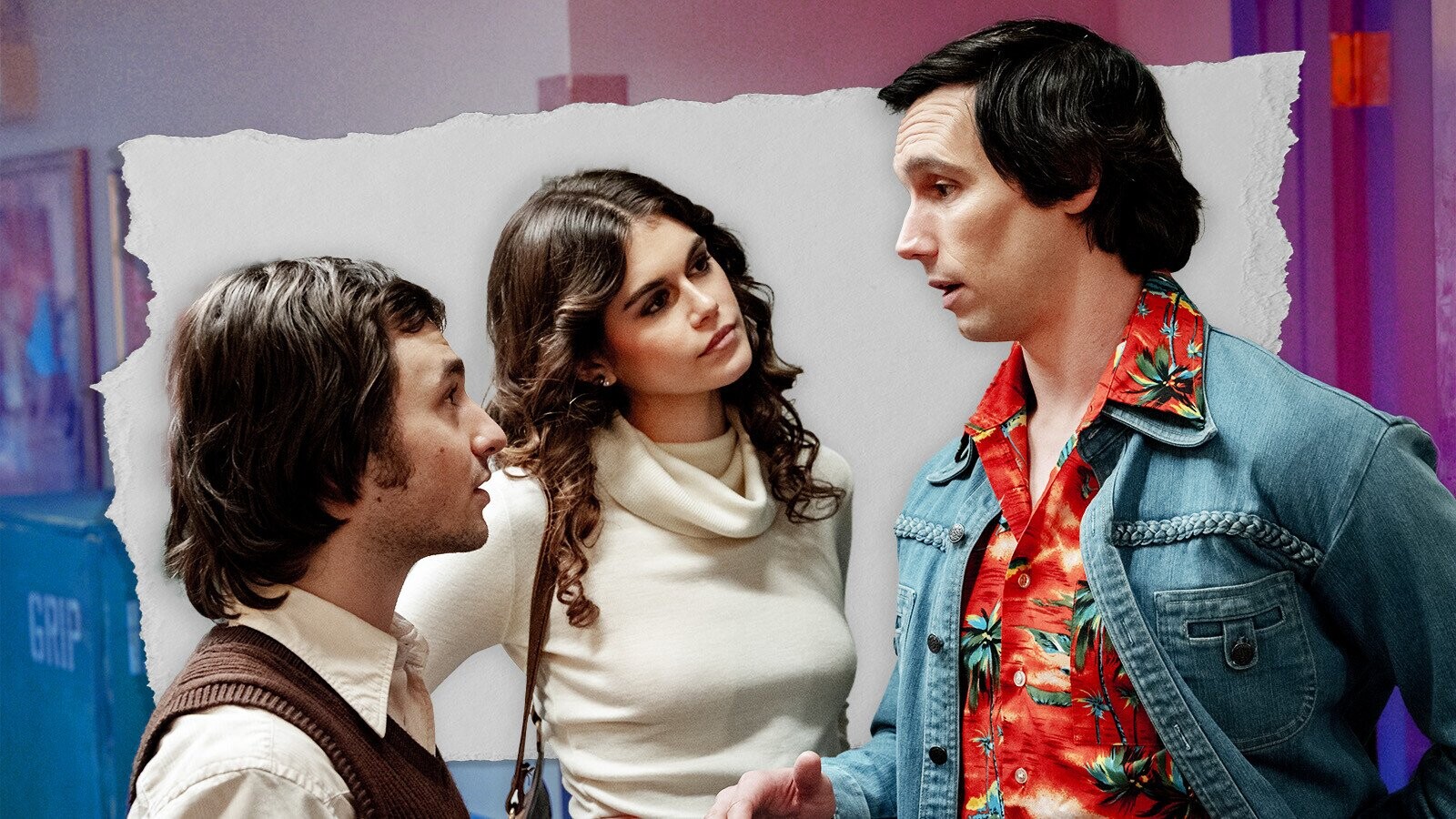
Jason Reitman’s Saturday Night does not stroll gently into television history. It sprints down the hallway of 30 Rockefeller Plaza with a lit match, a nervous producer, a half-built set, a suspicious network, and enough comedy egos to power Manhattan for a week. The movie, co-written by Reitman and Gil Kenan, dramatizes the 90 minutes before the first episode of what would become Saturday Night Live aired on October 11, 1975.
That setup is irresistible. A legendary show before it became legendary. A young Lorne Michaels trying to explain a format nobody fully understands. John Belushi refusing to behave like a team player. Chevy Chase discovering that confidence can be used as both charm and blunt-force instrument. George Carlin hovering around the edges like a counterculture wizard who wandered into network television by accident. If show business had a panic button, this movie presses it every seven seconds.
But how accurate is Saturday Night? The short answer: emotionally sharp, historically selective. The film gets many big-picture truths right, especially the atmosphere of creative chaos, the risk of live television, and the strange new energy that NBC was about to unleash. It also compresses events, moves real incidents to the wrong night, exaggerates certain personalities, and turns long-term backstage tensions into one frantic pre-show pressure cooker. In other words, it is not a documentary. It is a dramatic comedy wearing a documentary’s sneakers.
What Saturday Night Gets Right About the First SNL
The Date, the Pressure, and the Basic Setup Are Real
The first episode aired live on NBC at 11:30 p.m. on October 11, 1975. At the time, the show was not officially called Saturday Night Live. It premiered as NBC’s Saturday Night because ABC already had a program using the Saturday Night Live name with Howard Cosell. That tiny naming detail matters because it reminds viewers that this cultural giant began as a risky late-night experiment, not a polished national institution.
The movie’s ticking-clock structure is also rooted in reality. Reitman and Kenan frame the story as a real-time countdown to air, which captures the terrifying beauty of live television. Was every disaster in the film happening in the same 90-minute window? No. But the sense that nobody knew whether this oddball show would work is historically fair. NBC was betting on a new generation of comedy, and nobody had a crystal ball. If they did, it was probably stuck in the props department next to a fake bee costume.
The First Host and Musical Guests Are Correct
George Carlin was indeed the first host. The premiere also featured musical guests Billy Preston and Janis Ian. This is one of the movie’s strongest factual foundations. Carlin’s role, however, was different from what modern viewers expect from an SNL host. He did not jump into sketch after sketch. Instead, he delivered stand-up segments throughout the episode, giving the premiere a looser variety-show structure.
That difference is important. Today, an SNL host usually becomes a temporary cast member for the night. In 1975, the format was still being invented in public. The first episode included stand-up, music, short films, sketches, Muppets, and guest performances. It was less like a fully assembled machine and more like a comedy garage sale where every item somehow became valuable later.
The “Wolverines” Cold Open Really Started It All
The film correctly pays tribute to the now-famous opening sketch featuring Michael O’Donoghue and John Belushi. O’Donoghue appears as an English teacher, Belushi repeats bizarre phrases, and the sketch leads into the first version of the famous line: “Live from New York, it’s Saturday Night!”
This is not just trivia. It reveals how strange the show was from second one. The first sketch was not a clean political parody or a familiar sitcom setup. It was weird, dry, unsettling, and proudly allergic to old-school variety-show polish. That oddness was the point. SNL announced itself not by asking America to laugh politely, but by tossing America into a sketch and locking the door.
Billy Crystal Really Was Cut
One of the movie’s more painful moments involves Billy Crystal being bumped from the first broadcast. That part is true. Crystal, then still early in his career, had prepared material for the premiere, but his segment was cut before the live show. The movie understandably leans into the emotional sting of that decision, because it is a great showbiz heartbreak: a future comedy star standing at the edge of history and being told, essentially, “Not tonight, kid.”
The film dramatizes the moment for maximum tension, but the core fact holds up. Crystal would later become an SNL cast member and one of the most beloved entertainers of his generation. Still, being cut from the first episode had to hurt. Comedy history is full of glamorous moments, but it also has plenty of people holding scripts backstage while someone else gets the applause.
What the Movie Gets Wrong or Rearranges
Many Real Events Did Not Happen on Opening Night
This is the biggest fact-check point. Saturday Night uses the first broadcast as a container for stories from SNL’s early history. Some incidents happened days, weeks, months, or even years away from the premiere. That is not unusual for a biographical film, but it can mislead viewers who assume every scene is a timestamped recreation.
Think of the movie as a greatest-hits album of early SNL chaos, not a security-camera recording of October 11, 1975. It wants to communicate what the birth of the show felt like. To do that, it sometimes invites historical facts to arrive fashionably early, like celebrities at a party who know the photographer is waiting.
The Milton Berle Material Is Historically Out of Place
The film includes Milton Berle as a symbol of the old television establishment: loud, entitled, and not exactly built for the new comedy revolution. The problem is timing. Berle’s infamous clashes with SNL belong to a later chapter, especially his controversial 1979 hosting appearance, not the first episode in 1975.
As drama, the choice makes sense. Berle represents the show-business world SNL was rebelling against. As strict history, it is a major rearrangement. The film uses him like a walking museum exhibit labeled “Old TV: Do Not Feed After Midnight.” Funny? Yes. Accurate to opening night? Not exactly.
Alan Zweibel Was Not Hired Minutes Before Air
The movie’s portrayal of Alan Zweibel entering the SNL universe at the last possible second is another example of dramatic compression. The real story is more complicated and less convenient for a ticking-clock movie. Zweibel’s connection to the show began earlier, not in a magical emergency recruitment sprint right before airtime.
This change matters because it turns the writers’ room into an even wilder circus than it already was. The early SNL writing staff was chaotic, brilliant, and competitive, but it was not assembled like a heist crew while the clock blinked red. Reitman’s version is entertaining; history is messier and less perfectly timed.
Jim Henson’s Role Is More Nuanced Than the Film Suggests
The movie presents Jim Henson and the Muppets as awkwardly wedged into the SNL machine. There is truth underneath that. The first season featured Henson’s adult-oriented Muppet segments known as The Land of Gorch, and the SNL writers were not always thrilled about writing for puppets. The fit was uneasy.
Still, portraying Henson mainly as a gloomy outsider oversimplifies him. Henson was not merely a children’s entertainer confused by adult comedy. He had long been interested in experimental and mature material. The real tension was less “Jim Henson does not understand SNL” and more “SNL does not quite know what to do with Jim Henson.” That is a very different kind of awkward, like inviting a genius chef to a potluck and handing him a microwave burrito.
Fact-Check: The Original Cast and Character Portrayals
The Cast Lineup Is Mostly Right
The film features the key original performers viewers expect: Dan Aykroyd, John Belushi, Chevy Chase, Jane Curtin, Garrett Morris, Laraine Newman, and Gilda Radner. These performers became known as the Not Ready for Prime Time Players, a label that sounded like an insult but became a badge of honor.
The movie also gives attention to the personalities behind the legend. Belushi is volatile, Chase is ambitious, Radner is radiant, Aykroyd is odd and intense, and Morris is searching for his place in a mostly white comedy environment. These portraits are not neutral biographies. They are cinematic snapshots, sharpened for speed. Some land better than others, but the film understands that SNL was not born from harmony. It was born from friction, nerves, talent, and the kind of workplace energy that would make an HR department quietly leave the building.
Garrett Morris Deserved Even More Context
One of the more interesting threads involves Garrett Morris, whose background included serious theater and vocal training. The movie highlights his uncertainty about where he fits among the younger sketch comedians. That emotional idea rings true. Morris was a gifted performer, but early SNL did not always know how to use him fully.
However, some specific moments in the film are heightened or unsupported as literal opening-night events. The larger truth is more important: Morris brought range, intelligence, and musical ability to a show that sometimes boxed him into limited roles. A strong fact-check should give the movie credit for noticing his isolation while also noting that not every dramatic beat should be treated as archival fact.
Chevy Chase and John Belushi Are Turned Up to Movie Volume
Chevy Chase and John Belushi were both central to the early SNL mythology, and the film leans hard into their contrasting energies. Chase is presented as cocky and camera-ready, while Belushi is intense, suspicious, and allergic to being managed. Those broad strokes match many accounts of the era, but the film amplifies them for comic and dramatic rhythm.
That is where fact-checking biopics gets tricky. A portrayal can be spiritually accurate while still being exaggerated. Chase really did become the show’s first breakout star. Belushi really did carry a dangerous, unpredictable charisma. But real people are not just their loudest anecdotes. The movie sometimes treats personality as fireworks: bright, explosive, and not especially concerned with cleanup.
The Biggest Truth: SNL Was an Experiment, Not a Sure Thing
The most accurate thing about Saturday Night may be its refusal to treat SNL’s success as inevitable. Today, Saturday Night Live feels like part of American furniture. Presidents get impersonated there. Pop stars dream of hosting it. Cast members become movie stars. But on October 11, 1975, it was just a strange live show trying to survive its first broadcast.
That uncertainty is the movie’s superpower. It reminds viewers that institutions do not begin as institutions. They begin as risky ideas, confusing meetings, bad rehearsals, bruised egos, missing props, and someone saying, “We are live in five,” while everyone silently wonders whether they should have become dentists.
Viewer Experience: Watching Saturday Night as a Fact-Checking Fan
Watching Saturday Night with a fact-checking mindset is a strange little sport. On one hand, you want to enjoy the movie’s speed, jokes, performances, and nervous electricity. On the other hand, your brain keeps raising its hand like a student who did the reading: “Excuse me, did that happen in 1975 or 1979?” This is both fun and slightly annoying, which is basically the official hobby of entertainment history nerds.
The best way to experience the film is to treat it as a gateway rather than a final textbook. Let the movie pull you into the hallway outside Studio 8H. Feel the panic. Enjoy Gabriel LaBelle’s anxious, quietly stubborn Lorne Michaels. Appreciate how the cast captures the outlines of comedy legends without turning every scene into a wax museum. Then, after the credits, go back to the real first episode and notice how different it feels from the modern SNL format.
The premiere is fascinating because it is uneven. That is not an insult. Unevenness is part of its charm. The first episode contains brilliant moments, odd pauses, musical performances, stand-up, puppets, and sketches that feel like they arrived from different planets. Watching it after the movie makes the fact-check more rewarding. You can see what Reitman chose to emphasize and what he left out. You also realize that no film could fully capture the weirdness of the actual broadcast without becoming a three-hour museum tour hosted by a nervous page.
For writers, comedians, filmmakers, and creative teams, Saturday Night also works as a workplace movie. It is about the terror of launching something before anyone agrees what it is. That experience is not limited to television. Anyone who has opened a business, published a website, performed onstage, launched a podcast, or presented a project while secretly thinking, “Please do not collapse in public,” will recognize the feeling. The movie’s historical details may wobble, but its creative anxiety is dead-on.
There is also a useful lesson here about mythmaking. SNL’s first night has been retold so many times that it has become comedy folklore. Folklore is not the same as falsehood. It is truth shaped by memory, ego, regret, affection, and better pacing. Saturday Night participates in that tradition. It does not simply report the myth; it adds another layer to it.
So the most satisfying viewing experience comes from holding two thoughts at once. First, the movie is not a perfect factual record. Second, it captures something real about the madness of making live comedy under pressure. That combination is why the film is worth discussing. If it were completely accurate but dull, only archivists would clap. If it were wildly entertaining but careless, history fans would throw popcorn. Instead, it lands somewhere more interesting: a lively, flawed, affectionate dramatization that makes viewers want to argue, research, rewatch, and maybe shout “Live from New York!” in their living room when nobody asked.
Conclusion: What’s Right, What’s Wrong, and Why It Still Works
Saturday Night is best understood as a fact-based dramatic remix. It gets the central premise right: a young team really did launch a strange new live comedy show on October 11, 1975, with George Carlin hosting, Billy Preston and Janis Ian performing, and a cast that would change American comedy. It correctly captures the uncertainty, ambition, backstage nerves, and rebellious spirit surrounding the birth of SNL.
But the movie also takes major liberties. It compresses early SNL history into one night, moves later incidents into the premiere, simplifies complex personalities, and turns long-running tensions into immediate emergencies. That does not make the film worthless. It makes it a movie. The key is knowing when it is showing documented history and when it is chasing a larger emotional truth.
For viewers searching “Saturday Night fact check,” the verdict is simple: watch it for the energy, not the footnotes. Enjoy the performances, the chaos, the period detail, and the sense that television history is being built with duct tape and caffeine. Then remember that the real story of SNL is bigger, stranger, and more complicated than any 109-minute film can hold. Comedy history, like live TV, rarely fits neatly into the cue cards.