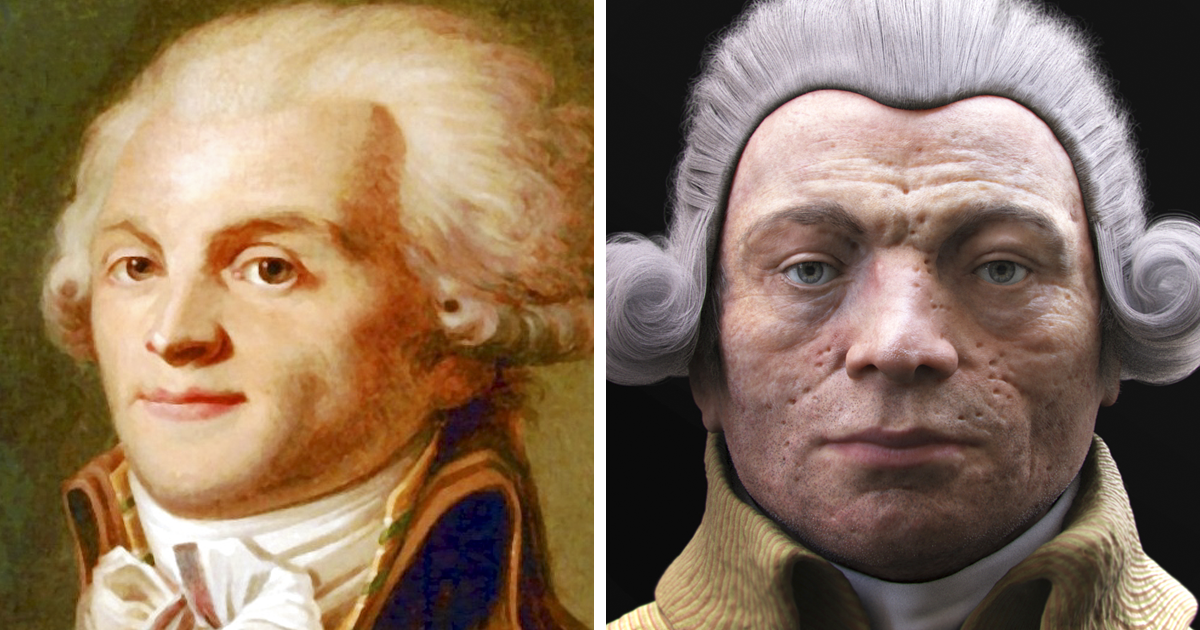
There is something wonderfully spooky, deeply human, and slightly nosy about looking into the recreated face of someone who lived centuries ago. We know we are not supposed to stare. And yet, when scientists reveal the face of a medieval woman, a Stone Age hunter, an ancient ruler, or a mummy who last saw daylight thousands of years before smartphones began ruining dinner conversations, we stare anyway.
Facial reconstruction is one of those rare fields where archaeology, forensic science, anatomy, genetics, art, and a dash of detective drama all sit at the same table. The goal is not to produce a perfect “photograph” of the past. Nobody is pulling a dusty skull out of the ground and saying, “Enhance!” like a crime show with unlimited pixels. Instead, researchers build a scientifically informed approximation: a face that fits the bones, the biological evidence, the archaeological context, and sometimes ancient DNA.
In recent years, scientists have recreated faces of people who lived centuries agoand even thousands of years agowith stunning detail. From Cheddar Man in Britain to the Jericho Skull, from Inca mummies to medieval Europeans, these reconstructions do more than satisfy curiosity. They help museums tell richer stories, challenge modern assumptions about ancestry, and remind us that history was not lived by dates in textbooks. It was lived by real people with cheekbones, tired eyes, crooked teeth, impressive hair days, and probably at least one neighbor they avoided in the marketplace.
What Is Facial Reconstruction?
Facial reconstruction, often called forensic facial approximation, is the process of estimating what a person may have looked like based primarily on the skull. In modern forensic investigations, it can help identify unknown remains. In archaeology, it can help the public connect with people from the distant past.
The skull is not a blank canvas. It gives scientists and artists a surprising amount of information. The shape of the brow ridge, nasal opening, cheekbones, jaw, chin, eye sockets, and dental structure can suggest the general architecture of a face. A strong jaw may produce one kind of lower face; a narrow nasal aperture may suggest another kind of nose base. The teeth can reveal age, diet, disease, and sometimes social status. The skull does not whisper everything, but it definitely has receipts.
However, the soft parts of the facelips, ears, hairstyle, facial fat, wrinkles, and expressionare much harder to know. That is why responsible scientists describe reconstructions as approximations, not exact portraits. Think of them as the best possible “based on available evidence” version, rather than a passport photo from the Bronze Age Department of Motor Vehicles.
How Scientists Recreate Ancient Faces
1. The Skull Is Scanned or Replicated
The process often begins with a CT scan, laser scan, photogrammetry, or 3D scan of the skull. This allows researchers to study the remains without constantly handling fragile bones. In many cases, they create a digital model or a 3D-printed replica. That way, the original specimen stays safe while the reconstruction team works on a copy.
This step is especially important for ancient remains because time is not gentle. Skulls may be cracked, incomplete, warped by burial conditions, or missing key parts. Digital tools allow scientists to mirror surviving bone from one side of the skull to the other, repair damaged areas, and test different interpretations before committing to a final model.
2. Tissue Depth Markers Are Added
One of the most important tools in facial reconstruction is soft-tissue depth data. Researchers use measurements gathered from living people, medical scans, and forensic studies to estimate how thick the facial tissue would have been at specific points on the skull. These points are called landmarks.
In traditional clay reconstructions, small pegs are placed on the skull replica to show estimated tissue thickness. The artist then builds muscle and skin around those markers. In digital reconstructions, software can apply similar data in a virtual environment. Either way, the core idea is the same: the bones provide the structure, and tissue-depth data helps shape the surface.
3. Anatomy Builds the Face
Facial muscles are added according to known human anatomy. The jaw muscles, cheeks, brow area, mouth region, and neck all follow patterns. A trained forensic artist does not simply “make a face that looks cool.” They work from anatomical relationships: where muscles attach, how the nose relates to the nasal bones, how the mouth sits around the teeth, and how the eyes fit into the orbital sockets.
This is where the work becomes both science and art. Two skilled experts working from the same skull might produce faces that are very similar in structure but different in personality. One might give the person a neutral expression; another might add a slight squint, relaxed mouth, or weathered texture. The bones guide the reconstruction, but the final spark of humanity comes from careful artistic judgment.
4. DNA and Archaeology Add the Details
Ancient DNA has changed the field dramatically. When DNA is preserved well enough, it can sometimes help estimate traits such as hair color, eye color, skin pigmentation, biological ancestry, and certain genetic markers. This is why some modern reconstructions are more detailed than older ones, which often had to guess at coloring.
Archaeological context also matters. Clothing, jewelry, tools, burial style, diet, injuries, and isotopic analysis can help researchers understand how a person lived. A reconstruction of a high-status Inca girl, a Neolithic hunter-gatherer, or a medieval townsman is not just about the face. It is about placing that face back into a world of climate, culture, food, labor, belief, and survival.
Famous Examples of Scientists Recreating Faces From the Past
Cheddar Man: A Face That Challenged Assumptions
Cheddar Man, a roughly 10,000-year-old skeleton found in Cheddar Gorge in England, became famous when scientists and artists created a reconstruction suggesting he had dark skin, blue eyes, and dark curly hair. The result startled many people because it challenged a simpleand wrongmodern assumption that ancient Europeans must have looked like today’s average northern Europeans.
The reconstruction showed how ancient DNA can reshape public understanding. Cheddar Man was not just a museum specimen. He became a reminder that human populations have always moved, mixed, adapted, and changed. History does not care about modern stereotypes. It has its own messy, fascinating family tree.
The Jericho Skull: Recreating an Ancient Ancestor
The Jericho Skull is one of the most intriguing ancient human remains ever studied. Dating back around 9,500 years, it was part of a tradition in which human skulls were plastered and decorated, possibly as part of ancestor veneration. Modern researchers used scanning and reconstruction techniques to estimate the face of the man behind the artifact.
This case is especially poetic because ancient people had already tried to preserve or recreate a face. Thousands of years later, scientists did it again with CT scans and digital modeling. It is like a collaboration across time: Neolithic ritual meets modern lab coat.
Juanita, the Inca “Ice Maiden”
Juanita, sometimes called the Inca Ice Maiden, was a young girl whose frozen remains were discovered high in the Andes. A modern facial reconstruction used CT scans, skull measurements, and archaeological evidence to create a lifelike version of her appearance. Because her body was unusually well preserved, researchers had more information than they often do with older skeletal remains.
Reconstructing Juanita’s face was not just a technical exercise. It raised emotional and ethical questions. She was a child, a real person, and part of a ceremonial world very different from our own. A good reconstruction invites curiosity, but it should also invite respect.
A 10,500-Year-Old Woman From Belgium
Researchers have also reconstructed the face of a woman who lived around 10,500 years ago in what is now Belgium. Using well-preserved ancient DNA and skeletal analysis, they were able to produce a detailed facial approximation, including traits such as eye and hair color. Cases like this show how much the field has advanced: the face is no longer built from bone alone, but from a combination of anatomy, genetics, and archaeological context.
Richard III: When History Gets a Jawline
The reconstruction of King Richard III, whose remains were found beneath a parking lot in Leicester, is one of the most famous examples involving a named historical figure. Scientists confirmed his identity using archaeological evidence, skeletal analysis, and DNA comparisons. Facial reconstruction then helped the public see the king not as a Shakespearean villain or a royal rumor machine, but as a human being with a specific face.
The Richard III case demonstrates why these projects attract so much attention. A skull in a lab feels distant. A face makes people lean forward.
Why These Reconstructions Matter
They Make History Human
Most people struggle to emotionally connect with a bone fragment, a burial date, or a museum label that says “adult male, approximately 35.” But a face? A face changes the conversation. Suddenly, the person is not “Remains 47B.” They are someone who may have laughed, worked, loved, suffered, worried about food, complained about the weather, and had no idea that future humans would argue about them on the internet.
Facial reconstructions help museums and educators bring the past closer. They transform archaeology from a subject about objects into a story about people.
They Correct Modern Myths
Ancient DNA and reconstruction can challenge simplified ideas about identity, race, and migration. The past was not neatly divided into modern categories. Human beings have always traveled, adapted, married across groups, traded, migrated, and changed. Reconstructions like Cheddar Man make that reality visible.
They also remind us that appearance is not the same as culture. A person’s face might surprise modern viewers, but their life was shaped by their community, environment, tools, diet, beliefs, and relationships.
They Improve Forensic Science
The same techniques used to recreate ancient faces can support modern forensic investigations. Facial approximation may help identify unknown remains when DNA, fingerprints, or dental records are unavailable or inconclusive. While it is not a magic identification machine, it can generate public recognition and investigative leads.
Advances in 3D scanning, soft-tissue databases, and computer modeling continue to improve the field. Researchers are also exploring automated and statistical methods that can produce multiple plausible faces rather than pretending there is only one exact answer.
The Big Question: How Accurate Are Recreated Faces?
Accuracy depends on the evidence. If scientists have a complete skull, good preservation, DNA, dental information, and archaeological context, the reconstruction can be more confident. If the skull is damaged, DNA is unavailable, or the person’s soft tissue features were highly individual, the uncertainty grows.
Bone can suggest the width of the face, the placement of the eyes, the shape of the jaw, and some aspects of the nose. DNA may suggest pigmentation. But the exact shape of the lips, the fullness of cheeks, the style of hair, the size of ears, and the emotional expression remain partly interpretive.
That does not make the work useless. A weather forecast is not useless because it cannot tell you the exact number of raindrops. Scientific reconstruction is about probability, evidence, and careful boundaries. The best reconstructions are honest about what is known, what is inferred, and what is artistic interpretation.
Technology Is Changing the Face of the Past
Modern facial reconstruction has benefited from several major technologies. CT scanning allows researchers to see bone structures in detail. 3D printing makes it possible to create accurate replicas without damaging original remains. Digital sculpting tools allow artists to revise and compare models quickly. Ancient DNA analysis can provide information that older reconstructions had to guess.
Artificial intelligence and statistical modeling are also entering the conversation. Some research explores how databases of skulls and faces can help generate likely facial forms. This could eventually allow scientists to produce a range of plausible reconstructions rather than a single polished face. That matters because one skull can support more than one reasonable interpretation.
Still, technology does not replace expertise. A computer can process measurements, but it cannot fully understand cultural context, preservation bias, or the ethical responsibility of representing the dead. The strongest reconstructions combine digital tools with human judgment.
Ethical Questions: Should We Recreate Every Ancient Face?
Just because scientists can recreate a face does not always mean they should. Human remains deserve dignity. Many cultures have strong beliefs about ancestors, burial, and display. Museums and researchers increasingly recognize that reconstructions must be handled with respect, especially when remains are connected to living descendant communities.
There is also the danger of overconfidence. A dramatic reconstruction can look so real that viewers forget it is an approximation. Museums and articles should clearly explain the evidence behind the image. A reconstructed face should invite wonder, not mislead people into thinking science has produced a guaranteed selfie from the year 1200.
The best projects are transparent. They show the skull, explain the method, discuss uncertainty, and avoid sensational claims. The goal is not to turn the dead into entertainment. The goal is to restore context, humanity, and understanding.
Experiences Related to Seeing Scientists Recreate Faces Of People Who Lived Centuries Ago
Seeing a reconstructed ancient face for the first time is a strange experience because it collapses time in a way that a textbook cannot. A date like “9,500 years ago” feels enormous, almost abstract. It belongs to charts, museum timelines, and the kind of history class where someone in the back is secretly drawing dragons in the notebook. But a face changes everything. Suddenly, the distance shrinks. You are no longer looking at “the past.” You are looking at a person.
For many museum visitors, that moment is surprisingly emotional. A skull may inspire curiosity, but a reconstructed face inspires recognition. You notice the slope of the nose, the tiredness around the eyes, the set of the mouth. You may wonder whether the person was kind, serious, funny, shy, stubborn, or the ancient version of someone who would absolutely refuse to ask for directions. The science opens the door, and imagination quietly walks in.
One powerful experience comes from comparing the reconstruction with the evidence beside it. When a museum displays the skull, the scan, the tissue markers, and the final face together, visitors can see the bridge between raw data and human form. It becomes clear that the reconstruction is not random decoration. It is a layered process built from anatomy, measurement, probability, and careful artistry. That transparency makes the final face more meaningful, not less.
Another memorable experience is realizing how often ancient faces disrupt modern expectations. People may walk into an exhibit with a tidy mental picture of what a “Stone Age European,” “medieval man,” or “ancient ruler” should look like. Then the reconstruction refuses to cooperate. The person may have darker skin, lighter eyes, unexpected ancestry, signs of disease, evidence of injury, or features that feel strikingly familiar. The past becomes less like a costume drama and more like a crowded human story.
There is also a quiet lesson in humility. These reconstructions remind us that future generations may one day study us with the same mixture of science and curiosity. They may examine our bones, analyze our diets, scan our dental work, and wonder why we spent so much time staring at glowing rectangles. Hopefully they will be kind. Hopefully they will not reconstruct everyone with “mildly stressed email face,” although, scientifically speaking, that would be fair.
The experience of viewing recreated ancient faces is ultimately about connection. It asks us to care about people who cannot speak for themselves. It turns archaeology into a conversation across centuries. And it reminds us that every era, no matter how distant, was once the present moment for someone with a face, a family, a body, a life, and a place in the long, unfinished story of being human.
Conclusion
Scientists recreate faces of people who lived centuries ago by combining skull analysis, soft-tissue depth data, CT scanning, 3D modeling, ancient DNA, archaeology, and artistic skill. The results are not perfect photographs, but they are powerful scientific approximations that bring the past into focus.
These faces matter because they make history personal. They remind us that ancient people were not background characters in a dusty documentary. They were individuals with bodies, identities, struggles, communities, and stories. Whether we are looking at Cheddar Man, the Jericho Skull, an Inca mummy, a medieval skeleton, or a newly reconstructed ancient woman, we are looking at evidence transformed into empathy.
The past may be gone, but it is not silent. Sometimes, with enough science and enough care, it looks back.