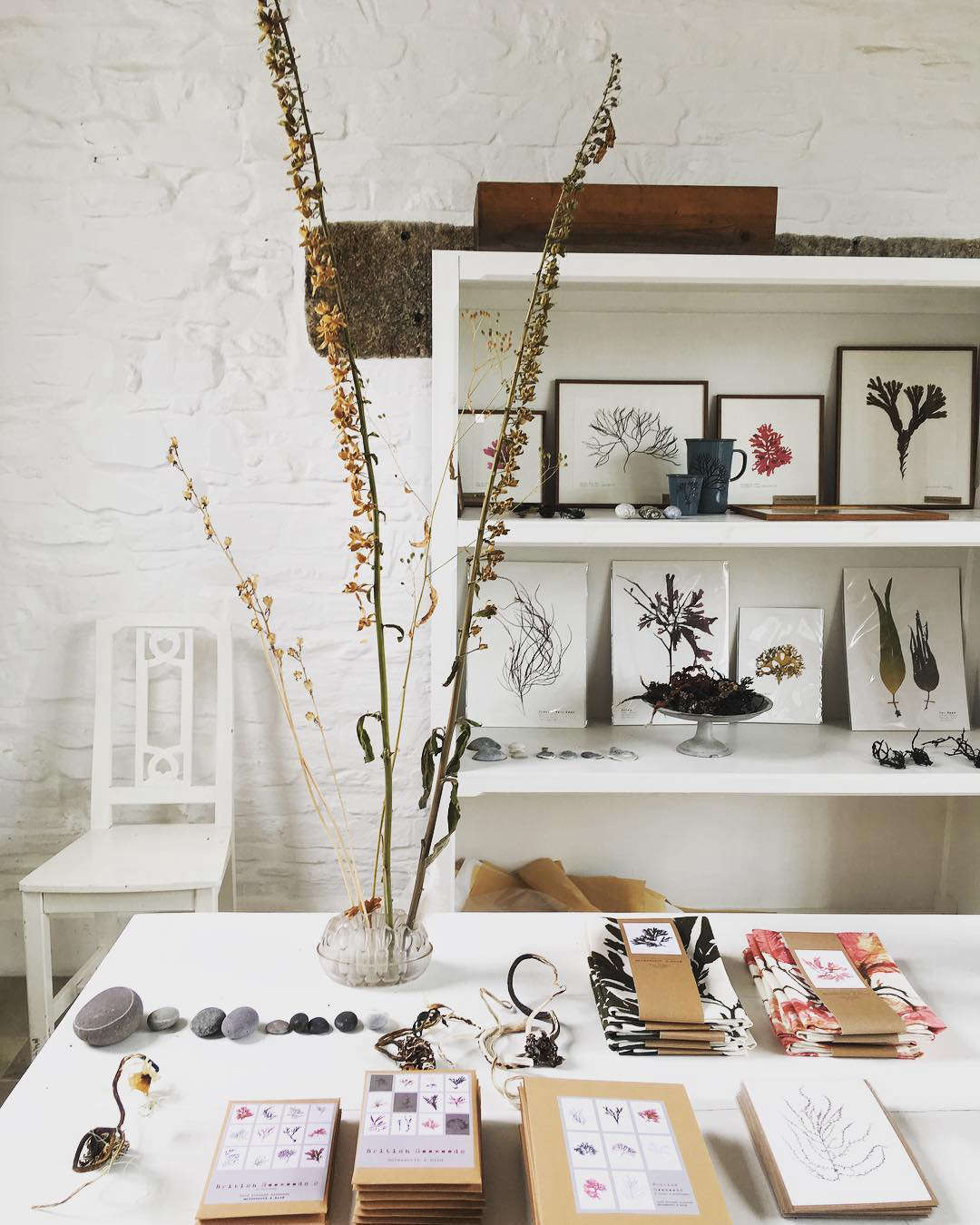
Seaweed has a branding problem. In most people’s minds, it’s either (1) that slippery stuff that clings to your ankle like a needy ex,
(2) a suspicious garnish on a poke bowl, or (3) the reason you’re Googling “how to get ocean smell out of sandals.”
But in Cornwall, seaweed gets a glow-uppressed, framed, printed, stitched, and turned into the kind of coastal keepsake you actually want
to bring home (and proudly hang on your wall, far from your shoes).
Enter Molesworth & Bird, a small design studio that’s made an entire, charming universe out of hand-pressed seaweed.
If you’ve ever wished your home could feel more “breezy seaside” and less “theme restaurant with anchors,” this is your sign.
Consider this your shopper’s diary entry: what they make, why it works, what to buy, how to style it, and how to do the whole coastal thing
with a wink and a little restraint.
Meet Molesworth & Bird: Seaweed, But Make It Art
Molesworth & Bird is the creative partnership of Melanie Molesworth and Julia Bird,
longtime friends who turned a shared fascination with seaweed pressings into a modern line of artwork and home goods.
Their signature look is instantly recognizable: botanical silhouettes that feel both scientific and dreamylike a natural history plate that
decided to become a minimalist.
The premise is simple (and honestly, kind of genius): forage seaweed along the coastline, press it in the traditional style,
and translate those organic shapes into limited-edition prints and practical pieces for everyday life.
The result lands in that sweet spot between “museum shop find” and “my kitchen is quietly stylish without trying too hard.”
Why Seaweed Pressings Feel So Right in a Home
Coastal decor can go sideways fast. One minute you’re adding a striped pillow for “beach energy,” and the next minute your living room is
one ship’s wheel away from a pirate-themed escape room. The secret to modern coastal style is subtlety: natural textures, airy colors,
and art that suggests the shoreline without screaming “I own three different kinds of driftwood.”
Seaweed prints work because they’re coastal without being corny. The forms are elegant and sculpturalfronds, ribbons,
branching fanslike underwater ferns doing interpretive dance. The palette tends to be calm and earthy, which plays nicely with
linen, rattan, light woods, and the kinds of neutrals that make a room feel breathable.
In other words: it’s a beach reference that doesn’t require a single glued-on shell. And that’s a win for everyone,
including your future self who won’t have to “declutter nautical.”
What to Buy: A Short (Very Tempting) Shopping List
Molesworth & Bird is the rare brand where you can buy something beautiful for your wall and something useful for your kitchen,
and both feel like they belong in the same aesthetic family. Here are the standouts that make the strongest case for “Yes,
I absolutely needed this, thank you for asking.”
1) Framable Seaweed Prints
If you buy one thing, make it a seaweed print. These are designed to be framed, gifted, and admired from a respectable distance
(because you’ll want to keep pointing at them like, “Look how real it is!”). They read like botanical art with a coastal twist
calm enough for a bedroom, interesting enough for a hallway, and smart enough for the kitchen where you pretend you don’t eat cereal over the sink.
2) The Calendar That Feels Like Wall Art
A seaweed calendar sounds niche until you realize: it’s basically twelve months of minimal botanical prints you can hang, flip, and later
repurpose. If you’re the kind of person who saves nice paper bags “just in case,” this is your functional design object.
(And yes, you can absolutely frame your favorite month when the year endsno judgment, only applause.)
3) Tea Towels, Cushions, and Other “Useful Art”
Seaweed on linen tea towels is the kind of detail that makes a kitchen feel considered, not staged.
It’s also a low-commitment way to add coastal texturelike jewelry for your oven handle.
Their cushions bring the same motif into living spaces without going full “beach house rental.”
4) Enamelware With Personality
Seaweed-printed enamel pieces are the ultimate “I bought this on a trip and now my ordinary Tuesday feels fancier” souvenir.
Use a jug as a water pitcher, a utensil holder, or a vase for wildflowersanything that lets you see that seaweed pattern
doing its understated best.
5) Cards, Postcards, and Small Gifts That Don’t Feel Small
If you need gifts that look thoughtful without requiring you to know someone’s exact candle scent preference,
seaweed stationery is a safe bet. It’s nature-forward, quietly artistic, andmost importantlydoesn’t come with a punny quote
about “living, laughing, and loving.” You’re welcome.
Note on pricing: In the original shopper’s-diary-style coverage, items were listed in pounds (for example:
prints around £19, tea towels around £15, cushions around £65, enamel jugs around £49, and a seaweed calendar around £22).
Prices and product ranges can shift over time, but it’s helpful as a ballpark for the “small luxury” vibe.
Where This Cornwall Find Lives: Studio Towns, Sea Air, and a Good Detour
Molesworth & Bird’s work is rooted in the landscapeliterally. Cornwall’s coastline has that storied mix of rugged cliffs, quiet coves,
and artist communities that have been pulling creative people toward the sea for generations.
Even if you’re not doing a full Cornwall itinerary, their world makes sense in this setting: a place where you can spend the morning
walking coastal paths and the afternoon discovering a small shop that makes you want to redecorate your entire entryway.
The brand has a presence in Cornwall (and beyond), and the “shopper’s diary” appeal is that it feels discoverablelike you’ve stumbled into
an atelier that turns beachcombing into collectible design.
How Seaweed Becomes Design: From Low Tide to Paper (and Then to Linen)
Seaweed pressing is a satisfying blend of science class and art studio. The seaweed is gathered, cleaned, and carefully arranged so the natural
structure showsribbons, fronds, branching fans, lace-like pieces that look painted even when they’re not.
Pressing preserves the form, and those pressings become the basis for prints and patterns.
The magic is in the contrast: seaweed is inherently wild and unpredictable, but the finished pieces feel calm and composed.
It’s the same reason people love botanical drawings and herbarium sheetsnature, organized.
Only here, the “plant” happens to have spent the day in the Atlantic.
Seaweed With a Conscience: A Quick Word on Foraging Ethics
Any time “collecting from the shore” enters the chat, it’s smart to talk about respect for the coastline.
Many coastal areasespecially protected tide pool habitatshave strict rules about removing natural items.
Even when something looks abandoned, it may be habitat, food, or part of the ecosystem’s nutrient cycle.
The responsible mindset is simple: know the rules where you are, and don’t treat the coast like a free craft store.
If you’re inspired by the seaweed-pressing tradition, admire the practice from a distance unless you’re certain it’s permitted and sustainable.
Better yet, support artists who are already doing the work thoughtfully and turning that inspiration into lasting objects.
How to Style Molesworth & Bird at Home (Without Turning Your House Into a Souvenir Shop)
Here’s the fun part: making seaweed prints and linens feel intentional in your space, whether you live on the coast or your closest body of water
is the condensation on your iced coffee.
In the Kitchen: Quiet Coastal, High Function
Seaweed tea towels look best when the rest of the kitchen is doing something simple: open shelving, pale woods, white tile, warm metals,
and textures like linen and woven baskets. The tea towel becomes a soft focal pointgraphic, but not loud.
Pair it with a ceramic crock, a cutting board that’s actually used, and one nice piece of art (yes, kitchens deserve art too).
In the Bathroom: Botanical Calm Beats Beachy Props
Instead of starfish soap dishes and “Sandy Toes” signage, try one framed seaweed print over a towel hook or near a mirror.
It delivers “ocean-adjacent” without the gimmicks. Bonus points if you keep the frame light and mattewhite, pale oak, or natural wood tones.
In the Living Room: Texture Layering That Feels Lived-In
A seaweed cushion works when it’s part of a texture mix: linen upholstery, a chunky knit throw, a jute rug, maybe a worn leather chair.
The motif reads as organic, not themed. Think “collected” instead of “coordinated.”
As a Gallery Wall: Let the Shapes Do the Talking
Seaweed prints are surprisingly flexible in a gallery wall. Mix them with black-and-white photography, a small abstract, a sketch, or a vintage map.
Keep the color story calm and let the seaweed shapes add movement. The goal is “artful,” not “gift shop aisle.”
As Gifts: The Best Kind of Practical Pretty
If you’re shopping for someone who has everything (or claims they want “nothing”), seaweed-printed linens and cards are a friendly loophole.
They’re useful, beautiful, and specific enough to feel personalwithout the pressure of guessing a ring size or a very intense perfume.
Why This Remodelista-Style Find Hits So Hard
The appeal of a “shopper’s diary” brand isn’t just the productit’s the story you bring home with it.
Molesworth & Bird sits at the intersection of craft, place, and everyday design.
Their work feels rooted in the coastline, but it’s not precious. You can frame it, use it, wash it, live with it.
And that’s the real flex: buying something made with care that doesn’t demand you treat it like a museum artifact.
It’s coastal style for people who like the sea, but also like their home to look like an actual home.
Extra : A Shopper’s Diary Add-On (Because the Coast Deserves a Postscript)
I planned to be “chill” about visiting Molesworth & Bird. Just a quick look, I told myself. A casual browse. A respectful nod to craftsmanship.
You knowlike someone who has never once walked into a small studio shop and immediately developed a strong opinion about linen.
Cornwall has a way of lowering your defenses. The light feels differentsoft but bright, like the sky is quietly showing off.
The air smells like salt and possibility (and, depending on the breeze, a hint of seaweed reminding you who’s boss).
You start the day thinking you’ll buy nothing but maybe a postcard, and somehow you end it contemplating whether your kitchen is “missing”
a seaweed-themed textile moment.
The first thing that gets you is the shapes. Seaweed isn’t just “stringy green stuff” when you really look at it.
Some pieces are delicate like lace. Others have bold, branching forms that look like underwater trees.
Seeing those silhouettes translated into prints feels oddly calminglike nature decided to organize itself for once.
It’s the same satisfaction as neatly labeled spice jars, but with more poetry and fewer cumin accidents.
Then you start mentally redecorating. A small print by the back door would make coming home feel nicer.
A tea towel with a seaweed motif would give the kitchen that “someone here owns a good cutting board” energy.
A cushion would look perfect on the chair you swear you use for reading (even though it’s currently holding yesterday’s hoodie).
Everything becomes a “tiny upgrade,” which is exactly how you end up with a bag of “tiny upgrades.”
The best souvenir purchases are the ones that keep working long after the trip ends. Every time you reach for that towel,
you’re back in that coastal headspace for a secondhearing gulls, feeling the wind, remembering the serious business of deciding between
“one print” and “maybe two prints because they look better together.” And when you frame the art, it becomes more than a memory:
it’s proof you paid attention to a place. Not just the obvious highlights, but the detailstextures, forms, quiet beauty.
By the end of the day, you realize the real win isn’t that you bought something pretty. It’s that you brought home a little piece of Cornwall’s
logic: slow down, look closer, choose fewer things, choose better things, and let nature be the designer when it’s clearly auditioning for the role.
Also, let seaweed have its moment. It’s earned it.