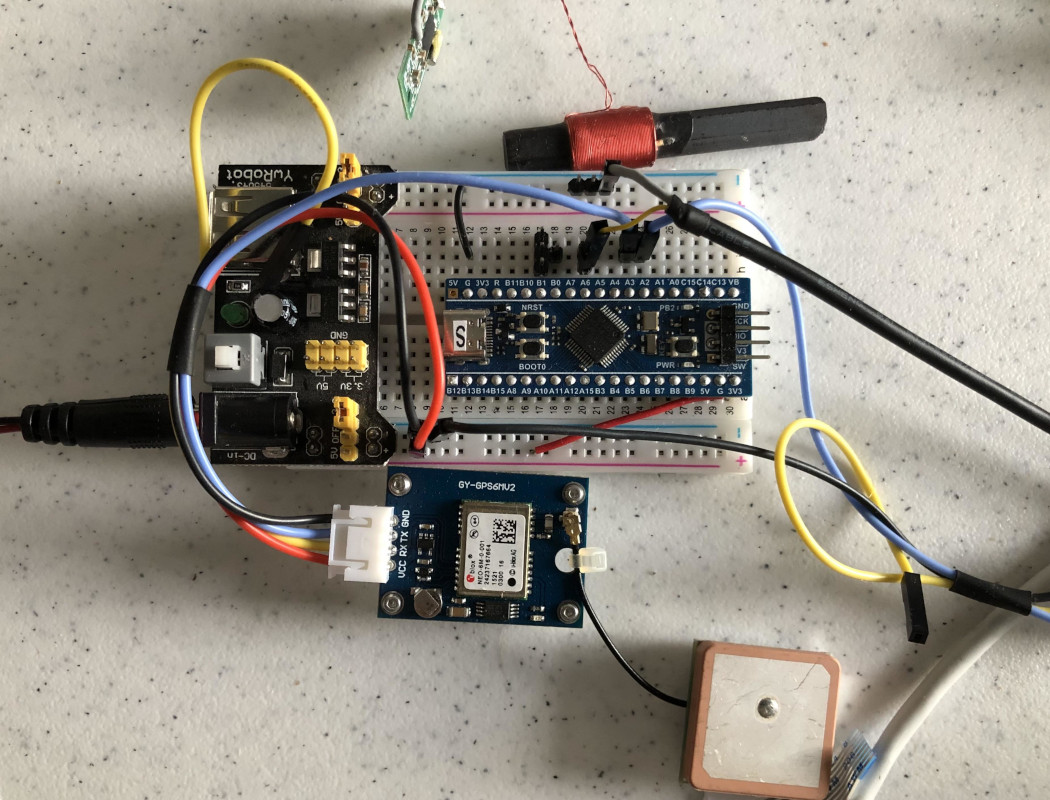
There is something wonderfully dramatic about a clock that listens to the sky. No app refresh. No Wi-Fi password. No desperate “have you tried turning the router off and on again?” Just a disciplined radio signal, a carefully encoded minute, and a receiver that quietly decides what time it is. That is the charm of a time-keeping radio signal, and it is exactly why simulating one is such a satisfying project.
If you are building embedded devices, testing a radio-controlled clock, teaching digital communications, or just enjoy making invisible systems visible, simulating a time signal is a fantastic playground. It combines signal processing, timekeeping, encoding, radio propagation, and a surprising amount of real-world messiness. In other words, it is engineering at its most honest: elegant on paper, moody in the lab, and deeply rewarding when it finally behaves.
This article breaks down how a time-keeping radio signal works, what you need to simulate one convincingly, where people usually get tripped up, and why the whole exercise teaches far more than “how to make a clock tick.”
What Is a Time-Keeping Radio Signal?
A time-keeping radio signal is a broadcast designed to carry accurate time information to receivers over the air. In the United States, the best-known examples are the longwave WWVB signal and the high-frequency WWV broadcasts. These services are not just old-school curiosities. They are practical, resilient ways to distribute official time, especially to clocks, instruments, and systems that need a shared reference.
The basic idea sounds simple: transmit a stable carrier, encode time data into it, and let receivers decode the result. But underneath that simplicity lives a stack of details. Which time scale are you transmitting? How do you mark the start of a minute? How do you encode year, day, hour, and minute? How do you warn about daylight saving time transitions or leap seconds? And how do you make the signal robust enough that a cheap bedside clock can still decode it from inside a building full of fluorescent lighting and electronic noise?
That is where simulation becomes useful. A good simulation lets you study the signal long before you ever touch real RF hardware. It gives you a safe environment for testing encoders, decoders, synchronization methods, channel noise models, and user-facing behavior. It is also much cheaper than buying gear first and apologizing to your budget later.
Why Simulate Instead of Just Listening to the Real Thing?
Real broadcasts are invaluable, but they are also inconvenient teachers. Reception changes with location, building materials, time of day, antenna orientation, and local interference. That makes live signals perfect for validation, but not always ideal for controlled experiments.
Simulation solves that problem. It lets you freeze time, replay edge cases, and stress-test your design on command. Want to see how your decoder behaves during a daylight saving time switch? Easy. Need to model a leap-second announcement? No problem. Curious whether your algorithm can survive jitter, amplitude fading, or burst noise? Now you are speaking the language of simulation.
For students, hobbyists, and engineers, a simulated time signal is also a powerful way to connect abstract communication theory with a real and useful system. Modulation stops being a textbook chapter and starts becoming a clock on your bench that either syncs properly or embarrasses you in public.
The Anatomy of a Time Signal
Carrier First, Information Second
Every time signal needs a carrier or some equivalent transmission structure. In a WWVB-style simulation, you are usually modeling a 60 kHz carrier whose timing information is organized into one-second symbols and one-minute frames. The signal is not just “on” or “off.” It uses carefully timed changes in amplitude or phase so the receiver can infer both the time markers and the encoded data.
That distinction matters. A beginner often imagines a digital time transmitter as a stream of neat binary beeps. Real systems are more refined. They preserve a stable underlying carrier while adjusting properties of that carrier in precise ways. Your simulation should reflect that, even if you start with an abstracted baseband model.
The One-Minute Frame Is the Star of the Show
A convincing time-signal simulation revolves around the minute frame. One minute is not just a friendly calendar unit; it is the structure that organizes the payload. In a WWVB-inspired model, each second contributes one symbol, and together those symbols carry minute, hour, day-of-year, year, daylight saving status, and leap-second information.
This is where the project gets fun. You are no longer simulating “a radio wave.” You are simulating a disciplined conversation between a national time source and a receiver that is trying to decode order from noise. The minute frame gives the receiver context, synchronization, and meaning.
Markers Matter More Than Most Beginners Expect
In time-code systems, special markers are crucial. They help a receiver identify boundaries and align itself with the frame. Without them, a decoder can still detect changes, but it cannot confidently tell whether a given bit means “minute 40” or “you started reading in the middle and now nothing makes sense.”
When simulating, you should make markers explicit in your model. Treat them as structural anchors, not decorative extras. In practice, reliable decoding often depends as much on synchronization behavior as on the raw bit values themselves.
What a Realistic Simulation Should Include
1. A Trustworthy Internal Time Source
Your simulator needs an internal notion of time, usually based on UTC. This is the master clock behind everything else. From it, you derive the current minute, hour, day, year, and the state of flags such as daylight saving time notices or leap-second warnings.
If your internal time model is sloppy, everything downstream becomes suspicious. A signal can look beautiful on an oscilloscope and still be wrong in the ways that matter. That is the engineering equivalent of a fancy cake made entirely of cardboard.
2. A Frame Encoder
Once you have a clean time source, you need to map that time into a defined frame structure. This includes deciding how to represent each field, when markers appear, and how the frame behaves at boundaries such as midnight, month-end, or a daylight saving transition day.
A good encoder does more than fill slots with numbers. It enforces timing discipline. It knows when a new minute begins, how to align announcements with the correct frame, and how to preserve consistency from one frame to the next. That consistency is what allows a receiver to lock on and stay sane.
3. A Modulator
Now you turn structured time data into a signal. In a simple first-pass simulation, you can work entirely at baseband and represent each second as a symbolic waveform. Later, you can map that onto an RF carrier and model amplitude changes, phase reversals, or both.
This is where you decide how realistic you want to be. For educational purposes, a baseband representation is often enough. For receiver development or DSP work, you may want a full synthetic carrier, sampled at an appropriate rate, with modulation timing accurate to the millisecond. The more serious your decoder, the less you can get away with hand-waving.
4. A Channel Model
A pristine signal is pleasant, but it teaches bad habits. Real receivers deal with attenuation, interference, phase ambiguity, burst noise, oscillator drift, and timing jitter. A worthwhile simulator includes at least some of these effects.
You do not need to turn the project into a weather system for electrons, but you should add enough imperfection to make the decoder earn its lunch. Start with white noise, amplitude fading, and small timing offsets. Then try indoor-style reception problems: weak signal strength, intermittent distortion, and periods where the data is barely but not quite unusable. That gray zone is where real products live.
5. A Receiver and Decoder
The simulation is only half the story until something tries to read it. Build or model a receiver that detects the signal, identifies second boundaries, recognizes markers, reconstructs the minute frame, and checks whether the decoded time is plausible.
This is also where you discover whether your simulation is genuinely useful. A toy simulator produces pretty plots. A useful simulator causes your decoder to fail in educational ways. Failure, in this case, is a gift wearing a fake mustache.
WWVB-Style Simulation: The Practical Blueprint
If your goal is to simulate a classic radio-controlled clock signal, a WWVB-style model is a strong choice because it is structured, well-documented, and historically important. At a high level, the workflow looks like this:
First, define the current UTC minute and generate all fields that belong in that minute frame. Next, convert those fields into the proper one-second symbols. Then apply the modulation pattern to a synthetic carrier or symbolic waveform. After that, send the result through a channel model that adds selected impairments. Finally, let a decoder attempt synchronization and recovery.
That may sound like a lot, but each stage is modular. You can test the frame encoder without RF. You can test the modulation without noise. You can test the decoder against an ideal signal before introducing ugly conditions. This staged approach is helpful because debugging everything at once is a wonderful way to develop a personal relationship with confusion.
For example, suppose you simulate midnight UTC on a date near a daylight saving transition. Your frame generator should not only update the minute and date fields correctly; it should also set the proper status indications. Your receiver should then interpret those flags without accidentally inventing a time-travel incident on your workbench.
Do Not Ignore WWV Just Because WWVB Gets the Spotlight
When people talk about radio-controlled clocks, WWVB usually steals the show. Fair enough. It is built for digital time code delivery and has become the star player for many consumer clocks. But WWV is also worth understanding, especially if you want a broader simulation of time-distribution systems.
WWV adds a different flavor: voice announcements, standard frequencies, time intervals, coded information, and the practical reality of high-frequency propagation. A WWV-inspired simulation can be useful if your project focuses on human-audible cues, tone schedules, or mixed analog-digital signaling.
In other words, simulating WWVB teaches you a lot about compact digital time encoding. Simulating WWV teaches you how time services can be broadcast in a richer, more layered format. One is the neat spreadsheet. The other is the radio station with a tie loosened at the end of a long shift.
Common Mistakes When Simulating a Time-Keeping Signal
The first common mistake is treating the signal as generic binary data instead of a timing system. Time signals are obsessed with alignment. Your bit values can be correct and still fail if your timing is off.
The second mistake is forgetting that local time is not the same thing as transmitted time. A serious simulation should treat UTC as the transmitted foundation and handle local display logic separately. Mixing the two too early creates bugs that only appear when users need the clock most, which is usually at 2 a.m. on a daylight saving transition. Nature has a sense of humor.
The third mistake is skipping edge cases. Test ordinary minutes, yes, but also test New Year rollover, leap year dates, DST transitions, weak-signal conditions, and delayed synchronization. Those are not exotic extras. They are exactly the moments that reveal whether your decoder is clever or merely optimistic.
The fourth mistake is making the channel too clean. Real receivers do not enjoy luxury conditions. If your decoder only works when the signal is perfect, it does not really work. It performs. There is a difference.
Why This Project Is So Educational
Simulating a time-keeping radio signal teaches several disciplines at once. You learn encoding and modulation. You learn synchronization and error handling. You learn that timekeeping is not just counting seconds; it is a whole infrastructure built on standards, coordination, and disciplined signal design.
You also learn something more subtle: a system can be extremely simple at the user level and astonishingly thoughtful underneath. A clock on a wall looks humble. Yet behind it may sit atomic time references, regulatory time-zone rules, leap-second logic, radio propagation challenges, receiver filtering, and decoding strategies designed to survive ordinary household chaos.
That is one reason this topic appeals to engineers and curious tinkerers alike. It turns a familiar object into a layered technical story. You start with “What time is it?” and end with “Why is civilization held together by synchronization, error tolerance, and very patient standards organizations?”
Real-World Applications of a Good Simulation
A robust simulator is useful in product development, especially for radio-controlled clocks, industrial displays, lab instruments, and embedded systems that need accurate time without always depending on the internet. It is also helpful in classroom environments where you want repeatable, safe demonstrations of modulation and decoding.
In software-defined radio projects, simulation makes it possible to prototype receiver algorithms before you commit to hardware decisions. In manufacturing or QA environments, it can support automated testing by generating known-good frames and controlled failure scenarios. And for hobbyists, it provides the pure joy of making a clock believe it has heard a national timing service while it is actually listening to your carefully orchestrated little fiction.
That last point may sound mischievous, but it is also the beauty of simulation. You are not faking reality for the sake of deception. You are recreating enough of reality to understand it, test it, and improve the systems that rely on it.
Experiences From Simulating A Time-Keeping Radio Signal
The most memorable part of simulating a time-keeping radio signal is how quickly the project changes from theoretical to personal. At first, it feels like a tidy technical exercise. You define a frame, generate symbols, add modulation, and call it a day. Then the first decoding failure happens, and suddenly it is not “a system” anymore. It is your system, your bug, and apparently your midnight problem.
One of the earliest lessons people experience is that timing errors are sneaky. A waveform can look almost perfect and still be just wrong enough to confuse a receiver. A symbol boundary off by a tiny amount may not sound dramatic, but to a decoder it can be the difference between “the minute is valid” and “I have no idea what century it is.” That kind of failure is humbling in the best possible way. It teaches precision without needing a lecture.
Another common experience is discovering how satisfying it is to watch order emerge from noise. When you first inject fading or interference into the simulation, it may feel like you are vandalizing your own work. Then, after tuning the receiver logic, you start seeing successful synchronization under messy conditions. That moment feels oddly heroic. Nothing exploded, nobody cheered, and yet it still feels like a triumph because the system is finally doing what real systems must do: cope.
There is also a strong educational thrill in testing edge cases that never come up in daily life. Most people do not spend their afternoons wondering how a clock handles a leap-second announcement or a daylight saving transition. But once you are inside the simulation, those rare events become fascinating. You begin to appreciate that robust engineering is not about the normal case. The normal case is easy. The real craft shows up when the calendar turns weird and the signal is weak at the same time.
People often report that the project changes how they think about ordinary clocks. After building or studying a simulator, a radio-controlled clock stops being a boring household object and starts looking like a tiny, stubborn communications receiver with excellent manners. It waits, listens, interprets, and quietly corrects itself, often in the middle of the night when nobody notices. That invisible competence is strangely charming.
There is a creative side, too. A simulation gives you freedom to invent controlled conditions that would be difficult to stage with live signals. You can compress time, replay the same minute again and again, or compare multiple decoding strategies under identical impairments. That makes the work feel less like passive observation and more like a conversation with the system. You ask, “What happens if the amplitude dips here?” and the signal answers, “Well, your parser falls apart in second 47.” Honest feedback is a gift, even when it is rude.
Perhaps the most valuable experience is realizing that time distribution is not abstract infrastructure. It is practical, physical, and surprisingly delicate. A simulator turns big ideas like UTC, synchronization, and modulation into something you can see, measure, break, and fix. That hands-on understanding tends to stick. Long after the project ends, you remember the feeling of chasing a one-second framing issue or finally getting a decoder to lock after an hour of adjusting thresholds. Those moments make the topic memorable.
In the end, simulating a time-keeping radio signal is one of those projects that rewards patience more than bravado. It is less about flashy output and more about disciplined thinking. But that is exactly why it is so satisfying. When the model is right, the timing is stable, and the decoder locks cleanly, the result feels quietly magical. You built a believable version of a system whose whole job is to tell the truth about time. That is a pretty elegant trick for a pile of logic, math, and radio ideas.
Conclusion
Simulating a time-keeping radio signal is far more than a niche RF experiment. It is a practical, revealing way to understand how accurate time moves from national standards into everyday devices. By modeling the carrier, frame structure, modulation, timing markers, status flags, and channel imperfections, you create a testbed that is useful for education, product design, SDR work, and pure technical curiosity.
The best part is that the project scales beautifully. A beginner can build a symbolic frame generator and learn the fundamentals. A more advanced engineer can model full modulation, realistic impairments, and decoder resilience. Either way, the project turns timekeeping from a background utility into a fascinating engineering system. And once you have seen how much work goes into a clock quietly correcting itself overnight, you may never look at a wall clock the same way again.