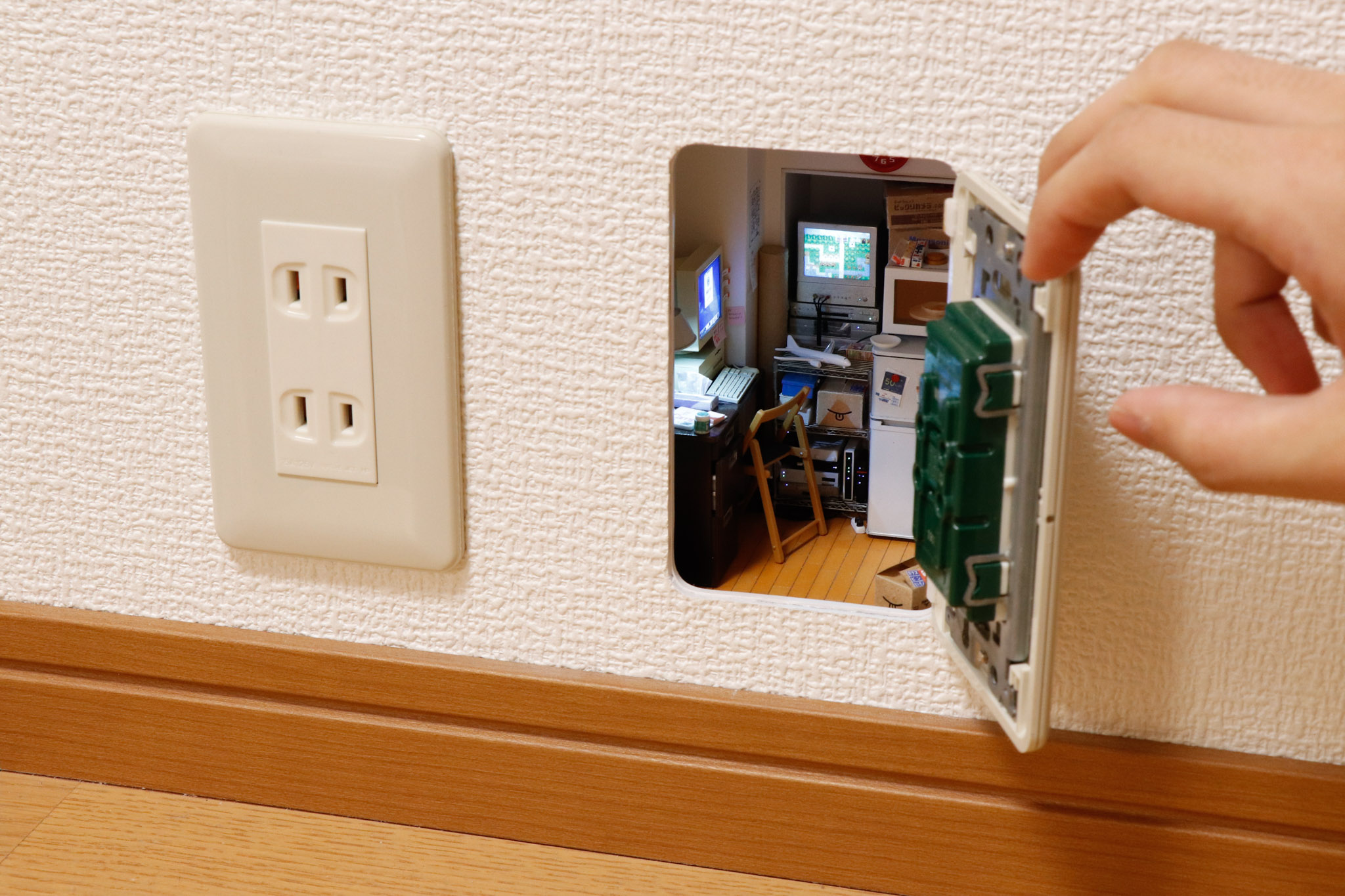
Imagine clicking a video expecting “real office tour” vibes… and instead you’re staring at a wall outlet. Then the outlet opens like a tiny door andsurprisethere’s a fully furnished micro-apartment inside it, complete with a glowing computer, a microwave, and the kind of Wi-Fi router lights that scream, “Yes, someone here rage-refreshes their email.”
That’s the charm (and mild betrayal) of Mozu’s hidden rooms: miniature interiors so believable your brain forgets they’re small. This is small-scale space done at full emotional volumecozy, lived-in, and secretly hilarious because it’s tucked inside places that absolutely should not contain a functioning kitchenette.
In this deep dive, we’ll unpack what makes Mozu’s work so convincing, why hidden rooms feel like magic, and how makers can borrow the same tricksmaterials, lighting, storytelling, and photographyto build their own tiny “secret base” that looks like it pays rent.
Meet Mozu: The Artist Who Turns “Dead Space” Into a Secret Life
Mozu (also known as Mizukoshi Kiyotaka) is celebrated for building hyper-detailed miniature roomsoften concealed behind everyday surfaces like outlet plates or tilesso the reveal feels like discovering a portal in your own house. Instead of treating a wall as a wall, he treats it like a mask for an entire hidden world.
One standout piece is the “Miniature Secret Base Inside an Outlet,” built with materials like plastic board, wood, and LEDs. The “tell” isn’t scaleit’s personality. The space looks used: there are tiny practical details that imply habits, preferences, and the universal truth that plugging cables into the back of the TV is annoying, even for imaginary tiny roommates.
The big idea is simple: small-scale space becomes emotionally huge when it’s believable. Mozu doesn’t just build rooms; he builds evidence of life.
Why Hidden Rooms Hit Us So Hard (A Tiny Psychology of “Wait, That’s Not Real?”)
Hidden rooms trigger a perfect storm of curiosity and credibility:
- Scale surprise: Your brain sees familiar objects (an outlet, a tile) and assumes the rules of reality applyuntil they don’t.
- Forbidden access: We’re wired to want what we can’t normally see. A secret door flips the “investigation” switch in your head.
- Domestic storytelling: A room implies an occupant. An occupant implies a life. Now you’re emotionally invested in a person who is literally the size of a paperclip.
Miniatures also cheat the eye the same way cinema does: controlled lighting, intentional texture, and carefully chosen focus cues make the scene feel life-sizeespecially on camera. When a miniature is photographed with the right depth-of-field choices, our brains accept it as “real” faster than we can say, “Why does this outlet have a microwave?”
The Anatomy of a Believable Mini Room
If you want “toy-cute,” you can skip half the effort and still be happy. But if you want that Mozu-style double-take“I genuinely thought that was a real room”you need to build realism in layers.
1) Scale Consistency: Pick a Scale and Commit Like It’s a Lease
Most convincing miniature rooms stick to a consistent scale (common choices include 1:12, 1:24, or 1:6). Scale isn’t just “how big the chair is.” It’s:
- How thick the “wood” looks at the edges
- How large screws, hinges, and trim appear
- How big clutter items are relative to each other
A single out-of-scale object reads like a jump scare in realism. Your brain won’t always identify what is wrongit’ll just stop believing you.
2) Materials That Behave Like Real Materials (Even If They’re Not)
Miniature builders often rely on practical, controllable materialsplastic sheet/board, wood strips, paper, and sculptable fillersbecause they can be cut cleanly, layered, and textured. The secret is surface treatment: paint, sanding, clear coats, and tiny imperfections that mimic wear.
Want a “lived-in” desk? Add faint scratches, slightly uneven paint, and micro-stains around high-touch areas. Perfection reads as a model. Use reads as real.
3) Micro-Clutter: The Fastest Shortcut to “Someone Lives Here”
Mozu’s rooms feel real because the objects feel chosen, not placed. Real spaces have:
- Things that are functional (cables, switches, containers)
- Things that are emotional (photos, sticky notes, souvenirs)
- Things that are accidental (a slightly crooked calendar, a chair not pushed in)
The trick is to stage clutter like a story, not a pile. A single mug beside a keyboard implies routine. A slightly curled calendar implies time. A half-open drawer implies a person who started organizing and immediately lost interest (which is, frankly, most of humanity).
4) Lighting: Where Miniatures Become Cinema
Lighting is the difference between “cute” and “convincing.” Mozu’s hidden rooms often include internal illuminationtiny LEDs that make the space feel powered, inhabited, and warm. Even a single practical light (like a desk lamp glow) can sell the illusion that the room is functional.
For makers, there are three approachable lighting levels:
- Basic: one LED (warm white) diffused behind a shade or ceiling panel
- Intermediate: multiple zones (desk, overhead, “ambient” window glow)
- Advanced: animated effects (blinking router lights, flicker, timed sequences)
5) Texture + Weathering: The “Reality Dust” Layer
Real rooms accumulate grime, fading, and micro-contrastespecially in corners and creases. Modelers often use classic weathering methods like thin washes that settle into details, and dry-brushing to highlight edges. Subtlety matters: you’re not painting a post-apocalyptic outlet apartment (unless you want to).
Hidden-Room Design: Where Do You Hide a World?
The “hidden” in hidden rooms is half the fun. The container becomes a punchline and a plot device. Popular hiding spots include:
- Outlet plates and switch covers: iconic because the reveal is so unexpected
- Bathroom tiles or wall panels: a secret room behind something you see daily
- Books, tins, and containers: “ordinary object becomes portal” energy
- Picture frames and shadow boxes: classic “peep show” viewing angle for mini interiors
Design tip: choose a container with a natural viewing angle. Hidden rooms work best when the viewer can’t easily see everything at oncebecause mystery is free special effects.
A Maker-Friendly Build Plan: Your First Hidden Room (Without Losing Your Mind)
If you’re inspired by Mozu but don’t want to spend four months making a microscopic HDMI cable (understandable), build a “starter” hidden room with controlled complexity. Here’s a practical approach:
Step 1: Choose a Story Before You Choose Furniture
Decide who lives there. Not a full biographyjust a vibe: late-night student, retro gamer, tiny librarian, mini mechanic. Once you know the occupant, object choices become obviousand your room stops feeling like a showroom.
Step 2: Build a Clean Shell
Construct walls, floor, and ceiling from sheet material (plastic board, foam board, or thin wood). Keep edges crisp. Your shell is the stage; everything else is props and lighting.
Step 3: Add One “Hero Detail” That Makes People Lean In
In Mozu’s outlet room, it might be the tiny computer glow and blinking router. Your hero detail could be:
- a lit desk lamp shining onto a book page
- a mini window with rainy-night reflections
- a tiny vending machine with readable labels
One hero detail buys you forgiveness on everything else. It’s the miniature equivalent of good eyebrows.
Step 4: Layer Clutter Like a Director Blocks a Scene
Start with big objects (desk, chair), then medium (books, boxes), then micro (pens, cables, sticky notes). Pause often and view from the intended angle. If it reads as real from that angle, you’re winning.
Lighting Without the Spaghetti: Practical Options That Look Professional
You don’t need an engineering degree to make tiny lights behave. Here are three maker-tested approaches:
- Simple LED + coin cell: fast, compact, great for one-light builds
- LED strip segments + hidden battery box: ideal for room glow and under-shelf lighting
- Microcontroller-controlled LEDs: perfect for blinking, flicker, and timed effects (and for living your best “tiny electrician” life)
If you want the “router blink” effect, plan it early. Animated lights are easiest when wiring paths, diffusion panels, and access points are designed into the structurerather than added after everything is glued down and your soul has left your body.
Photographing Tiny Rooms So They Look Life-Size
Mozu’s work often goes viral because it photographs like reality. To get that effect, think like a product photographer and a filmmaker at the same time.
Depth of Field: The Realism Trapdoor
In macro and close-up photography, depth of field gets extremely thin. You can use that two ways:
- To sell realism: use a deeper focus range so the room reads like a full-sized space
- To sell scale: use a shallower focus so it feels like a small model shot up close
If your goal is “Wait, that’s a miniature?” you’ll often want more of the scene in focus. That means stopping down the aperture (with the trade-offs of needing more light and managing diffraction), stabilizing your camera, and considering focus stacking when the scene is very close.
Lighting for the Camera, Not Just the Room
Tiny practical lights look amazing, but they also create harsh hotspots and deep shadows at miniature scale. Diffuse wherever possible: translucent paper, frosted plastic, or indirect bounce. The best miniature lighting feels like a room, not a flashlight interrogation.
Small-Scale Space Is Also Fine Art (Museums Prove It)
Hidden rooms aren’t just internet candy. Miniature interiors have a long tradition in museums and collections, where craftsmanship and storytelling are taken very seriously.
For example, the Thorne Miniature Rooms at the Art Institute of Chicago showcase exquisitely crafted interiors at 1:12 scalebuilt to document historical design with uncanny accuracy. Museums like the National Museum of Toys and Miniatures also highlight how miniature artists use lighting, perspective, and “secondary spaces” (glimpses beyond the main room) to deepen narrative and mystery.
That ideasecondary spacesconnects beautifully to Mozu. A hidden room is basically a secondary space taken to its most delightful extreme: you’re not just looking into a room; you’re looking into what lies beyond the expected world.
What Mozu Teaches Makers: Big Emotion, Tiny Footprint
Mozu’s hidden rooms are a masterclass in making small feel significant. If you want to apply the same magic, focus on these principles:
- Make it lived-in: realism is behavior, not just accuracy
- Use lighting as narrative: glow implies presence
- Choose a container with meaning: the hiding place is part of the story
- Design the viewing angle: control what the viewer can and can’t see
- Obsess strategically: pick a few details to take to “wow” level
Conclusion: The Smallest Rooms Can Hold the Biggest Stories
“Small-scale space” isn’t about shrinking realityit’s about concentrating it. Mozu’s hidden rooms work because they pack daily life into a secret footprint and then light it like a scene from a film. They remind us that wonder doesn’t require a big canvas… just the willingness to imagine that a wall outlet might be a doorway to someone else’s cozy little universe.
And if you build your own? Congratulations in advance: you’re about to become the kind of person who looks at blank walls and thinks, “You could fit a whole apartment in there.” (You’ll never know peace again, but it’s a fun hobby.)
Hands-On Experiences Related to “Small-Scale Space Mozu’s Hidden Rooms – Make:” (Extra ~)
If you’ve never built a miniature room, the first experience is equal parts joy and “Why are my fingers suddenly the size of bulldozers?” The funny thing about tiny building is that it rewires how you notice the real world. After an hour of making a miniature shelf, you start staring at full-size shelves like they’re suspiciously easy. You’ll catch yourself thinking, “That book spine texture would be simple at 1:1,” as if you’re planning a hostile takeover of IKEA.
The most memorable part is the moment the room becomes believable. It rarely happens when you place the big furniture. A desk is just a desk. A chair is just a chair. The “click” happens when you add one tiny human habit: a cable that’s slightly tangled, a notebook that’s not perfectly centered, a mug ring, a crooked sticky note, a sock tossed where it doesn’t belong. It’s almost eerielike you didn’t build a set, you discovered evidence. The space starts feeling occupied, even though you’re the only one in the room (and you’re definitely not living inside an outlet, please hydrate).
Lighting is the second “aha.” The first time you switch on a tiny LED inside your build, the whole project changes status from craft to cinema. Shadows appear where they should. Corners get moody. A desk lamp glow suddenly makes the chair look like someone just stood up to grab a snack. If you go one step furthersay, adding a faint blinking light for a pretend routeryou’ll notice how motion, even minimal, creates life. Your eyes keep returning to it. That tiny blink becomes the heartbeat of the room.
Then comes the hidden-room experience: designing the reveal. Building inside an outlet-shaped frame (or a faux wall panel) forces you to think like a stage designer. You can’t show everything. You must choose what the viewer discovers first. This limitation is secretly the best part. A narrow viewpoint makes the room feel bigger, because your imagination fills what you can’t see. People lean in. They crouch. They angle their heads. The room becomes interactivenot with screens or buttons, but with human curiosity.
Photographing the finished piece is its own mini-adventure. You’ll take a photo, feel confident, and then zoom in and realize your “wood grain” looks like a painted popsicle stick because it is a painted popsicle stick. The camera is honest in a way that is both helpful and emotionally disrespectful. But it also rewards you fast: soften the light, adjust focus, tidy one corner, and suddenly the image stops reading like a model and starts reading like a place. That’s the closest you’ll get to Mozu’s signature trick: turning a tiny build into a believable environment that your brain accepts without asking for a ruler.
Finally, there’s the lasting effect: once you’ve made a hidden room, you don’t unsee hidden possibilities. Every blank surface becomes a candidate for a secret world. You’ll look at a bookshelf and wonder what could be behind the back panel. You’ll notice the “secondary spaces” in real roomshallways, closets, gaps, cornersand realize that mystery is everywhere. That’s the best kind of maker experience: not just building an object, but gaining a new way to see space itself.