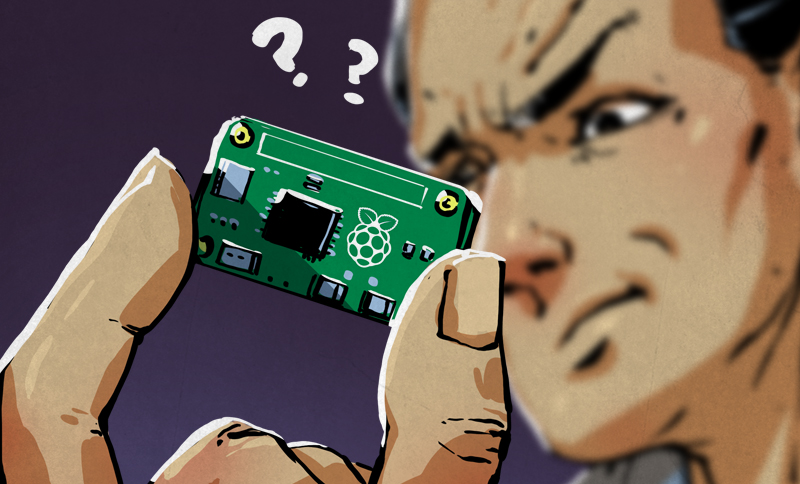
Once upon a time, hardware was the star of the technology show. The faster processor, the shinier device, the bigger server rack, the more powerful machine on the factory floorthese were the headline acts. Software was important, of course, but it often played the supporting role: the helpful translator that told the hardware what to do. Today, that relationship has flipped so dramatically that the hardware may need a tiny inspirational poster in the break room.
Software is now driving hardware. It shapes how chips are designed, how cars behave, how factories operate, how medical devices update, how data centers scale, and how everyday gadgets improve after purchase. The modern device is no longer finished when it leaves the factory. In many industries, it is only beginning its life. Software updates, AI models, firmware patches, cloud services, digital twins, and automation platforms can make the same physical machine smarter, safer, faster, or more profitable over time.
This shift is not just a technical trend. It is a business model, a design philosophy, and a competitive advantage. Companies that understand software-defined hardware can move faster, reduce waste, extend product lifecycles, and create better user experiences. Companies that ignore it may still build beautiful machinesbut those machines can become outdated faster than a phone charger in a junk drawer.
What Does “Software Driving Hardware” Mean?
“Software driving hardware” means that software increasingly determines what physical devices can do, how efficiently they perform, and how long they remain useful. Instead of treating hardware as a fixed object with permanent capabilities, modern engineering treats hardware as a flexible platform. The value comes from the combination of sensors, processors, connectivity, operating systems, applications, data, and continuous improvement.
A smartphone is the easiest example. The camera lens is hardware, but computational photography decides how the final image looks. A car has motors, brakes, sensors, and steering components, but software now manages driver assistance, battery performance, infotainment, diagnostics, and even recall fixes. A factory robot has arms and joints, but software tells it how to move, adapt, detect defects, and coordinate with the rest of the production line.
In older product cycles, hardware was built, shipped, and replaced. In software-defined systems, hardware is built, shipped, monitored, updated, optimized, secured, and sometimes monetized through new digital features. The physical product becomes a living platform.
From Fixed Machines to Software-Defined Systems
The big idea behind software-defined hardware is abstraction. Instead of every function being locked to a specific physical component, software creates a layer that can control, reconfigure, or improve the hardware underneath. This is why cloud computing can turn physical servers into flexible virtual machines. It is why a data center can allocate compute power on demand. It is why industrial automation can move toward virtualized controllers and digital workflows.
Software-defined infrastructure is especially important in manufacturing and enterprise technology. Traditionally, factories relied on specialized operational technology devices: one box for one function, another box for another function, and a small museum of mysterious blinking lights in between. Modern software-defined infrastructure can consolidate workloads onto general-purpose compute platforms and manage them through centralized software. That reduces complexity and makes systems easier to update, test, and scale.
The same principle applies to networks, storage, vehicles, chips, and connected devices. The hardware provides the muscle. Software provides the nervous system, the memory, and occasionally the attitude.
AI Accelerators: When Software Demands New Hardware
Artificial intelligence is one of the clearest examples of software driving hardware design. AI workloads are not gentle. Training large models, running inference at scale, processing images, analyzing video, and making real-time decisions require enormous computing power. Traditional CPUs are still essential, but many AI tasks benefit from specialized hardware such as GPUs, ASICs, FPGAs, neural processing units, and dedicated AI accelerators.
Here is the twist: the need for these chips is created by software. Machine learning frameworks, generative AI models, robotics systems, autonomous driving platforms, and data analytics tools create demand for hardware that can process parallel workloads efficiently. In response, hardware companies design accelerators around the needs of software developers and AI engineers.
But the relationship goes both ways. A powerful GPU is not very useful without the software layer that helps developers access it. Programming platforms, libraries, compilers, drivers, and frameworks translate human ideas into machine execution. In practical terms, the winning hardware is often the hardware with the strongest software ecosystem. Performance matters, but developer experience matters too. A chip that is hard to program is like a sports car with the steering wheel hidden in the trunk.
Cloud Infrastructure: Hardware You Rarely See but Always Use
Cloud computing is another major example of software controlling hardware at massive scale. When a business launches a virtual server, stores data, runs an AI workload, or deploys an application globally, it is using physical machines somewhere. But customers do not usually interact with the bare metal directly. They interact with software interfaces that allocate computing, networking, storage, and security resources automatically.
This is the magic of virtualization and cloud orchestration. Software turns physical infrastructure into flexible services. Instead of buying and maintaining servers for peak demand, companies can scale resources up or down as needed. That makes hardware more efficient and accessible. It also changes how hardware is designed. Cloud providers now build custom chips, specialized networking hardware, security processors, and storage systems to serve software-defined workloads more effectively.
In this world, hardware is no longer just a product. It is part of a service architecture. The customer buys outcomes: speed, reliability, security, capacity, and availability. The physical server still exists, but software decides how its power is sliced, protected, measured, billed, and improved.
Software-Defined Vehicles: Cars That Evolve After Purchase
Few industries show the shift more clearly than automotive. The modern vehicle is becoming a computer on wheels, though that phrase slightly underplays the difficulty of building a computer that also survives potholes, rain, heat, snow, spilled coffee, and people who believe turn signals are optional.
Software-defined vehicles use software platforms to manage features that once depended almost entirely on mechanical or isolated electronic systems. Over-the-air updates can improve infotainment, adjust battery management, refine driver assistance features, fix bugs, and sometimes address safety recalls without a traditional service visit. Automakers are also moving toward centralized computing architectures, application programming interfaces, cloud connectivity, and platforms that separate software from underlying hardware.
This changes the ownership experience. A car can gain new features after it is sold. A software bug can be fixed more quickly. Fleet operators can monitor vehicle health remotely. Automakers can create subscription services, personalization options, and data-driven maintenance tools. The vehicle becomes a platform rather than a static product.
However, this approach also raises the stakes. When software controls braking behavior, battery systems, sensors, or driver-assistance functions, software quality becomes safety-critical. A buggy app on a phone is annoying. A buggy vehicle control system is a much bigger problem. That is why testing, cybersecurity, regulatory compliance, and transparent update practices are essential in software-defined mobility.
Industrial Automation and Digital Twins
Factories, energy systems, logistics networks, and infrastructure projects are also being reshaped by software. Industrial automation once depended heavily on fixed-purpose controllers and carefully separated systems. Now, software-defined automation, industrial AI, edge computing, and digital twins are changing how physical operations are designed and managed.
A digital twin is a virtual model of a physical asset, process, or system. It can use real-time data to simulate behavior, predict failures, test changes, and improve performance before engineers touch the real-world equipment. In manufacturing, digital twins help teams run “what if” scenarios without accidentally turning a production line into modern art. In energy and aviation, digital twins can support predictive maintenance by analyzing sensor data and forecasting when parts may need attention.
Software-defined automation also supports faster development cycles. Engineers can test logic virtually, apply version control, automate deployment, and use DevOps-style practices in operational technology environments. That matters because factories need reliability. Nobody wants a production line to stop because someone pushed a bad update with the confidence of a raccoon opening a trash can.
The goal is not to replace hardware. It is to make hardware more adaptable. Machines still cut, weld, move, scan, heat, cool, and assemble. Software helps them do it with more intelligence, coordination, and resilience.
Edge Computing: Intelligence Moves Closer to the Machine
Not every decision can wait for the cloud. In robotics, autonomous vehicles, smart cameras, medical devices, retail systems, and industrial equipment, data often needs to be processed close to where it is created. This is where edge computing becomes essential.
Edge computing places processing power near sensors, machines, and users. Instead of sending every signal to a remote data center, an edge device can analyze information locally and respond quickly. That reduces latency, supports privacy, lowers bandwidth costs, and allows systems to keep operating even when connectivity is limited.
Software drives the edge because it determines what data matters, which AI model runs locally, when information should be sent to the cloud, and how devices coordinate with larger systems. Hardware must then be designed for compact performance, energy efficiency, thermal limits, rugged environments, and secure updates. A smart camera, for example, is not just a lens and a chip. It is a complete software-hardware system that may detect objects, blur faces, flag anomalies, update firmware, and report health status.
Security: The Unfun but Absolutely Necessary Part
When software drives hardware, cybersecurity becomes a core engineering requirement. Connected devices need secure boot, signed updates, vulnerability management, access control, encryption, logging, and responsible patching. Firmware matters because it sits close to the hardware. If attackers compromise low-level software, they may gain powerful control over the device.
This is why secure-by-design practices are so important. Security cannot be sprinkled on top at the end like parsley on a suspicious casserole. It must be built into the product lifecycle, from requirements and architecture to coding, testing, deployment, maintenance, and end-of-life support.
For IoT devices and embedded systems, update mechanisms are especially important. A connected device that cannot be patched can become a long-term risk. A smart thermostat, router, camera, industrial sensor, or medical device may stay in service for years. If the software is abandoned, the hardware may still work physically but become unsafe digitally.
The best software-driven hardware strategies include clear update policies, software bills of materials, secure development practices, monitoring, and a plan for what happens when support ends. In a connected world, unsupported hardware is not just old. It can be a doorway.
Business Value: Why Companies Care
Software driving hardware is not just exciting for engineers. It creates real business value. First, it extends product lifecycles. A device that can be improved through software does not become obsolete as quickly. Second, it enables recurring revenue. Companies can offer subscriptions, premium features, analytics services, and cloud-connected capabilities. Third, it improves customer experience because problems can be fixed faster and features can evolve.
It also helps companies respond to market changes. A manufacturer can adjust machine behavior through software. A cloud provider can introduce new instance types using specialized hardware and orchestration. An automaker can refine vehicle features after launch. A device maker can patch vulnerabilities instead of asking customers to replace equipment.
There is also a sustainability angle. If software can keep hardware useful longer, companies may reduce unnecessary replacements. Better monitoring and predictive maintenance can reduce downtime and waste. Smarter energy management can improve efficiency. Of course, software is not magic fairy dust. Data centers consume energy, AI workloads can be resource-intensive, and connected products require responsible design. But software gives companies more tools to optimize physical systems instead of blindly overbuilding them.
The Challenges of Software-Driven Hardware
The shift comes with serious challenges. One is complexity. When hardware, firmware, cloud services, mobile apps, AI models, and third-party integrations all depend on each other, debugging can feel like solving a mystery novel where every suspect is also the detective.
Another challenge is reliability. Continuous updates are powerful, but they must be tested carefully. A failed update can interrupt vehicles, factories, medical devices, or business operations. Companies need staged rollouts, rollback mechanisms, simulation environments, and strong quality assurance.
Vendor lock-in is another concern. If a company builds its operations around one proprietary software-hardware ecosystem, switching later can be expensive. Open standards, APIs, modular architectures, and interoperability can reduce this risk, but they require thoughtful planning.
Finally, there is the human factor. Engineers, operators, executives, regulators, and customers must trust systems that change over time. Clear communication matters. If a product receives an update, users should understand what changed, why it changed, and whether it affects safety, privacy, or performance.
Specific Examples of Software Driving Hardware
1. GPUs and AI Frameworks
AI frameworks and high-performance computing libraries have pushed demand for GPUs and accelerators. Hardware is designed not only for raw speed but also for compatibility with developer tools, AI models, and data pipelines.
2. Cars With Over-the-Air Updates
Vehicles can receive software updates that improve features or fix defects. This makes the car a changing platform, but it also requires careful safety validation and regulatory oversight.
3. Cloud Virtual Machines
Cloud platforms use software to divide, secure, and manage physical servers. Customers see flexible computing services, while software handles the complex hardware orchestration behind the scenes.
4. Digital Twins in Manufacturing
Factories can simulate products, machines, and workflows before making physical changes. This reduces risk and helps teams optimize operations based on data rather than guesswork.
5. Smart Home and IoT Devices
Connected devices depend on firmware, mobile apps, cloud services, and security updates. The hardware may be simple, but the software ecosystem determines whether it remains useful and safe.
Where the Trend Is Going Next
The next phase of software driving hardware will be more intelligent, more distributed, and more automated. AI will increasingly help design chips, tune systems, detect failures, write code, optimize energy use, and operate machines. Edge devices will become more capable. Vehicles will become more platform-like. Factories will rely more on simulation and software-defined control. Cloud providers will continue building custom hardware for specific software workloads.
We should also expect more regulation and accountability. When software controls physical systems, the line between digital risk and real-world risk becomes thin. Governments, standards bodies, and customers will push for stronger cybersecurity, safer update practices, clearer labeling, and better lifecycle support.
The winners will not be companies that choose software over hardware or hardware over software. The winners will be companies that design both together. Software needs hardware that is efficient, secure, and update-ready. Hardware needs software that is reliable, usable, and continuously improving. The future belongs to integrated thinking.
Experiences Related to Software Driving Hardware
One of the most practical lessons from software-driven hardware is that the product people see is only part of the product they actually use. A device may look simple on the outside, but the real experience depends on invisible layers: firmware, diagnostics, cloud services, driver software, mobile apps, security policies, and update systems. Anyone who has owned a gadget that became better after an update has experienced this shift. Anyone who has owned a gadget that became worse after an update has experienced the other side of the same coin, usually while muttering at a screen like it personally betrayed them.
In real product environments, the most successful teams tend to treat hardware and software as one system from the beginning. They do not design the physical device first and then ask software teams to “make it smart” at the end. Instead, they ask integrated questions early. What data should the device collect? How will it update securely? What happens if connectivity fails? How will performance be measured? Can the hardware support future features? What is the rollback plan if an update breaks something? These questions may sound less glamorous than a launch video with dramatic music, but they often determine whether the product survives real-world use.
Another experience many teams learn quickly is that field data is gold. Once hardware is deployed, software can reveal how it performs in real conditions. Engineers can see which features people use, where failures happen, how temperature affects performance, how batteries age, or which machines need maintenance. This feedback loop makes products smarter. It also humbles assumptions. A feature that looked brilliant in the lab may be ignored by users. A small bug may appear only after thousands of devices encounter a strange combination of conditions. Real-world hardware has a talent for finding edge cases. It is basically a professional troublemaker.
Software-driven hardware also changes customer expectations. People increasingly expect products to improve, not just function. They expect cars to gain features, phones to get smarter, routers to receive security patches, and factory systems to become more efficient over time. That expectation creates opportunity, but it also creates responsibility. If a company sells a connected product, customers reasonably expect support. Abandoning software support while the hardware still works can damage trust and create security risks.
The best experience with software driving hardware is when the technology quietly disappears into usefulness. A predictive maintenance alert prevents downtime. A vehicle update fixes a problem without a service appointment. A digital twin catches a design flaw before expensive tooling begins. An edge AI system spots a defect before it reaches a customer. These moments are not flashy, but they are powerful. They show the real promise of software-defined systems: not technology for its own sake, but physical products that learn, adapt, and deliver better outcomes over time.
Conclusion
Software driving hardware is one of the defining technology shifts of our time. It is changing chips, cars, factories, cloud platforms, smart devices, and infrastructure. The old model treated hardware as fixed and software as an accessory. The new model treats hardware as a platform and software as the engine of continuous improvement.
This does not make hardware less important. In fact, it makes hardware design more strategic. Devices must be built for updates, security, AI workloads, connectivity, observability, and long-term usefulness. Software cannot rescue bad hardware forever, just as great hardware cannot reach its full potential without strong software. The future is not software versus hardware. It is software and hardware working together so closely that separating them feels like asking which blade of a pair of scissors does the cutting.
For businesses, the message is clear: build products that can evolve. For engineers, design systems, not isolated parts. For customers, expect smarter devicesbut also demand secure, transparent, and responsible support. Software is now behind the wheel, and hardware is not just along for the ride. It is becoming more capable because of it.