Note: This article is a fully rewritten synthesis based on real Garfield history, official character background, creator interviews, comic-strip archives, and widely discussed fan interpretations. No external source links are included per request.
Garfield looks harmless at first glance. He is orange, round, lazy, sarcastic, and spiritually committed to lasagna in a way most of us reserve for rent money. Since Jim Davis introduced the comic strip in 1978, Garfield has become one of the most recognizable comic characters in American pop culture. He hates Mondays. He bullies Odie. He judges Jon Arbuckle’s dating life with the confidence of someone who has never once paid a bill.
But then the internet did what the internet does best: it stared too long at a friendly cartoon and whispered, “Wait a second… this is kind of disturbing.” A viral discussion about Garfield’s “dark side” focused on one oddly persistent question: what happened to Lyman, Jon’s early roommate and Odie’s original owner? One fan theory jokingly suggested that Jon may have been involved in Lyman’s disappearance. It is not official canon, of course, but it caught fire because Garfield has always contained more weird emotional gravity than people expect from a strip about naps and pasta.
The result is a fascinating pop-culture case study. Garfield is not just a simple newspaper gag. It is a long-running comic world full of missing characters, lonely rooms, strange silences, and occasional moments that feel less like a punchline and more like someone left the kitchen light on in an empty house.
Why Garfield Is So Easy to Read as Dark
The basic Garfield formula is familiar: Garfield says something cynical, Jon suffers, Odie gets mistreated, and lasagna becomes a sacred object. The strip is usually light, repetitive in the comforting way of a favorite sitcom, and intentionally broad. That simplicity is exactly why darker interpretations stick so easily.
Garfield’s world is small. Most strips happen in Jon’s house, at the kitchen table, on the couch, or near the food bowl. The main cast is tiny: Jon, Garfield, Odie, and later recurring characters like Liz, Nermal, and Arlene. When a character disappears from such a small universe, fans notice. When Jon talks mostly to animals who do not answer out loud, fans notice. When Garfield’s thoughts shape the entire reality of the strip, fans absolutely noticeand then create a 37-post theory at 2 a.m. because sleep is apparently optional.
The comic’s emotional engine is also surprisingly bleak. Jon is lonely. Garfield is selfish. Odie is endlessly cheerful but often treated like a squeaky toy with legs. Many jokes are built around routine failure: failed romance, failed diets, failed motivation, failed mornings. None of this makes Garfield a horror comic, but it gives the strip enough shadows for readers to project darker stories into the corners.
The Lyman Mystery: A Missing Roommate in a Funny Cat Comic
Who Was Lyman?
In the early years of Garfield, Jon Arbuckle had a roommate named Lyman. Lyman was not a background extra. He appeared as part of the original household dynamic and was closely tied to Odie, who was introduced as Lyman’s dog. In simple terms, without Lyman, Odie’s original place in the Garfield universe becomes a little awkward. Odie did not simply materialize from a cloud of dog hair and optimism. He came with a human.
Then Lyman faded away. By the early 1980s, he stopped appearing regularly, and Odie effectively became Jon’s dog. In practical comic-strip terms, the explanation is simple: Lyman was no longer necessary. Garfield could “talk” through thought balloons, Jon could react, and Odie could provide visual chaos. A roommate gave Jon someone to speak to, but Garfield himself eventually filled that role. From a writing standpoint, Lyman became extra furniture.
From a fan-theory standpoint, however, “extra furniture” is never just extra furniture. It is evidence. It is motive. It is the first act of a mystery that somehow involves a cat, a dog, and a man who should probably not be trusted with a basement.
Why Fans Turned Lyman Into a Dark Joke
The fan theory that Jon may have done something terrible to Lyman is not official Garfield lore. It is a darkly comic interpretation built from absence, timing, and the internet’s love of making wholesome things suspicious. The logic goes like this: Lyman lived with Jon, owned Odie, vanished without a clean on-page explanation, and Odie stayed behind. Therefore, something strange must have happened.
That is not a serious accusation against Jon Arbuckle, who is canonically more likely to commit a fashion crime than a real one. Still, the joke works because the gap is real. Lyman did disappear from the strip. Odie did remain. Jon did continue life as though his roommate’s absence required no emotional processing whatsoever. In a daily gag comic, that is normal. In the hands of internet detectives, it becomes “true crime with lasagna.”
Is Jon Actually Dark? Not ReallyBut That Is Why It Is Funny
The humor of the Lyman theory depends on contrast. Jon Arbuckle is not presented as dangerous. He is awkward, hopeful, unfashionable, and almost aggressively uncool. He plays instruments badly, wears questionable outfits, and gets roasted by a cat who has never contributed to household chores. Turning Jon into the center of a grim mystery is funny precisely because it clashes with everything we know about him.
This kind of fan reading is common with long-running family entertainment. When a fictional world runs for decades, tiny continuity gaps become playgrounds. A missing character becomes a conspiracy. A strange old strip becomes a hidden message. A throwaway joke becomes “evidence.” Garfield’s huge cultural footprint gives fans thousands of strips to examine, remix, and overthink. And because Garfield is so famous, even a small twist can feel hilarious.
In other words, the theory says less about Jon and more about how modern audiences read nostalgia. We no longer just consume old comics; we excavate them. We look for the weird part. We ask why the dog stayed. We turn a simple strip into a haunted house and then blame the cat for not warning us.
The Real Dark Garfield Moment: Halloween 1989
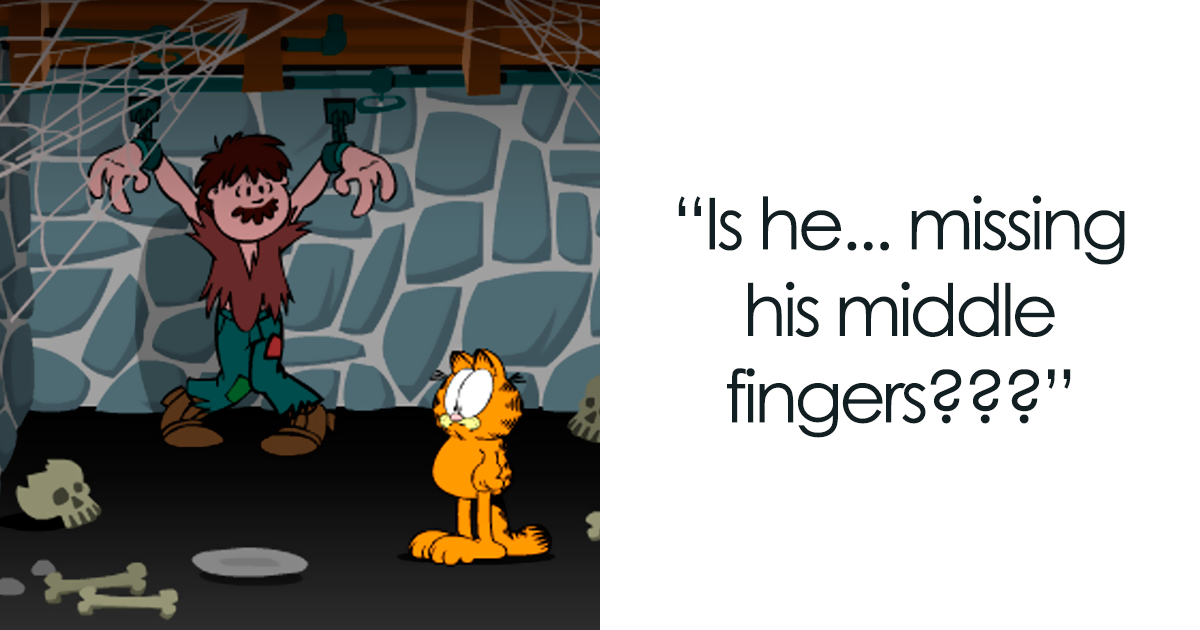
The Lyman theory is fan-made, but Garfield does have an officially eerie chapter. In October 1989, the strip ran a short Halloween sequence often remembered by fans as one of the strangest moments in Garfield history. Instead of the usual jokes about food or Mondays, Garfield wakes up in a decaying, empty version of his home. Jon and Odie are gone. The house feels abandoned. The familiar comfort of the comic strip collapses into isolation.
This sequence is unsettling because it attacks the core promise of Garfield. The strip normally says that no matter how bad Monday gets, the couch, the kitchen, and Jon’s long-suffering face will still be there tomorrow. The Halloween strips briefly take that away. Garfield is not just hungry. He is alone. For a character built on routine, losing the routine feels almost cosmic.
What makes the sequence effective is that it does not rely on monsters. There is no vampire Odie. No zombie lasagna. No haunted scratching post demanding unpaid taxes. The fear is absence. The horror is waking up and realizing the world that always reset has stopped resetting. That is a surprisingly mature fear for a newspaper strip famous for jokes about overeating.
Garfield Minus Garfield: When Removing the Cat Reveals the Sadness
Another reason people associate Garfield with hidden darkness is the famous remix project “Garfield Minus Garfield.” The concept is brilliantly simple: remove Garfield and his thought bubbles from the original strips. What remains is often Jon Arbuckle talking to himself, reacting to silence, or standing alone in rooms with expressions that suggest he has just remembered every embarrassing thing he has ever done since middle school.
The project became popular because it revealed something already present in the original comic. Jon is lonely. The cat gives his loneliness a comic rhythm. Take the cat away, and Jon’s domestic life becomes weirdly existential. A harmless gag about Garfield refusing to interact becomes a portrait of a man speaking into empty space. It is funny, but it is also oddly sad.
Jim Davis has been notably open to clever Garfield parody and remix culture, especially when the result offers a fresh way to understand the strip. That matters because Garfield is not a fragile cultural artifact locked in a glass case. It is a living comic language. People can rearrange it, subtract from it, and discover new meanings. Sometimes the meaning is “Jon needs friends.” Sometimes the meaning is “never underestimate the emotional consequences of deleting an orange cat.”
Why the Internet Loves “Dark Garfield”
The internet has a long history of turning innocent characters into unsettling mythology. Garfield is especially vulnerable because he is everywhere. He has appeared in newspapers, books, television specials, animated shows, movies, merchandise, memes, and online archives. He is familiar enough to feel safe, which makes twisting that safety feel dramatic.
There is also something funny about applying serious analysis to a comic that often ends with a cat eating too much. When fans discuss Lyman’s disappearance or Garfield’s lonely Halloween strips, they are partly joking and partly appreciating how flexible the material is. Garfield can be read as slapstick, sitcom, workplace cartoon, family strip, existential comedy, or accidental horror depending on what you emphasize.
That flexibility is one reason the character has lasted so long. Garfield is simple enough for children to understand and strange enough for adults to reinterpret. A kid sees a fat cat who hates Mondays. An adult sees a household trapped in routines, emotional avoidance, and carbohydrate dependence. Both readings are valid. One is just more likely to make you stare at your own cat and ask, “What do you know?”
Specific Examples of Garfield’s Hidden Shadows
Jon’s Loneliness
Jon is often the emotional center of Garfield, even though Garfield gets the title. He wants connection, romance, respect, and maybe one outfit that does not look like it was selected during a power outage. Many jokes depend on Jon trying and failing. He calls people. He attempts dates. He talks to pets. He seeks approval from a cat whose main hobby is contempt.
That loneliness can be funny because Jon is exaggerated, but it can also feel painfully recognizable. Garfield’s sarcasm protects the strip from becoming too sad. Without that sarcasm, Jon’s life can look like a quiet study in isolation.
Odie’s Strange Ownership Shift
Odie’s move from Lyman’s dog to Jon’s household pet is another small continuity wrinkle that invites speculation. In a gag strip, nobody needs a legal adoption scene. Odie stays because the strip works better with him. Still, the absence of explanation gives fans room to wonder. Where did Lyman go? Why did Odie remain? Did Jon file paperwork? Did Garfield forge it with marinara sauce?
Garfield’s Selfishness
Garfield is funny because he says what polite people are not supposed to say. He wants comfort, food, sleep, and control. He is not evil, but he is shameless. That shamelessness can become dark when exaggerated. A character who ignores others’ feelings for a punchline can, under the wrong lighting, look less like a lovable rascal and more like a tiny orange tyrant with a pasta budget.
How to Enjoy the Dark Side Without Ruining the Joke
The best way to read dark Garfield theories is with balance. The Lyman theory is funny, not official. The Halloween strips are genuinely eerie, but they do not erase the everyday warmth of the comic. “Garfield Minus Garfield” makes Jon look painfully alone, but the original strip still works as a joke about human-pet relationships.
In fact, the dark interpretations can make Garfield more interesting. They remind us that long-running comedy often contains sadness, and that familiar characters become powerful because they hold many moods at once. Garfield can be lazy and iconic. Jon can be ridiculous and lonely. Odie can be silly and mysteriously transferred between owners without anyone calling a meeting.
That mixture is why people keep returning to the strip. The comfort is real, but so are the oddities. Garfield is a sunny kitchen with one suspicious basement door. Most days, we do not open it. But when someone online does, the whole internet gathers around with popcorn and asks, “Is there lasagna down there?”
What This Says About Comic-Strip Storytelling
Daily comic strips are built differently from novels or television dramas. They reset. They repeat. They rely on recognizable patterns. A reader should be able to understand today’s joke without reading thousands of previous installments. That means continuity is often loose. Characters can appear, vanish, return, or change roles with minimal explanation.
But modern readers approach old media with modern expectations. We are trained by serialized television, cinematic universes, and online wikis to expect continuity. If someone disappears, we want a reason. If a pet changes owners, we want the paperwork. If a comic strip shows an abandoned house, we start building a timeline.
Garfield sits at the center of that shift. It was born as a newspaper gag strip, but it now lives in an internet culture that loves lore. The dark side of Garfield is not only in the strip itself; it is in the collision between old comic-strip logic and new fandom habits. Garfield was made for quick laughs over breakfast. The internet brought a flashlight, a corkboard, and red string.
Experiences and Reflections: Growing Up With Garfield’s Weird Little Shadows
Many readers first meet Garfield as a comfort character. He appears in comic collections, newspaper pages, greeting cards, lunchboxes, TV reruns, and the kind of old paperback books that seem to live permanently in school libraries. At first, the appeal is simple. Garfield is rude in a safe way. He says the lazy thing out loud. He hates Mondays before many young readers even understand why adults complain about them. He treats lasagna like treasure, which is correct and should be legally recognized.
Then, as readers get older, the strip changes without changing. The same jokes begin to feel different. Jon’s awkwardness becomes less like random silliness and more like a portrait of someone trying to be loved. Garfield’s laziness becomes less like cartoon mischief and more like a fantasy of escaping pressure. Odie’s happiness becomes almost heroic because he keeps wagging through a world that constantly underestimates him.
That is the strange experience of revisiting Garfield. The comic does not need to become darker; the reader brings more shadow with them. A child laughs when Garfield kicks Odie off the table. An adult may still laugh, but also think, “Wow, this household has terrible conflict resolution skills.” A child sees Jon as a goofy owner. An adult recognizes the uncomfortable comedy of loneliness, failed dating, and talking to pets because the pets are at least present.
The Lyman theory works because it captures that shift. Nobody seriously needs Garfield to become a crime drama. The fun is in realizing that a cheerful, familiar strip has enough missing pieces to support a ridiculous mystery. It is like finding a trapdoor under a cartoon couch. You probably should not climb down, but curiosity is undefeated.
The Halloween 1989 sequence creates a different kind of experience. It shows that Garfield can be unsettling on purpose. Readers who discover those strips later often feel surprised because they break the contract of the comic. The house is not cozy. The silence is not a setup for a quick joke. Garfield’s usual confidence does not protect him. For a moment, the strip asks what would happen if the routine ended and the character had to face emptiness without sarcasm as armor.
That moment sticks because it touches a real fear. Everyone has places that are supposed to feel safe: a bedroom, a kitchen, a family routine, a favorite comic. When those places feel wrong, the unease is powerful. Garfield’s dark side is not about gore or shock. It is about absence, loneliness, and the uncomfortable spaces between jokes.
At the same time, the darkness makes the comedy stronger. Garfield remains funny because the strip usually returns to normal. The lasagna comes back. Jon gets roasted again. Odie survives another day of being Odie. The world resets, and that reset is part of the comfort. But once you have noticed the shadows, the strip becomes richer. It is still a joke machine, but now it also feels like a tiny universe with history, gaps, and emotional weather.
That is why “Someone Shows That Garfield Comics Have A Dark Side” is such a compelling idea. It does not destroy Garfield. It gives readers a new way to look at him. The orange cat is still lazy, smug, and hungry. Jon is still Jon. Odie is still the purest soul in the room. But behind the punchlines, there is enough mystery to keep fans talking decades later. Not bad for a comic strip whose hero considers exercise a personal insult.
Conclusion
Garfield’s dark side is not a hidden official storyline where every lasagna pan contains a clue. It is something more interesting: a mix of real comic history, missing-character curiosity, creator-approved weirdness, and internet imagination. Lyman’s disappearance gave fans a mystery. The Halloween 1989 strips gave them genuine unease. “Garfield Minus Garfield” gave them a way to see Jon’s loneliness in full daylight.
That combination explains why Garfield remains culturally sticky. The strip is simple, but not empty. Its routines are funny because they are familiar, and its darker interpretations work because familiarity makes every strange detail louder. Garfield may be the world’s most famous lazy cat, but he is also proof that even the softest comic strip can cast a long shadow when readers decide to look closely.