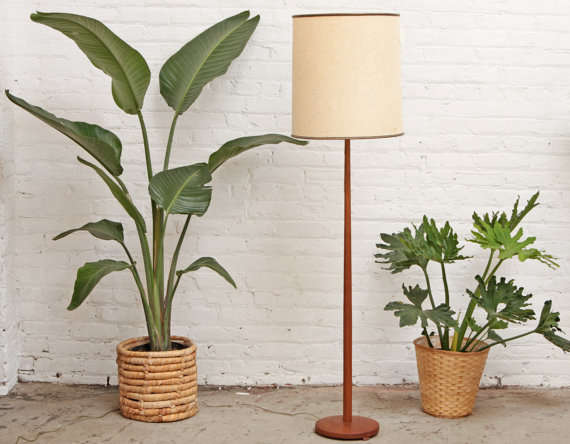
A teak Danish floor lamp from the mid-century era does something that many modern lamps struggle to do: it makes a room feel finished without making a speech about it. It does not flash, sparkle, or demand applause. It simply stands there with a graceful wood stem, a calm linen-like shade, and the quiet confidence of furniture that knows it has excellent posture.
That is the enduring appeal of a teak Danish floor lamp mid century design. It combines warm natural timber, clean geometry, practical lighting, and an almost suspiciously effortless sense of balance. Whether you are furnishing a true 1950s-inspired living room, softening a contemporary apartment, or trying to make your reading corner look less like a temporary campsite, this kind of lamp can do a remarkable amount of visual work.
Below is a practical guide to understanding, choosing, styling, restoring, and enjoying a Danish modern teak floor lamp without turning your home into a time capsule where everyone is required to wear horn-rimmed glasses.
Why Teak Danish Floor Lamps Still Feel So Modern
Mid-century Danish design became admired because it made useful objects look graceful without making them fussy. Furniture and lighting from this tradition often emphasize function, material quality, proportion, and craftsmanship. A good teak floor lamp is not trying to be a sculpture first and a lamp second. It is designed to give light where people need it while adding warmth to the room.
Teak became especially popular in Danish modern interiors because of its rich honey-to-brown color, smooth grain, and ability to look refined without needing heavy ornament. The wood brings visual warmth to spaces filled with glass, brick, stone, metal, or white walls. In other words, it is the design equivalent of adding butter to toast: simple, familiar, and often exactly what was missing.
A vintage Danish floor lamp may feature a slender turned wood column, a tripod base, tapered legs, brass details, a small shelf or table, an adjustable reading arm, or a broad drum shade. Some examples are extremely minimal. Others include sculptural wood forms that resemble a tiny piece of architecture. The best examples look light on their feet even when they are solidly built.
The Beauty of Purposeful Simplicity
The reason a teak Danish floor lamp fits so many homes is that the design language is restrained. There are no oversized crystals, no fake candle drips, and no decorative vines attempting to crawl up the pole. Instead, the lamp relies on proportion. A slim stem gives vertical movement. A tapered shade creates softness. A well-shaped base keeps the piece visually grounded.
This balance makes the lamp useful in more than one decorating style. It can sit beside a walnut credenza in a classic mid-century modern room, but it also works next to a boucle sofa, a contemporary sectional, a traditional leather chair, or even a quiet Scandinavian-inspired bedroom.
Warm Wood Meets Soft Light
Lighting is not only about brightness. It is also about mood. Teak naturally has a warm undertone, so pairing it with a soft white or warm white LED bulb can make a room feel inviting without becoming yellow or gloomy. A fabric, fiberglass, parchment-style, or woven shade can diffuse light and create a gentle glow around the lamp.
That is why a Danish modern floor lamp often works best as ambient or reading light rather than the only source of illumination in a room. Think of it as a supporting actor with excellent range. It makes the sofa look better, helps a chair become a reading nook, and gives a dark corner a reason to stop behaving like a cave.
What Makes a Danish Mid-Century Floor Lamp Different?
Not every wooden floor lamp is Danish modern, and not every lamp described online as “mid-century” deserves the title. The phrase gets used so generously that a lamp from 2008 can sometimes acquire a Danish accent by lunchtime. Still, there are recognizable traits that separate a thoughtfully designed teak floor lamp from a generic imitation.
Elegant Proportions
Danish modern lighting usually feels visually calm. The stem may be narrow, but it should not look fragile. The base may be simple, but it should feel stable. The shade should relate to the body of the lamp instead of appearing like it was borrowed from a much larger lamp during a family emergency.
Look for a silhouette with clean lines, gentle tapers, and enough negative space around the form. A good floor lamp does not need a dozen decorative details because the shape itself carries the design.
Natural Materials and Honest Construction
Teak, oak, walnut, cane, brass, linen, and woven fibers all fit comfortably into mid-century Danish interiors. On a vintage lamp, the wood grain should look natural rather than printed or heavily covered by thick glossy finish. Small signs of age can be attractive: a soft patina, minor finish variation, or a little mellowing around the brass hardware.
Construction details also matter. A quality lamp may have a sturdy wood base, neatly fitted joints, solid hardware, and a balanced socket assembly. A lamp does not need to be museum-perfect to be beautiful, but it should not wobble, lean, or look like it has survived three separate garage sales and a minor earthquake.
A Functional Relationship With the Room
Mid-century modern design values usefulness. A teak floor lamp may include an adjustable head for reading, a small built-in table for a book or drink, or a carefully directed shade that controls glare. These details are not gimmicks. They help the lamp earn its square footage.
This is particularly useful in compact homes. A floor lamp with a narrow base can provide layered lighting without requiring another table. A floor lamp with an attached side shelf can become a tiny nightstand substitute. In a small apartment, that is not merely decorating; that is diplomacy between furniture.
How to Choose the Right Teak Danish Floor Lamp
Before buying a vintage teak floor lamp or a new Danish-inspired reproduction, consider how it will function in the room. The most beautiful lamp in the world is still a poor choice if the shade blocks a doorway, the base crowds a chair, or the bulb shines directly into your eyeballs every evening.
Measure the Height Before You Fall in Love
Most floor lamps work best when the lower edge of the shade is at or near eye level when you are seated nearby. This helps reduce glare and keeps the bulb from becoming a surprise guest in your line of sight. If the lamp is intended for reading, position it beside or slightly behind the chair so the light falls over your shoulder onto the page.
A tall lamp can make a low-profile sofa look more substantial, while a shorter lamp may feel more intimate beside a lounge chair. Measure your seating height, the available floor space, and the nearby furniture before making a decision. Vintage lamps can be wonderfully slim, but their shades often need more visual breathing room than buyers expect.
Choose a Shade That Respects the Lamp
The shade can make or break the look. A classic drum shade is versatile and clean. A tapered shade can feel more traditional. A slightly conical shade often suits a narrow teak stem because it echoes the gentle taper found in many Danish designs.
In general, the shade should be wider than the widest part of the lamp body and should not hide most of the teak. A shade that is too small makes the lamp look top-heavy. A shade that is too large can turn an elegant Danish floor lamp into a mushroom with unresolved feelings.
For color, start with warm white, ivory, flax, oatmeal, soft beige, or light natural linen. These choices complement teak without competing with it. Black shades can work in dramatic spaces, while textured paper or woven shades can add more visual interest to a relaxed organic-modern room.
Decide Whether You Need Ambient Light or Task Light
A lamp with a broad shade and a single upward or outward-facing bulb is usually best for ambient lighting. It creates a soft pool of light near a sofa, console, or room corner. A lamp with an adjustable arm, directional shade, or reading light attachment is better for books, puzzles, knitting, laptop work, or pretending you are about to read a novel instead of scrolling on your phone.
For most homes, use warm white LED bulbs in the range that feels comfortable for relaxing. Choose dimmable bulbs if the lamp has a compatible dimmer, and avoid bulbs that exceed the fixture’s listed wattage. LED bulbs are often a smart choice because they produce less heat than older incandescent bulbs, which is especially helpful around vintage shades and older wiring.
Styling a Teak Danish Floor Lamp in Different Rooms
In the Living Room
Place a teak Danish floor lamp beside a lounge chair, at one end of a sofa, or near a low credenza. Pair it with a wool rug, ceramic vase, framed abstract art, and a few plants for a relaxed mid-century modern arrangement. The trick is not to make every object look like it came from the same catalog page.
Teak plays especially well with walnut, oak, camel leather, olive green, rust, navy, cream, charcoal, and muted terracotta. It also looks excellent against white plaster walls and darker painted walls because the wood grain adds contrast without becoming visually loud.
In a Bedroom
A teak floor lamp can replace a bedside table lamp when nightstands are small or unavailable. Choose a slim base, a soft diffusing shade, and a bulb that feels gentle at night. Position it slightly behind the bedside table or beside an upholstered chair to create a hotel-like reading zone.
For a calmer look, repeat the wood tone elsewhere in the room through a teak dresser, oak frame, rattan bench, or vintage mirror. You do not need every piece to match perfectly. Matching everything too closely can make a room feel like it has been issued a uniform.
In a Home Office or Study
A Danish modern floor lamp can soften the hard lines of a desk, monitor, filing cabinet, or bookshelf. Put it in a corner behind the desk for background glow, or position an adjustable reading lamp beside a comfortable chair for breaks away from the screen.
Mixing vintage wood lighting with modern technology is one of the easiest ways to keep a workspace from feeling sterile. A teak lamp beside a black desk, cream walls, and a simple framed print creates a space that feels professional without resembling a waiting room.
Caring for a Vintage Teak Floor Lamp
A vintage teak floor lamp usually needs gentle care rather than aggressive restoration. Dust the wood regularly with a soft, dry microfiber cloth. For light grime, use a barely damp cloth and dry the surface immediately. Avoid soaking the wood, harsh chemical cleaners, abrasive pads, and heavy silicone sprays that can create an unnatural shine or leave residue.
If the teak looks dry, dull, or uneven, test any furniture oil or finish product on a hidden area first. Many vintage pieces have original finishes that should be preserved when possible. Over-oiling can darken the wood and attract dust, while aggressive sanding can remove the character that made the lamp special in the first place.
Do Not Ignore the Electrical Parts
The prettiest lamp in the room should also be safe enough to turn on. Before using a vintage floor lamp, inspect the plug, cord, socket, switch, and base. Stop using the lamp if the cord is brittle, cracked, frayed, warm during use, pinched under furniture, or visibly damaged. A qualified lamp-restoration professional or electrician can rewire many vintage lamps while preserving the original teak body and hardware.
Use the correct bulb type and do not exceed the fixture’s rated wattage. Keep the shade clear of the bulb and avoid placing the lamp where it can easily tip onto bedding, curtains, or upholstered furniture. Vintage style is wonderful. Vintage fire hazards are not a collectible category.
Is a Teak Danish Floor Lamp Worth Buying?
For people who value warm materials, practical lighting, and timeless design, a teak Danish floor lamp can be one of the most useful vintage purchases in a home. Unlike a decorative object that only sits on a shelf looking expensive, a floor lamp improves the way a room functions every day.
The best choice is not always the rarest lamp or the one with the biggest seller story. Focus on proportions, condition, stable construction, electrical safety, and whether the lamp genuinely works in your space. A modest, well-designed teak lamp with a beautiful shade can bring more joy than a supposedly rare piece that lives in a corner because it is too delicate to use.
When chosen carefully, a Danish modern teak floor lamp becomes more than a light source. It becomes a small architectural element: warm, useful, quietly expressive, and capable of making almost any room feel more settled.
Real-Life Experiences With a Teak Danish Floor Lamp Mid Century
Living with a teak Danish floor lamp is one of those design experiences that sounds minor until you notice how often you use it. At first, it may seem like a decorative upgrade: a beautiful wooden lamp standing beside a chair. A week later, it has become the light you switch on every evening. A month later, it somehow feels like the room has always needed it.
One of the nicest experiences is seeing how the lamp changes a space after dark. During the day, teak can look calm and understated, especially against pale walls. At night, the grain becomes warmer. The wood catches the soft light from the shade, and the whole lamp begins to feel more sculptural. It does not just brighten the room; it gives the room a quieter rhythm.
A teak floor lamp also tends to make people slow down. That may sound overly poetic for a household object with a plug, but it is true. Put one beside a chair with a small table, a book, and a blanket, and suddenly the chair stops being “that chair in the corner.” It becomes the place where you drink coffee in the morning, answer emails before the day gets noisy, or read three pages of a book before falling asleep and dropping it on your lap.
In a living room, the experience is often social. Overhead lighting can make everyone feel like they are waiting for a meeting to start. A floor lamp changes the mood. It creates a pool of light that makes conversation feel more relaxed. Guests naturally gather around seating areas that are warmly lit, which is why a good lamp can be surprisingly helpful when hosting. It will not make anyone wash the dishes, but it can make the room look forgiving enough that you stop worrying about them.
For people who love vintage furniture, the lamp becomes a bridge piece. It can connect a modern sofa to an older credenza, a new rug to inherited furniture, or a minimalist room to something with more personality. Teak has a way of making mixed interiors feel intentional. Even when the room includes pieces from different decades, the lamp gives the arrangement a warm center of gravity.
There is also satisfaction in restoring a vintage lamp gently. Replacing a tired shade, having old wiring professionally updated, and polishing a small brass fitting can make the piece feel renewed without erasing its history. The goal is not to make a 1960s lamp look factory-new. The goal is to make it safe, useful, and ready for another chapter.
Perhaps the best part is that a teak Danish floor lamp rarely becomes boring. Trends can change around it. Walls can be repainted. Sofas can be replaced. The lamp still works because it was never built around a temporary trend. It was built around good wood, useful light, and a shape that knows when to stop talking.
Note: Vintage lighting should be inspected and rewired by a qualified professional when there is any concern about cords, sockets, switches, plugs, or electrical safety.