Modern phones have “strong glass.” Gravity has “stronger opinions.” If you’ve ever watched your phone slip out of your hand in slow motionlike a dramatic movie scene where the hero definitely does not survivethen you already understand why screen protectors still matter in 2025.
The best screen protectors today aren’t just thin sheets of “maybe.” They’re engineered sacrificial layers: tough enough to take the first hit, clear enough that you forget they exist, and slick enough that your thumb glides like it just got a raise. The biggest upgrade in 2025 isn’t only tougher glassit’s the installation experience. The top brands have leaned hard into alignment trays and “pull-tab” systems that make bubble-free installs way less terrifying.
Below are the 11 best screen protectors of 2025, with picks for different needs (budget, privacy, glare reduction, curved screens, and “I drop my phone like it’s a hobby”). I’ll also show you how to choose the right one, how to install it without trapping a dust bunny under the glass, andbecause the internet needs honestysome real-world experiences from living with these things.
How This List Was Built (Without Sacrificing a Phone to the Concrete Gods)
Rather than obsess over marketing numbers that are hard to verify in real life, this guide focuses on what consistently matters:
- Material & feel: tempered glass vs. film, thickness, edge finishing, and how “glass-like” it feels.
- Clarity: how much it impacts brightness, color, and sharpness (especially with privacy and matte finishes).
- Smudge control: oleophobic coatings and how quickly it turns into a fingerprint crime scene.
- Installation: alignment trays, dust control tools, and how forgiving the adhesive is.
- Case compatibility: whether it lifts at the edges once a case squeezes the phone like a hug from a bear.
- Device compatibility: flat vs. curved screens, and whether it plays nice with fingerprint readers.
- Value: price per protector, what’s in the kit, and how much pain you’ll feel replacing it.
The 11 Best Screen Protectors of 2025
1) Spigen Glas.tR EZ Fit / Spigen AluminaCore (Best Overall for Most People)
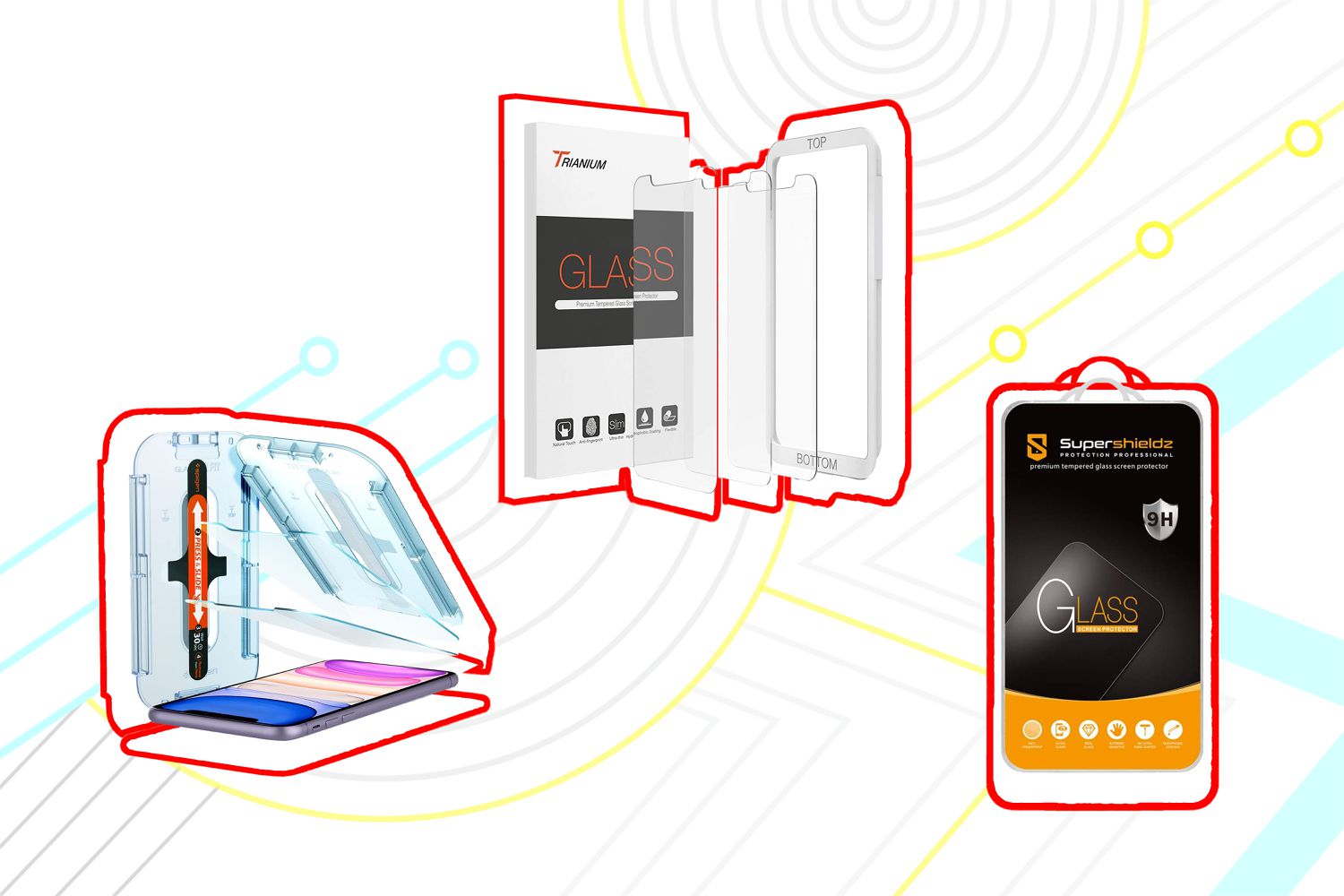
If “I just want a protector that works” were a product category, Spigen would be the default answer. In 2025, the big selling point is still the EZ Fit alignment tray: you clean, you place the tray, you press, and you feel like a genius. Spigen’s higher-end lines (often labeled AluminaCore) lean into durability upgrades while keeping the install process friendly.
Why it’s great: foolproof installation, strong day-to-day protection, great clarity, usually comes in a 2-pack.
Best for: iPhone, Pixel, Galaxy owners who want the easiest “set it and forget it” glass.
2) ZAGG InvisibleShield Glass Elite (Best Premium Protection + Strong Brand Support)
ZAGG has been in the screen-protector business long enough to have calluses. Glass Elite is typically positioned as a premium option with reinforced strength claims and coatings aimed at resisting fingerprints and improving the “slick glass” feel. It’s not the cheapest, but ZAGG’s appeal is the combo of a premium build and a support ecosystem that’s been around for years.
Why it’s great: premium feel, strong brand reputation, often sold at major retailers.
Best for: people who want a known name and are okay paying extra for it.
3) Belkin ScreenForce UltraGlass 2 (Best “Apple Store Vibes” + Clean Clarity)
Belkin’s UltraGlass line is a go-to for shoppers who like buying accessories from brands that feel “official-adjacent.” In 2025, UltraGlass 2 is popular for its clarity, polished fit, and the kind of packaging that whispers, “Yes, this costs more. No, we will not apologize.”
Why it’s great: excellent clarity, premium finishing, widely available.
Best for: iPhone users who want a high-end protector that looks invisible when installed.
4) ESR Armorite (Best for Rugged Protection on a Realistic Budget)
ESR Armorite is built for people who treat their phone like an action camera. It’s known for being marketed as heavy-duty glass and often ships in multi-packs with an installation frame. ESR’s kits tend to be generous: cleaning supplies, alignment help, and enough spare protectors to make you feel like you’re prepping for a screen-protector winter.
Why it’s great: tough vibe, good value per protector, strong install kit.
Best for: commuters, parents, gym-goers, and anyone who has ever dropped a phone while trying to do two things at once.
5) amFilm Tempered Glass (Best Value Multi-Pack That Doesn’t Feel Cheap)
amFilm has become the “smart default” budget pick for a lot of people because it typically includes multiple protectors, decent clarity, and simple tools that don’t feel like they came out of a cereal box. The main charm is consistency: you buy it, you install it, it works, and you move on with your life.
Why it’s great: low cost per protector, reliable clarity, good everyday scratch protection.
Best for: anyone who wants a solid protector and would rather spend the savings on coffee (or a case).
6) Supershieldz Tempered Glass (Best Ultra-Budget “Just Protect It” Pick)
Supershieldz is the kind of screen protector you buy when you want coverage fast, cheap, and in bulk. You’re not paying for fancy brandingyou’re paying for basic protection and a replace-it-without-crying price.
Why it’s great: very affordable multi-packs; good for people who crack protectors often.
Best for: budget shoppers, students, and “I drop my phone a normal amount” (which is still too much).
7) Torras GlassGo / “Pull-Tab” Style Kits (Best Stress-Free Installation Experience)
Some brands have gone all-in on installation systems that feel like a magic trick: place the tray, pull the tab, press, and watch the adhesive settle like it’s obeying a polite house rule. Torras kits often appeal to people who hate installing protectors but love the results.
Why it’s great: install system is the star; great for people who fear bubbles and dust.
Best for: first-timers and anyone who has ever rage-peeled a protector off after a failed attempt.
8) ZAGG 4-Way Privacy (Best Privacy Screen Protector for Crowds and Commutes)
Privacy protectors are for anyone who’s had a stranger on a plane learn their entire life story through a banking app. The best ones block viewing angles effectivelybut the tradeoff is usually reduced brightness and sometimes a slight haze. ZAGG’s privacy offerings tend to be premium-priced, but they’re among the most talked-about for strong privacy performance.
Why it’s great: strong privacy, premium feel.
Watch out for: dimming (you may bump your brightness up).
Best for: commuters, travelers, and anyone who works in public spaces.
9) FLOLAB NanoArmour / “Infinity Edge” Styles (Best for Clarity + Edge-to-Edge Coverage)
FLOLAB targets the crowd that notices everything: reflections, edge feel, and that tiny lip where some protectors end. Its premium positioning often focuses on clarity, coatings, and edge finishing that feels smoother during swipe gestures. If you hate feeling the border, this category is worth a look.
Why it’s great: premium coatings and edge finishing; excellent “forget it’s there” potential.
Best for: people picky about reflections, swipe comfort, and “screen looks like glass” realism.
10) Whitestone Dome Glass (UV) (Best for Curved Screens and Tricky Fingerprint Readers)
Curved displays (and some under-display fingerprint scanners) can be picky. Whitestone’s UV-curing approach has a learning curve, but it’s popular because it can adhere more evenly on curved glass and around complex edgeswhere standard adhesive protectors may lift or leave gaps.
Why it’s great: strong adhesion for curved screens; can be a better match for certain premium Android phones.
Watch out for: installation complexity (read instructions like it’s a recipe you only get one shot at).
Best for: curved-screen users and people willing to trade time for a better fit.
11) OtterBox Premium Glass (Best for Case People Who Want One Brand to Rule Them All)
If you’re already an OtterBox case loyalist, matching your screen protector to your case brand can simplify the “will it lift?” anxiety. OtterBox Premium Glass protectors are positioned as durable, case-friendly options with strong brand consistency across popular devices.
Why it’s great: dependable fit, strong brand ecosystem, usually well-matched to rugged cases.
Best for: OtterBox case users and anyone who wants a familiar, mainstream option.
Buying Guide: How to Choose the Right Screen Protector in 2025
Tempered Glass vs. Film: Which One Should You Buy?
Tempered glass is the crowd favorite for a reason: it feels the most like your real screen, usually offers the best scratch resistance, and can crack in a way that “saves” your display. Film protectors are thinner and can be better for certain devices (especially foldables and some curved screens), but they can feel tackier and show wear sooner.
Privacy and Matte Protectors: Worth It?
Privacy protectors are awesome for public spacesbut you often pay with brightness and sometimes sharpness. Matte / anti-glare protectors can reduce reflections and fingerprints, but they may add a slight texture or grain that not everyone loves. If you do a lot of outdoor use, matte can be a win. If you do a lot of photo editing, glossy clarity might be more important.
Case Compatibility: The Silent Dealbreaker
“Edge-to-edge” sounds great until your case presses the protector up like a tent. Most brands now aim for case-friendly marginsa tiny gap that helps prevent edge lift. If you use a thick protective case, prioritize “case-compatible” claims and avoid overly aggressive edge coverage unless it’s designed for your specific case style.
Fingerprint Readers: The Android Gotcha
Under-display fingerprint scanners can be sensitive. Some phones work fine with tempered glass; others prefer thin glass, special coatings, or film. If your phone has an ultrasonic reader, consider protectors that specifically claim compatibilityor look at UV solutions if you have a curved display.
Installation Tips (So You Don’t Trap a Dust Speck Forever)
- Pick the right room. Bathrooms after a hot shower can be greatsteam knocks dust down. Yes, really.
- Clean like you mean it. Alcohol wipe, dry cloth, then dust sticker. Repeat if you’re even slightly unsure.
- Use the alignment tray. If your protector comes with one, that’s not “extra plastic.” That’s your sanity.
- Commit to the drop. Hovering is how you trap dust. Align, lower, pressconfidently.
- Chase bubbles gently. Small bubbles often disappear over 24–48 hours. Big ones need a squeegee and patience.
FAQ: Quick Answers Before You Buy
Do screen protectors actually prevent cracks?
They can. A protector won’t make your phone invincible, but it can absorb scratches and take impact damage that might otherwise hit the display. Think of it as a helmet: not magic, but very helpful when accidents happen.
Will a screen protector reduce touch sensitivity?
Good tempered glass protectors typically keep touch feeling normal. Privacy and matte finishes are more likely to change the feel (and sometimes the brightness) than standard clear glass.
How often should I replace a screen protector?
Replace it when it’s cracked, when the edges lift, or when it’s so scratched that it looks like it lost a fight with your keys. If it’s smooth, clear, and firmly attached, there’s no need to change it “just because.”
Real-World Screen Protector Experiences (Extra of Truth)
Here’s what living with screen protectors in 2025 actually feels likebeyond the product descriptions and the suspiciously perfect marketing photos.
1) The “I swear my screen was clean” incident. The first time you install a screen protector, you learn a surprising fact: dust is not a thing you remove. Dust is a lifestyle you negotiate with. I once cleaned a phone screen so thoroughly I could’ve performed surgery on it, then lowered the glass andbamone single dust speck appeared like it teleported from another dimension. That’s when you learn the value of protectors that include a big, sticky dust-lifter and a tight alignment tray. In 2025, the best kits feel less like “here’s a wipe” and more like a tiny ritual designed to keep you from spiraling.
2) The bubble that wasn’t a bubble. Sometimes you press a protector down and see a hazy circle that looks like a trapped air bubble. You panic. You consider peeling it off. Then you realize it’s the adhesive slowly settling and it disappears in an hour like it never existed. That’s why I’m a fan of modern “press-to-seal” glass: it’s more forgiving, especially for people who do not want to spend their Saturday chasing a bubble with the intensity of a detective in a noir film.
3) Privacy glass: the blessing and the brightness tax. Privacy protectors are amazing in airports, coffee shops, and anywhere you don’t want your neighbor reading your messages like they’re subtitles. But the tradeoff is real: you’ll usually bump brightness up, which can nudge your battery down. On the plus side, you may also discover you text less in public because you can’t see your screen at 30% brightnessso congratulations on your accidental digital wellness journey.
4) Matte glass: outdoor hero, indoor drama queen. Anti-glare protectors are clutch when you’re outside and your screen turns into a mirror that reflects your entire face back at you like a judgmental painting. Matte finishes cut reflections and hide fingerprints better. But if you’re picky about sharpnessespecially when reading small textmatte can feel slightly softer. It’s a trade: visibility in harsh light versus maximum crispness indoors. For many people, it’s worth it. For others, it’s “why does my $1,000 phone look like it’s wearing a filter?”
5) The moment you become a screen-protector believer. The most convincing “review” is the day you drop your phone, pick it up, and see a crackthen realize the crack is only in the protector. You peel it off, your actual screen is perfect, and you feel a wave of relief that is almost spiritual. Then you immediately install the spare protector from your 2- or 3-pack and promise yourself you’ll never raw-dog reality again. That’s the real value of a good protector: not perfection, but a second chance.
Bottom Line
In 2025, the “best” screen protector depends on what annoys you most: installation stress, glare, nosy strangers, edge feel, or the fear of a drop. If you want the safest all-around bet, go with Spigen’s EZ Fit style kits. If you want premium brand backing, ZAGG, Belkin, and OtterBox remain strong mainstream choices. If you want value, amFilm and Supershieldz cover you without the financial heartbreak. And if your phone is curved or fingerprint-picky, Whitestone’s UV approach can be worth the extra effort.