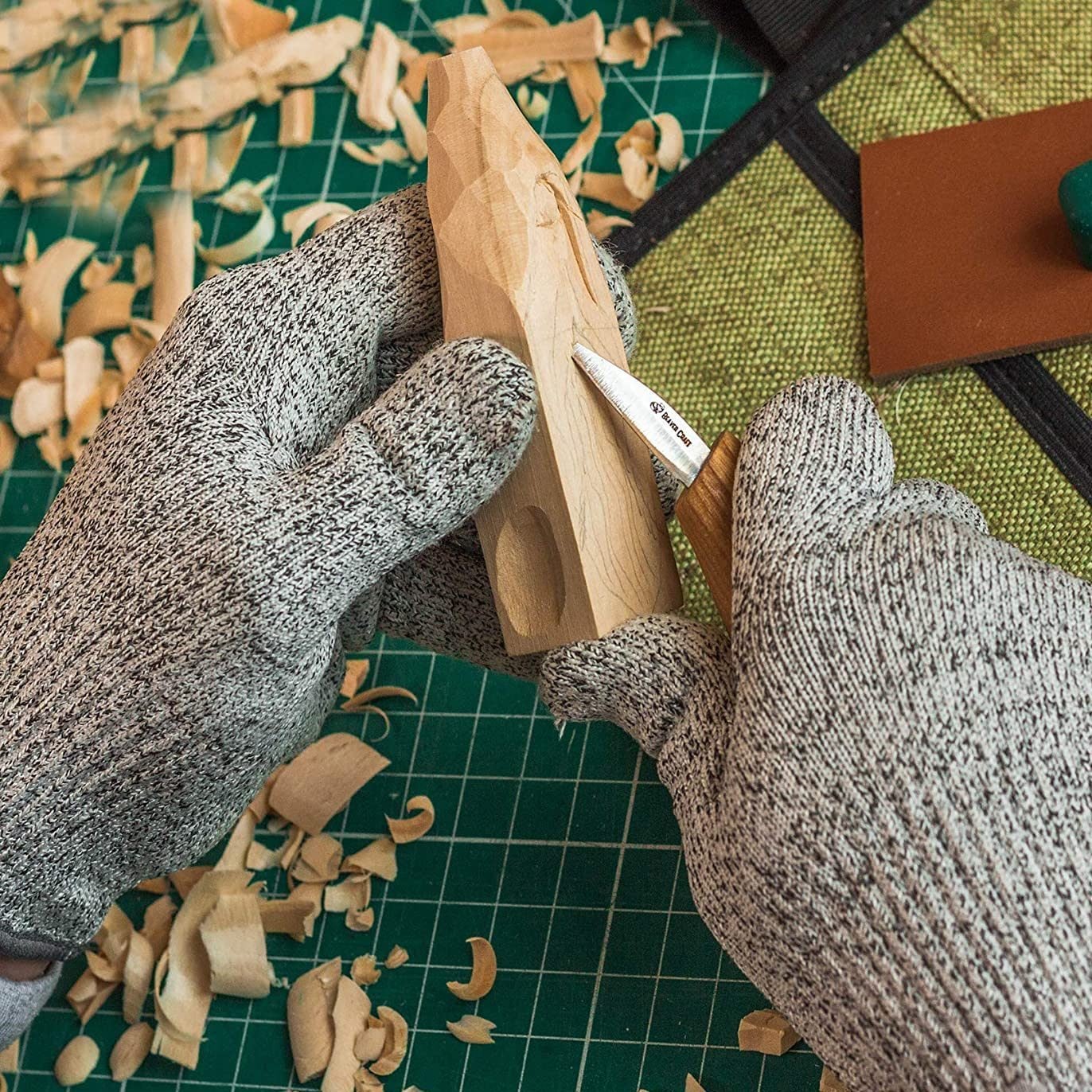
Whittling is wonderfully uncomplicated: take a piece of wood, use a sharp knife, and gradually reveal the bird, spoon, wizard, or suspiciously lumpy “abstract sculpture” hiding inside. The difficult part often comes before the first shaving curls awaychoosing a knife that is sharp, controllable, comfortable, and appropriate for the project.
For this 2025 guide, we compared dedicated fixed blades, portable folding knives, multi-blade carving tools, and complete beginner kits. The selections reflect manufacturer specifications, specialist woodworking guidance, established retailer information, and hands-on product evaluations. Because a knife that excels at roughing out a spoon may feel clumsy around tiny facial details, the list includes winners for several different carving styles rather than pretending one blade can do everything.
Quick Comparison of the Best Whittling Knives and Kits
| Product | Best For | Format | Skill Level |
|---|---|---|---|
| BeaverCraft S15X Premium Wood Carving Set | Best overall | Three-knife kit | Beginner to advanced |
| Morakniv Woodcarving Knife 120 | Best fixed-blade knife | Single fixed blade | Beginner to advanced |
| Flexcut KN100 Four-Piece Carving Knife Set | Best versatile knife set | Four-knife kit | Intermediate |
| BeaverCraft C4S Sloyd Whittling Knife | Best value | Single fixed blade | Beginner |
| Flexcut JKN88 Whittlin’ Jack | Best portable knife | Two-blade folder | Intermediate |
| Flexcut Carvin’ Jack 2.0 | Best premium multitool | Six-tool folder | Intermediate to advanced |
| Opinel No. 08 Carbon Steel | Best traditional pocket knife | Single-blade folder | Beginner to intermediate |
| BeaverCraft DIY01 Comfort Bird Kit | Best complete starter project | Knife-and-project kit | Beginner |
Our Top 8 Whittling Knives and Kits for 2025
1. BeaverCraft S15X Premium Wood Carving Set Best Overall
The BeaverCraft S15X earns the top position because it provides the useful variety of a serious carving kit without becoming a drawer full of mysterious sharp objects. It includes a larger knife for removing material, a detail knife for controlled finishing, and a chip-carving knife for decorative cuts. A leather strop, polishing compound, and storage case complete the package.
The three blade profiles let a carver move naturally from rough shaping to delicate refinement. The Scandi-ground blades arrive sharp, while the walnut handles offer a fuller, more polished feel than many entry-level sets. In independent testing, the knives remained comfortable during extended carving sessions and held their edges well. The main drawback is that buyers who only carve simple figures may not need all three blades.
Best for: Buyers who want one high-quality kit that can support both early practice and more ambitious future projects.
2. Morakniv Woodcarving Knife 120 Best Fixed-Blade Whittling Knife
The Morakniv 120 is a classic for a reason. Its short, pointed blade gives the user excellent control during detailed carving, yet it remains sturdy enough for everyday shaping. The current carbon-steel version uses a 62-millimeter blade, a full rat-tail tang, a Scandi-zero grind, and an oiled birch handle.
At approximately 2.44 inches, the blade is long enough to make efficient slicing cuts but short enough to feel manageable around curves and small features. The barrel-shaped handle fills the palm comfortably, although users with very small hands may find it chunky. Carbon steel is easy to sharpen and can hold an excellent edge, but it should be wiped clean, dried, and lightly oiled after use to prevent corrosion. A sheath is included.
Best for: Carvers who prefer a simple, durable fixed blade for figures, greenwood projects, and controlled detail work.
3. Flexcut KN100 Four-Piece Carving Knife Set Best Versatile Set
The Flexcut KN100 is a practical step up for carvers who have already discovered that one blade shape cannot happily perform every job. The set includes a cutting knife, a detail knife, a pelican knife, and a mini pelican knife. Together, they cover broad shaping, narrow detail cuts, slicing motions, concave areas, and tiny finishing work.
Each knife uses a high-carbon-steel blade and a sculpted ash handle. The handles are faceted rather than perfectly round, giving the fingers useful reference points when the blade is turned. All four tools fit into the included roll, which is considerably more civilized than dropping them loose into a toolbox and hoping for the best. The set is made in the United States. Its only notable limitation is that it does not include a hook knife for hollowing spoons or bowls.
Best for: Figure carvers and hobbyists who need several specialized profiles but do not require spoon-carving tools.
4. BeaverCraft C4S Sloyd Whittling Knife Best Value
The BeaverCraft C4S is an affordable introduction to the traditional sloyd-style knife. Its straight, pointed blade can remove substantial amounts of stock while still reaching into narrower areas. The 80-millimeter blade uses 1066 high-carbon steel hardened to approximately 57–59 HRC, with a 20-degree bevel and an ambidextrous design.
The long cutting edge makes the C4S especially effective for roughing out animals, utensils, ornaments, and larger geometric forms. It also includes a protective leather sheath, an important bonus at this price level. Because the blade is longer than a dedicated detail knife, complete beginners should practice with short cuts instead of attempting heroic, full-length slices on day one. Your wooden fox does not need to be finished before lunch.
Best for: New carvers seeking a capable fixed blade without investing in a complete set.
5. Flexcut JKN88 Whittlin’ Jack Best Portable Whittling Knife
The Flexcut Whittlin’ Jack combines two genuinely useful carving blades in a pocket-friendly folding design. One is a 2-inch roughing blade for basic shaping, while the other is a 1.5-inch detail blade for tighter cuts. Both fold into an aluminum frame with wood inlays.
Shorter blade profiles offer better control than many ordinary pocket knives, and the high-carbon-steel edges arrive honed and ready to carve. At camp, on a porch, or during a weekend trip, the Whittlin’ Jack provides enough capability to work without carrying a complete knife roll. Fixed-blade knives remain more comfortable during long sessions, but few dedicated carving tools travel this conveniently.
Best for: Travelers, campers, and hobbyists who want two dedicated carving blades in one portable tool.
6. Flexcut Carvin’ Jack 2.0 Best Premium Carving Multitool
The Carvin’ Jack 2.0 is essentially a pocket workshop. Its six locking tools include a detail knife, straight gouge, hook knife, V-scorp, gouge scorp, and pelican knife. That collection supports ordinary whittling, texturing, outlining, hollowing, spoon carving, and work inside narrow recesses.
Unlike inexpensive novelty multitools, the Carvin’ Jack is built around specialized carving profiles. The blades lock in both open and closed positions, while the deeply textured handle improves grip. A belt sheath, custom strop, and polishing compound are included. It is considerably more expensive than a basic fixed blade and requires patience when sharpening the curved tools, but serious mobile carvers receive remarkable capability in a compact package.
Best for: Experienced carvers who want a premium, portable tool for figures, spoons, texture, and recessed details.
7. Opinel No. 08 Carbon Steel Best Traditional Pocket Knife
The Opinel No. 08 is not a specialized carving knife, yet its thin carbon-steel blade, light weight, simple handle, and dependable locking ring make it an enjoyable general-purpose whittler. The XC90 carbon-steel blade measures 3.28 inches, and the entire knife weighs approximately 1.6 ounces.
The Virobloc ring locks the blade during use and can also secure it in the closed position. The blade slices cleanly through soft wood and is easy to touch up, making the No. 08 ideal for casual projects, camping, feather sticks, and the timeless art of turning an ordinary twig into a slightly smaller twig. Its longer blade and rounded handle do not provide the same close control as a dedicated detail knife, and the carbon steel requires protection from moisture.
Best for: Casual whittlers who want a lightweight folding knife that can also handle everyday cutting tasks.
8. BeaverCraft DIY01 Comfort Bird Carving Kit Best Complete Beginner Project
The DIY01 Comfort Bird Kit removes one of the biggest obstacles facing a new carver: not knowing what to buy after purchasing the knife. It combines a small whittling knife with basswood and cherry blanks, a carving pattern, safety tape, sandpaper, beeswax, a leather strop, polishing compound, written instructions, and a video tutorial.
The project is structured around carving a smooth comfort bird, which teaches basic rounding, grain awareness, controlled slicing, sanding, finishing, and blade maintenance. A beginner version with pre-shaped blanks is also available, reducing the amount of heavy stock removal required. The kit is recommended for ages 14 and older, with adult supervision advised for younger users.
Best for: First-time carvers, gift recipients, and anyone who prefers a guided project instead of staring blankly at a block of wood.
How to Choose the Best Whittling Knife
Match the Blade Length to the Work
Short blades generally provide better control for eyes, feathers, hair, facial features, and small curves. Longer sloyd blades remove material faster and create smooth slicing cuts on larger objects. For a first knife, a blade between roughly 1.5 and 2.5 inches is usually easier to manage than a full-size outdoor knife.
Choose Fixed or Folding
A fixed blade has fewer moving parts, provides a solid connection between the hand and cutting edge, and is usually more comfortable during extended sessions. A folding whittling knife is easier to transport but may have a narrower or less ergonomic handle. When buying a folder, a secure locking mechanism is preferable for carving.
Understand the Steel
High-carbon steel is popular because it takes a very keen edge and is relatively easy to sharpen. Its weakness is corrosion resistance. Stainless steel requires less maintenance, while laminated carbon steel combines a hard cutting core with softer outer layers for edge retention and toughness. Regardless of the steel type, good geometry and regular maintenance matter more than impressive-sounding metallurgy alone.
Do Not Ignore the Handle
A whittling knife should remain comfortable when held tightly, loosely, sideways, and close to the blade. Large rounded handles are comfortable for forceful cuts, while faceted handles provide orientation and control. People with smaller hands may prefer slimmer handles or compact detail knives.
Look for Maintenance Accessories
A strop and polishing compound are more useful to a beginner than a giant collection of sharpening stones. Frequent stropping maintains an already-sharp edge and delays the need for more aggressive sharpening. Woodworking specialists commonly recommend polishing and stropping carving tools during use rather than waiting until the edge becomes dramatically dull.
Whittling Safety and Knife Care
Start with soft, straight-grained wood such as basswood. It holds detail, resists splitting, and requires less force than harder species. Less force usually means more control, cleaner cuts, and fewer moments when the knife suddenly escapes the wood and begins exploring your fingers.
Carve away from your body while learning, use short controlled strokes, and keep the hand holding the wood outside the blade’s path. A cut-resistant glove, thumb guard, or finger tape adds protection but does not make unsafe technique magically safe. A sharp knife is generally easier to control than a dull one because it cuts without excessive pressure.
After carving, remove wood dust and moisture from the blade. Carbon-steel knives should be dried promptly and occasionally treated with a light coat of appropriate oil. Store fixed blades in their sheaths and folding knives in a dry location. Strop the edge before it feels seriously dull; once the knife starts crushing fibers instead of slicing them, polishing compound alone may not be enough.
Real-World Experience: What Using Different Whittling Knives Teaches You
A first whittling session often begins with great optimism. The new knife gleams, the basswood block looks cooperative, and the project photograph promises that a handsome little woodland creature is only a few cuts away. Twenty minutes later, the creature resembles a potato with emotional problems. This is normal. More importantly, those first imperfect cuts quickly reveal what matters in a knife.
The most noticeable difference is not usually steel hardness or blade branding. It is control. A short detail blade feels calm and predictable around corners. You can brace the thumb, make a small slicing motion, and remove a shaving thin enough to float away. A longer sloyd knife feels more energetic. It clears broad surfaces rapidly and creates graceful curves, but its extra reach demands awareness. Used carelessly, it removes the feature you intended to refine, plus several features you had planned to keep.
Complete kits provide a smoother early experience because they eliminate small purchasing mistakes. A beginner with a knife, suitable wood, strop, compound, pattern, and safety tape can begin immediately. Someone who purchases only a knife may discover that the mystery scrap from the garage is actually dried oak, knotty construction lumber, or a material apparently engineered to resist civilization. Starting with clean basswood lets the carver learn cutting technique instead of wrestling with the wood.
Multi-knife sets become more valuable after the basic shape appears. A roughing knife removes corners quickly, but a narrow detail blade reaches the spaces under a bird’s beak or between a figure’s legs. A pelican profile makes controlled slicing cuts along curves. The improvement does not come from owning more tools for decorative purposes; it comes from avoiding awkward cuts with the wrong blade.
Folding carving knives offer a different kind of satisfaction. They invite spontaneous practice because they fit into a pocket or small bag. A few minutes beside a campfire or on the back porch can become a useful exercise in grain direction and blade control. However, compact handles may create fatigue during long sessions. A portable knife is often the tool you use most frequently, while a comfortable fixed blade is the one you prefer when settling in for an entire afternoon.
Edge maintenance also changes the experience dramatically. New carvers sometimes wait for a blade to become unmistakably dull before doing anything. By then, the knife requires more pressure, the wood surface becomes fuzzy, and the user assumes the tool was overrated. A few light passes on a charged leather strop every 20 to 30 minutes can preserve the crisp feeling of a fresh edge. Stropping takes less time than finding the tiny nose you accidentally launched across the room after forcing a dull blade through end grain.
The final lesson is that comfort matters more than prestige. An expensive multitool is impressive, but a simple fixed blade with a handle that fits your hand may produce better work. Carvers with large hands often appreciate fuller handles; those with smaller hands may gain control from slimmer tools. Some people love traditional rounded birch handles, while others prefer flat facets that prevent the knife from rotating.
The best whittling knife is therefore not merely the sharpest model or the one with the longest feature list. It is the tool that encourages small, controlled cuts, remains comfortable, is easy to maintain, and matches the projects you actually enjoy. Choose that knife, add a forgiving block of wood, and accept that your first few animals may look like they were designed by committee. Every shaving still teaches something.
Final Verdict
The BeaverCraft S15X Premium Wood Carving Set is our best overall choice because its three useful blade profiles, comfortable handles, maintenance accessories, and protective case create a balanced package for a wide range of projects.
For buyers who prefer one straightforward fixed blade, the Morakniv Woodcarving Knife 120 delivers excellent control and proven simplicity. Budget-conscious beginners should consider the BeaverCraft C4S, while mobile carvers will appreciate the compact Flexcut JKN88 Whittlin’ Jack. Those starting from zero will find the BeaverCraft DIY01 Comfort Bird Kit especially welcoming because it includes both the tool and a clear first project.
No knife will replace patient practice, careful grain reading, and regular stropping. Still, the right tool makes those lessons much more enjoyableand considerably less likely to end with a wooden duck that looks like an angry turnip.