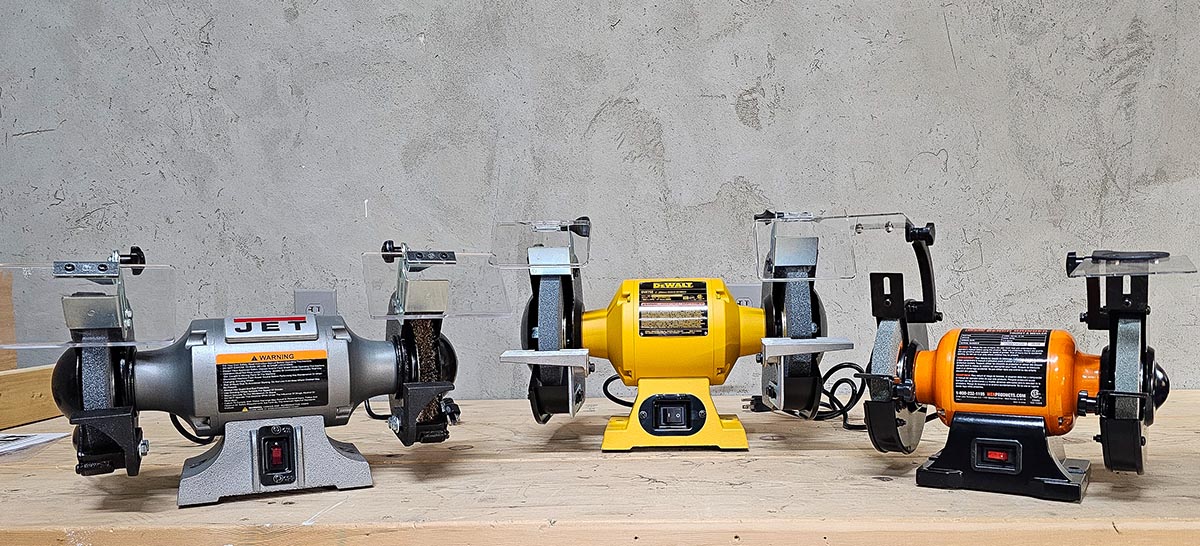
A bench grinder may not have the swagger of a cordless drill or the dramatic personality of a chainsaw, but this modest workshop machine can rescue dull tools, clean rusty hardware, smooth rough welds, and save a small fortune in replacement blades. The best bench grinders combine steady power, low vibration, useful wheel configurations, and tool rests that do not feel as though they were designed during somebody’s lunch break.
Based on tested recommendations associated with Bob Vila’s tool coverage, verified manufacturer specifications, retailer data, abrasive-wheel guidance, and established workshop safety practices, the following models stand out for general grinding, sharpening, polishing, and restoration work. The right choice depends less on which grinder looks toughest and more on whether you plan to sharpen chisels, reshape mower blades, clean rusty bolts, or do a little of everything.
Research basis:
Our Top Bench Grinder Picks
| Category | Model | Wheel Size | Speed | Best Use |
|---|---|---|---|---|
| Best Overall | DeWalt DW758 | 8 inches | 3,600 RPM | Heavy general grinding |
| Best Value | WEN BG4260 | 6 inches | 3,450 RPM | Occasional home-shop work |
| Best With Wire Wheel | Jet JBG-6W | 6 inches | 3,450 RPM | Rust and paint removal |
| Best Variable-Speed | Delta 23-196 | 6 inches | 2,000 to 3,400 RPM | Mixed materials and tasks |
| Best for DIYers | WEN BG625V | 6 inches | 2,000 to 3,400 RPM | Sharpening and light grinding |
| Best for Sharpening | Rikon 80-805 | 8 inches | 1,750 RPM | Chisels and woodworking tools |
Best Overall: DeWalt DW758 8-Inch Bench Grinder
The DeWalt DW758 is the workshop equivalent of a sturdy pickup truck: not particularly interested in fancy tricks, but ready to work whenever called. Its 3/4-horsepower induction motor turns the 8-inch wheels at up to 3,600 RPM, producing enough speed and torque for rapid material removal.
The larger wheels provide a broader working surface than most 6-inch grinders. That extra area is useful when grinding wide chisels, mower blades, axe heads, brackets, and freshly cut steel. DeWalt also gives the machine a cast-iron base and motor housing, which add weight but help control vibration. In the world of bench grinders, weight is usually a compliment.
What We Like
- Powerful 3/4-horsepower motor
- Large 8-inch wheels for bigger workpieces
- Rugged cast-iron construction
- Wide spacing between wheels
- Adjustable aluminum tool rests
What Could Be Better
The DW758 is designed primarily for fast grinding, not delicate sharpening. At 3,600 RPM, it can generate heat quickly, so users must work in short passes when sharpening tempered steel. It is also happiest when bolted to a solid bench. Trying to use a powerful 8-inch grinder on a wobbly folding table is an excellent way to discover new meanings for the word “vibration.”
Product verification:
Best Bang for the Buck: WEN BG4260 6-Inch Bench Grinder
For homeowners who sharpen a mower blade twice a year, clean the occasional rusty bolt, and do not operate a secret fabrication plant behind the garage, the WEN BG4260 delivers impressive value. Its 2.1-amp motor spins two 6-by-3/4-inch wheels at up to 3,450 RPM.
The supplied 36-grit wheel removes material quickly, while the 60-grit wheel is better for refining edges and smoothing marks left by coarse grinding. Adjustable eye guards and pivoting tool rests are included, and the compact body fits comfortably on a crowded workbench.
Why It Works for Home Shops
This WEN bench grinder is affordable without feeling disposable. It starts smoothly, reaches useful grinding speed quickly, and can handle ordinary sharpening and deburring jobs. It is not intended for continuous industrial use, however. During longer sessions, giving the motor an occasional rest is wise. Machines need coffee breaks too; they are simply less vocal about it.
Best For
- Sharpening lawn and garden tools
- Cleaning damaged threads
- Smoothing cut bolts and brackets
- Light metal shaping
- First-time bench grinder owners
Manufacturer and testing data:
Best With a Wire Wheel: Jet JBG-6W Shop Grinder
The Jet JBG-6W arrives with a coarse grinding wheel on one side and a wire wheel on the other. This configuration makes it especially useful for automotive restoration, equipment maintenance, and general cleanup work.
The grinding wheel handles burrs, rough edges, and minor reshaping. The wire wheel removes loose rust, old paint, surface scale, and grime while preserving more of the underlying metal than aggressive grinding would. That makes the Jet a practical choice for cleaning bolt threads, brackets, hinges, and small machine parts.
Its 1/2-horsepower motor runs at approximately 3,450 RPM, and the machine’s solid construction helps it operate smoothly. A rear dust port can also help control debris when paired with a suitable metal-grinding collection setup.
Know the Trade-Off
Because one side is occupied by a wire wheel, the machine does not provide both coarse and fine grinding wheels out of the box. Buyers focused primarily on edge sharpening may prefer a traditional two-wheel arrangement. For rust removal and shop cleanup, however, the combination is wonderfully efficient. It is like hiring one employee who can grind metal and scrub the evidence afterward.
Comparative testing:
Best Variable-Speed: Delta 23-196 6-Inch Grinder
The Delta 23-196 offers a useful middle ground between high-speed material removal and controlled sharpening. Its 2.5-amp induction-type motor can be adjusted from 2,000 to 3,400 RPM using a conveniently located front dial.
Higher speeds are suitable for cleaning hardware and removing burrs. Lower settings give users more time to control the angle and reduce heat buildup when sharpening chisels, blades, and other edge tools. The grinder includes two wheel grits, adjustable tool rests, safety shields, a work light, and a cooling tray.
Who Should Buy It?
The Delta makes sense for a workshop that handles woodworking one weekend and mechanical repairs the next. Its adjustable speed does not make it a replacement for every specialized sharpening system, but it greatly expands what one compact grinder can do.
The built-in light is also more helpful than it sounds. Grinding a precise bevel in a dim garage is difficult, especially when your own head keeps blocking the ceiling light. Focused illumination lets users see the contact point and monitor the developing edge.
Official specifications:
Best for DIYers: WEN BG625V Variable-Speed Bench Grinder
The WEN BG625V is another versatile 6-inch model, pairing a 2.5-amp variable-speed motor with a flexible work light. Its operating range of 2,000 to 3,400 RPM covers common sharpening, deburring, cleaning, and light shaping tasks.
Unlike many entry-level grinders supplied with 36- and 60-grit wheels, the BG625V includes a coarse 36-grit wheel and a finer 80-grit wheel. The 36-grit side removes damaged metal, while the 80-grit side produces a more refined surface before final honing.
Why It Stands Out
- Variable speed for better heat control
- Flexible work light
- Useful 36- and 80-grit wheel combination
- Pivoting tool rests
- Adjustable eye guards
- Compact footprint
This is not the machine for spending eight hours grinding heavy welds. It is better suited to homeowners, hobbyists, and light-duty mechanics who want one grinder that can move from a garden tool to a rusty fastener without behaving like an angry carnival ride.
Manufacturer and retailer data:
Best for Sharpening: Rikon 80-805 Low-Speed Bench Grinder
Woodworking tools need sharp edges, but excessive heat can damage the temper of hardened steel. The Rikon 80-805 addresses that problem with an 8-inch wheel diameter and a slower operating speed of 1,750 RPM.
The 1/2-horsepower motor powers white aluminum-oxide wheels in 60- and 120-grit configurations. The 60-grit wheel can restore a worn bevel, while the 120-grit wheel refines the edge before honing on a stone or strop. Because the wheels turn more slowly, users have greater control and a lower risk of overheating thin chisel or plane-iron edges.
Where It Excels
- Wood chisels
- Plane irons
- Woodturning tools
- Carving tools
- Careful blade restoration
The Rikon is less appealing for aggressive metal removal. Asking a 1,750-RPM sharpening grinder to reshape a mangled axe is a bit like entering a librarian in a demolition derby. It might participate, but that is not where its talents shine.
Sharpening specifications and comparison:
How to Choose the Best Bench Grinder
Choose Between 6-Inch and 8-Inch Wheels
A 6-inch bench grinder is compact, affordable, and sufficient for most occasional home-shop jobs. Replacement wheels are commonly available, and the machine occupies less bench space.
An 8-inch grinder provides a larger working surface and usually has a more powerful motor. Its larger wheel also creates a flatter grinding arc, which can be advantageous when sharpening wide blades. Mechanics, fabricators, and frequent users often appreciate the extra capacity.
Match the Speed to the Work
Fast grinders operating around 3,450 to 3,600 RPM remove metal quickly. They are ideal for deburring, reshaping, and cleaning but can heat a thin edge in seconds.
Slow-speed grinders running near 1,750 RPM are favored for sharpening woodworking tools. Variable-speed models offer a compromise, allowing users to slow the wheel for controlled work and increase the speed when faster material removal is needed.
Understand Wheel Grit
Lower grit numbers indicate larger abrasive particles and more aggressive cutting. A 36-grit wheel is useful for reshaping damaged edges or removing substantial material. A 60- or 80-grit wheel leaves a smoother finish, while 100- to 120-grit wheels provide more control for sharpening.
A bench grinder generally establishes or repairs the bevel. A sharpening stone, fine abrasive system, or leather strop may still be required for a polished, razor-sharp edge.
Consider Motor Power
A lightly powered grinder may slow noticeably when pressure is applied. For occasional sharpening, that may not matter. For repeated grinding of thick steel, a stronger induction motor maintains wheel speed and removes material more efficiently.
Look for Stable Tool Rests
The tool rest supports the workpiece and helps maintain a consistent angle. It should adjust securely without flexing or drifting. Grooved rests can help guide drill bits or narrow tools, although dedicated sharpening jigs are better for repeatable precision.
Do Not Ignore Vibration
Excessive vibration makes accurate work difficult and can indicate an improperly mounted, unbalanced, or out-of-round wheel. A heavy cast-iron base helps, but even a well-built grinder should be bolted to a rigid bench when practical.
Buying guidance:
Bench Grinder Safety Essentials
Bench grinders look simple, but the wheels rotate at thousands of revolutions per minute. A few basic precautions make the difference between productive sparks and an extremely memorable trip to urgent care.
- Wear safety glasses and preferably a full-face shield.
- Keep wheel guards and spark deflectors installed.
- Secure loose clothing, jewelry, and long hair.
- Confirm that the wheel’s maximum RPM rating meets or exceeds the grinder’s speed.
- Inspect new wheels for cracks or damage and perform an appropriate ring test before mounting vitrified wheels.
- Keep the tool rest close to the wheel and readjust it as the wheel wears.
- Stand slightly to one side when starting a newly installed wheel.
- Allow the grinder to reach full speed before contacting the workpiece.
- Use light, controlled pressure rather than forcing the metal into the wheel.
- Never grind on the side of a standard wheel unless it is specifically designed for side grinding.
Norton Abrasives recommends visually inspecting bench grinding wheels, checking machine speed against the wheel’s rated operating speed, and ring-testing applicable wheels before installation. Proper wheel mounting, blotters, guards, and controlled startup procedures are not ceremonial details; they help prevent wheel failure.
Abrasive-wheel safety:
Real-World Bench Grinder Experiences and Workshop Lessons
The first lesson most new owners learn is that a bench grinder removes metal faster than expected. A damaged mower blade may look as though it needs several minutes of heroic grinding, but a coarse wheel can change its profile surprisingly quickly. The smartest approach is to make a light pass, inspect the edge, and repeat. Removing too little metal is easily corrected. Putting metal back requires either welding equipment or a time machine.
Heat is the second major lesson. When sharpening a chisel on a high-speed grinder, the narrow cutting edge can become hot before the thicker part of the tool feels uncomfortable. A blue or straw-colored area near the edge may indicate overheating. Short passes, minimal pressure, and frequent cooling pauses provide much better control. A slow-speed grinder makes this process more forgiving, but it does not repeal the laws of physics.
Wheel condition also matters more than beginners expect. A glazed wheel may spin beautifully while cutting poorly. The natural response is to press harder, which creates more heat and makes control worse. Dressing the wheel exposes fresh abrasive grains, restores a flat cutting surface, and can reduce vibration caused by uneven wear. A basic diamond dresser is one of the least glamorous accessories in the shop, yet it often produces the most noticeable improvement.
Another common discovery is that factory tool rests vary widely in quality. They may be perfectly adequate for cleaning a bolt but frustrating when attempting to grind matching bevels on a pair of chisels. A sharpening jig or upgraded rest can transform an ordinary grinder into a much more precise system. The grinder supplies the power; the jig supplies the repeatability.
Mounting deserves equal attention. A grinder that seems rough and noisy on a temporary shelf may become dramatically smoother after being bolted to a heavy bench. A rigid mounting surface absorbs vibration, keeps the machine from walking, and makes light pressure easier to maintain. Rubber isolation pads can help, but they cannot rescue a bench that wobbles whenever someone closes the garage door.
The wheel combination should reflect actual projects rather than imagined ones. A mechanic restoring old hardware may get more value from a grinding wheel and wire wheel than from two abrasive wheels. A woodworker may prefer 60- and 120-grit white aluminum-oxide wheels. A general DIY user often benefits from a coarse wheel for repairs and a medium wheel for cleanup. Buying the right arrangement initially reduces the trouble of replacing, mounting, balancing, and dressing wheels later.
Finally, good results come from letting the abrasive do the work. Heavy pressure does not automatically produce faster or better grinding. It can slow the motor, overheat the workpiece, wear the wheel unevenly, and increase the chance that the grinder grabs the part. Controlled contact, steady movement across the wheel face, and frequent inspection create straighter edges and fewer unpleasant surprises.
With practice, a bench grinder becomes one of those tools that quietly earns its space. It can restore a battered garden tool in minutes, clean threads that seemed beyond saving, prepare metal for welding, and keep woodworking tools useful for years. It may never be the most glamorous machine in the workshop, but neither is the person who remembers where every missing socket wentand both are extremely valuable.
Final Verdict
For power, stability, and broad workshop usefulness, the DeWalt DW758 is the best overall bench grinder in this group. Its 8-inch wheels and 3/4-horsepower motor make it a dependable option for demanding grinding and deburring work.
The WEN BG4260 is the better choice for budget-conscious homeowners who need a compact grinder for occasional maintenance. Mixed-use workshops should consider the variable-speed Delta 23-196 or WEN BG625V, while woodworkers who prioritize careful sharpening will be better served by the slow-speed Rikon 80-805.
The best bench grinder is ultimately the one matched to your most common work. Choose high speed for rapid metal removal, low speed for heat-sensitive sharpening, and a variable-speed machine when your project list changes more often than your plans for Saturday morning.