A dirty mirror has a special talent: it can make an otherwise clean room look like it gave up halfway through life. One toothpaste fleck, one mysterious smudge, one ghostly streak across the middle, and suddenly your bathroom feels less “fresh and polished” and more “crime scene for hairspray.” The good news? Getting a mirror truly clean is not complicated. The bad news? Most people make it harder than it needs to be.
The easiest way to clean a mirror comes down to two simple methods: one with a store-bought glass cleaner and one with a DIY vinegar solution. Both work. Both are fast. And both can leave your mirror streak-free if you use the right cloth, the right motion, and just a little self-control with the spray bottle.
In this guide, you’ll learn the two easiest ways to clean a mirror, how to avoid streaks, how to deal with stubborn toothpaste and hard water spots, and how to keep your reflection crisp enough to remind you that, yes, you really do need more sleep.
Why Mirrors Get Streaky in the First Place
Before jumping into the cleaning methods, it helps to know why mirrors end up cloudy, smeary, or downright weird-looking after you clean them. Usually, the problem is not the mirror. It’s the process.
Streaks often show up because of one or more of these issues:
- Too much cleaner
- A dirty or linty cloth
- Dust left on the surface before wet cleaning
- Hard water minerals in a homemade solution
- Wiping in circles until the mess simply changes shape
- Skipping the final dry buff
In other words, the easiest way to clean a mirror is also the smartest way: remove loose dust first, use a light amount of cleaner, wipe with a microfiber cloth, and finish with a dry cloth. That is the whole magic trick. No wizard robe required.
What You Need
You do not need a full cleaning cart that looks like it belongs in a hotel hallway. For most mirrors, keep it simple:
- 2 clean microfiber cloths
- A glass cleaner or DIY mirror cleaner
- Cotton swabs for corners and edges
- A small bowl of warm water if there is heavy grime
- A little dish soap or baking soda for spot treatment
If your cloth has already cleaned the kitchen counter, a faucet, and what may or may not have been spaghetti sauce, retire it from mirror duty. Mirrors are unforgiving. They remember everything.
Way 1: The Fastest Everyday Method With Glass Cleaner
Best for: Routine cleaning, fingerprints, light splatter, and quick touch-ups
If you want fast, simple, and reliable, this is the easiest way to clean a mirror on a normal day. A good glass cleaner and two microfiber cloths will usually do the job in under two minutes.
Step 1: Dust First
Use a dry microfiber cloth to remove loose dust, hair, and powdery debris. This step matters more than people think. If you skip it, you turn dry particles into muddy streaks the second the cleaner hits the surface.
Step 2: Spot-Treat the Gross Stuff
If the mirror has toothpaste dots, makeup spray, handprints, or mysterious specks that appeared through dark bathroom sorcery, treat those first. Use a tiny amount of glass cleaner, a dab of warm water with a drop of dish soap, or a little rubbing alcohol on the corner of your cloth. Work only on the problem spot before cleaning the full mirror.
Step 3: Apply Cleaner Lightly
For framed, older, or delicate mirrors, spray the cleaner onto the cloth instead of soaking the glass. This helps reduce the risk of liquid seeping behind the mirror edges, where moisture can damage the backing over time. If your mirror is unframed and especially smudgy, a very light mist directly on the glass can work too, as long as you wipe it quickly and do not flood the surface.
Step 4: Wipe in an S Pattern
Start at the top and move down in a tight S or zigzag pattern. This keeps you from pushing dirt back into areas you already cleaned. It also helps catch drips before they dry into fresh streaks. Circular motions may feel satisfying, but they tend to smear residue around like a tiny windshield wiper having an emotional breakdown.
Step 5: Dry Buff Immediately
Take your second clean, dry microfiber cloth and buff the mirror. This step is the difference between “pretty clean” and “why is this mirror so fancy now?” A dry buff removes lingering moisture and leaves the glass clearer and shinier.
Why This Method Works
Store-bought glass cleaners are designed to cut through oils, fingerprints, and light bathroom grime quickly. They are ideal when you want a streak-free mirror without mixing anything yourself. For people who want speed over chemistry experiments, this is usually the best mirror cleaning method.
Way 2: The DIY Vinegar Method
Best for: Budget-friendly cleaning, everyday haze, and eco-minded households
If you prefer homemade cleaners, the classic vinegar-and-water solution is still one of the easiest ways to clean a mirror. It is simple, inexpensive, and surprisingly effective when paired with a clean microfiber cloth.
How to Mix It
Combine equal parts distilled white vinegar and water in a spray bottle. If your home has hard water, use distilled water rather than tap water. That one switch can make a huge difference, because mineral-heavy water often dries into the very haze you were trying to remove in the first place.
How to Use It
- Dust the mirror with a dry microfiber cloth.
- Lightly spray the solution onto your cloth, or lightly onto the mirror if you can wipe quickly.
- Wipe from top to bottom in an S pattern.
- Use a second dry microfiber cloth to buff the surface.
Why This Method Works
Vinegar helps dissolve residue and cuts through many everyday bathroom smudges. It also evaporates fairly quickly, which helps reduce streaking when you do not overapply it. For many households, this homemade mirror cleaner is the easiest low-cost option that still gives a polished result.
How to Handle Stubborn Mirror Messes
Toothpaste Dots
These are tiny, clingy, and weirdly loyal to the glass. Use warm water with a drop of dish soap or a little rubbing alcohol on a corner of your cloth, then wipe clean and follow with your regular mirror-cleaning method.
Hairspray and Makeup Mist
Beauty products leave oily residue, so treat them before you do a full wipe-down. A cloth dampened with warm water and a tiny bit of dish soap works well. Follow with glass cleaner or vinegar solution so the mirror does not look like it has been moisturized.
Hard Water Spots
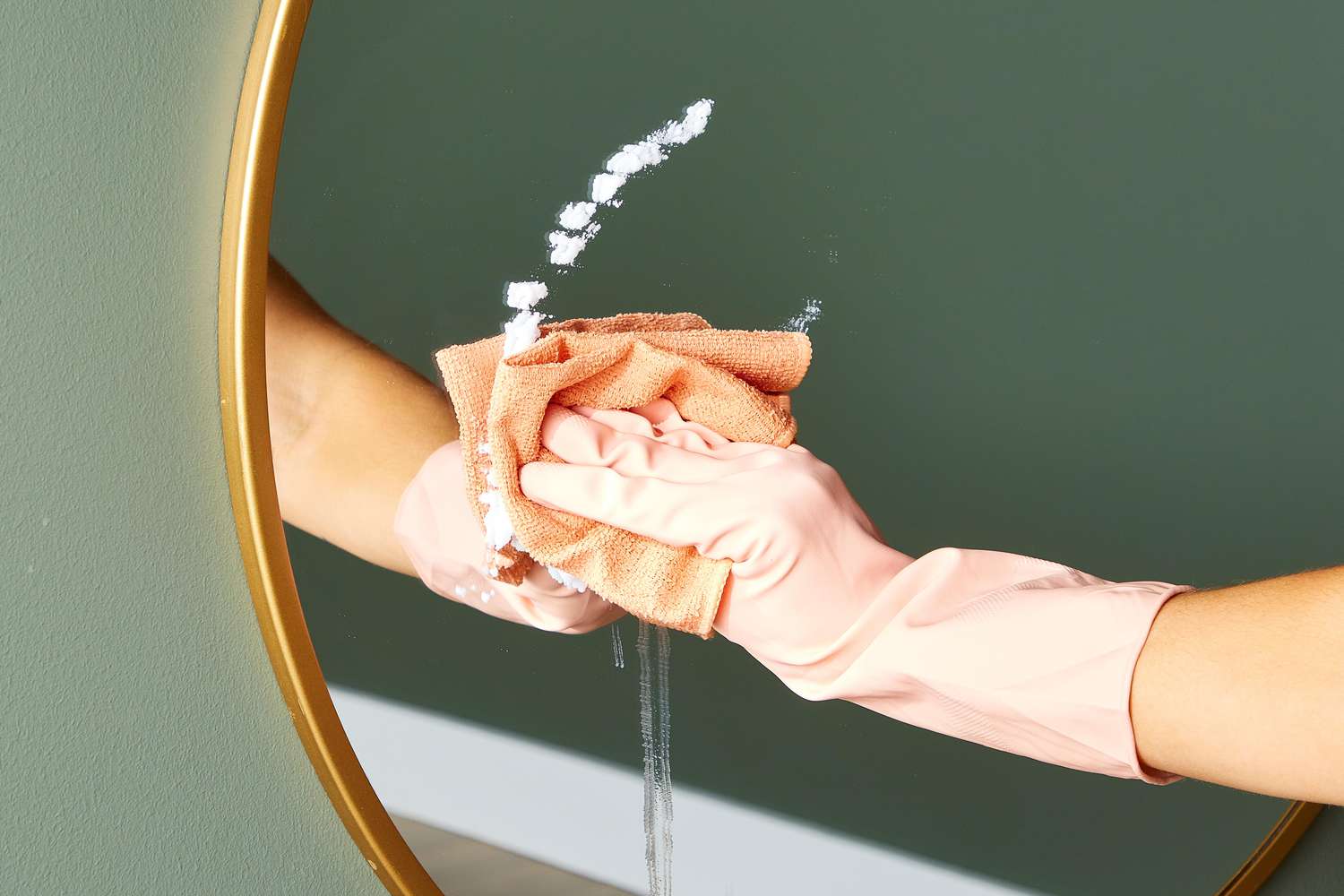
If your bathroom mirror is near a sink and gets splashed regularly, you may notice chalky white marks or cloudy patches. Make a paste with baking soda and water, gently apply it to the spots, let it sit briefly, then wipe it away with a damp cloth. After that, clean the full mirror with your usual method and buff it dry.
Foggy Bathroom Mirror
If you want to reduce fog after hot showers, some people use a very thin layer of shaving cream and buff it off with a dry microfiber cloth. It can help temporarily, though it is more of a bonus trick than an everyday cleaning method.
Mistakes to Avoid When Cleaning Mirrors
If your mirror always looks worse after you clean it, one of these habits may be the culprit:
- Using too much product
- Cleaning with paper towels that leave lint behind
- Using a dirty rag with old residue trapped inside
- Skipping the dry cloth at the end
- Cleaning a hot mirror or a mirror in direct sunlight, where product dries too fast
- Ignoring corners and edges where grime likes to hide
Also, avoid soaking the mirror. More spray does not mean more clean. It usually just means more drips, more buffing, and more muttering under your breath.
Which Mirror Cleaning Method Is Best?
If you want the shortest answer possible, here it is:
- Choose Way 1 if you want speed, convenience, and a quick polished finish.
- Choose Way 2 if you want a DIY mirror cleaner that is affordable, simple, and effective.
For most people, the easiest way to clean a mirror is the one they will actually do regularly. A mirror cleaned once a week is much easier to maintain than one ignored until it starts looking like a haunted lake.
How Often Should You Clean a Mirror?
Bathroom mirrors usually need light cleaning once or twice a week, especially if they sit above a busy sink. Entryway, bedroom, and decorative mirrors can often go longer, unless they are located in a house with children, pets, or adults who somehow touch the mirror every single day for no obvious reason.
A quick wipe before buildup gets thick will save time later. That is the real shortcut. Not a fancy product. Not a viral hack. Just consistency.
My Real-World Experience With Mirror Cleaning: What Actually Helps
Over time, one thing becomes obvious: mirror cleaning is less about finding a miracle product and more about learning the tiny habits that make the job easier. In real homes, mirrors do not get dirty in a neat, cinematic way. They collect toothpaste freckles, handprints at suspiciously low heights, face cream haze, and the occasional fine mist of hairspray that settles like invisible weather. That is why the best mirror-cleaning advice is practical, not dramatic.
In a busy bathroom, the fastest win is keeping two microfiber cloths nearby: one for cleaning and one for buffing. That single change makes mirror cleaning feel easier almost immediately. Instead of trying to do everything with one damp cloth, you clean first and polish second. The result looks better, and the process feels less annoying. It is the housekeeping version of using the right knife in the kitchen. Could you do it the other way? Probably. Would you enjoy it? Absolutely not.
I have also found that many mirror problems are not “whole mirror” problems. They are “three toothpaste spots and one weird foggy patch” problems. When that is the case, a full spray-and-wipe routine can be overkill. A quick spot clean with a microfiber cloth and a tiny bit of cleaner often solves the issue in under a minute. That makes it easier to stay on top of bathroom messes without turning every small chore into a full cleaning session.
The DIY vinegar method is especially handy when you want a simple routine without buying another specialty product. It works well for everyday haze and general smudges, and it feels satisfyingly low-tech. But the biggest lesson is this: homemade solutions only shine when your cloth is actually clean. If the cloth is carrying old dust, lint, or residue from other surfaces, even the best DIY glass cleaner can leave behind a disappointing film. The mirror is innocent. The cloth is the problem.
Another real-life lesson is that bathroom timing matters. If the room is steamy from a hot shower or the vanity lights have warmed the glass, cleaner can dry too quickly and leave streaks. Waiting a few minutes before cleaning often gives better results. It is a small thing, but small things are basically the whole sport of mirror care.
For homes with kids, mirrors become unofficial art galleries for fingerprints. In those spaces, a commercial glass cleaner is often the easiest choice because it cuts through skin oils faster. In calmer rooms, the vinegar method is usually enough. So the “best” mirror cleaning method can change depending on the location. A powder room mirror, a bathroom vanity mirror, and a full-length bedroom mirror do not always need the same strategy.
And perhaps the most underrated part of mirror cleaning is the final inspection. Looking straight at the mirror can make it seem perfectly clean. Then you step to the side, catch the light at an angle, and discover a dramatic streak that was hiding in plain sight like it pays rent there. A quick angle check saves you from walking away too soon.
So, when people ask about the easiest way to clean a mirror, the honest answer is not flashy. Use a clean microfiber cloth. Do not overspray. Wipe top to bottom. Buff it dry. Handle tough spots before they become a full-blown project. That is what works in real homes, on real mornings, with real people trying to get out the door while the bathroom mirror judges them silently.
Conclusion
The easiest way to clean a mirror is not about buying the fanciest spray or trying every internet hack with ingredients from the back of your pantry. It is about using a simple method that works every time. For everyday messes, a quality glass cleaner and two microfiber cloths are hard to beat. For a budget-friendly option, a vinegar-and-water solution can do an excellent job. In both cases, the same rules apply: dust first, use a light hand with product, wipe in an S pattern, and finish with a dry buff.
Once you get that routine down, mirror cleaning stops feeling like a tedious chore and starts feeling like one of the fastest ways to make a room look instantly cleaner. Which, frankly, is a pretty great return on two minutes of effort.