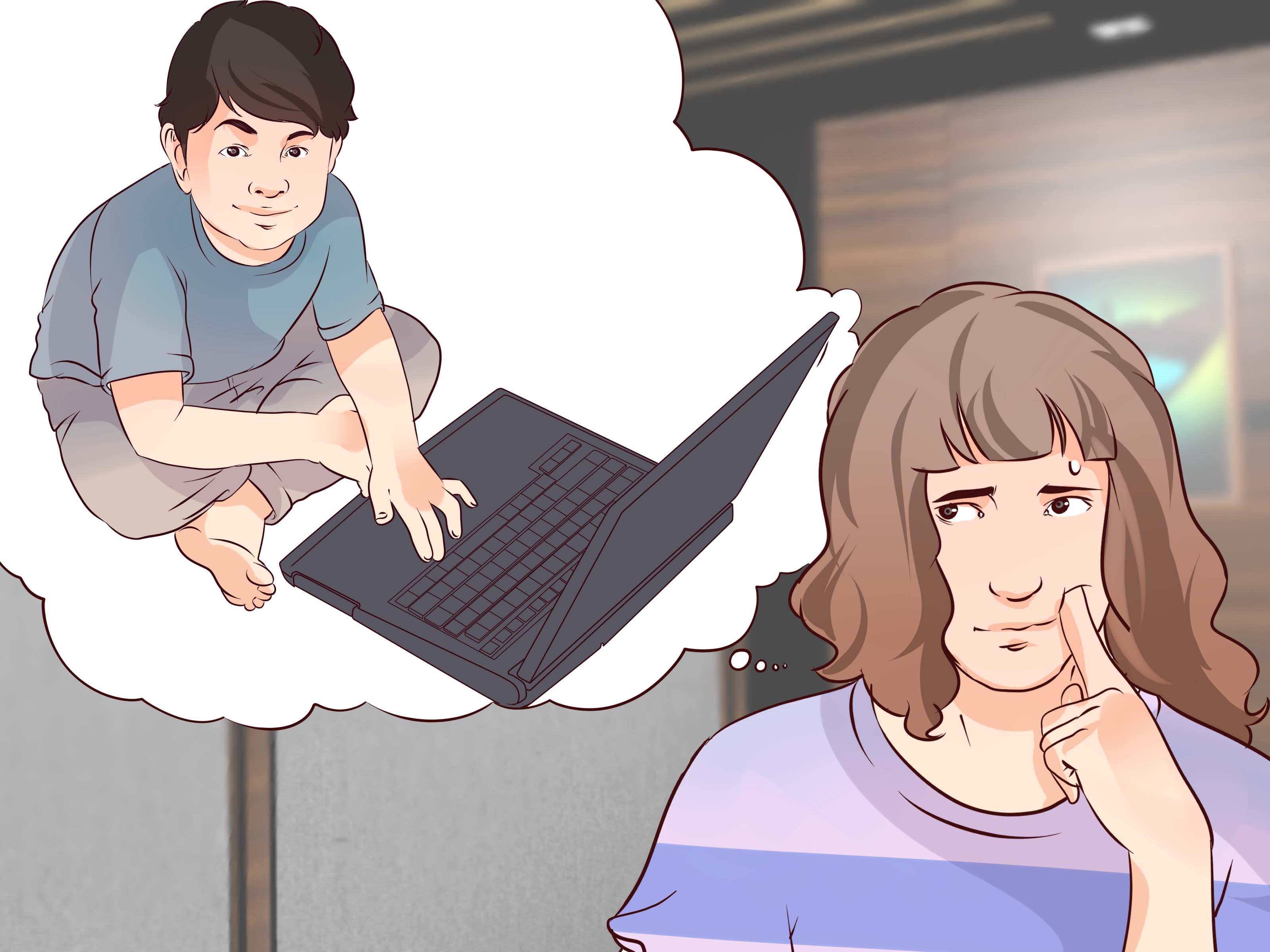
Ever been absolutely, unshakably sure that a movie quote went one way, only to discover reality had other plans? Welcome to the Mandela Effect, the internet’s favorite reminder that the human brain is brilliant, efficient, and occasionally the proud owner of a fake monocle. The Mandela Effect happens when many people share the same incorrect memory, often about a famous event, brand name, quote, character, or image. It feels spooky because it is not just one person being mistaken. It is a whole crowd marching confidently in the wrong direction.
That collective confidence is exactly what makes the phenomenon so fascinating. A single wrong memory is easy to shrug off. A shared wrong memory feels more dramatic, almost cosmic, like reality quietly edited itself while nobody was looking. But the best explanation is much less supernatural and much more human: memory is not a perfect recording device. It is a reconstruction project. Every time you recall something, your brain rebuilds it using stored details, general patterns, expectations, social cues, and whatever helpful or unhelpful information wandered in afterward.
In other words, your memory is not a vault. It is more like a very fast intern with great instincts, questionable filing habits, and a tendency to say, “Close enough.” That does not make memory useless. It makes memory adaptive. The same flexibility that helps us learn, predict, imagine, and make sense of the world also leaves us vulnerable to distortion. The Mandela Effect is what happens when those distortions become shared, reinforced, and weirdly convincing.
What Is the Mandela Effect?
The term Mandela Effect was popularized after many people claimed they remembered Nelson Mandela dying in prison during the 1980s, even though he was released in 1990 and died in 2013. From there, the label expanded to cover other examples of collective false memories. These are not simple typos in the mind. They are memories people often hold with real confidence and emotion.
That confidence matters. The Mandela Effect is not just about being wrong. It is about being wrong with the swagger of someone betting rent money on a trivia answer. People do not usually say, “I vaguely think this might have happened.” They say, “No, I know it happened. I can picture it.” And that vividness is part of the trap. A memory can feel detailed, familiar, and emotionally real while still being inaccurate.
The phenomenon is usually discussed in connection with pop culture because famous logos, movie lines, childhood books, and celebrity stories are shared by millions of people. That creates the perfect storm. Lots of exposure, lots of repetition, lots of conversation, and plenty of opportunities for the wrong version to spread like glitter at a craft table. Once it sticks, it sticks hard.
Why the Mandela Effect Happens
1. Memory is reconstructive, not replayable
One of the biggest reasons the Mandela Effect happens is simple: memory does not work like a camera. We do not pull out a flawless mental video every time we remember something. Instead, the brain rebuilds past events from bits and pieces. It uses fragments of what we actually experienced, along with expectations, meaning, emotion, and context. That process is efficient, but efficiency is not the same thing as precision.
This is why people can remember the general idea of something while getting the details wrong. You may remember the feeling of a commercial, the vibe of a book title, or the structure of a famous quote, but not the exact wording or spelling. Your brain stores the gist and then fills in the blanks with what seems most likely. Usually that shortcut works beautifully. Sometimes it produces a confident little disaster.
2. The brain loves patterns and shortcuts
Human beings are pattern machines. We organize information into categories and mental templates so the world makes sense faster. Psychologists often refer to these templates as schemas. They are useful because they help us predict what usually belongs where. They are also sneaky because they can rewrite memories to fit what seems normal instead of what actually happened.
That is why so many Mandela Effect examples feel plausible. “Berenstein” looks like a more familiar ending than “Berenstain.” “Luke, I am your father” sounds more natural out of context than the actual line, “No, I am your father.” A monocle feels like it belongs on the Monopoly Man because he already has the top hat, mustache, and rich-guy energy of a banker from a cartoon boardroom. The mind sees a pattern and says, “Yes, obviously.” Reality, meanwhile, is in the corner muttering, “That is not what happened.”
3. Source-monitoring errors mix everything together
Another major cause is a source-monitoring error. That is a fancy way of saying we remember information but misremember where it came from. Maybe you saw a parody, a meme, a Halloween costume, a fan-made image, or a joke version of something. Later, the content remains, but the source gets fuzzy. Your brain keeps the idea and loses the label.
That is how people end up “remembering” things that were never part of the original. A spoof can become the memory. A misquote repeated on late-night TV can replace the actual movie line. A fan illustration can merge with the official character design. When the source tag falls off, the memory does not arrive wearing a warning sticker. It just strolls in like it owns the place.
4. Repetition makes wrong information feel right
The misinformation effect is one of the most important ideas in memory science. When people encounter misleading information after an event, that new information can blend into the original memory. The more often the false version appears, the more familiar it feels. And familiarity is powerful. People often mistake it for truth.
This is one reason the internet is such fertile ground for Mandela Effect discussions. If thousands of posts repeat the same wrong memory, the error starts to feel confirmed by popularity. A person thinks, “See? Everyone remembers it.” But agreement does not automatically equal accuracy. Sometimes it just means the same mistaken version has been copied, shared, and reinforced until it looks official.
5. Emotion and nostalgia make memories feel extra solid
Childhood memories are especially vulnerable because they are often tied to emotion, routine, and incomplete detail. We remember how something felt long before we remember its exact spelling, image, or dialogue. Nostalgia smooths edges. It edits. It beautifies. It also occasionally lies to your face.
That does not mean cherished memories are fake. It means emotional certainty is not a guarantee of accuracy. In fact, some false memories feel strong precisely because they have been revisited so often over the years. Every retelling is a little reconstruction. Every reconstruction is a chance for drift.
Classic Mandela Effect Examples
Some examples of the Mandela Effect show up again and again because they are clean, familiar, and culturally sticky. The most famous is Nelson Mandela himself. Others live in pop culture, branding, and childhood nostalgia. These examples are not important because they prove anything mystical. They are useful because they reveal where memory bends.
Berenstain Bears vs. Berenstein Bears
This may be the heavyweight champion of childhood spelling confusion. Many adults swear the beloved book series was called Berenstein Bears, but the actual name is Berenstain Bears. The mistaken version feels more natural because “-stein” is a more familiar ending in English than “-stain.” The brain votes for pattern over precision.
The Monopoly Man’s missing monocle
Plenty of people picture the Monopoly mascot wearing a monocle. He does not. The false memory probably survives because the rest of the character design already screams old-fashioned wealth. A monocle fits the mental costume so perfectly that the brain happily adds one, like an overenthusiastic costume designer who was not asked for notes.
“Luke, I am your father”
It is one of the most repeated movie lines in history, except it is not the original line. In The Empire Strikes Back, Darth Vader says, “No, I am your father.” The incorrect version became popular because it makes more sense when quoted outside the scene. Context gets stripped away, and the simplified version wins.
“Mirror, mirror on the wall”
Many people remember Snow White using this exact phrase. The line most associated with the Disney film begins, “Magic mirror on the wall.” Why do so many people get it wrong? Because “mirror, mirror” sounds older, fairy-tale-ish, and rhythmically satisfying. It is the kind of phrase the brain adopts and refuses to evict.
Curious George’s tail
A surprising number of people remember Curious George as having a tail. He does not. Monkeys often have tails in cartoons, and our minds tend to fill in category-consistent details. The character is a monkey, monkeys have tails, therefore cartoon monkey has tail. The logic is understandable. The memory is still wrong.
Why So Many People Share the Same Wrong Memory
This is the question that makes the Mandela Effect feel bigger than ordinary forgetfulness. Why would so many people make the same mistake? The answer is that human brains tend to make similar shortcuts under similar conditions. If millions of people are exposed to the same logos, films, titles, jokes, memes, and cultural assumptions, many of them will reconstruct the same detail in the same wrong way.
Language plays a role. So does visual expectation. So does cultural repetition. The brain prefers coherence over chaos, so it often edits details to match what feels typical. Shared media creates shared templates. Shared templates create shared distortions. Once social conversation enters the mix, the false version gets reinforced again and again.
This is also why some Mandela Effect examples are stronger in certain age groups or online communities. Different generations were exposed to different commercials, parodies, classroom conversations, and internet jokes. People are not pulling the memory from nowhere. They are building it from overlapping scraps. When those scraps overlap enough, a collective false memory begins to look like a mystery when it is really a very human pattern.
Does the Mandela Effect Prove Alternate Realities?
It is a fun theory. It is also not where the evidence points. The Mandela Effect is far better explained by what psychologists already know about false memory, suggestion, imagination, and recall. Memory distortion is normal. Shared distortion is also normal when groups are shaped by the same media environment.
That does not make the experience boring. Quite the opposite. The fact that ordinary mental processes can create vivid, shared, emotionally persuasive errors is astonishing all by itself. We do not need a portal in space-time when the human brain is already this dramatic.
The scientific value of the Mandela Effect is not that it reveals a broken reality. It reveals a flexible mind. It shows how memory helps us navigate life by storing meaning, patterns, and prediction instead of preserving every detail with courtroom-level precision. That trade-off is useful. It is also messy. Welcome to being human.
How to Check a Suspicious Memory
- Pause before declaring victory. Confidence is not proof. A vivid memory can still be wrong.
- Look for the original source. Find the actual book cover, film clip, logo, or transcript instead of relying on reposts and memes.
- Separate the memory from the parody. Ask whether you remember the original or a later joke, remix, or imitation.
- Notice what “feels right.” If the false version sounds more familiar or more symmetrical, that may be the clue that your brain polished it.
- Be careful with group confirmation. A crowd can reinforce a mistake just as easily as a fact.
These habits matter beyond trivia. The same mental processes behind the Mandela Effect also matter in news consumption, eyewitness testimony, online rumors, and everyday disagreements. Once you understand how memory can drift, you become a little harder to fool, including by your own extremely persuasive brain.
Everyday Experiences Related to the Mandela Effect
The strangest part of the Mandela Effect is not the wrong detail itself. It is the feeling that comes with it. First there is certainty. Then comes correction. Then comes that brief mental wobble, the one that says, “Wait, if I was wrong about that, what else have I confidently told people at dinner?” It is a tiny identity crisis wrapped in pop culture trivia, and honestly, that is part of the fun.
A lot of people first run into the Mandela Effect during a casual conversation with friends or family. Someone says, “You know the Monopoly Man has a monocle,” and another person pulls up the image to prove it. Except the proof goes the other way. Suddenly the whole room turns into a courtroom drama where no one is qualified, everyone is loud, and one person is far too emotionally invested in a board game mascot. These moments are funny because they feel so personal. A wrong logo should not feel like betrayal, yet somehow it does.
Childhood memories make the experience even stronger. People often describe looking at an old book cover or movie clip and feeling genuine disbelief. Not mild surprise. Disbelief. They remember sitting on a classroom rug, reading a title one way, hearing adults say it one way, seeing it one way in their mind for years. Then the record says otherwise. That clash between memory and evidence can feel unnerving, not because the fact is important, but because the memory feels woven into the texture of growing up.
The internet magnifies that feeling beautifully and chaotically. One person posts a Mandela Effect example, and hundreds of comments arrive within minutes: “I remember this too,” “No way,” “I refuse to accept this,” “My whole childhood is a lie.” The comments are half comedy and half anthropology. You get to watch people test their confidence in real time. Some double down. Some laugh. Some immediately begin hunting for proof that the old version existed somewhere, somehow, perhaps in an alternate timeline guarded by cereal mascots and misquoted movie villains.
There is also a social comfort in discovering that other people share the same wrong memory. Being mistaken alone can feel embarrassing. Being mistaken in a crowd feels like a club. That group reaction is one reason the Mandela Effect spreads so well. It transforms a small memory error into a shared experience, and shared experiences are sticky. They become stories. Stories get repeated. Repetition strengthens familiarity. Familiarity strengthens confidence. Around and around it goes.
Some people describe the Mandela Effect as creepy. Others find it delightful. Many feel both at once. It can be unsettling to realize your mind edits reality, but it is also oddly charming. The phenomenon reminds us that memory is not just storage. It is interpretation. It is storytelling. It is the brain doing its best with incomplete information and occasionally adding decorative flourishes nobody asked for. Seen that way, the Mandela Effect is not just a glitch. It is a window into how people build meaning together, get details wrong together, laugh about it together, and then immediately misquote another movie line with total confidence.
Conclusion
The Mandela Effect is fascinating because it sits at the crossroads of memory, culture, language, and social influence. It shows that false memories are not rare little accidents hidden in the corners of the mind. They are part of how memory works. The brain stores meaning more efficiently than detail, relies on patterns to fill gaps, and absorbs suggestion more easily than most of us like to admit.
That is why the Mandela Effect keeps showing up in movie quotes, logos, book titles, and childhood icons. These are exactly the kinds of things people revisit casually, discuss socially, and remember by feel rather than by forensic precision. Add repetition, nostalgia, memes, and a few source-monitoring errors, and suddenly millions of people are prepared to defend a detail that never existed.
So no, the Mandela Effect does not require parallel universes. Reality did not secretly swap out your childhood books in the night. Your mind simply did what minds do: it built a memory that felt right, shared it with others, and discovered that human recall is both impressive and gloriously imperfect. That may not be science fiction, but it is still one of the most interesting things about being human.