Cheese is one of the few foods that can sound classy, comforting, and slightly dramatic all at once. It can star on a five-star tasting board, melt into a grilled sandwich, or show up at 11:47 p.m. as the last heroic shred in your refrigerator. But beyond its delicious reputation, cheese has an astonishing backstory. It is ancient, scientific, cultural, regulated, occasionally moldy on purpose, and somehow still capable of surprising people who thought they had already reached peak cheese knowledge.
If you have ever wondered why Swiss cheese has holes, why cheddar can look traffic-cone orange, or why some cheeses smell like they have seen things, this guide is for you. Below are the top 10 fascinating facts about cheese, explained in plain American English with enough depth to satisfy curious readers and enough fun to keep things from turning into a dairy lecture.
1. Cheese Is Much Older Than Most People Realize
Cheese is not some recent culinary trend dreamed up by food bloggers with excellent lighting. Archaeological evidence suggests humans were making or eating cheese more than 7,000 years ago. That means cheese has been around longer than most empires, most alphabets, and definitely longer than your favorite snack brand.
Why this matters
The age of cheese tells us something important: people figured out very early that milk did not have to stay milk. Turning milk into cheese made it easier to preserve nutrients, transport food, and create something richer, saltier, and far more portable than a bucket of fresh dairy. In a world without refrigeration, that was not just clever. That was survival with better flavor.
So yes, every time someone dramatically arranges brie on a wooden board, they are participating in a tradition with roots that stretch deep into human history. Fancy? Absolutely. Ancient? Also yes.
2. All Cheese Starts With the Great Split: Curds and Whey
At the heart of cheese making is one magical little transformation: milk gets separated into solids and liquid. The solids are curds. The liquid is whey. That nursery rhyme was not joking; it was quietly dropping dairy science.
Cheesemakers warm milk and add cultures and usually rennet, which helps the milk coagulate. Once the curd forms, it gets cut. Here is where things get fascinating: the size of that curd matters. Smaller cut curds release more whey, which helps create a drier, firmer cheese. Larger curds hold more moisture, which leads to softer textures.
What that means on your plate
That simple curd-and-whey split helps explain why mozzarella feels so different from Parmesan. One is soft, stretchy, and ready for pizza duty. The other is dense, dry, and willing to be grated over everything you have ever loved. Cheese may look mysterious in a store case, but its origins are surprisingly logical.
3. Moisture and Aging Decide Whether a Cheese Is Soft, Hard, Mild, or Sharp
If cheese had a personality quiz, the big questions would be: how much moisture do you keep, and how long do you age? Those two factors shape an enormous amount of what we experience as texture and flavor.
Younger cheeses usually have more moisture and a milder taste. Think ricotta, fresh mozzarella, or a young jack. Older cheeses lose moisture over time, becoming firmer, denser, and often sharper or nuttier. That is why an aged cheddar tastes more intense than a mild one, and why a long-aged gouda can develop caramel-like notes that make people pause mid-bite and stare into the distance.
Cheese aging is part science, part art
Aging is not just “leave it somewhere and hope for the best.” Modern cheese aging can involve carefully controlled humidity, airflow, and temperature. In other words, some cheeses are basically living their best spa life before reaching your cutting board. During aging, proteins and fats break down, textures change, and flavor compounds develop. That is why two cheeses made from similar milk can end up tasting wildly different.
4. Swiss Cheese Holes Are Called “Eyes,” and Their Story Is Stranger Than the Cartoon Version
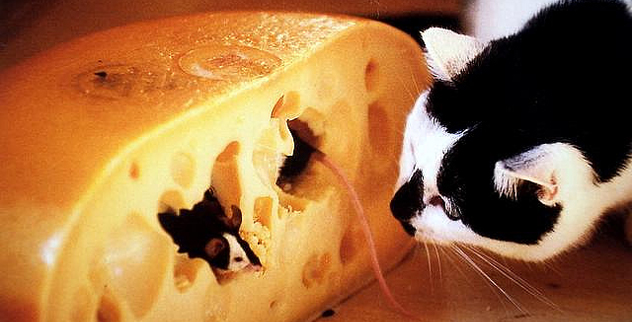
Most people grow up with a very silly explanation for Swiss cheese holes: mice. Nice try, cartoons. In reality, those holes are called eyes, and their formation is tied to the cheese-making environment.
For years, people focused on gas from bacteria as the main explanation. More recent research added another twist: tiny hay particles in milk may help seed the formation of those characteristic holes. So the famous holes are not just a random design feature. They are part dairy microbiology, part old-school farm environment, and part reminder that food history is often messier and more interesting than we expected.
Why fewer holes can actually happen
As milking became more modern and cleaner, the amount of tiny particles entering the milk changed. That means some traditional Swiss-style cheeses have developed fewer dramatic eyes than they once did. In other words, cleaner farming helped make Swiss cheese slightly less photogenic. Progress is complicated.
5. Orange Cheddar and White Cheddar Usually Taste the Same
This may be the fact that breaks up the most dinner-table arguments: orange cheddar is not automatically sharper, bolder, or more “real” than white cheddar. In many cases, the main difference is color.
That orange hue usually comes from annatto, a natural coloring derived from the achiote plant. Historically, cheddar developed an orange association because milk from grass-fed cows could have a richer golden tint from beta-carotene. Over time, cheesemakers started adding color to create a consistent look.
The flavor truth
If two cheddars are made the same way and aged the same amount of time, one white and one orange, the color alone does not create a flavor difference. Age matters. Moisture matters. Production matters. Color mostly handles the wardrobe department.
So if you passionately prefer orange cheddar, that is perfectly fine. Just know you may be choosing with your eyes before your taste buds take the wheel.
6. Some Cheese Mold Is Fancy. Some Cheese Mold Is a Red Flag.
Cheese has one of the weirdest relationships with mold in the food world. In some cases, mold is a disaster. In others, it is the entire point.
Blue cheeses rely on mold cultures such as Penicillium roqueforti to develop those signature veins and bold flavors. Bloomy-rind cheeses like brie and camembert also depend on friendly surface mold to create texture and taste. This is good mold. Invited mold. Mold with a name tag.
But random mold is not your friend
If soft cheese, shredded cheese, sliced cheese, or crumbled cheese grows unexpected mold, that is generally a sign to toss it. Those products have enough moisture and enough exposed surface area that contamination can spread beyond the fuzzy spot you can see. Hard cheese is more forgiving, but soft cheese is not the place to practice optimism.
This is one reason cheese is so fascinating: one mold can help create a world-class blue cheese, while another can ruin your lunch plans.
7. Many Natural Cheeses Are Naturally Low in Lactose
Here is some unexpectedly good news for many people who are sensitive to lactose: several natural cheeses contain only minimal amounts of it. During cheese making, much of the lactose leaves with the whey. What remains can continue to decrease as cheese ages.
That is why cheeses such as cheddar, Swiss, Monterey Jack, Colby, and mozzarella are often easier for some lactose-sensitive people to tolerate than a glass of milk. This does not mean every person reacts the same way, of course, but it does explain why cheese and lactose are not always the dramatic enemies people assume they are.
Cheese is more than a flavor bomb
Cheese also contributes nutrients like calcium, protein, phosphorus, and vitamin A. In the U.S. dietary framework, one ounce of hard cheese counts as a dairy serving. Translation: that little cube on your snack board is not nutritionally identical to a potato chip wearing a dairy costume.
8. Cheese Is So Important That Many Types Are Legally Defined
Cheese is not just food. In the United States, many cheeses also have standards of identity. That means federal rules can define how certain cheeses are made and what characteristics they must have in order to be labeled a particular way.
This is both practical and kind of amazing. Cheese is so culturally and commercially important that regulators care about things like moisture content, fat content, ingredients, and production methods. That helps protect consumers and creates consistency in the marketplace.
Why this is fascinating
It means “cheese” is not always a loose, poetic term. In many cases, it is a legally meaningful one. Somewhere out there, a block of cheese is living under more precise rules than some group projects.
This also helps explain why labels matter. A natural cheese, a processed cheese product, and a soft-ripened cheese are not just marketing phrases. They can reflect real differences in formulation and regulation.
9. Soft Cheeses Deserve Extra Respect From a Food Safety Standpoint
Not all cheeses carry the same food safety profile. Soft cheeses are higher in moisture, and that can make them more vulnerable to contamination by harmful bacteria such as Listeria monocytogenes. Fresh soft cheeses, especially queso fresco-style varieties, have been linked to outbreaks in the United States.
Raw-milk cheese is another area where safety rules matter. In the U.S., cheese made from unpasteurized milk that is allowed to be sold must generally be aged for at least 60 days. That rule exists because aging can help reduce risk. Even so, public health agencies continue to warn that cheese made from raw milk can still carry a higher risk than cheese made from pasteurized milk.
The important nuance
Pasteurized does not mean invincible. Soft cheeses made from pasteurized milk can still become contaminated during cheese making or handling. That is why refrigeration, sanitation, and proper storage still matter. Cheese may be noble, but it is not above food safety law.
If you are pregnant, older, or immunocompromised, paying attention to cheese labels and preparation is especially important. Not glamorous advice, perhaps, but far more useful than hoping your brie has good intentions.
10. America Is Seriously, Deeply, Impressively Into Cheese
Cheese is not a fringe hobby in the United States. It is a mainstream obsession with a refrigerator drawer. USDA data show Americans consumed about 39.5 pounds of cheese per person in 2024. That is a lot of slices, shreds, snack cubes, party trays, burger toppings, and “I am just having a tiny bit more” moments.
This popularity helps explain why cheese shows up everywhere in American food culture. It bridges comfort food and gourmet food with suspicious ease. It can star in mac and cheese, top tacos, fill lasagna, anchor a cheeseboard, finish salads, or get torched onto onion soup like it has a flair for theater.
Cheese wins because it does everything
Few foods manage to be this versatile. Cheese can melt, crumble, stretch, shave, grill, brown, foam, crisp, and age. It can be mild enough for picky eaters and intense enough for flavor chasers. In culinary terms, cheese is basically the overachiever who somehow remains likable.
Final Thoughts on These Fascinating Facts About Cheese
Cheese is one of those foods that seems simple until you look closely. Then suddenly it becomes a story about ancient preservation, bacteria, enzymes, molds, legal definitions, safety science, cultural identity, and flavor chemistry. That is a lot of drama for something that also pairs beautifully with crackers.
The top 10 fascinating facts about cheese reveal why this food has endured for thousands of years. Cheese is practical and luxurious. It is old-world and modern. It can be elegant, funky, comforting, and slightly ridiculous in the best possible way. And perhaps that is why people keep coming back to it: cheese is never just cheese. It is history, science, and dinner, all in one bite.
Extended Section: Real-Life Experiences That Make Cheese Even More Fascinating
One of the best ways to understand cheese is not by reading a label, but by paying attention to the experience of eating it in real life. Anyone who has stood in front of a cheese counter knows that cheese creates a very specific kind of indecision. You start out thinking you will buy one simple block of cheddar, and ten minutes later you are seriously considering manchego, smoked gouda, a triple-cream brie, and something wrapped in leaves that sounds like it belongs in a fairy tale.
Then comes the tasting experience itself, which is where cheese stops being a grocery item and turns into a full event. A young mozzarella feels cool, delicate, and fresh. A sharp aged cheddar arrives with a little bite and a lot of confidence. Blue cheese does not politely introduce itself; it kicks open the door and announces its presence. Even texture changes the emotional experience. A crumbly cheese makes you slow down. A gooey melted cheese makes you forget your table manners almost immediately.
Cooking with cheese creates another layer of fascination. The smell of Parmesan hitting hot pasta is completely different from the stretchy drama of mozzarella on pizza or the golden crust that forms when cheddar melts over a casserole. Cheese transforms food visually and aromatically before it even reaches your mouth. That is part of its power. It does not just add flavor. It changes mood. A plain baked potato becomes comfort food. Toast becomes dinner. Vegetables suddenly get a much better public relations team.
Cheese also carries memory in a way many foods do. For some people, it is the grilled cheese sandwiches of childhood, browned at the edges and impossible to wait for. For others, it is a holiday cheeseboard, a family lasagna, or the first time they tasted a truly aged cheese and realized dairy could have crystals, nuttiness, and a finish more complex than some wines. Cheese often becomes part of place as well. A farmers market cheese tastes different because the setting changes the story. A wedge cut fresh at a specialty shop feels more personal than something grabbed in a hurry from a supermarket cooler.
Even sharing cheese is its own experience. Put a good cheese board in the middle of a table and people instantly become conversational. They point, compare, recommend, rank, and return for one more sliver “just to confirm.” Cheese invites curiosity without requiring expertise. You do not need to be a trained cheesemonger to notice that one cheese tastes buttery, another earthy, and another like it might secretly be the main character.
That is what makes cheese so endlessly fascinating. It is deeply scientific, yet completely emotional. It can be studied in labs, aged in caves, regulated by law, and still end up making a Tuesday lunch feel special. Not many foods can do that. Cheese can.