Note: This article is an original, plagiarism-free editorial piece synthesized from reputable literary, publishing, and reference sources. It is written for web publication in standard American English.
Introduction: When a “Masterpiece” Feels Like Homework Wearing a Tuxedo
Calling a novel “overrated” is a literary way of tossing a tiny grenade into a book club and then politely asking who brought cookies. Few words make readers clutch their tote bags faster. But let us be clear: overrated does not mean bad. It means the reputation, cultural noise, classroom worship, movie adaptation, merchandise, or fan devotion may have grown larger than the actual reading experience can comfortably support.
Some novels become famous because they changed literature. Others become famous because teachers, critics, influencers, parents, professors, and that one friend with a suspiciously dramatic scarf keep insisting they are essential. A few are genuinely brilliant but have been praised so loudly that readers open them expecting a life-changing thunderbolt and instead get a very attractive drizzle.
This list of the top 10 most overrated novels is not a bonfire of beloved books. It is a friendly roast. These works are influential, widely discussed, and often worth reading. But each one also carries more hype than a bookstore window during prize season. We will look at why people love them, why others roll their eyes, and what makes them such durable targets in debates about overrated classic novels, popular fiction, literary canon, and reader expectations.
What Makes a Novel Overrated?
A novel becomes overrated when its reputation promises more than the text delivers for many readers. That mismatch can happen for several reasons: the book may be taught too solemnly, marketed too aggressively, praised for themes it only handles lightly, or defended by fans as if criticism were a parking violation against civilization.
Overrated novels often fall into three categories. First, there are the classroom classics: books with real merit that have been laminated by decades of academic reverence. Second, there are cultural phenomenon books: novels that sold millions, inspired films, and made everyone briefly pretend they understood secret codes, vampire etiquette, or the meaning of life. Third, there are “important” books that may be historically influential but are not always enjoyable, elegant, or emotionally convincing.
Now, let us walk into the library, lower our voices, and lovingly annoy everyone.
Top 10 Most Overrated Novels
1. The Catcher in the Rye by J.D. Salinger
The Catcher in the Rye has been treated for decades as the sacred handbook of teenage alienation. Published in 1951, J.D. Salinger’s novel follows Holden Caulfield during a short, emotionally messy escape through New York City after he leaves prep school. Its voice is sharp, memorable, and full of adolescent frustration. For many readers, especially younger ones, Holden’s anger at adult “phoniness” feels painfully real.
So why is it overrated? Because the book’s reputation often suggests that Holden is the definitive portrait of youth itself. That is a heavy backpack for one fictional teenager to carry. Holden is compelling, but he is also repetitive, self-absorbed, and exhausting by design. Unfortunately, generations of readers have been told to admire his sensitivity before they are allowed to admit that spending several hours inside his head can feel like being trapped beside someone complaining in a diner booth.
The novel remains important because it helped shape modern coming-of-age fiction. But its hype can flatten the reading experience. It is not the final word on adolescence. It is one very specific, lonely, privileged, wounded voice. Powerful? Yes. Universal? Not quite. Overrated? Often.
2. The Great Gatsby by F. Scott Fitzgerald
Few American novels arrive with a shinier reputation than The Great Gatsby. Published in 1925, F. Scott Fitzgerald’s slim classic explores wealth, longing, reinvention, class, and the glittering emptiness behind the American Dream. It has gorgeous sentences, unforgettable symbols, and enough champagne-soaked disappointment to fuel a century of essays.
The problem is not that Gatsby is bad. It is very good. The problem is that it is often presented as the perfect American novel, which makes every reader expect fireworks, jazz, moral revelation, and possibly a green light personally winking at them from across the room. At fewer than 200 pages, the book is elegant and compact, but some characters feel more like symbolic furniture than fully breathing people. Daisy is fascinating, but she is also treated as a dream object. Gatsby is tragic, but also strangely hollow. Nick observes beautifully, though sometimes he seems to be narrating from behind expensive curtains.
Its greatness is real, but so is the overexposure. When a novel is taught, quoted, adapted, and worshipped this often, even its best lines start to arrive wearing a varsity jacket. The Great Gatsby deserves admiration, but perhaps not the gold-plated throne it has been assigned in American literature.
3. Moby-Dick by Herman Melville
Moby-Dick is one of those books people praise in a tone usually reserved for mountain ranges and ancient temples. Herman Melville’s 1851 novel follows Ishmael, Captain Ahab, and the obsessive hunt for the white whale. It is philosophical, symbolic, strange, funny, encyclopedic, and wildly ambitious.
It is also, let us admit, a lot. Reading Moby-Dick can feel like boarding a thrilling adventure ship only to discover the captain has scheduled several mandatory seminars on whale anatomy, maritime labor, theology, taxonomy, and rope. Some readers love this. Others begin rooting for the whale by page 90.
The novel’s defenders are right that its digressions are part of its genius. Melville expands a revenge story into a cosmic investigation of obsession, industry, nature, fate, and language itself. Still, its reputation as a must-read masterpiece often hides how uneven, demanding, and bizarre it is. Not every reader who struggles with it is lazy. Some simply wanted a story and got a floating encyclopedia with a harpoon.
Moby-Dick is magnificent in places. It is also one of the most overrated novels whenever people pretend its difficulty is automatically the same thing as pleasure.
4. Wuthering Heights by Emily Brontë
Emily Brontë’s Wuthering Heights, published in 1847, is often marketed as a great romance. That may be the first problem. It is not exactly a romance unless your idea of a romantic getaway involves emotional warfare, generational trauma, revenge, ghosts, and moors with extremely bad vibes.
The novel is powerful because it is intense, atmospheric, and psychologically wild. Catherine and Heathcliff are not polite drawing-room lovers. They are a storm system with names. Brontë created a gothic world where passion curdles into cruelty and the landscape seems to have a grudge against everyone.
Yet the book can feel overrated because its cultural image often softens what is actually on the page. Readers arrive expecting tragic love and instead encounter a cast of people who communicate mainly through suffering, manipulation, and dramatic weather. Heathcliff has been romanticized for generations, but as a person, he is less “dreamy hero” and more “please block this number.”
Wuthering Heights is not overrated because it lacks power. It is overrated because the wrong kind of praise has followed it around. It is a ferocious gothic novel, not a cozy love story. Read it for darkness, not date-night inspiration.
5. Atlas Shrugged by Ayn Rand
Ayn Rand’s Atlas Shrugged, published in 1957, is part novel, part political statement, part philosophical megaphone with no volume knob. The book imagines a collapsing society where industrialists, inventors, and other productive figures withdraw from a world they believe exploits them. It is one of the most influential ideological novels in American culture.
Its defenders admire its confidence, individualism, and grand moral architecture. Its critics often point to the same qualities as flaws. The characters frequently speak less like humans and more like debate-club statues. The plot can be dramatic, but the speeches are long enough to make a sandwich, eat it, clean the kitchen, and return before the point has landed.
The novel is overrated because its admirers sometimes treat it not merely as fiction but as a complete operating system for life. As a novel, it has memorable scenes and bold ideas. As storytelling, it can be heavy-handed. As philosophy, it is controversial. As a reading experience, it occasionally feels like being trapped in an elevator with a billionaire manifesto.
Atlas Shrugged matters. It shaped conversations about capitalism, individualism, government, and ambition. But influence is not the same as literary subtlety, and this book has all the subtlety of a brass band entering through a wall.
6. The Alchemist by Paulo Coelho
Paulo Coelho’s The Alchemist, first published in Portuguese in 1988, follows Santiago, an Andalusian shepherd who travels in search of treasure and learns spiritual lessons along the way. The novel has sold massively around the world and is beloved for its simplicity, optimism, and dream-chasing message.
Here is the issue: for readers who connect with it at the right moment, The Alchemist can feel like a lantern in the desert. For others, it reads like a motivational poster took a gap year. Its language is clear, its structure is fable-like, and its central message is easy to remember: follow your dream, listen to your heart, trust the journey.
That accessibility is exactly why many people love it. It is also why others find it overrated. The novel often presents wisdom in broad, polished statements that can feel profound until you stare at them for more than five seconds. Then some begin to resemble advice from a decorative mug.
Still, dismissing the book entirely would be unfair. Its emotional usefulness is real. Many readers found it at a crossroads and felt encouraged. But as a novel, its characters and conflicts are thin. Its reputation as a deep philosophical masterpiece may be larger than the book itself.
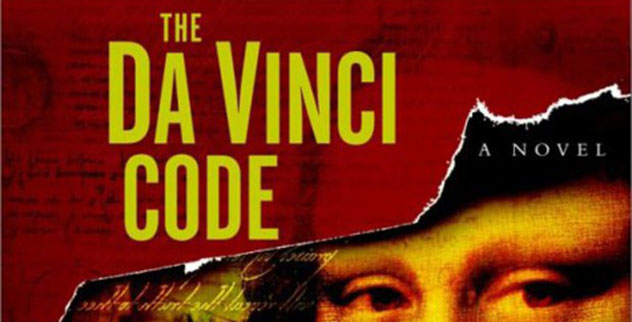
7. The Da Vinci Code by Dan Brown
Dan Brown’s The Da Vinci Code, published in 2003, became a global sensation with its blend of art history, secret societies, religious mystery, puzzles, and rapid-fire cliffhangers. It is the sort of book that makes readers say, “Just one more chapter,” which is impressive until you realize every chapter is roughly the length of a sneeze.
As a thriller, it works. Brown knows how to keep pages turning. The problem is that cultural hype briefly treated the novel as if it were not only entertaining but intellectually explosive. Suddenly everyone was squinting at Renaissance paintings like they had discovered a secret menu.
The book is overrated because its ideas are often more sensational than sophisticated. The prose is functional, the characters are mostly vehicles for clues, and the historical claims sparked endless debate. But the plot machine is undeniably efficient. It is airport fiction with a graduate-school Halloween costume.
The Da Vinci Code deserves credit for making millions of people excited about museums, symbols, and conspiracy-flavored storytelling. It does not deserve to be mistaken for literary genius. It is fun. Sometimes fun is enough. But hype built it into something grander than it needed to be.
8. Twilight by Stephenie Meyer
Stephenie Meyer’s Twilight, published in 2005, became a defining young adult phenomenon. It introduced Bella Swan, Edward Cullen, Forks, Washington, and a vampire romance that launched films, fan debates, merchandise, and countless arguments about whether sparkling vampires were a crime against folklore or simply very committed to skincare.
The novel’s appeal is easy to understand. It captures the intensity of first love, the fantasy of being chosen, and the moody atmosphere of a rainy town where everyone seems one secret away from dramatic background music. For many readers, especially teens at the time of its release, it was immersive and addictive.
So why call it overrated? Because the cultural explosion around Twilight often outran the quality of the writing. Bella can feel underdeveloped, Edward’s mystique does a lot of heavy lifting, and the romance depends heavily on longing, danger, and emotional intensity rather than balanced character growth.
Still, dismissing Twilight with a smirk ignores its impact. It energized young adult publishing, built passionate reading communities, and showed the commercial power of teen-centered fantasy romance. Overrated? Yes. Meaningless? Absolutely not.
9. On the Road by Jack Kerouac
Jack Kerouac’s On the Road, published in 1957, became the signature novel of the Beat Generation. It follows Sal Paradise and Dean Moriarty through restless cross-country trips filled with jazz, motion, rebellion, hunger, friendship, and the search for meaning beyond conventional life.
At its best, the novel has energy. The prose rushes forward like a car with questionable brakes. It captures youth, speed, longing, and the myth of American freedom. Readers who find it at the right age may feel the road opening under their own feet.
But the book is also deeply overrated when treated as pure liberation. Its women are often thinly drawn. Its romantic view of drifting can feel irresponsible rather than profound. Dean Moriarty, often framed as magnetic, may strike modern readers as less holy madman and more exhausting friend who definitely owes someone gas money.
On the Road remains historically important because it helped define a countercultural mood. But as a novel, it can feel repetitive and self-mythologizing. The road is exciting. The passengers, after a while, may test your patience.
10. The Old Man and the Sea by Ernest Hemingway
Ernest Hemingway’s The Old Man and the Sea, published in 1952, is a short, spare novel about Santiago, an aging fisherman, and his epic struggle with a giant marlin. It won the Pulitzer Prize for Fiction in 1953 and helped reinforce Hemingway’s late-career literary reputation.
The book is admired for its simplicity, symbolism, and stripped-down style. It is also one of those works that can make readers ask, “Is that all?” The story is clean and powerful, but its classroom treatment sometimes inflates it into a bottomless ocean of meaning. Yes, the fish can symbolize struggle, pride, nature, art, endurance, or whatever your essay prompt needs before Friday. But some readers experience it simply as an old man, a fish, and a great deal of dignified suffering.
Hemingway’s restraint is either the book’s genius or its limitation, depending on your taste. The prose is direct, the structure is elegant, and the emotional arc is clear. But its reputation can make the novella feel larger than it is. Sometimes minimalism is profound. Sometimes it is just minimal.
The Old Man and the Sea deserves respect. But when treated as an untouchable monument, it becomes one of the most overrated classic novels in the modern classroom canon.
Why We Keep Arguing About Overrated Books
Debating the most overrated novels is really a debate about expectations. A book rarely disappoints in isolation. It disappoints after someone tells you it is genius, essential, life-changing, revolutionary, and possibly capable of fixing your posture. Hype creates a contract the novel never signed.
Another reason these debates survive is that reading is personal. A novel can find one reader at the perfect hour and another at the worst possible time. A teenager may adore Holden Caulfield because he expresses their frustration. An adult may revisit him and want to mail him a planner. A traveler may read On the Road and feel set free. Another reader may wonder why nobody in the book has discovered basic responsibility.
Canon also plays a role. Once a novel enters school curricula, prize lists, “best books” roundups, or national conversations, it becomes more than a book. It becomes an institution. And institutions invite rebellion. Nobody likes being told what to admire, especially when the telling comes with quizzes.
Reader Experience: My 500-Word Reflection on Overrated Novels
Reading overrated novels is a strange experience because the book begins before page one. You do not simply open The Great Gatsby; you open every teacher’s sigh, every critic’s applause, every movie poster, every quote printed on a mug, and every person who has ever said, “You have not read that yet?” By the time the first sentence appears, the novel is already wearing a crown and looking nervous.
My experience with famous novels has taught me that reputation can be both a helpful map and a very pushy tour guide. Sometimes the hype points you toward something extraordinary. I understand why Moby-Dick has obsessed readers for generations. It is weird, huge, funny, philosophical, and unlike almost anything else. But I also understand the reader who hits another whaling chapter and begins mentally packing a lifeboat. Both reactions are honest.
The same is true of popular phenomena. A novel like The Da Vinci Code may not offer elegant characterization, but it understands momentum. It gives readers puzzles, danger, short chapters, and the feeling that every painting is hiding a secret under its frame. Is it overrated as literature? Probably. Is it effective entertainment? Absolutely. Sometimes critics forget that readability is not a minor talent. Making millions of people turn pages at midnight is not nothing.
With Twilight, the experience is different. Many readers came to it young, when emotion is enormous and atmosphere matters more than sentence-level polish. Later criticism often sounds like adults judging a diary entry for not being a tax document. The novel has obvious flaws, but it also captured a feeling. That is why it traveled so far. Still, cultural obsession can turn a modest pleasure into a giant target. The higher the pedestal, the louder the wobble.
Classic novels face a harsher problem: forced reverence. When students are told that a book is great before they are allowed to encounter it as a story, resistance is natural. The Old Man and the Sea may work beautifully when read quietly as a compact tale of endurance. It can feel painfully inflated when every fish, hand cramp, and wave is treated as a sacred symbol. Analysis should open a book, not wrap it in bubble wrap.
The healthiest way to approach overrated novels is with curiosity instead of obedience. Ask what the book does well. Ask what time, culture, or institution made it famous. Ask whether its flaws are personal, artistic, historical, or simply the result of too much hype. Most importantly, give yourself permission to disagree. Reading is not a loyalty test. You can respect a book’s influence and still dislike the experience. You can love a so-called overrated novel and still admit it has problems.
In the end, overrated novels are useful because they keep literature alive as a conversation rather than a museum exhibit. A book that still makes people argue is not dead. It is sitting at the table, causing trouble, and probably asking for another cup of coffee.
Conclusion: Overrated Does Not Mean Unreadable
The top 10 most overrated novels are not necessarily the worst novels. In fact, many are classics because they did something bold, memorable, or culturally powerful. Their problem is inflation. Too much praise can make even a strong book feel disappointing, just as too much frosting can turn a good cupcake into a structural emergency.
Some novels on this list are brilliant but over-taught. Some are entertaining but overhyped. Some are influential but stylistically uneven. The best way to read them is not with worship or contempt, but with alert skepticism. Let the book prove itself. Let it fail in places. Let it surprise you. And if you finish a world-famous masterpiece thinking, “Well, that was fine,” congratulations. You have joined one of literature’s oldest traditions: respectfully disagreeing with everyone.