Modern people love to imagine the ancient world as one long parade of sandals, dust, and deeply inconvenient plumbing. We picture people squinting into the sun, inventing philosophy, and absolutely not enjoying anything resembling comfort, convenience, or personal care. But history keeps ruining that stereotype in the best possible way.
The truth is that ancient civilizations were far more inventive than they usually get credit for. Long before smartphones began bossing us around and long before “smart home” gadgets started turning on our lights for no reason at 2 a.m., people in Egypt, Greece, Rome, and South Asia were already solving everyday problems with startling creativity. They built sanitation systems, engineered heating, treated teeth, wore cosmetics, published public news, and even created coin-operated machines. In other words, the ancients were not just surviving. They were troubleshooting.
What makes these discoveries so fascinating is not only that they existed, but that many of them were practical, refined, and surprisingly familiar. These were not random one-off oddities. In many cases, they were working systems, clever tools, or lifestyle upgrades that reveal just how advanced ancient societies could be.
1. Prosthetics
When people hear the word prosthetic, they usually think of advanced modern medicine, custom fittings, and sleek carbon fiber. Ancient Egypt would like a word. Archaeologists have found a roughly 3,000-year-old artificial toe made from wood and leather, and it was not just decorative. Evidence suggests it was carefully crafted and adjusted to fit the wearer, which means it likely served a real functional purpose.
That detail matters. A ceremonial burial object is impressive, but a wearable prosthetic is something else entirely. It shows attention to anatomy, comfort, movement, and daily life. Imagine the level of trial and error involved. Somebody, thousands of years ago, was basically doing early orthopedic design work without a lab, a patent attorney, or a TED Talk.
2. Breath Mints and Early Tooth-Cleaning Products
Bad breath is one of the few human problems that has remained aggressively consistent across history. The ancients knew this, and they responded with admirable determination. Ancient Egyptians appear to have made breath mints by combining honey with herbs and spices. So yes, people were freshening their breath thousands of years before convenience stores lined entire checkout lanes with minty regret prevention.
Tooth cleaning was also not some modern revelation. Ancient people used powders and abrasive mixtures to scrub their teeth, even if their formulas were a bit less glamorous than today’s peppermint gel. The lesson here is simple: ancient hygiene was not nonexistent. It was experimental, a little gritty, and honestly kind of relatable. Everyone wants clean teeth. Civilization, apparently, begins somewhere between architecture and trying not to smell like lunch.
3. Makeup Kits and Beauty Products
Ancient beauty culture was not primitive. It was organized, stylish, and fully accessorized. Egyptians used kohl around the eyes, stored it in dedicated containers, and applied it with specially designed sticks. Museums today still preserve elegant kohl jars, tubes, cosmetic boxes, and applicators that look less like crude artifacts and more like premium vanity-table gear.
And this was not just about appearance. Cosmetics in the ancient world often overlapped with ritual, identity, status, and even practical concerns. Eye paint could help reduce glare and may have been linked to beliefs about health and protection. Men and women both used cosmetics, which is a useful reminder that ancient grooming was not a niche hobby. It was part of social life. The ancients did not just invent beauty routines. They turned them into culture.
4. Dentistry
If you are nervous about the dentist, history offers the deeply unhelpful comfort of knowing that people have been dealing with tooth misery for a very long time. Archaeological evidence shows that prehistoric people were drilling teeth thousands of years ago. In some ancient cases, dental work appears to have involved remarkably precise manipulation of cavities, suggesting that people understood both the problem and the need for treatment.
This is one of those discoveries that sounds impossible until you think about how relentless tooth pain can be. Once a community figures out that a damaged tooth can be worked on rather than simply endured, dentistry is born. Was it luxurious? Almost certainly not. Was it effective enough that people kept doing it? Apparently yes. The ancient world may not have had a cheerful receptionist and a fish tank in the waiting room, but it definitely had dental innovation.
5. Toilets, Drains, and Organized Sanitation
One of the biggest myths about the ancient world is that sanitation was universally awful. In reality, some ancient societies invested serious effort into waste management. The Indus Valley is famous for early urban planning that included drainage and toilet systems, while later civilizations such as the Romans built toilets, sewers, and water infrastructure on an impressive scale.
Now, this is not a fairy tale in which every ancient person enjoyed a spotless spa bathroom with fluffy towels. Conditions varied enormously, and sanitation could still be messy, unequal, and unpleasant. But the key point is that the idea of organized public hygiene was already on the table. Ancient engineers understood that crowded settlements needed systems for moving water and managing waste. That insight alone places them much closer to us than the old stereotype of “everyone just guessed and hoped for the best.”
6. Central Heating
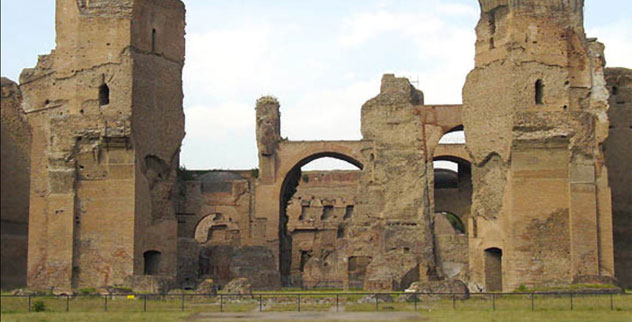
Underfloor heating feels like the kind of feature modern real-estate listings write in bold. The Romans had it. Their hypocaust system moved hot air beneath floors and sometimes through wall spaces, warming baths and elite buildings with striking sophistication. It was not a tiny trick. It was a real engineering solution that required planning, fuel, airflow management, and structural design.
That means somebody in the ancient world stepped onto a warm floor in winter and thought, “Yes, this is how civilized people live.” Honestly, fair enough. Roman baths in particular became showcases for this technology, blending heating, water management, and architecture into a social experience that was practical and luxurious at the same time. When you realize the ancients engineered climate control without flipping a thermostat, their achievements suddenly feel a lot less ancient and a lot more annoyingly impressive.
7. Alarm Clocks
Waking up against your will is apparently one of humanity’s oldest traditions. Long before the bedside alarm clock or the smartphone chime that makes you question every life decision, the Greeks were experimenting with timekeeping devices that could signal a specific moment. One famous example is the water clock associated with Plato, which reportedly used water pressure and sound to mark time and wake him for lectures.
Was it sleek? No. Was it battery powered? Also no. But the core idea is unmistakably modern: set a device so future-you does not mess up the schedule. That mental leap is what makes ancient technology so compelling. It is not just about materials. It is about problem-solving. The ancients were not merely watching time pass. They were trying to command it, organize it, and make sure somebody got out of bed when it mattered.
8. Vending Machines
Yes, vending machines have ancient roots, which is one of those facts that sounds fake right up until it becomes your favorite fact of the week. Hero of Alexandria described a coin-operated device that dispensed a measured amount of holy water. Insert coin, receive product. That is the whole vending concept in embryo, just with more temple atmosphere and fewer stale crackers.
The brilliance here is the mechanism. A machine had to recognize the coin’s weight, trigger a response, and release a controlled amount of liquid. That is not some accidental gimmick. It is a clear example of automation and transactional design. Ancient people understood that machines could do repeatable jobs and enforce fair exchange. So the next time a vending machine eats your money and gives you nothing, just remember: the concept is ancient. The disappointment, sadly, is timeless.
9. Newspapers and Public News Feeds
The modern obsession with updates, headlines, and public information is older than many people realize. In ancient Rome, official notices known as Acta Diurna were posted in public spaces. These records included political developments, legal matters, military news, social announcements, and other information meant for public awareness.
No, this was not a newspaper tossed onto your driveway at sunrise. But it absolutely reflects the same impulse: gather information, summarize it, publish it, and make sure people know what is happening. In a very real sense, Rome understood that power and communication travel together. Public information was part of governance, civic identity, and shared life. The format was stone and metal, not paper and pixels, but the instinct behind it feels remarkably current.
10. Concrete That Still Outclasses Ours
Modern builders have poured a lot of concrete, and yet Roman concrete continues to sit there like an unbothered overachiever. Researchers have spent years studying why many Roman structures have survived so well, and recent work suggests the material’s mix and internal chemistry helped it resist damage and even seal cracks over time.
That is the kind of discovery that makes engineers stare into the middle distance. The Romans were not just building big. They were building smart. Their concrete helped support harbors, baths, temples, and other infrastructure that endured for centuries. It reminds us that ancient technology was not always crude first-draft stuff waiting for modern people to improve it. Sometimes the ancients built something so durable that we are still reverse-engineering their homework.
Why Ancient Technology Still Feels So Surprising
The real shock is not the gadget. It is the mindset.
What ties all of these examples together is not just cleverness. It is familiarity. Prosthetics, sanitation, heating, cosmetics, timed alerts, news distribution, and automated service all come from the same human urge: make life more manageable, more comfortable, more efficient, and maybe a little more stylish.
We tend to imagine progress as a neat ladder, with the ancient world stuck on the bottom rung holding a rock and looking confused. But history is messier than that. Innovation does not always move in a straight line. Sometimes a civilization solves a problem brilliantly, that knowledge fades, and later societies reinvent the answer with new materials and better branding. The ancient world was full of experiments, prototypes, and practical systems that prove people were thinking in remarkably sophisticated ways.
That is why these discoveries keep grabbing our attention. They collapse the distance between “them” and “us.” Suddenly, ancient people are not abstract figures in textbooks. They are humans dealing with sore feet, bad breath, cold floors, crowded cities, late mornings, and the eternal desire to look good in public. Which, if we are being honest, is basically the entire human condition.
Experiences That Make This Topic Feel Strangely Personal
Why learning about ancient comforts changes the way we see everyday life
There is something almost eerie about realizing how many “modern” experiences have ancient echoes. You step onto a heated floor in a hotel bathroom and feel a little spoiled. Then you remember Romans engineered warm floors two thousand years ago, and suddenly your luxury feels less futuristic and more like a reboot. The same thing happens when you reach for toothpaste, glance at public news, or feed a coin into a machine. These ordinary habits start to feel like conversations across time.
That shift can be surprisingly emotional. The ancient world often seems distant because we meet it through ruins, museum glass, and solemn documentaries narrated by someone who sounds like they have never once laughed at a broken vending machine. But once you focus on daily experience rather than just empires and battles, the past becomes more intimate. You are not just reading about “civilization.” You are recognizing people who also cared about comfort, routine, hygiene, image, and convenience.
Imagine an Egyptian carefully fastening a prosthetic toe before walking in sandals. Imagine a Roman entering a warm bathhouse after a cold day. Imagine someone checking a public notice board for the latest official developments, or dropping a coin into a mechanism and expecting a precise result. These are not distant, alien moments. They are practical, lived experiences. They feel close because they are close. Human beings have always tried to reduce friction in daily life.
That is what makes the topic so memorable. It is not just a list of surprising facts for trivia night. It changes how you experience the present. The next time you clean your teeth, follow a morning alarm, use indoor plumbing, read a public update, or admire clever engineering, there is a good chance you will think of the ancients and give them a bit more credit. Not too much credit, of course. They still did not invent customer support. But credit nonetheless.
And maybe that is the best part of studying ancient technology. It reminds us that innovation is deeply human, not exclusively modern. The tools change. The materials improve. The marketing becomes louder. But the underlying desires remain astonishingly steady. We want relief from pain. We want warmth. We want useful information. We want efficiency. We want dignity. We want to look presentable and smell acceptable. Across thousands of years, that continuity makes history feel less like a dead subject and more like a mirror with older clothes.
So the next time someone says ancient people lived in a world too primitive to resemble ours, feel free to smile politely and ruin their day with facts about prosthetic toes, coin-operated holy water, and Roman heated floors. History deserves that kind of comeback.
Conclusion
The ancient world was not a technological blank space waiting for modern genius to arrive. It was a laboratory of bold ideas, practical fixes, and surprisingly familiar comforts. From prosthetics and dental work to sanitation, cosmetics, heating, and public information systems, ancient civilizations developed solutions that still feel recognizable today.
That does not mean the past was easy or elegant. It was often harsh, unequal, and improvised. But it was also inventive. The more closely we study it, the more we see that ancient people were not standing at the beginning of history with empty hands. They were already building, testing, refining, and living with tools that speak directly to modern life. And that is exactly why their world still fascinates us.