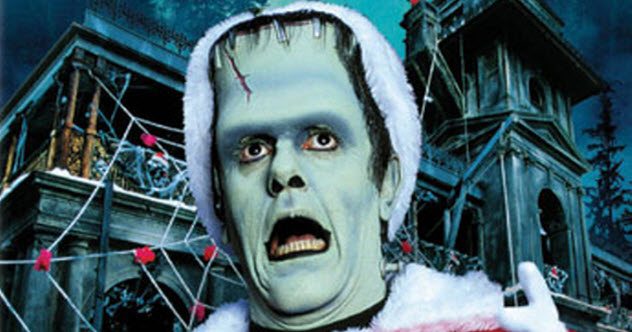
Christmas television usually arrives wrapped in familiar paper: a grouch rediscovers joy, Santa misplaces something important, and a choir appears before the final commercial break. Then there are holiday specials that put the formula in a blender and press “purée.”
The weirdest Christmas specials are not necessarily bad. Some are inventive, funny, or technically brilliant. Others feel like broadcasts from a parallel universe where Wookiees celebrate family holidays, leprechauns guard Christmas gold, and sewer-dwelling reptiles sing opera while shopping for a plastic pizza. This ranking considers originality, tonal whiplash, visual strangeness, cult reputation, and one essential question: “How did this get made, and why can’t I stop watching it?”
What Makes a Christmas Special Truly Weird?
Rudolph’s glowing nose and Frosty’s magical hat no longer seem unusual; they are tradition. True holiday weirdness appears when genres refuse to cooperate: science fiction meets a celebrity variety show, toy-driven fantasy teaches religious customs, or a children’s sitcom puppet encounters several human crises in one evening. The best Christmas TV oddities also survive their original broadcasts. They disappear onto VHS, return as cult discoveries, and become annual tests of friendship for viewers brave enough to share them.
10. A Claymation Christmas Celebration (1987)
Beautifully Crafted, Cheerfully Unhinged
Will Vinton’s stop-motion special proves that “weird” can be a compliment. Two clay dinosaurs, Rex and Herb, introduce inventive interpretations of carols. “Carol of the Bells” becomes a performance by anthropomorphic bells, while confusion over “Here We Come A-Wassailing” produces Christmas waffles. The California Raisins perform “Rudolph the Red-Nosed Reindeer,” because late-1980s television correctly believed wrinkled clay fruit could carry a musical finale. Originally shown on CBS in 1987, the special remains visually impressive, funny, and just strange enough to feel like an art-school pageant funded by a cereal company.
9. Nestor, the Long-Eared Christmas Donkey (1977)
Rudolph’s Journey With Considerably More Emotional Damage
Nestor is bullied because of his enormous ears, suggesting a familiar Rankin/Bass outsider story. Then his mother dies protecting him during a snowstorm, and the cute-animal adventure becomes a miniature grief drama. Nestor eventually discovers that his ears help him guide Mary through a sandstorm on the journey to Bethlehem. The message is sincere, but the route combines adorable “Animagic” design with startling emotional intensity. Critics have noted its serious middle section and unusual pathos, making it the rare children’s special capable of inspiring faith, tears, and a difficult bedtime conversation in under 30 minutes.
8. The Leprechauns’ Christmas Gold (1981)
St. Patrick’s Day Wanders Into December
Rankin/Bass apparently decided the crowded Christmas market needed Irish folklore. A sailor reaches an island of leprechauns and becomes involved in a conflict over their gold while a banshee threatens the treasure. The oddity is conceptual: leprechauns and Christmas each have rich traditions, but combining them does not automatically create double the magic. It creates a program that feels as though two holiday scripts were placed in the same envelope. Entertainment Weekly has described its mixture of Christmas and St. Patrick’s Day mythology as an uneasy fitwhich is precisely why it remains such a charming seasonal curiosity.
7. Christmas Comes to Pac-Land (1982)
Santa Meets a Yellow Circle With a Serious Appetite
Santa crashes in Pac-Land, so Pac-Man and his family must repair the sleigh and recover the gifts while dealing with the Ghost Monsters. The world-building is delightfully literal: nearly everything is “Pac”-something, and the residents have mastered suburban life without learning about Christmas. Even the ghosts soften when included in the celebration. TV Insider summarizes the central sleigh-rescue plot, while later coverage has embraced the special as a chomp-filled relic of 1980s brand expansion. It is wholesome, ridiculous, and somehow less strange once the viewer accepts that an arcade mascot is now responsible for global gift delivery.
6. He-Man & She-Ra: A Christmas Special (1985)
Peace on Earth, Merchandising on Eternia
Orko accidentally visits Earth and returns to Eternia with a Christmas tree and two children. They explain the holiday to warriors, sorcerers, talking creatures, and villains who normally communicate through energy beams. Horde Prime wants the children captured, while He-Man and She-Ra protect them. The peak arrives when Skeletor experiences temporary kindness, proving even a skull-faced tyrant can be reached by seasonal programming. Official descriptions from Universal and Netflix confirm the glorious premise. The special sincerely promotes family and generositypreferably while viewers memorize the names of several action figures.
5. Christmas at Pee-wee’s Playhouse (1988)
Celebrity Cameos Arrive Faster Than Reindeer
A normal Pee-wee Christmas would have been the shocking choice. Instead, the special delivers talking furniture, visual gags, musical interruptions, and a blizzard of guest stars. Pee-wee writes a wish list one and a half miles long, orders Frankie Avalon and Annette Funicello to make cards, skates with Little Richard, rides with Magic Johnson, and talks with Dinah Shore. TV Guide’s summary resembles a celebrity Rolodex emptied into a snow globe. Yet the chaos has a moral: Pee-wee must give up his excessive wishes so other children receive gifts. This is surreal Christmas comedy made by people who knew exactly what they were doing.
4. ALF’s Special Christmas (1987)
A Sitcom Puppet Enters an Emotional Obstacle Course
ALF was a wisecracking alien known for insulting his hosts and threatening to eat cats. His two-part Christmas story instead offers terminal illness, childbirth, and a suicide intervention. Mistaken for a donated toy, ALF reaches a children’s hospital and befriends a seriously ill girl named Tiffany. He later helps a woman give birth in a stalled elevator and, disguised as Santa, talks a despairing man away from a bridge. TV Guide and Apple TV confirm these extraordinary plot turns. The episode is compassionate and moving, but it feels like three “very special episodes” squeezed into one oversized Santa coat.
3. We Wish You a Turtle Christmas (1994)
Four Heroes, One Gift, Several Alarming Songs
The live-action Teenage Mutant Ninja Turtles realize they forgot to buy Master Splinter a present. This leads to public singing, a “Wrap Rap,” Michelangelo attempting opera, and Leonardo adopting a Jamaican-style singing voice that seems to have arrived from another VHS tape. The Turtles eventually buy Splinter a framed plastic pizza, a gift that raises more questions than it answers. The soft costumes give every close-up the energy of a theme-park show recorded after closing time. Released direct-to-video in 1994, it has since appeared on lists of notorious holiday productions and earned a reputation as perhaps the strangest screen version of the Turtles.
2. Rapsittie Street Kids: Believe in Santa (2002)
Uncanny CGI Meets an Astonishing Voice Cast
A boy gives a treasured teddy bear to a classmate, who rejects it as cheap. On paper, it is a workable lesson about generosity. On screen, primitive computer animation turns every smile, walk, and hand gesture into an encounter with the unknown. The surrealism deepens because the voice cast includes Mark Hamill, Nancy Cartwright, Jodi Benson, Paige O’Hara, and Grey DeLisle.
Polygon’s production history explains how the syndicated special became a lost-media curiosity, while The A.V. Club later treated it as a source of holiday fear. Yet it is more interesting than a simple failure: it was an ambitious attempt to create a heartfelt musical without the technology or resources needed to realize the vision. Viewers arrive to laugh at the animation and often leave fascinated by the very human production story.
1. The Star Wars Holiday Special (1978)
The Emperor of Strange Holiday Television
Chewbacca tries to return to his family on Kashyyyk for Life Day. That simple setup expands into untranslated Wookiee conversations, musical performances, comedy sketches, virtual-reality entertainment, Imperial danger, and a cooking demonstration built around repeated instructions to stir and whip. Bea Arthur sings in the Mos Eisley cantina, Jefferson Starship performs through a holographic device, and Chewbacca’s relatives receive enough screen time to establish an entire branch of the family tree.
The special also contains the animated sequence that introduced Boba Fett. StarWars.com confirms that the Nelvana-produced segment was both the franchise’s first cartoon and Fett’s debut. The full program aired once on CBS on November 17, 1978, then became a legendary bootleg. Official Star Wars coverage now openly acknowledges its maligned reputation and one-time broadcast history. Life Day survived, Boba Fett became an icon, and the special remains the gold standard for a famous franchise entering a holiday party and waking up with no memory of the musical numbers.
Why Weird Christmas Specials Keep Coming Back
Traditional classics offer reassurance; strange holiday television offers discovery. These programs also preserve their eras. The 1970s loved celebrity variety shows. The 1980s converted toys and arcade games into animated worlds. The 1990s filled video stores with franchise experiments. The early 2000s embraced computer animation before inexpensive computer animation was always ready.
Most importantly, weird Christmas specials are social. A polished classic can play quietly in the background. A bizarre one demands commentary, rewinding, and the immediate recruitment of an unsuspecting friend. Confusion becomes a shared traditionand traditions are what Christmas television was built to create.
A 500-Word Viewing Experience: Surviving a Weird Christmas Special Marathon
A marathon of strange Christmas specials begins with confidence. Snacks are arranged, the lights are low, and everyone expects a nostalgic variation on ordinary holiday viewing. Starting with A Claymation Christmas Celebration encourages this belief. The animation is beautiful, the jokes are playful, and the California Raisins feel less alarming than expected. Someone says, “This is actually good,” which is true and also dangerously reassuring.
Then Nestor begins. The room grows quiet. A person prepared to laugh at oversized donkey ears is suddenly processing sacrifice and biblical destiny. The emotional gearshift teaches the first rule of the marathon: “weird” does not always mean silly. Sometimes it means a children’s special has examined your festive mood and decided it needs a grief subplot.
The Leprechauns’ Christmas Gold restores conversation because everyone needs help determining which holiday is being celebrated. By Christmas Comes to Pac-Land, the group accepts that Santa can enter any intellectual property without a passport. The Pac-family’s round architecture inspires questions nobody can answer. Are the houses structurally sound? Does Pac-Man eat cookies, or are all foods merely seasonal dots? The special offers no guidance, so the audience develops its own scholarship.
The He-Man and She-Ra adventure usually produces the first sincere cheer. Skeletor’s reluctant kindness is funny, but it works. Next comes Pee-wee, where identifying every celebrity becomes a competitive sport. Older viewers recognize the guests; younger viewers search faces on their phones and become increasingly confused by the sentence, “Yes, that is Little Richard ice-skating with Pee-wee Herman.”
ALF’s Special Christmas changes the room again. People expecting cat jokes receive a hospital, a woman in labor, and a man in despair. The story is earnest enough that mockery feels wrong, yet its concentration of serious events is impossible to ignore. Someone checks the runtime because one puppet should not be able to encounter this much human crisis before the credits.
The final stretch becomes endurance comedy. During We Wish You a Turtle Christmas, every song causes a louder reaction than the last. The framed plastic pizza is greeted like a major plot twist. Rapsittie Street Kids inspires laughter, curiosity, and then strange protectiveness toward the people who tried to make it. By the time The Star Wars Holiday Special begins, the group believes it is ready.
Nobody is ready. The Wookiee scenes stretch time. The cooking demonstration becomes hypnotic. Bea Arthur’s cantina performance arrives like a message from another dimension. Phones are put down because ordinary distraction cannot compete with what is happening. The marathon ends not with a tidy moral but with collective astonishment.
The best part is the conversation afterward. Everyone chooses a winner: funniest, darkest, most impressive, or most likely to be shown to a friend without warning. That is the appeal of cult Christmas specials. They may not deliver perfect comfort, but they create stories about watching them. Years later, nobody remembers which cookies were served. Everybody remembers the singing Ninja Turtles.
Conclusion
The top 10 weirdest Christmas specials show what happens when creators take an enormous seasonal swing. Sometimes the result is inspired, as with Pee-wee and Will Vinton. Sometimes it is emotionally startling, as with Nestor and ALF. Occasionally it becomes a monument to creative overreach, as with Rapsittie Street Kids and the unbeatable Star Wars Holiday Special.
These productions demand attention, invite debate, and make excellent additions to an unconventional watchlist. Pour the cocoa, gather the bravest people you know, and remember: Christmas television is more fun when there is at least a small chance that Skeletor will discover compassion or a Wookiee will watch a cooking show.
Note: This ranking is editorial and subjective. Production details were synthesized from established entertainment publications, official franchise pages, streaming catalogs, and television databases. The viewing-experience section presents a representative group-watch scenario rather than a claim of personal experience.