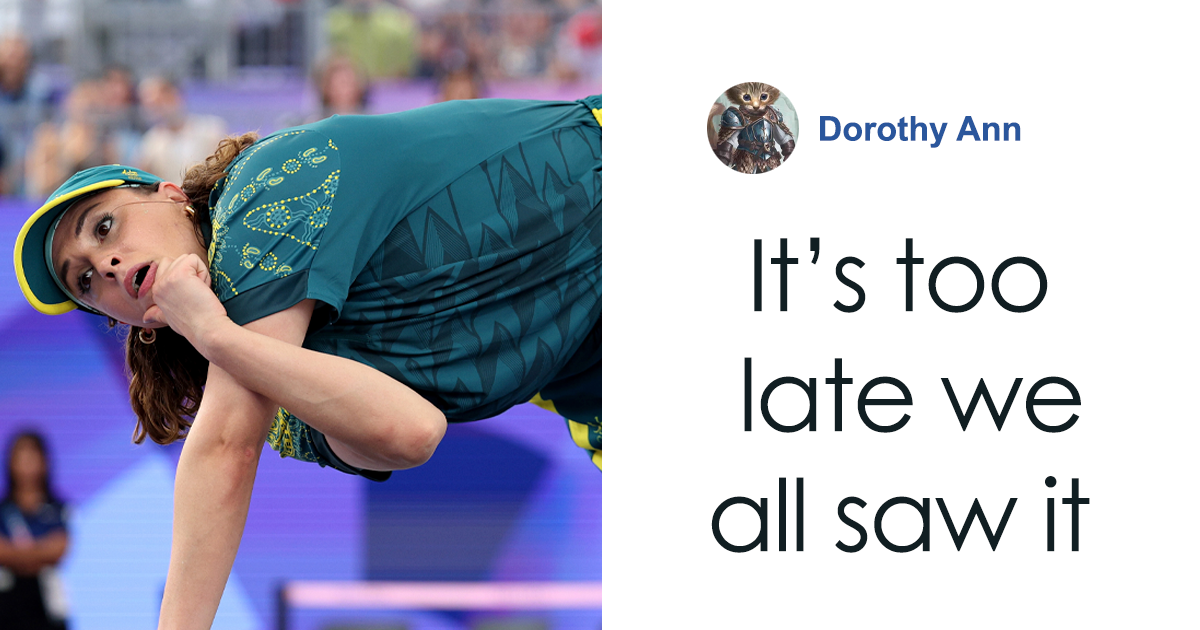
For a few glorious, chaotic, deeply online days, Raygun’s Olympic breaking performance was everywhere. It was on X, TikTok, Instagram, YouTube, group chats, reaction threads, sports blogs, and probably in the dreams of at least a few very confused uncles. Then something odd happened: clips started disappearing. Reposts vanished. Search results got thinner. Full routines became harder to find. The internet, which usually hoards viral content like a raccoon with a ring light, suddenly seemed to be losing one of its favorite memes.
That strange disappearance is what made the whole story even more fascinating. This was not just a quirky sports moment anymore. It became a case study in how modern media really works: viral fame can happen in minutes, but ownership still lives in boardrooms, licensing agreements, platform policies, and copyright systems that do not care how loudly the group chat is laughing.
Raygun, whose real name is Rachael Gunn, did not become famous because she won Olympic gold. She became famous because her performance at the Paris Olympics was instantly recognizable, instantly remixable, and instantly meme-ready. That is not the same thing as athletic success, but in the online era, it can be even more powerful. One unusual routine can travel farther than a medal ceremony. One screenshot can outpace a carefully edited highlight reel. And one moment of public performance can turn into a thousand recycled punchlines before the athlete has even left the venue.
How Raygun Became the Main Character of Olympic Breaking
Breaking made its Olympic debut in Paris, and that alone made the event a magnet for curiosity. Viewers who had never watched competitive breaking before suddenly became armchair judges, cultural critics, choreography experts, and part-time comedians. Into that environment stepped Raygun, representing Australia with a style that looked noticeably different from many of her competitors. She lost her battles, did not advance, and became the kind of viral sports story the internet loves most: surprising, highly visual, easy to parody, and impossible to ignore.
Her routine was dissected from every angle. Some people saw creativity and nerve. Others saw awkwardness and a performance that did not fit their expectations of Olympic-level breaking. Online audiences locked onto specific moments, looped them endlessly, added captions, slapped on reaction audio, and transformed a real athlete into a meme template faster than you can say “copyright strike.” That speed is important, because viral fame often strips context before the audience even knows what the original event was supposed to be.
Suddenly, millions of people who had never watched a full breaking competition felt like they knew exactly what they had seen. In reality, many had only consumed chopped-up clips, freeze frames, jokes, and out-of-context edits. Raygun became less a person and more a symbol: of internet pile-ons, Olympic experimentation, culture-war commentary, and the weird modern habit of turning every public performance into a referendum on civilization itself. Not bad for a competition that was supposed to last a few minutes and then politely exit stage left.
Are the Videos Really Being Deleted?
The short answer is yes, but with an asterisk the size of a stadium scoreboard.
No, Raygun’s performance was not literally erased from human memory or launched into a digital volcano. This is not some sci-fi situation where a black SUV pulls up and confiscates everyone’s screenshots. What did happen is that many reposted clips and unauthorized uploads appear to have been removed, while some official replays also became much harder to access on mainstream platforms.
That distinction matters. When people say the videos are “being deleted from the internet,” they usually mean that the easy-to-find, endlessly reposted versions are disappearing. The meme ecosystem gets thinned out. The full routine becomes harder to locate than the hot take. The internet moves from “Here are 900 copies of the same clip” to “Why can I only find one blurry repost from an account named something like @DanceBro420?”
And that is where the story gets more interesting than the meme. The disappearing clips do not point to one giant conspiracy. They point to a collision between viral culture and sports media rights. In other words, the internet wanted free-floating chaos, while the Olympic rights system showed up wearing a blazer and carrying paperwork.
Why the Clips Started Vanishing
1. Olympic footage is heavily protected
The Olympics are not a casual public-domain buffet where anyone can grab a full event clip and repost it forever. Olympic footage is tightly controlled by the International Olympic Committee and by national broadcast partners. That means full-performance uploads, ripped broadcasts, and copied highlight packages can trigger takedowns quickly, especially when a clip becomes massively visible. The more viral a post gets, the more likely it is to attract both audience attention and copyright enforcement. Fame is fun until legal notices show up wearing steel-toe boots.
2. Breaking is a music-heavy event
Breaking is not just athletic movement; it is movement tied directly to music. Musicality is part of the judging, and DJs play a central role in the event. That creates additional complexity for replays, archived clips, and redistributed footage. Even when music is cleared for live competition, that does not always translate into unlimited, permanent, platform-wide replay freedom in every format. Music licensing is one of those boring-sounding topics that becomes very exciting the moment your favorite clip disappears.
3. Official replay windows can be shorter than fans expect
Another wrinkle is that some official coverage does not stay up forever. Reports around the Paris Games indicated that certain Peacock or NBC-hosted Olympic content had predetermined removal windows. That matters because the public often assumes “official upload” means “available forever.” In reality, official sports streaming libraries are more like hotel minibars: accessible for a while, oddly expensive in one way or another, and gone before you have emotionally processed what happened.
4. Viral memes multiply unauthorized copies
Raygun’s performance was not just viewed; it was copied, cropped, subtitled, dueted, stitched, clipped, remixed, and repackaged. Once a moment enters meme orbit, it spawns countless unauthorized versions. That makes takedowns more likely, not less. Ironically, the bigger the viral wave, the more cleanup usually follows. The internet throws a huge party and then acts shocked when someone eventually notices the furniture is missing.
The Bigger Issue: Context Gets Deleted Faster Than Video
One reason the vanishing clips feel so dramatic is that most people were not actually looking for the full truth. They were looking for the funniest fragment. That is how viral culture works. A ten-second loop beats a ten-minute explanation. A weird pose beats a judging rubric. A punchline beats a biography.
But context matters here. Raygun was not some random passerby who wandered into the Olympics after winning a raffle at a mall kiosk. Officials later pushed back against false rumors about how she qualified. Her selection came through the established pathway, and governing bodies defended the legitimacy of the process. That matters, because once an athlete becomes a meme, the internet tends to invent extra lore whether it is true or not. Suddenly the performance is not enough; people want a conspiracy, a scandal, or a villain origin story.
That hunger for a bigger story helped fuel the backlash. An online petition questioning her participation spread widely before being condemned and removed. Raygun later described the hate as devastating. That shifts the story from light mockery to something heavier. It is one thing to laugh at a public sports moment. It is another to pile misinformation, harassment, and endless ridicule onto a real person who competed on one of the biggest stages in the world.
What This Says About the Internet in 2024 and Beyond
The Raygun clip saga reveals something uncomfortable about the current internet: we treat public moments as both communal property and disposable entertainment. We want instant access, infinite replay, and maximum meme potential, but we rarely stop to ask who owns the footage, who profits from the attention, or who absorbs the damage when the joke goes too far.
In the old media era, a strange Olympic moment might have lived on in highlight specials, late-night monologues, and maybe a few newspaper columns. Today it gets screen-recorded, clipped, reposted, filtered, and turned into identity discourse before breakfast. Then, when the clips start disappearing, people act like history itself is being censored, when the more accurate explanation is usually a messy blend of licensing, platform policy, and modern attention economics.
There is also a cultural irony here. Breaking was introduced to the Olympics partly because it was seen as youthful, urban, digital-friendly, and socially magnetic. Well, mission accomplished. The sport generated one of the most talked-about moments of the Games. But instead of the conversation being fully about the art form, much of it centered on one viral performance and the meme-industrial complex that followed. That is the internet’s favorite trick: it takes a big cultural debut and turns it into one screenshot with a punchline.
And then there is the timing twist. Breaking was part of Paris 2024, but it is not on the program for Los Angeles 2028. That makes Raygun’s moment feel even more bizarrely permanent and temporary at the same time. The sport arrived, exploded into discourse, and thenat least for nowstepped back out of the Olympic spotlight. So the clips became not just viral content, but artifacts from a short, strange chapter in Olympic history.
Why People Keep Looking for the Deleted Videos
People are not searching for the clips just because they want to laugh again. Some are trying to understand what really happened after seeing only fragments. Others want to judge the performance fairly by watching a fuller version rather than recycled memes. Some are fascinated by internet censorship claims. Others are just curious because whenever people hear “this is being deleted,” human nature kicks in immediately. Nothing boosts demand like the possibility that something is becoming harder to find.
That is one of the oldest laws of online life: the moment a clip seems endangered, it becomes more culturally valuable. Scarcity adds mystique. Deletion adds drama. Takedowns create headlines. And before long, the disappearing video becomes more famous than the event that produced it.
So yes, Raygun’s performance was viral. But the disappearing-clips story gave it a second life. First it was the routine everyone joked about. Then it became the video everyone suddenly needed to locate before it slipped behind paywalls, rights restrictions, or moderation systems. In other words, it completed the full internet transformation from “Look at this” to “Wait, where did it go?”
Experiences From the Internet’s Front Row Seat
If you were online when the Raygun story blew up, you probably experienced it in layers. First came the confusion. Someone posted a clip. Someone else quote-posted it with a joke. Then a celebrity reference popped up. Then a friend sent it with the digital equivalent of wide eyes and popcorn. Before long, you were not just watching an Olympic performance; you were watching the internet process an Olympic performance in real time, which is a very different sport and one with absolutely no judges, no mercy, and way too many amateur commentators.
For casual viewers, the experience was strangely hypnotic. You might have started with a laugh, then wandered into debate, then found yourself wondering whether the joke had gone too far. That emotional whiplash is now a normal online experience. We begin as spectators, become participants, and then suddenly realize a real person is standing at the center of the meme storm. The same clip that made people laugh over lunch could feel uncomfortable by dinner once the harassment, misinformation, and pile-on became impossible to ignore.
For fans of breaking, the experience was different again. Many felt frustrated that one athlete’s viral moment overshadowed the larger story of the sport’s Olympic debut. They wanted viewers to appreciate the athleticism, rhythm, originality, and history of breaking, not just fixate on the most meme-able seconds from the event. Imagine waiting years for your art form to reach the Olympics, only to watch the internet reduce the conversation to one loop and one punchline. That had to feel like hosting a carefully planned dinner party and discovering everyone came just to photograph the salt shaker.
For creators and meme accounts, the disappearing clips created another kind of experience: the sudden realization that virality does not equal ownership. A post can rack up views, shares, and comments, but that does not mean it gets to stay. Takedowns are the cold shower after the hot burst of engagement. One minute, your clip is flying; the next, it is replaced with a bland notice that basically says, “Congratulations on your success. It has now been removed.”
And for Raygun herself, the experience was likely the strangest of all: performing on a global stage, becoming instantly recognizable, and then watching the world argue over not just what you did, but who you are. That is the hidden cost of viral sports fame. The audience thinks it is consuming a moment. The athlete has to live inside the aftermath. Even when the clips disappear, the experience does not. The screenshots remain. The headlines remain. The memory remains. The internet may delete the video, but it rarely deletes the story it has already written around you.
Final Thoughts
The disappearing Raygun videos are not just a story about copyright. They are a story about how fragile “internet permanence” really is. We talk like the web never forgets, but actually it forgets selectively, inconsistently, and often for legal reasons that arrive long after the meme has peaked. What survives is usually not the full performance, but the simplified version people already decided to believe.
That is why this story matters. It sits right at the intersection of sports, entertainment, ownership, platform culture, and public empathy. Raygun’s routine became a viral event, then a legal-content problem, then a media-analysis case study. And somewhere inside all of that was still an athlete who showed up, performed, got judged, got mocked, and then watched the internet turn her into a symbol.
So if the clips feel like they are disappearing, that is because many of them are. But the bigger lesson is not that the internet is erasing Raygun. It is that the internet was never really built to preserve context in the first place. It preserves whatever spreads fastest. Everything else has to fight for oxygen.