Note: This article is an original, publication-ready synthesis based on real information about vintage disc-cutting lathes, lacquer mastering, vinyl manufacturing, audio preservation, and the modern vinyl revival.
Watching a recording lathe from 1958 cut a lacquer master record is a little like watching a mechanical wizard write music into a mirror. There is no “upload” button, no progress bar, and absolutely no room for a coffee spill. A spinning lacquer disc turns under a precision cutter head, and a heated stylus carves one continuous spiral groove that will eventually become the musical roadmap for thousands of vinyl records.
For anyone raised on playlists, Bluetooth speakers, and the magical disappearing act known as “cloud storage,” the process feels almost suspiciously physical. Sound becomes motion. Motion becomes a groove. That groove becomes metal parts. The metal parts press warm vinyl into a record you can hold, drop, love, clean, and occasionally argue about on the internet.
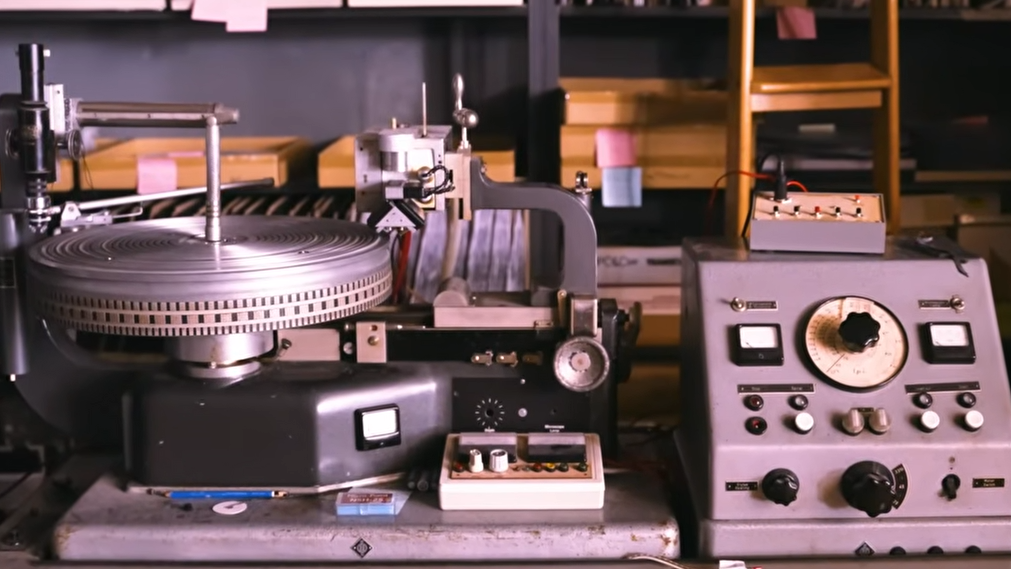
The star of the show is a Neumann AM32B Master Stereo Disk Recording Lathe, a machine from the late 1950s that represents one of the great bridges between old-school mechanical recording and modern hi-fi vinyl production. It is not just antique furniture with knobs. It is a precision instrument, part turntable, part microscope, part industrial sculpture, and part diva. Treat it well and it rewards you with a lacquer master. Treat it badly and it will punish your audio with distortion, groove problems, or the kind of silence that makes engineers stare at the floor.
What Is a Lacquer Master Record?
A lacquer master record is the first physical disc created in the vinyl record manufacturing chain. It is not the final record you buy at a shop. Instead, it is the delicate master used to create the metal parts that later press commercial vinyl copies.
The blank lacquer disc usually starts with an aluminum core coated in a smooth layer of nitrocellulose lacquer. The surface is soft enough for a cutting stylus to engrave but stable enough to hold extremely fine groove details. Think of it as a highly disciplined cake frosting that went to engineering school.
During cutting, the mastering engineer sends the approved audio through cutting electronics. The cutter head converts that electrical signal into tiny physical movements. As the disc rotates, the stylus moves side to side and up and down, carving the waveform into the lacquer in real time. If the song is four minutes long, the cut takes four minutes. Vinyl does not believe in skipping the boring parts.
Why a 1958 Recording Lathe Still Matters
A 1958 recording lathe matters because the core idea behind lacquer cutting has changed surprisingly little. Modern studios may use digital workstations, cleaner signal chains, improved monitoring, and better measurement tools, but the essential task remains beautifully stubborn: cut a precise groove into a lacquer disc without ruining it.
The Neumann AM32B is especially fascinating because it arrived during a key moment in recording history. Stereo LPs were emerging, high-fidelity home systems were becoming more popular, and record labels needed better ways to fit longer, louder, cleaner sides onto vinyl. Variable-pitch technology helped solve part of that puzzle by adjusting groove spacing based on the loudness and complexity of the music.
Variable Pitch: The Lathe’s Secret Superpower
In simple terms, variable pitch controls how tightly or loosely the grooves are spaced. Quiet passages can sit closer together. Loud passages, heavy bass, or sudden peaks need more room so neighboring groove walls do not crash into each other like shopping carts in a windy parking lot.
Older fixed-pitch cutting systems had to leave enough space for the loudest expected moment, which could waste disc area. Variable-pitch systems allow the lathe to use the surface more intelligently. The result can be longer playing time, better volume, and reduced risk of groove damage. For a machine built in the 1950s, that is not merely clever; it is analog problem-solving with a pocket protector and a strong sense of drama.
How the Lacquer Cutting Process Works
Watching the lathe in action is hypnotic because the process looks calm while the stakes are high. Under the surface, several systems must work together perfectly.
1. The Audio Is Prepared for Vinyl
Before anything touches lacquer, the audio must be mastered for the physical limits of vinyl. A digital file can contain massive bass, extreme stereo width, sharp high-frequency energy, and sudden peaks. A record groove has opinions about all of these things.
Low frequencies take up space. Excessive sibilance can become harsh. Out-of-phase bass can make the groove difficult to track. Very loud sides may require wider spacing and shorter playing time. This is why vinyl mastering is not simply “make it louder and sprinkle analog dust on top.” It is a technical translation from sound into geometry.
2. The Lacquer Disc Is Placed on the Lathe
The blank lacquer must be clean, flat, and handled carefully. Dust, fingerprints, or surface flaws can become audible problems. The disc is mounted on the lathe platter, and the engineer checks speed, alignment, suction, stylus condition, cutting depth, and signal level.
At this point, the room often feels less like a studio and more like an operating room where the patient is a shiny black pancake worth treating with respect.
3. The Heated Stylus Cuts the Groove
A heated cutting stylus, commonly made from sapphire, carves the groove into the lacquer. Heating helps reduce cutting noise and allows the stylus to move through the lacquer more cleanly. As the cutter head receives the audio signal, it vibrates with astonishing precision, turning music into a visible path.
The groove is continuous. One side of a record is not a stack of separate tracks in the way a digital playlist is. It is one spiraling road from the outside edge toward the center, with silent or quieter bands between songs. That single groove contains rhythm, bass, vocals, cymbals, reverb tails, and every little studio decision people will later call “warmth.”
4. The Chip Is Removed
As the stylus cuts, it creates a tiny thread of removed lacquer called the chip. This thread must be pulled away continuously, often by vacuum suction. If the chip tangles or falls back onto the disc, the cut can be ruined. Yes, even a microscopic noodle can destroy the mood.
5. The Lacquer Is Inspected
After the cut, the engineer inspects the lacquer for visual defects, groove spacing, and obvious errors. Because lacquer masters are fragile and time-sensitive, they are usually sent quickly to plating. The goal is to transform that delicate cut into durable metal parts before anything goes wrong.
From Lacquer Master to Vinyl Record
The lacquer master is only the beginning. Once the lacquer is approved, it goes through electroplating. The surface is made conductive, often through a silvering process, and then metal is grown over it. This creates a negative metal copy of the groove structure.
From there, manufacturers create parts commonly known as fathers, mothers, and stampers. The stamper is installed in a record press. Warm vinyl compound is placed between two stampers, pressure is applied, labels are pressed in, and the result is a vinyl record with grooves molded from the original lacquer cut.
That means the moment you watch a 1958 lathe cut a lacquer master, you are seeing the ancestor of every copy that may follow. The lacquer itself may never be played casually. It is too important, too fragile, and frankly too emotionally high-maintenance.
Why Vinyl Cutting Is Still an Art
Vinyl mastering is not magic, but it often feels magical because the engineer is balancing physics, music, and taste at the same time. A great cut is not simply accurate. It is playable, durable, loud enough, clean enough, and emotionally convincing.
For example, a bass-heavy dance track may need careful low-end control so the groove does not become too wide. A bright rock song may need attention around cymbals and vocal sibilance. A long album side may require lower level to fit comfortably. A quiet jazz record might reward a more open, dynamic cut. Every project asks the lathe a different question.
This is why old lathes remain respected. Machines like the Neumann AM32B are not nostalgic props. They are tools designed for a job where tiny mechanical decisions become audible results. A skilled engineer listens, adjusts, checks, and sometimes starts over. The lathe may be vintage, but the judgment required is very much alive.
The 1958 Lathe as a Time Machine
There is something deeply satisfying about watching a machine from 1958 perform a task that still matters in 2026. It reminds us that not all technology becomes obsolete because something newer appears. Some machines survive because they solved a problem so elegantly that the world keeps finding reasons to use them.
A recording lathe also reveals how much trust older audio production placed in mechanical precision. Today, a mistake in a digital session can often be undone. During lacquer cutting, a serious mistake may mean starting over with a new blank. The process encourages focus. It rewards preparation. It does not care about your excuses.
Why the Video Is So Mesmerizing
Part of the appeal is visual. The lacquer spins smoothly. The cutter head glides inward. The chip curls away. Meters dance. The engineer watches with the calm intensity of someone defusing a bomb made of music.
Another part is emotional. Viewers know they are seeing sound become physical. The invisible is being carved into matter. In an age when music often lives inside apps, there is a special pleasure in watching a song become a groove you could trace with your eyes.
It is also oddly funny. The whole process seems both advanced and ridiculous. We have satellites, artificial intelligence, and instant global streaming, yet one of the most beloved music formats still begins with a tiny heated rock scratching a spiral into lacquer. Human civilization is strange, but at least it has good bass response.
The Modern Vinyl Revival Gives Old Lathes New Fame
Vinyl has enjoyed a long revival, and that resurgence has made record-making equipment more visible to collectors, musicians, engineers, and curious viewers. While streaming dominates everyday listening, vinyl offers something different: a physical ritual.
You choose a record, remove it from the sleeve, place it on the turntable, clean it, lower the tonearm, and listen with intention. That ritual begins long before the listener touches the album. It begins in mastering rooms, pressing plants, plating departments, and cutting studios where people still care about groove geometry.
The renewed interest in vinyl has also highlighted supply-chain realities. Lacquer discs are specialized products, and the number of global suppliers has been limited. That makes each lacquer cut feel even more precious. The humble master disc is not just a technical step; it is a bottleneck, a craft object, and a reminder that physical media depends on real materials.
Lacquer Cutting vs. Lathe-Cut Records
It is easy to confuse lacquer mastering with lathe-cut records. They are related but not identical.
A lacquer master is usually made as part of the traditional pressing process. It is cut once, plated, and used to create stampers for manufacturing many records. A lathe-cut record, on the other hand, is often cut directly onto a playable plastic disc one copy at a time. Small labels, artists, and collectors may use lathe-cut records for short runs, special editions, or personal projects.
Both processes involve a lathe. Both are charmingly mechanical. But traditional lacquer mastering is about making a master for mass production, while lathe-cut records are often the finished object themselves. One is the blueprint. The other is the handmade souvenir.
What Viewers Can Learn From a 1958 Recording Lathe
The biggest lesson is that recorded sound is not abstract. Even digital music becomes physical at some point, whether through a speaker cone, a headphone driver, or a record groove. The lathe makes that transformation visible.
It also teaches respect for limitations. Vinyl cannot do everything digital audio can do. It has surface noise, inner-groove challenges, playback wear, and strict space limits. But those limitations can encourage thoughtful mastering and careful listening. Constraints, when handled well, can become part of the character.
Finally, the lathe reminds us that old technology can be sophisticated. A 1958 machine may look charmingly analog, but its design reflects deep knowledge of mechanics, electronics, materials, and sound. It is not primitive. It is precise.
Experience: Watching a 1958 Recording Lathe Cut a Lacquer Master Record
The first experience of watching a vintage recording lathe cut a lacquer master is usually quieter than expected. You may expect sparks, drama, or at least a machine making the kind of noise that says, “I was built before seat belts were fashionable.” Instead, the moment is controlled and almost ceremonial. The lacquer disc sits on the platter like a black mirror. The cutter head hovers with purpose. The engineer makes small adjustments that seem minor until you realize each one may affect the final record.
What makes the experience memorable is the tension between calm movement and permanent consequence. Once the stylus drops and the cut begins, the process has a one-way seriousness. There is no casual pause. There is no dragging the waveform backward with a mouse. The music must travel through the system in real time, and the lathe must translate it perfectly as it happens. A three-minute song takes three minutes to carve. A twenty-minute side takes twenty minutes. The machine is patient, but not forgiving.
One of the most satisfying details is the lacquer chip. It curls away from the cut like a tiny thread, almost too delicate to matter. Yet it matters enormously. If that chip misbehaves, the master can be compromised. Watching it disappear into suction gives the whole scene a strange suspense. It is the audio equivalent of watching a chef pull one continuous noodle and hoping nobody sneezes.
The sound of the process is also fascinating. You are not only hearing music; you are watching the mechanical birth of playback. The groove being cut is not a symbolic representation. It is the future path of the stylus on someone’s turntable. The bass will become wider motion. The treble will become smaller, faster movement. Loud passages will demand space. Quiet passages will tuck themselves into the spiral. It is music translated into geography.
For collectors, the experience deepens appreciation for every record on the shelf. That album is no longer just a product with cover art and liner notes. It is the end result of many fragile steps: mastering decisions, lacquer cutting, plating, pressing, trimming, sleeving, shipping, and finally the listener’s turntable. A clean record suddenly feels less ordinary. Even a slightly warped one earns a little sympathy. It has been through a lot.
For musicians, watching the lathe can be humbling. It shows that mixes are not finished just because they sound exciting in headphones. Vinyl has rules. Excessive low-end energy, harsh vocals, brittle cymbals, and extreme stereo tricks can create real cutting problems. The lathe is honest in a way that can feel rude but helpful, like a studio mentor who refuses to compliment your snare drum just to be nice.
For casual viewers, the pleasure is simpler: it looks cool. A polished machine from 1958, still doing precision work, has an undeniable charm. It is retro without being decorative, technical without being cold, and beautiful because every visible part has a purpose. In a digital world, watching a lacquer master being cut feels like seeing music put on a suit and become tangible.
That is the magic of the recording lathe. It does not merely preserve sound. It performs the transformation in front of you. By the end, the lacquer disc looks almost unchanged from a distance, but up close it now carries a spiral of music. A blank surface has become a master. A moment has become a medium. And a machine from 1958 has politely reminded everyone that analog technology still knows how to steal the show.
Conclusion
Watching a recording lathe from 1958 cut a lacquer master record is more than a nostalgic peek at old studio equipment. It is a lesson in how music becomes matter. The Neumann AM32B and machines like it show that vinyl is not powered by romance alone. It depends on engineering, chemistry, patience, and skilled ears.
The process is beautiful because it is real. A lacquer blank spins. A stylus cuts. A chip curls away. The groove forms one continuous path that can eventually become the record spinning in someone’s living room decades from now. That is why this kind of video attracts engineers, collectors, musicians, and curious listeners alike. It turns the hidden craft of vinyl mastering into something visible, understandable, and strangely thrilling.
In the end, a 1958 recording lathe is not just a relic. It is proof that great tools can outlive trends, formats, and generations of shiny new gadgets. The machine does one difficult thing extremely well: it writes sound into a groove. And honestly, that still feels like a pretty good trick.