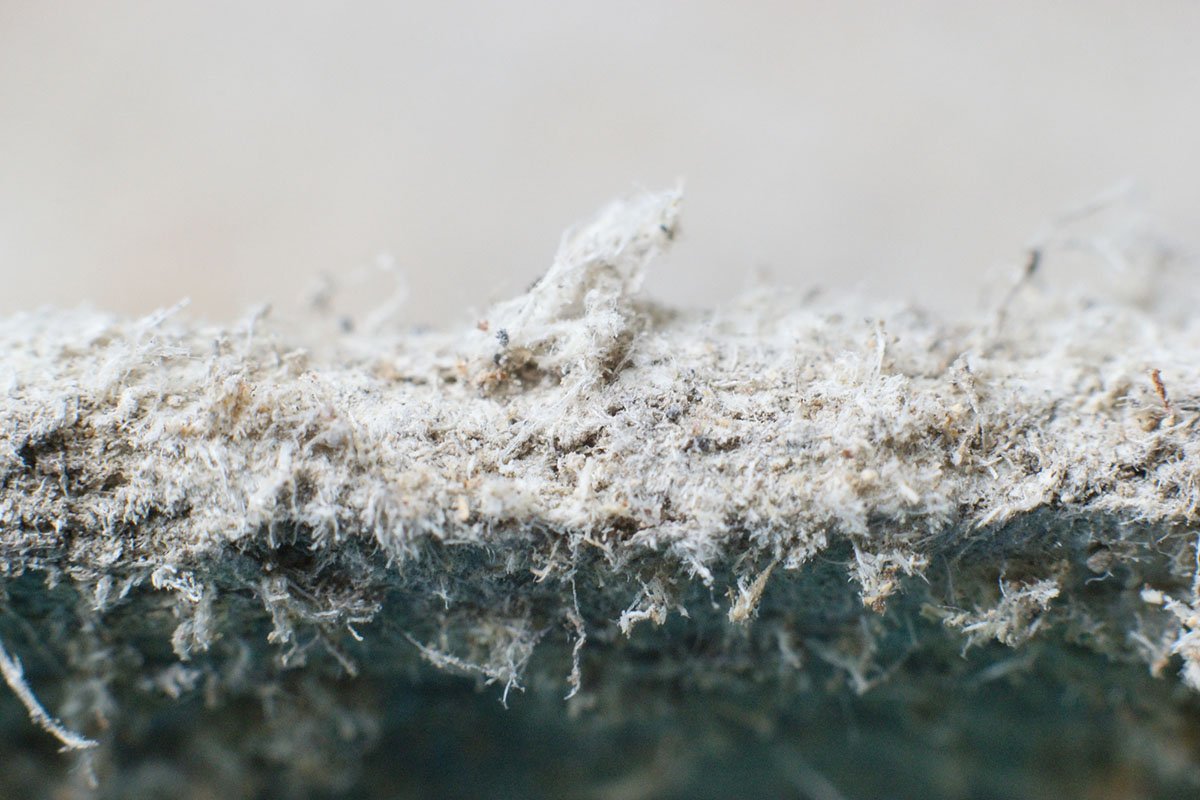
Asbestos does not usually announce itself with a warning label, ominous music, or a tiny sign reading, “Please do not sand me.” It often hides inside perfectly ordinary-looking flooring, insulation, siding, plaster, roofing, adhesives, and ceiling finishes.
That is what makes asbestos in older homes so confusing. A dangerous asbestos-containing material may look nearly identical to a harmless modern product. You cannot reliably identify it by its color, texture, age, pattern, brand, or tile dimensions alone. Even experienced contractors cannot confirm asbestos simply by staring at a suspicious ceiling and squinting thoughtfully.
The safest approach is to recognize materials that commonly contained asbestos, pay attention to their condition, and stop before drilling, cutting, scraping, sanding, or demolishing anything questionable. This guide explains what suspected asbestos materials may look like, where they are commonly found, and what to do when your renovation project uncovers an unpleasant surprise.
What Does Asbestos Actually Look Like?
Raw asbestos is a group of naturally occurring fibrous minerals. Depending on the mineral type, unprocessed asbestos may appear white, gray, blue, greenish, or brown. However, homeowners almost never encounter asbestos as a neat pile of recognizable mineral fibers.
Instead, manufacturers mixed asbestos into thousands of products to improve heat resistance, fire resistance, strength, durability, or insulation. Once blended into cement, vinyl, plaster, adhesive, paper, or insulation, its microscopic fibers are generally impossible to identify with the naked eye.
In other words, asbestos-containing floor tile usually looks like floor tile. Asbestos cement siding looks like cement siding. Joint compound containing asbestos looks like ordinary joint compound. The danger is not wearing a convenient disguise; the product itself is the disguise.
Can You Identify Asbestos by Looking at It?
No visual feature can confirm that a building material contains asbestos. Some products have characteristics associated with older asbestos-containing materials, but those characteristics are clues, not proof.
A qualified asbestos inspector considers several factors:
- The approximate age of the building and previous renovations
- The material’s location and intended function
- Manufacturer labels, packaging, invoices, or construction records
- Whether the material is damaged, deteriorating, or likely to be disturbed
- Laboratory analysis of properly collected samples
A house built or remodeled during the decades when asbestos products were widely used deserves additional caution. However, age alone is not a reliable asbestos detector. Older homes may have received newer asbestos-free materials, while certain newer structures may still contain legacy products or materials manufactured under different regulations.
The only dependable confirmation comes from appropriate laboratory testing. Sampling should normally be handled by a trained and accredited asbestos professional because improper sampling can release fibers that would otherwise have remained contained.
Common Asbestos-Containing Materials and Their Appearance
1. Pipe and Boiler Insulation
Older hot-water pipes, steam pipes, boilers, and furnace components may be covered with asbestos insulation. It can appear as a white, gray, or off-white wrapping that resembles heavy cloth, corrugated cardboard, chalky plaster, or a hardened bandage.
Straight sections may be wrapped with fabric-like tape or molded insulation. Pipe elbows and joints sometimes have a thick, plaster-like coating. When badly deteriorated, the surface may look fuzzy, flaky, powdery, cracked, or frayed.
This material can be especially hazardous when it is soft enough to crumble by hand. Do not touch a suspicious pipe wrap to determine whether it feels brittle. That experiment provides no reliable identification and may turn a manageable situation into an airborne dust problem.
2. Vermiculite Attic Insulation
Vermiculite insulation is one of the more visually distinctive materials homeowners may encounter. It is a loose, pour-in insulation that often looks like lightweight pebbles, tiny accordion-shaped nuggets, or pieces of shiny mica.
Its color commonly ranges from gray-brown to silver-gold. It may be found between attic joists, inside wall cavities, or underneath newer fiberglass insulation.
Not all vermiculite contains asbestos. However, a large portion of vermiculite insulation historically sold in the United States came from a mine near Libby, Montana, where the ore was contaminated with asbestos. The EPA advises treating older vermiculite insulation as potentially contaminated and leaving it undisturbed.
Do not dig through it looking for packaging, vacuum it with a household vacuum, or push it aside to install wiring. Shiny attic pebbles are not buried treasure.
3. Vinyl Floor Tiles
Some older vinyl and asphalt floor tiles contained asbestos. They may be solid-colored, lightly marbled, speckled, or patterned to imitate stone. Common colors include beige, cream, brown, gray, black, green, and reddish tones.
Nine-inch-square tiles are frequently associated with asbestos, but tile size is not proof. Twelve-inch and other tile sizes may also contain asbestos, while many nine-inch tiles do not.
Floor tiles are generally considered nonfriable while intact, meaning the fibers are tightly bound into the material. The risk rises when tiles are sanded, pulverized, aggressively scraped, ground, or broken into small pieces.
4. Flooring Adhesive and Black Mastic
The adhesive beneath older flooring may also contain asbestos. One commonly discussed material is black mastic, a dark brown or black tar-like adhesive used below tiles and sheet flooring.
It may remain sticky, become hard and glossy, or appear as uneven black ridges on a subfloor. Unfortunately, plenty of asbestos-free adhesives look similar. Black color is a reason to pause, not a laboratory result.
Grinding black mastic from concrete is particularly concerning because abrasive equipment can produce a substantial amount of fine dust. Testing should take place before mechanical removal begins.
5. Sheet Vinyl Flooring and Felt Backing
Older sheet flooring may have a paper-like or felt-like backing containing asbestos. The visible surface can feature floral patterns, geometric designs, faux brick, imitation stone, or the sort of cheerful kitchen motif that suggests an avocado-colored refrigerator is nearby.
The backing is usually hidden until the flooring is lifted. Pulling, tearing, scraping, or mechanically removing it can separate the backing and release dust. The adhesive underneath may also need evaluation.
6. Popcorn Ceilings and Textured Coatings
Some sprayed or troweled ceiling textures contained asbestos. These finishes may look bumpy, stippled, swirled, rough, or similar to cottage cheese. They were popular because they concealed imperfections and improved acoustics.
Visual inspection cannot distinguish an asbestos-containing popcorn ceiling from an asbestos-free one. Even ceilings applied during the same general period can have different formulations.
Intact texture may remain stable for years. The major concern begins when someone sands it, scrapes it dry, drills through it, removes light fixtures, repairs water damage, or demolishes the ceiling.
7. Ceiling Tiles and Acoustic Panels
Older ceiling tiles may be white, cream, tan, or gray. They can have small pinholes, fissures, embossed patterns, or rough fibrous surfaces. Some were manufactured with asbestos, while many similar-looking tiles were not.
Suspended ceiling panels can also collect debris from deteriorating fireproofing, pipe insulation, or other asbestos-containing material located above them. A harmless tile may therefore have contaminated dust resting on its upper surface.
8. Cement Siding and Roofing Shingles
Asbestos cement products are typically rigid, dense, and brittle. Exterior siding shingles may be gray, white, painted, or molded with a wood-grain texture. Some have a wavy lower edge, while others resemble ordinary rectangular shingles.
Roofing products may appear as cement shingles, asphalt shingles, roofing felt, flashing material, or corrugated panels. Intact asbestos cement usually keeps fibers strongly bound, but sawing, drilling, snapping, sanding, or crushing it can release hazardous dust.
A missing corner or weathered edge does not automatically prove asbestos is present. It does, however, provide an excellent reason not to attack the siding with a circular saw.
9. Wall Plaster, Drywall Compound, and Patching Materials
Asbestos was used in some plasters, joint compounds, drywall systems, patching compounds, decorative coatings, and textured paints. These materials may look white, beige, gray, or slightly off-white.
Because they are covered by paint or wallpaper, they can appear completely ordinary. Trouble may begin during sanding, wall removal, electrical work, plumbing repairs, or demolition.
Testing may need to account for multiple layers. A wall can contain asbestos-free drywall, asbestos-containing joint compound, several coats of paint, and a newer skim coat all in the same location.
10. HVAC Duct Insulation and Furnace Components
Older heating systems may include asbestos tape, duct wrap, vibration dampers, furnace insulation, gaskets, or cement board. Duct wrap may resemble thick paper, cardboard, canvas, or fabric coated with a chalky material.
Air movement and vibration can worsen the condition of deteriorating insulation. Suspect material around a furnace, boiler, register, or duct should be assessed before equipment replacement or major HVAC work.
11. Fire-Resistant Boards and Stove Protection
Walls and floors around older wood-burning stoves may contain asbestos paper, millboard, cement sheets, or heat-resistant panels. These products can look like gray board, compressed cardboard, thin cement panels, or ordinary wall protection.
Old ironing-board covers, stove pads, fireproof curtains, fireplace decorations, and appliance components have also historically contained asbestos. Age and intended heat-resistant use should raise suspicion, particularly when a product is damaged or deteriorating.
Friable Versus Nonfriable Asbestos
The condition of suspected asbestos-containing material matters as much as its location.
Friable material can be crumbled, pulverized, or reduced to powder with hand pressure when dry. Examples may include deteriorated pipe insulation, sprayed fireproofing, damaged ceiling texture, or loose insulation. Friable material can release fibers relatively easily.
Nonfriable material holds fibers inside a solid matrix. Intact vinyl tile, cement siding, and certain roofing products are common examples. These materials may pose a lower exposure risk while undamaged, but cutting, grinding, sanding, drilling, weathering, or demolition can make them release fibers.
Warning signs include:
- Fraying, fuzziness, or loose fibers
- Cracks, tears, punctures, or missing sections
- Powder, flakes, or debris beneath the material
- Water damage or staining
- Repeated vibration, rubbing, or airflow
- Renovation work that will cut through or remove the material
What Should You Do If You Suspect Asbestos?
Stop Disturbing the Area
Put down the scraper, step away from the drill, and resist the urge to “just finish this one corner.” Do not touch, sweep, brush, sand, drill, cut, or break the suspicious material.
Keep People and Pets Away
Limit access to the room or work area. Avoid tracking dust through the house. Do not carry debris through occupied spaces or shake dusty clothing indoors.
Do Not Use a Household Vacuum
A standard shop vacuum or household vacuum may spread microscopic fibers through its exhaust. Specialized HEPA equipment used for asbestos work is not the same as a consumer vacuum with a filter sticker on the box.
Contact a Qualified Asbestos Professional
An accredited inspector can evaluate the building, identify materials that require sampling, document their condition, and arrange laboratory analysis. When removal or repair is necessary, use an appropriately licensed asbestos abatement contractor.
It can be helpful to hire an inspector who is independent from the company bidding on removal. Separating inspection from abatement may reduce potential conflicts of interest.
Check State and Local Requirements
Asbestos rules vary by state, project type, building classification, quantity, and whether the work involves renovation or demolition. Requirements may cover inspections, notifications, worker certification, containment, transportation, and disposal.
Never place suspected asbestos debris in ordinary household trash unless local authorities specifically confirm that the disposal method is legal. Improper disposal can expose sanitation workers, neighbors, contractors, and anyone who later handles the waste.
Should Asbestos Always Be Removed?
Not necessarily. Material that is confirmed or presumed to contain asbestos may be safer left in place if it is intact, stable, and unlikely to be disturbed.
Professional management options may include:
- Monitoring: Leaving stable material alone and checking its condition periodically
- Encapsulation: Applying a specialized sealant that binds or covers the surface
- Enclosure: Installing a durable barrier around the material
- Repair: Correcting limited damage using approved procedures
- Removal: Taking out the material under controlled abatement conditions
Removal is not automatically the safest answer. Removing asbestos necessarily disturbs it, which is why the work requires planning, containment, protective equipment, cleaning, and lawful disposal.
Why Asbestos Exposure Is Dangerous
Asbestos fibers associated with disease are too small to see with the naked eye. When airborne fibers are inhaled, some can lodge deep in the lungs or surrounding tissues.
Exposure is associated with asbestosis, lung cancer, mesothelioma, and other serious diseases. Risk generally increases with the amount, frequency, and duration of exposure, although brief exposures cannot be declared harmless with certainty.
Asbestos-related diseases often have long latency periods. Symptoms may not appear for 10 to 40 years or longer. Smoking and asbestos exposure together substantially increase the risk of lung cancer, although smoking is not considered the cause of mesothelioma.
Someone concerned about past exposure should discuss the circumstances with a healthcare professional, particularly if the exposure was repeated, heavy, occupational, or accompanied by respiratory symptoms. A routine chest X-ray cannot simply reveal whether one afternoon of remodeling caused an asbestos exposure.
Practical Experience: Lessons From Common Renovation Scenarios
The following are composite scenarios based on situations frequently encountered during home inspections and remodeling projects. They are included as practical lessons, not as claims about one specific homeowner or property.
The Bathroom Floor That Became a Bigger Project
A homeowner began removing a dated bathroom floor and discovered a second layer of small tiles underneath. The tiles lifted easily in some areas, revealing black adhesive on the subfloor. Instead of continuing, the homeowner stopped and arranged testing.
The upper flooring was asbestos-free, but the older tile adhesive tested positive. Because the work had paused before grinding or power scraping began, the affected area remained manageable. The lesson was simple: hidden layers matter. Testing only the visible surface may not reveal the materials that will actually be disturbed.
The Attic Cable Installation
Another homeowner planned to run a network cable through the attic. Beneath newer fiberglass batts was loose, shiny, pebble-like insulation. It would have been easy to scoop the material aside and continue working.
Instead, the project was postponed and an asbestos professional was contacted. The material was treated as potentially contaminated vermiculite, and a safer cable route was developed. The additional planning was inconvenient, but considerably less inconvenient than spreading contaminated attic dust through ceiling openings and occupied rooms.
The Popcorn Ceiling Surprise
A family wanted to modernize a bedroom by scraping away its popcorn ceiling. Online tutorials made the project look straightforward: spray, scrape, celebrate. Testing was performed before work began, and the texture was found to contain asbestos.
The family chose professional encapsulation followed by installation of a new ceiling system rather than full removal. This preserved the original material in a controlled condition and reduced disruption. The experience demonstrated that abatement does not always mean tearing everything out.
The Contractor Who Wanted to Start Immediately
During a kitchen renovation estimate, a contractor suggested removing old sheet flooring without testing because it “didn’t look like asbestos.” The homeowner requested an asbestos survey anyway.
The flooring surface was not the main concern; its paper-like backing was. The survey changed the demolition plan and allowed proper handling before the general construction crew arrived.
A confident opinion is not a substitute for laboratory analysis. Reputable contractors should be willing to pause when suspect materials are identified. A contractor who mocks testing may be volunteering a useful piece of information about the quality of the contractor.
The Damaged Pipe Wrap in the Basement
In an older basement, a homeowner noticed white-gray insulation around a heating pipe. Part of the wrap had cracked, and small fragments were visible below it. Rather than brushing away the debris, the homeowner restricted access and called a professional.
The damaged section required controlled repair. The remaining insulation was stable and left in place under a management plan. This avoided unnecessary removal while addressing the immediate hazard.
The broader lesson from these experiences is that the safest decisions usually happen before demolition begins. A modest inspection expense can prevent project delays, contaminated rooms, disposal problems, contractor disputes, and expensive cleanup.
Home renovation television has trained people to believe every project begins with a smiling person swinging a sledgehammer. In an older building, the more responsible opening scene may involve construction records, an accredited inspector, and absolutely no sledgehammer at all.
Conclusion: Suspicion Is Not Proof, but It Is a Reason to Pause
What does asbestos look like? Most of the time, it looks like an ordinary building material that cannot be positively identified by sight.
Old pipe insulation may resemble plaster. Vermiculite may look like shiny pebbles. Floor tile may appear completely solid and harmless. Ceiling texture may look like every other popcorn ceiling in the neighborhood. None of these visual characteristics can confirm asbestos content.
Use appearance and building history only to recognize potentially suspect materials. Before renovation or demolition, arrange professional inspection and testing when questionable materials may be disturbed. If a suspected material is intact and will remain untouched, leaving it alone may be safer than attempting removal.
The smartest tool in an older-home renovation kit is not always the pry bar. Sometimes it is the ability to stop before creating dust.
SEO Metadata
Note: This article provides general educational information and cannot be used to identify asbestos or replace an on-site inspection. Do not collect samples or disturb suspect materials without first consulting a properly trained asbestos professional and checking applicable state and local requirements.