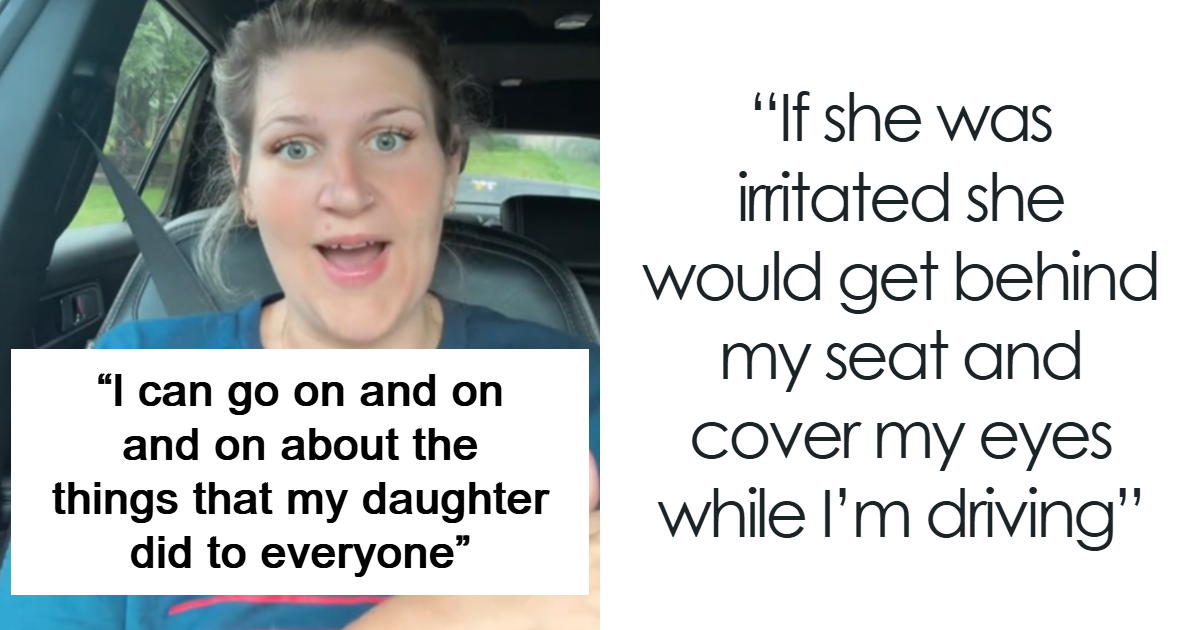
There are parenting dilemmas, and then there are the kind that make the internet drop its coffee, open the comment section, and suddenly become a board-certified expert in family crisis management. The story behind the viral question, “What would you have done?” is one of those painful cases: a mother said she made the heartbreaking decision to remove her young daughter from the home after the child’s mental health struggles began creating safety concerns for the rest of the family.
The phrase “kick out” is doing a lot of dramatic heavy lifting here. It sounds cold, almost cartoonishly cruel, like a parent tossing a backpack onto the porch and changing the locks. But according to the story that circulated online, the situation was more complicated. The mother described repeated dangerous behavior, fear for siblings, and a home environment that had become impossible to manage safely without professional intervention.
That is where the debate exploded. Some people said the mother abandoned her child. Others argued that seeking a safer, more structured placement was the responsible thing to do. And somewhere between those two loud internet camps is the real issue: families dealing with severe mental health and behavioral crises often face impossible choices with too little support, too few resources, and way too many strangers ready to judge them from behind a glowing rectangle.
The Story That Sparked The Debate
The mother’s account described a child whose mental health challenges had gone beyond typical childhood misbehavior. This was not about refusing broccoli, drawing on the wall, or screaming because the blue cup was apparently “emotionally offensive.” The mother said the child’s behavior had created serious safety concerns for siblings, pets, and even during car rides.
That detail matters because many online arguments about parenting skip the most important question: Is everyone in the home safe? A family home is supposed to be a place of care, but it also has to be a place where other children can sleep, eat, study, and exist without constant fear. When one child’s needs become so intense that everyone else is living in survival mode, the problem is no longer just a parenting challenge. It becomes a family safety crisis.
Still, the language around the story caused understandable discomfort. Saying a mother “kicked out” a mentally ill child feels harsh and stigmatizing. A more accurate framing may be that the mother sought removal from the household or professional placement because the situation could no longer be managed safely at home. Words matter. They shape whether readers see a parent as cruel, desperate, responsible, overwhelmed, or all of the above.
Mental Illness Does Not Mean Dangerous
Before going further, let’s clear up something important: most people living with mental health conditions are not dangerous. Mental illness is not a synonym for violence, bad character, or “future villain origin story.” Depression, anxiety, bipolar disorder, trauma-related conditions, psychosis, behavioral disorders, and other mental health concerns can affect people in many different ways. Millions of people manage mental health conditions while going to school, working, parenting, creating art, paying taxes, and pretending they understand their health insurance portal.
The issue in this story is not “mental illness equals danger.” It does not. The issue is that this particular family described behavior that had become unsafe. That distinction matters for SEO, for accuracy, and for basic human decency. Stigma keeps families quiet. Silence delays help. And delayed help can turn a difficult situation into a crisis.
Why A Parent Might Consider Removing A Child From The Home
For most parents, removing a child from the home is not a casual decision. It is not Plan A, Plan B, or even Plan C. It is usually the option that appears after the family has tried therapy, appointments, school meetings, medication discussions, behavior plans, emergency calls, sleepless nights, and the uniquely terrible activity known as “waiting on hold with insurance.”
A parent may consider out-of-home care, hospitalization, respite care, residential treatment, or another structured placement when several concerns overlap:
1. Immediate Safety Risks
If a child’s behavior repeatedly puts siblings, caregivers, pets, or the child themselves in danger, parents may need professional support beyond what a typical household can provide. Love is powerful, but love is not a locked medical unit, a crisis team, a trained behavioral specialist, or a 24-hour support system.
2. Siblings Are Being Harmed Emotionally Or Physically
Parents do not stop being responsible for their other children because one child is in crisis. Siblings may develop anxiety, sleep problems, resentment, guilt, or fear when the home revolves around one child’s unpredictable needs. Protecting siblings is not betrayal. It is part of parenting the whole family.
3. The Parent Is No Longer Able To Function
Caregiver burnout is real. Parents caring for children with complex mental health or behavioral needs may experience exhaustion, isolation, financial strain, relationship stress, and physical health problems. When a caregiver is depleted, the entire household becomes more fragile. A burned-out parent is not a bad parent; they are a human being whose battery has been blinking red for too long.
4. The Child Needs A Level Of Care The Home Cannot Provide
Some children need intensive evaluation, medication management, structured therapy, specialized education, or round-the-clock supervision. In those cases, placement outside the home may not be abandonment. It may be the safest way to get care that is simply not available in a regular living room, no matter how many inspirational throw pillows are involved.
The Difference Between Abandonment And Safety Planning
One reason this story hit such a nerve is that “kicking out” a child sounds like abandonment. But not every removal from a home is abandonment. There is a major difference between pushing a vulnerable child into homelessness and arranging a safer placement with professionals, relatives, social services, or medical support involved.
A responsible safety plan should include professional evaluation, documentation of incidents, communication with doctors or therapists, involvement of appropriate agencies when necessary, and a plan for continued contact if contact is safe and clinically appropriate. It should also consider the child’s dignity. A child in crisis should not be treated as disposable, defective, or beyond hope.
At the same time, parents should not be expected to tolerate endless danger because “family sticks together.” Family sticking together does not mean everyone stands in a burning kitchen admiring the flames. Sometimes sticking together means finding firefighters.
Why The Internet Reacted So Strongly
Stories like this activate several emotional buttons at once. First, people are protective of children, and rightly so. The idea of a young child being removed from a home sounds heartbreaking. Second, people are afraid of mental health stigma. They worry that stories about unsafe behavior will make life harder for people with diagnoses who are not harmful to anyone. Third, many readers carry their own family history into the comment section, often without realizing it.
Someone who grew up feeling abandoned may read the story and see cruelty. Someone who grew up with a dangerous sibling may read it and see relief. Someone who has parented a child in crisis may read it and think, “I know exactly how desperate she must have been.” The same story can look completely different depending on which chair you are sitting in.
That is why “What would you have done?” is not a simple question. The honest answer for most people is: “I hope I never have to find out.”
What Experts Commonly Recommend In Family Mental Health Crises
Reputable mental health organizations in the United States often emphasize the same core ideas for families: seek professional help early, create a crisis plan, set clear boundaries, support the caregiver, protect all children in the home, and avoid trying to manage serious symptoms alone.
Start With Professional Evaluation
When behavior becomes extreme, families need more than internet advice. A licensed mental health professional, pediatrician, psychiatrist, emergency clinician, or crisis team can help determine what level of care is needed. That may include outpatient therapy, intensive outpatient programs, partial hospitalization, inpatient care, family therapy, or residential treatment.
Create A Written Safety Plan
A safety plan can include warning signs, emergency contacts, steps to reduce risk, safe rooms or exits, medication information, school contacts, and what to do if behavior escalates. It should be practical, not decorative. A plan that lives in a notebook nobody opens is basically a scrapbook with anxiety.
Set Boundaries Without Dehumanizing The Child
Boundaries are not punishments. A boundary might be: “We will not allow anyone to hurt siblings,” “We will leave the room if screaming escalates,” or “We will call for help if the situation becomes unsafe.” Clear boundaries help parents respond consistently instead of improvising during chaos.
Support The Siblings
Siblings often become invisible in families focused on crisis. They may need therapy, reassurance, private time with parents, and permission to talk honestly about fear, anger, guilt, or confusion. A sibling should not have to become a tiny therapist in dinosaur pajamas.
Take Caregiver Burnout Seriously
Parents need sleep, emotional support, respite care, peer groups, and sometimes therapy of their own. A parent who asks for help is not failing. They are doing maintenance on the engine that keeps the family moving.
When “Keeping The Child Home” Is Not Automatically The Best Answer
Many people instinctively believe that a child should always stay at home. In an ideal world, every child would have exactly the support they need in the safest, most loving home environment. In the real world, some families face crises that exceed what parents can provide.
Keeping a child home may be harmful if the home has become unsafe, if siblings are being repeatedly traumatized, if caregivers are breaking down, or if the child needs intensive treatment unavailable at home. Out-of-home care should never be used casually, angrily, or as a threat. But when done carefully, it can be part of a treatment plan.
The key question is not, “Did the child leave the home?” The key question is, “Was the child moved into a safer, more therapeutic, more appropriate situation with continued care and accountability?” Those are very different stories.
What Parents Should Avoid
In a crisis, parents may say things they later regret. Fear and exhaustion are not known for their elegant public relations skills. Still, certain approaches can make things worse.
Parents should avoid shaming the child publicly, using diagnosis as an insult, threatening abandonment, ignoring siblings’ needs, refusing professional help, or assuming that love alone will fix a serious condition. They should also avoid minimizing dangerous behavior because they feel guilty. Guilt is understandable, but it is a terrible emergency manager.
Another mistake is waiting until the situation becomes unbearable before asking for support. Early intervention can make a major difference. Schools, pediatricians, therapists, family support organizations, crisis lines, and local mental health agencies can help families understand options before everything hits the ceiling fan.
How To Talk About A Child With Mental Illness Online
One uncomfortable part of viral parenting stories is that the child cannot truly consent to becoming content. Even when parents are desperate for support, children deserve privacy. Mental health struggles, especially in childhood, should not become permanent internet labels.
If parents share their experiences online, they should avoid identifying details, humiliating descriptions, or language that paints the child as a monster. It is possible to say, “Our family experienced serious safety concerns and needed a higher level of care,” without turning the child into the villain of a viral drama.
For readers, the same rule applies: criticize systems more than children. The bigger issue is not one struggling child or one overwhelmed mother. The bigger issue is that many families cannot access affordable, timely, specialized mental health care until a crisis becomes unbearable.
The Bigger Problem: Families Are Often Left Alone
The mother’s story became viral because it is shocking, but the loneliness behind it is painfully common. Families dealing with severe mental health needs often bounce between school meetings, emergency rooms, waitlists, insurance denials, and advice that sounds nice but does not survive contact with reality.
People love to say, “Get help.” Excellent idea. Gold star. But what if the next available appointment is months away? What if insurance will not cover the recommended program? What if the school says the behavior is medical, the doctor says it is behavioral, and the parent is stuck in the middle like a human tennis ball?
This is why the conversation should not stop at whether one mother made the perfect choice. It should ask why families reach the edge before help arrives. Better access to child psychiatrists, family therapy, respite care, crisis stabilization, supportive housing, school-based mental health services, and caregiver education could prevent many families from having to make such devastating decisions under pressure.
So, What Would You Have Done?
The most responsible answer is not a dramatic yes or no. It is: “I would protect everyone, seek professional help, document what was happening, create a safety plan, and choose the least harmful option available.” Sometimes that option may be keeping the child at home with intensive support. Sometimes it may be temporary hospitalization. Sometimes it may be residential treatment. Sometimes it may involve another caregiver or specialized placement.
None of those choices are easy. None should be made for clicks. And none should be judged without understanding the full context.
A parent can love a child deeply and still admit, “I cannot safely manage this alone.” That sentence is not failure. In some cases, it is the beginning of getting help.
Experience-Based Lessons From Families Facing Similar Situations
Families who have lived through severe mental health and behavioral crises often describe the same emotional pattern: confusion first, then hope, then exhaustion, then guilt, then a strange kind of clarity. At first, many parents assume the situation is a phase. They try sticker charts, calmer voices, stricter rules, softer rules, different dinners, earlier bedtimes, later bedtimes, reward systems, consequences, and the sacred parental ritual of Googling symptoms at 1:17 a.m. while whispering, “Surely this is fixable.”
Then comes the realization that ordinary parenting tools are not enough. A parent may notice that the entire household has started orbiting one child’s crisis. Siblings learn to read the mood of the room before speaking. Parents stop inviting friends over. Family outings become military-level operations. Everyone becomes alert, careful, and tired. The home still has walls, furniture, and cereal boxes, but it no longer feels peaceful.
One common experience is the shame of asking for help. Parents may worry that professionals will blame them, relatives will judge them, or strangers will accuse them of giving up. Some families hide the problem for years because they do not want the child labeled. Others keep hoping the next appointment, next medication adjustment, next school plan, or next therapist will finally turn the corner. Sometimes it does. Sometimes it does not.
Another experience is learning that compassion and boundaries have to travel together. Compassion says, “This child is suffering and deserves care.” Boundaries say, “Other people in the home deserve safety too.” At first, those ideas may feel like enemies. Over time, many families discover they are actually partners. Without compassion, boundaries become cold. Without boundaries, compassion becomes chaos in a cardigan.
Parents who have chosen out-of-home treatment often describe grief, even when they believe it was necessary. They may feel relief and heartbreak in the same breath. Relief because the house is calmer. Heartbreak because no parent dreams of needing professionals to do what they wished they could do at home. They may miss the child fiercely while also sleeping through the night for the first time in months. That emotional mix can be confusing, but it is normal.
Siblings also carry lasting lessons. Some feel safer after intervention. Some feel guilty for feeling safer. Some need help understanding that their sibling’s condition was not their fault and that needing protection does not mean they stopped loving them. In strong recovery stories, parents make space for siblings to speak honestly without forcing them to perform instant forgiveness or emotional maturity beyond their years.
The biggest lesson is that crisis decisions should not be made in isolation. Families need teams: doctors, therapists, school staff, crisis workers, relatives, support groups, and sometimes legal or social service guidance. No parent should have to become a psychiatrist, case manager, security guard, insurance negotiator, and emotional shock absorber all at once. That is not parenting; that is a one-person government department with snacks.
In the end, the question “What would you have done?” may be less useful than “What support would have made this family safer sooner?” That question moves the conversation away from blame and toward solutions. It reminds us that children in crisis need care, siblings need protection, parents need backup, and families need systems that show up before everything falls apart.
Note
This article is for informational and editorial purposes only. It is not a substitute for professional medical, mental health, legal, or emergency advice. If a child, caregiver, or family member is in immediate danger, contact local emergency services or a qualified crisis professional in your area.