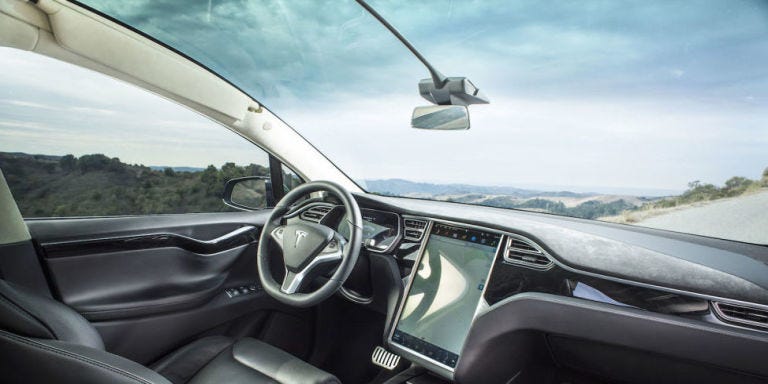
Your new car can see blind spots, warn you about drifting, slam the brakes before you hit a stopped SUV, and beep with the emotional intensity of a microwave that has finished popcorn. So naturally, you might expect your car insurance bill to reward you with a polite little discount. After all, safer car equals fewer crashes, fewer crashes equal fewer claims, and fewer claims equal cheaper insurance. That sounds logical enough to put on a motivational poster.
Unfortunately, auto insurance is not priced by motivational poster. It is priced by risk models, repair bills, claim severity, state regulations, litigation trends, vehicle theft, medical costs, parts availability, and the quiet terror of replacing a bumper that now contains more technology than a 1990s office building.
Advanced driver assistance systems, commonly called ADAS, really can reduce certain crashes. Automatic emergency braking, blind spot monitoring, lane keeping support, rear cross-traffic alerts, adaptive headlights, and pedestrian detection are not gimmicks. They are useful safety tools, and federal regulators have been moving toward broader use of automatic emergency braking on new cars and light trucks. But the big surprise for many drivers is this: the same safety technology that helps prevent a crash can make the crashes that still happen much more expensive.
The Promise of Driver Safety Tech
Driver safety technology has spread quickly across the American vehicle market. What used to be reserved for luxury models is now common on family crossovers, compact sedans, pickup trucks, and even entry-level trims. Features such as forward collision warning, automatic emergency braking, lane departure warning, lane keeping assist, adaptive cruise control, blind spot detection, parking sensors, backup cameras, and surround-view cameras are now part of the everyday driving experience.
In plain English, ADAS uses cameras, radar, lidar, ultrasonic sensors, software, and control modules to help the vehicle detect danger. If you begin to drift out of your lane, it may nudge the steering wheel. If traffic ahead suddenly stops, it may warn you or brake. If a cyclist appears near the curb, the system may recognize the risk before your coffee-deprived brain does. That is good news for everyone except maybe your ego.
Research from safety organizations and insurance data groups has found real-world benefits from crash avoidance systems. Front crash prevention, lane departure prevention, blind spot monitoring, and rear crash prevention have all shown reductions in certain types of crashes. More recent insurance data also suggests that when multiple systems are bundled together, the safety benefits can stack up. In other words, the technology is not snake oil. It works, especially when drivers understand it, keep it active, and avoid treating it like a robot chauffeur.
So Why Aren’t Insurance Discounts Huge?
The short answer is that insurance companies do not only care about whether a crash happens. They care about what the crash costs when it does happen. A lower crash frequency can be offset by higher claim severity. That is the central puzzle behind ADAS and car insurance premiums.
Imagine two vehicles. Car A has no fancy sensors and gets into a minor front-end collision. The repair shop replaces a bumper cover, checks the lights, paints a panel, and sends the owner home. Car B has adaptive cruise control radar hidden behind the bumper, a forward camera behind the windshield, parking sensors, wiring harnesses, brackets, and software that must be calibrated after the repair. The same tap in traffic can turn into a diagnostic-and-calibration festival. There may be no balloons, but there will be an invoice.
That is why advanced safety technology does not automatically translate into cheaper car insurance. Insurers must weigh two opposing forces: fewer accidents versus costlier repairs. If the accident reduction is strong enough, premiums may eventually reflect that. But if the repairs are expensive, inconsistent, slow, or difficult to price accurately, the discount can shrink or disappear.
The Repair-Cost Trap: Sensors Are Not Cheap Decorations
Modern bumpers are not just plastic shields anymore. They are sensor neighborhoods. A parking-lot bump can affect radar sensors, ultrasonic sensors, cameras, mounting brackets, wiring, and software alignment. A windshield replacement may require camera recalibration. A side mirror may contain blind spot monitoring components. Even small bodywork can become technical work.
AAA has reported that vehicles equipped with ADAS can cost significantly more to repair after minor collisions because sensors and calibration add cost beyond ordinary bodywork. Its research has shown that damaged ADAS components can add hundreds or even thousands of dollars to a repair, and a windshield replacement on a camera-equipped vehicle can be far more expensive than replacing ordinary glass.
This matters because insurers price policies based on expected losses. If a car’s advanced safety systems reduce the number of claims by 10 percent but increase the average repair cost by 20 percent, the math is not exactly doing cartwheels in the policyholder’s favor. A safer car may still be an expensive car to insure.
Calibration: The Invisible Repair That Still Sends a Bill
One of the least understood costs of driver safety tech is calibration. After certain repairs, sensors and cameras must be adjusted so the vehicle understands the road correctly. If a camera is even slightly misaligned, lane keeping assist or automatic emergency braking may not behave as intended. That is not a place where “close enough” belongs. Close enough is fine for folding laundry. It is not fine for a car deciding when to brake.
Calibration can be static, dynamic, or both. Static calibration may require special targets, controlled lighting, a level floor, and manufacturer-specific procedures. Dynamic calibration may require driving the vehicle under particular road conditions so the system can relearn its environment. Some repairs also require pre-scans and post-scans, which check electronic systems before and after repair work.
For body shops, this means more equipment, more training, more documentation, and more cycle time. For insurers, it means claims are harder to estimate. For drivers, it means a “simple” repair may take longer and cost more than expected. Your car may look fixed before it is electronically ready to return to duty.
Insurance Discounts Depend on Data, Not Window Stickers
Many drivers assume that if their vehicle has automatic emergency braking or lane assist, the insurer automatically knows and applies a discount. That is not always how it works. Insurers need reliable data about the exact vehicle, trim, optional packages, software versions, feature combinations, and whether those systems are actually active and effective.
This is complicated because ADAS features vary widely. One automaker’s “safety package” may include forward collision warning but not pedestrian detection. Another may bundle adaptive cruise control with lane centering. Some systems work only at certain speeds. Some are camera-based; others use radar or multiple sensors. Some drivers turn annoying alerts off. Some features improve dramatically from one model year to the next.
Insurance pricing works best when insurers can connect a specific feature to a measurable reduction in losses. If the data is incomplete, inconsistent, or too new, insurers may hesitate to offer a meaningful discount. A car may be safer in theory but still hard to price in practice.
Not All Safety Tech Prevents the Same Kind of Claim
Another reason discounts can disappoint is that different technologies affect different kinds of claims. Automatic emergency braking may reduce rear-end crashes. Blind spot monitoring may reduce lane-change crashes. Backup cameras and rear cross-traffic alerts may reduce backing crashes. Lane departure prevention may help with run-off-road events. But your insurance policy includes several coverage types, and not every safety feature affects every coverage equally.
Collision coverage pays for damage to your vehicle after a crash. Comprehensive coverage deals with theft, vandalism, hail, fire, falling branches, animal strikes, and other non-collision losses. Liability coverage pays for damage or injuries you cause to others. Medical payments, personal injury protection, and uninsured motorist coverage may involve bodily injury costs. ADAS may help with some of these risks, but it does not stop hail, theft, floods, lawsuits, or the mysterious shopping cart that attacks your door in a grocery-store parking lot.
That means even a truly effective crash-prevention system may only influence part of your premium. If your state has high medical costs, high litigation rates, severe weather exposure, high theft, dense traffic, or expensive repair labor, those factors can overwhelm a small safety-tech discount.
New Cars Are Safer, But Also More Expensive to Replace
Vehicle prices also matter. Many ADAS-equipped vehicles are newer, and newer vehicles usually cost more to repair or replace. If your car is totaled, the insurer may owe more because the vehicle has a higher market value. If replacement parts are specialized, delayed, or tied to complex electronics, claim costs rise again.
The U.S. vehicle fleet has also been aging, with many Americans keeping cars longer because of high new-vehicle prices, interest rates, and general affordability pressure. That creates a mixed insurance environment. Older vehicles may lack some newer safety systems, but newer vehicles can be packed with electronics. Insurers are pricing a road full of both: older cars that may be more vulnerable in crashes and newer cars that may be safer but costlier to repair.
This is one reason the phrase “average repair cost” is becoming less useful. The average vehicle is not very average anymore. A ten-year-old compact sedan, a new electric SUV, a hybrid crossover, and a full-size pickup with sensor-heavy bumpers all produce different claim patterns.
Partial Automation Is Not the Same as Crash Avoidance
Here is where marketing can get messy. Some drivers hear terms like “driver assist,” “autopilot,” “hands-free,” or “semi-autonomous” and assume the car is doing most of the work. But current consumer vehicles are not truly driverless. The human driver remains responsible for supervision, steering, braking, and decision-making.
Crash avoidance features such as automatic emergency braking are different from partial automation features such as adaptive cruise control combined with lane centering. The former may intervene in a dangerous moment. The latter may help with speed and lane position but can also create overconfidence if the driver stops paying attention. Insurers know this distinction matters.
A system that prevents a rear-end crash is easier to value than a convenience feature that may reduce fatigue but also tempt drivers to glance at their phone, eat tacos, or conduct a deep philosophical inspection of the dashboard screen. Safety technology helps most when drivers treat it as backup, not permission to mentally leave the vehicle.
Why Your Neighbor Got a Discount and You Didn’t
Insurance pricing is personal and local. Your neighbor may get a discount because their insurer has a specific rating plan for their vehicle’s safety equipment, or because their state allows certain rating factors, or because their carrier has better ADAS data. You may not get the same benefit even if your car feels equally high-tech.
Several factors can affect whether driver safety tech lowers your car insurance premium:
1. The exact vehicle and trim
A base model, mid-level trim, and premium trim may have different sensors. Insurers may not treat them the same.
2. The insurer’s data
Some companies have more detailed vehicle-feature data than others. Others may rely heavily on VIN data, which does not always reveal every optional package.
3. Your state’s insurance rules
State regulators influence how insurers file rates and apply discounts. A discount available in one state may not exist in another.
4. Repair costs in your area
Labor rates, parts delays, calibration availability, and shop capacity vary by region. A sensor repair in one city may cost more than the same repair elsewhere.
5. Your overall risk profile
Driving history, mileage, garaging ZIP code, claims history, coverage limits, deductibles, vehicle use, and household drivers can matter more than the safety package.
Can Driver Safety Tech Ever Lower Insurance Costs?
Yes, it can. The point is not that ADAS is useless for insurance. The point is that it is not a magic coupon taped to the windshield.
Some insurers do offer discounts for certain safety features. Some loss-cost studies suggest that ADAS-equipped vehicles can reduce claim frequency and overall loss costs in certain coverages. As more vehicles include standardized systems and more claims data becomes available, insurers may become more comfortable pricing those benefits. The spread of automatic emergency braking may be especially important because a standard, widely deployed technology is easier to study than a scattered menu of optional packages.
Over time, better data could make ADAS discounts more accurate. Insurers may eventually distinguish between vehicles with basic warning systems and vehicles with stronger intervention systems. They may also use telematics, connected-car data, and repair analytics to understand whether a driver keeps features active and how the vehicle performs in real life.
But even then, cheaper insurance is not guaranteed. If repair complexity continues rising, if parts remain expensive, if medical claims grow, or if vehicles become more costly to replace, safety savings may be absorbed by other cost pressures.
How Drivers Can Actually Save Money
If you are shopping for a car and hoping driver safety tech will slash your insurance bill, do not guess. Get insurance quotes before buying. Compare the exact year, make, model, trim, and VIN if possible. A car that looks affordable on the dealer lot may surprise you once the insurer sees its repair profile.
Also ask your insurer directly about discounts for automatic emergency braking, anti-theft systems, usage-based insurance, low mileage, bundling, defensive driving courses, good student discounts, paperless billing, and pay-in-full options. The boring discounts may save more than the glamorous ones. Nobody brags at a barbecue about paperless billing, but money saved is money saved.
You can also manage costs by choosing a deductible you can comfortably afford, keeping a clean driving record, avoiding unnecessary claims, maintaining good tires and brakes, and learning how your safety systems work. Read the owner’s manual. Yes, the thick book in the glove box that looks like it was designed to stop a door in a hurricane. It explains when systems work, when they do not, and how weather, dirt, poor lane markings, sun glare, or blocked sensors can affect performance.
Real-World Experiences: When Safety Tech Meets the Insurance Bill
Many drivers discover the insurance reality of ADAS only after a small incident. Picture a commuter with a newer SUV that has adaptive cruise control, lane keeping assist, blind spot monitoring, rear parking sensors, and a camera tucked neatly behind the windshield. One morning, a loose stone cracks the glass. In an older car, the repair might have been a basic windshield replacement. In the newer SUV, the glass is tied to a forward-facing camera. The shop replaces the windshield, then recalibrates the camera so automatic emergency braking and lane support can function correctly. The driver is grateful the technology exists, but less thrilled when the bill looks like the windshield came with a subscription to NASA.
Another common experience happens after a low-speed parking mishap. A driver backs into a post or clips the corner of a garage. The damage looks minor: scratched bumper, maybe a cracked plastic piece, nothing dramatic. Then the estimate arrives. Behind that bumper are sensors for parking assist, rear cross-traffic alert, or blind spot detection. The repair may require replacement parts, paint work, scanning, calibration, and extra labor. The car never looked badly hurt, but the claim becomes expensive because modern vehicles hide expensive components in vulnerable places.
Some drivers also notice that safety systems do not prevent every ordinary claim. A car with excellent crash avoidance can still be damaged by hail. It can still be stolen. It can still be hit while parked. A deer will not politely check whether your SUV has pedestrian detection before leaping into the road. Comprehensive claims, weather losses, theft rates, and local accident patterns still matter. This is why a driver may own a very safe vehicle and still see premiums rise after moving to a dense urban ZIP code, adding a teen driver, or living in a state with high claim costs.
There is also the learning curve. Some drivers turn off lane departure warnings because they beep too often. Others dislike automatic braking because it feels abrupt. Some do not understand that adaptive cruise control is not a substitute for watching traffic. When drivers misuse or disable systems, insurers cannot assume the technology delivers full safety benefits. The car may be capable, but the human is still part of the operating system. And unlike software, humans cannot always be updated overnight.
The best experience comes from treating driver safety tech as a co-pilot, not a chauffeur. Keep sensors clean. Repair cracks and damage promptly. Ask the repair shop whether calibration is required. Save documentation showing that scans and calibrations were completed. When buying a car, ask not only “What safety features does it have?” but also “What does it cost to repair them?” That second question may not sound exciting, but it can protect your wallet from a very modern surprise.
Conclusion: Safety Tech Helps, But Insurance Math Is Complicated
Driver safety technology is one of the most important improvements in modern vehicles. Automatic emergency braking, blind spot detection, lane support, and other systems can reduce crashes and make roads safer. That is worth celebrating.
But car insurance premiums are not based on good intentions. They are based on expected costs. If advanced safety systems reduce some crashes but make remaining claims more expensive, the premium impact may be smaller than drivers expect. Add in state rules, medical costs, theft, weather, repair labor, parts delays, calibration requirements, and vehicle values, and the simple promise of “safer car, cheaper insurance” becomes much less simple.
The smartest move is to value safety tech for what it does best: helping prevent crashes and injuries. Consider any insurance discount a welcome bonus, not a guarantee. Before buying a high-tech car, compare quotes, understand repair costs, and ask your insurer how specific features affect your rate. Your vehicle may be watching the road, but your budget still needs you behind the wheel.