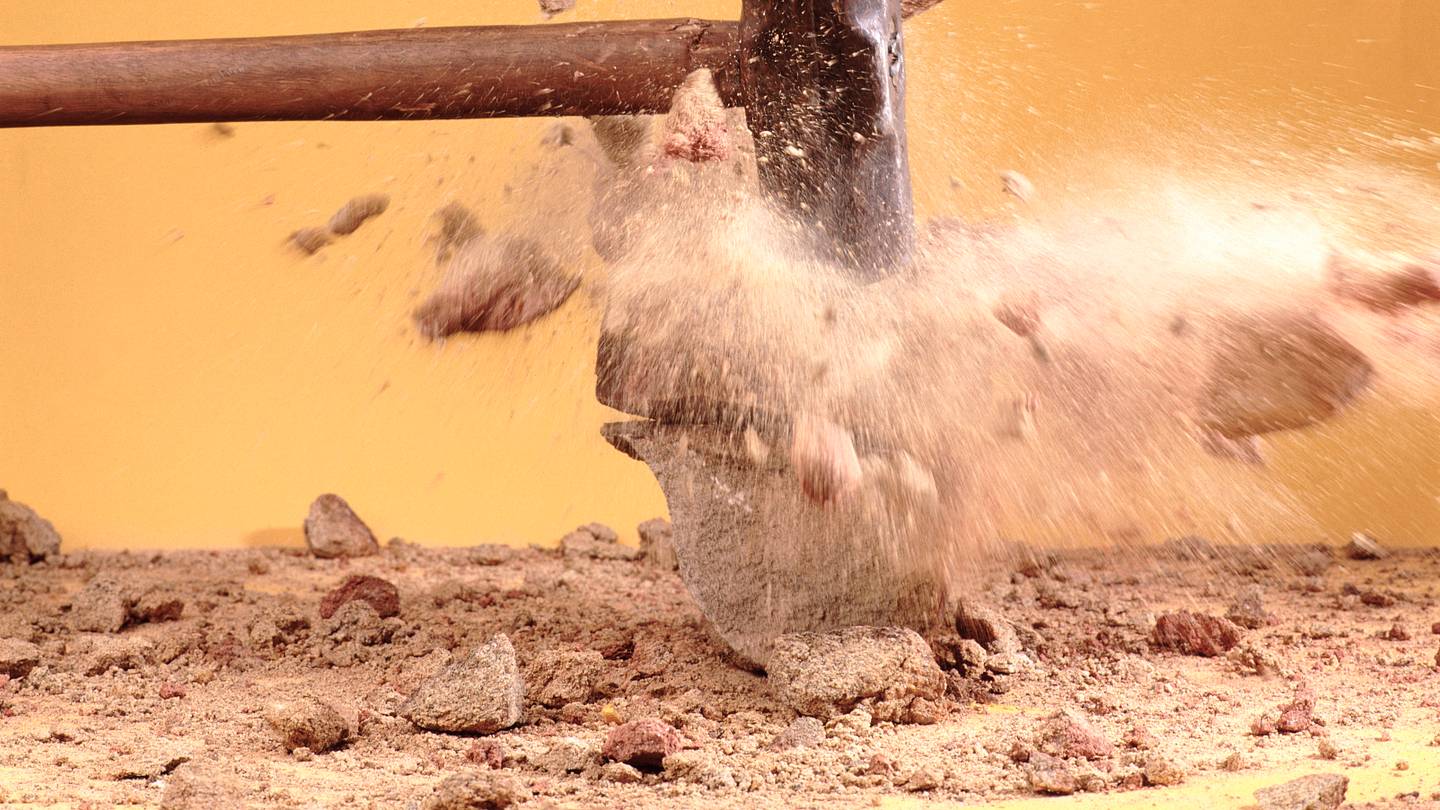
At first glance, the word sledgehammer sounds like it should involve winter transportation, a team of huskies, and possibly someone yelling, “Mush!” But no, a sledgehammer is not a hammer designed for repairing sleds, building sleds, or dramatically smashing sleds in a snowy rage. The name comes from a much older meaning of the word sledge: a heavy hammer or mallet used for striking.
That means the word sledgehammer is one of those delightful English compounds that becomes clearer the further back you travel. Long before modern hardware stores lined up steel-headed tools by weight and handle type, sledge already meant a large striking tool. Later, English speakers paired it with hammer, creating a word that is technically a bit redundant but wonderfully clear. In simple terms, a sledgehammer is called a sledgehammer because sledge once meant “heavy hammer,” and hammer made the meaning impossible to miss.
The Short Answer: “Sledge” Already Meant a Heavy Hammer
The most important thing to know is that there are two different words spelled sledge. One refers to a sled or sleigh-like vehicle. The other refers to a heavy striking tool. The sledge in sledgehammer belongs to the second family.
Historically, sledge came through Middle English as slegge, from Old English slecg, meaning a hammer or mallet. It is related to old Germanic words connected with striking, beating, or delivering a blow. That is why the word has linguistic cousins tied to forceful action. The tool’s name is not poetic; it is blunt, muscular, and refreshingly literal.
So when someone asks, “Why is it called a sledgehammer?” the best answer is: because sledge was already a name for a large hammer, and sledgehammer doubled down on the idea. English looked at a huge hammer and said, “Let’s call it a heavy-hammer hammer.” Subtle? Not exactly. Useful? Absolutely.
What Does “Sledge” Mean in Sledgehammer?
In the tool sense, sledge means a large, heavy hammer, usually one that requires two hands. Unlike a claw hammer, which is built for driving and removing nails, a sledgehammer is made for heavy impact. It has a long handle and a heavy head, giving the user more swing, more momentum, and more force.
The word sledge is also connected to Old Norse and Middle Dutch forms that referred to similar heavy striking tools. That matters because it shows the word was not a random nickname that appeared one day in a workshop. It grew out of a long Germanic language tradition in which words for striking, blows, and heavy tools were closely related.
This is also why a sledgehammer sounds so satisfying as a word. It has weight built into the language. You do not need to see the tool to feel its meaning. The word lands with a thud.
Is a Sledgehammer Related to a Snow Sled?
No. This is the fun twist. The sledge in sledgehammer is not the same word as the sledge that means a sled. They look alike today, but they come from different origins.
The sled-related sledge refers to a vehicle that slides over snow or ice. The hammer-related sledge refers to a striking tool. Same spelling, different family tree. English is full of these little traps, which is why one language can give us both jam for fruit spread and jam for a traffic nightmare. Context does the heavy lifting.
So a sledgehammer is not a “sled hammer.” It is a hammer whose name preserves an older tool word. If anything, the question is not why it is called a sledgehammer, but why English kept both meanings under the same spelling and then walked away whistling like nothing strange had happened.
When Did the Word “Sledgehammer” Appear?
The word sledgehammer appears to have been in use by the late 15th century. Earlier English had related words for heavy hammers and mallets, but the compound sledgehammer gave speakers a more specific and unmistakable term.
At the time, heavy hammers were essential in trades such as blacksmithing, masonry, mining, construction, and metalworking. A smith might use a large hammer to shape hot iron. A stone worker might use one to break rock or drive wedges. A laborer might use one when a job required force that a smaller hammer could not deliver.
The tool’s name matched the work. A sledgehammer was not delicate. It was not designed for tapping picture hooks into drywall or assembling a flat-pack bookshelf with three mysterious leftover screws. It was built for serious impact, the kind of tool that says, “This problem and I are about to have a very brief conversation.”
Why Add “Hammer” If “Sledge” Already Meant Hammer?
Because language is practical, not always efficient. English often uses compounds to make meaning clearer, even when one part of the compound overlaps with the other. This is sometimes called redundancy or pleonasm. In everyday terms, it is the same reason people say PIN number, even though the “N” already stands for number, or free gift, even though a gift should not come with an invoice.
The word sledgehammer works because it removes doubt. Over time, as sledge also existed as a word for a sled, adding hammer helped identify exactly which kind of sledge was meant. Nobody wants to hear “bring me the sledge” on a job site and wonder whether they should return with a demolition tool or a winter vehicle.
In this way, sledgehammer is a practical word. It tells you the category and the character of the tool. It is a hammer, yes, but not just any hammer. It is the big one. The serious one. The one that makes nearby objects reconsider their life choices.
What Makes a Sledgehammer Different From a Regular Hammer?
A regular hammer, such as a claw hammer, is usually designed for precision: driving nails, pulling nails, adjusting small parts, and handling everyday carpentry tasks. A sledgehammer is designed for force. It typically has a much heavier head, a longer handle, and a face built for delivering broad, powerful blows.
Modern sledgehammers commonly come in different head weights, such as 6, 8, 10, 12, 16, or 20 pounds. Lighter versions may be used for controlled work, while heavier ones are reserved for bigger jobs. Handles may be wood, fiberglass, or steel, each with its own advantages. Wood has a traditional feel and absorbs some shock. Fiberglass is durable and resistant to weather. Steel is strong but can transfer more vibration unless designed with a cushioned grip.
There are also smaller cousins of the sledgehammer, such as the drilling hammer or engineer’s hammer. These tools have shorter handles and lighter heads, making them useful for tighter spaces or one-handed tasks. But the classic sledgehammer is the two-handed heavyweight of the hammer family.
How Sledgehammers Were Used Historically
For centuries, sledgehammers were associated with hard physical work. In blacksmithing, heavy hammers helped shape heated metal on an anvil. In quarrying and stonework, they were used with wedges to split stone. In construction and demolition, they helped break apart masonry, concrete, brick, and other stubborn materials.
Before powered demolition tools became common, the sledgehammer was one of the simplest ways to apply human strength to a solid object. It required no fuel, no battery, no extension cord, and no software update. It was just mass, leverage, and gravity working together. In a world before jackhammers and hydraulic breakers, that made it incredibly valuable.
The sledgehammer also became a symbol of labor. It represents effort, grit, and direct action. When people describe a “sledgehammer approach,” they usually mean something forceful and unsubtle. That metaphor comes naturally from the tool’s physical character. A sledgehammer does not negotiate with a wall; it makes a point.
The Sledgehammer as a Metaphor
Because the tool is so strongly associated with impact, English speakers use sledgehammer figuratively. A “sledgehammer blow” can mean shocking news. A “sledgehammer tactic” can mean a harsh or overly aggressive method. The phrase “using a sledgehammer to crack a nut” means using far more force than necessary.
This metaphor works because everyone understands the mismatch. A nut needs a nutcracker, not a demolition tool. The image is funny because it is excessive. It captures a very human habit: sometimes we bring maximum force to a problem that required patience, finesse, or maybe just reading the instructions first.
That figurative meaning has helped keep the word alive beyond workshops and construction sites. You can find sledgehammers in politics, sports commentary, business writing, movie reviews, and everyday conversation. The tool became a linguistic shortcut for power without subtlety.
Why the Name Still Fits Today
The name sledgehammer has survived because it is accurate, memorable, and satisfyingly physical. It sounds like what it is. You would never confuse a sledgehammer with a jewelry hammer, a tack hammer, or a rubber mallet. The word has the same blunt confidence as the tool.
It also survives because the basic design has remained remarkably simple. Materials have improved, handles have changed, and manufacturing has become more precise, but the idea is ancient: attach a heavy head to a handle and use controlled force to strike. The physics is not trendy. It does not need a subscription plan.
In a world full of smart devices, digital tools, and gadgets that require charging before they can disappoint you, the sledgehammer remains wonderfully direct. Pick it up, respect its weight, and understand its purpose. The name has lasted because the tool has lasted.
Common Misunderstandings About the Word “Sledgehammer”
Misunderstanding 1: It Means a Hammer for Sledges
This is the most common guess, and it is easy to understand. Since sledge can mean a sled, people assume the word refers to a hammer used on sleds. But the tool name comes from the older hammer-related meaning of sledge, not the snow vehicle.
Misunderstanding 2: It Was Named After Its Ability to “Sled” Through Objects
Creative, but no. The name is not based on sliding, gliding, or moving smoothly. A sledgehammer is about striking, not sledding. In fact, “smooth” is probably the last word most people would use after seeing one meet a concrete block.
Misunderstanding 3: It Is Just Another Name for Any Big Hammer
Not quite. While people sometimes use the term loosely, a true sledgehammer usually refers to a large, heavy hammer with a long handle, often used with two hands. Smaller heavy hammers, such as club hammers or drilling hammers, are related but not identical.
What the Word Teaches Us About English
The word sledgehammer is a small but excellent example of how English preserves history. A modern speaker may not know Old English, Middle English, or Germanic roots, but those roots are still hiding inside familiar words. Every time someone says sledgehammer, they are using a linguistic fossil from an older world of smiths, stone workers, and hand tools.
It also shows how words become clearer through repetition. Technically, if sledge already meant a hammer, adding hammer was unnecessary. Practically, it made the word stronger. Language is not a machine that removes every extra part. It is a workshop, and sometimes the tool that works best is not the sleekest one.
That is part of the charm. Sledgehammer is redundant in the same way a big sign reading “GIANT ROCK” is redundant when placed next to a giant rock. Nobody is confused, and that is the point.
Real-World Experience: What a Sledgehammer Teaches You
The first thing you notice about a sledgehammer is not the name. It is the weight. Even before it moves, the tool announces itself. Pick one up, and you immediately understand why the word has become a metaphor for force. It does not feel like a normal household hammer that lives quietly in a drawer next to picture hooks and old batteries. It feels like a tool with a job description written in capital letters.
Anyone who has spent time around renovation work, landscaping, or a busy workshop knows that a sledgehammer has a strange way of making people serious. Conversation changes when one appears. People step back. Someone checks the surrounding area. Someone else suddenly remembers they have safety glasses in the truck. This is not fear; it is respect. A sledgehammer is simple, but simple does not mean casual.
One memorable experience with a sledgehammer often comes during home improvement. Maybe an old concrete footing needs to be broken down, or a stubborn post base needs persuasion. You learn quickly that the tool is not only about strength. Good work with a sledgehammer depends on balance, timing, spacing, and control. Swinging wildly is exhausting and ineffective. A controlled motion does more than a dramatic one. The lesson is almost philosophical: force works best when it has direction.
That lesson also explains why the name fits so well. A sledgehammer is not just “big.” It is purpose-built. The long handle gives leverage. The heavy head stores momentum. The broad face spreads impact. Every part of it supports the same idea: deliver a serious blow where serious force is needed. That is why the word has stayed attached to the tool for so long. The name feels earned.
There is also something oddly satisfying about the honesty of a sledgehammer. Many tools hide their complexity inside motors, gears, chips, or settings menus. A sledgehammer has no hidden mode. There is no “premium version.” It does not ask for Wi-Fi. It simply waits for a person to use it carefully and appropriately. That simplicity makes the tool feel almost ancient, even when it has a modern fiberglass handle and a polished steel head.
In language, the same honesty applies. The word sledgehammer sounds heavy because its history is heavy. It comes from words connected with striking, and it describes a tool built to strike. The experience of using or even lifting one makes the etymology easier to remember. You do not need a lecture in historical linguistics to feel the connection between the word and the object. The name has impact because the tool has impact.
And maybe that is the best reason the word has lasted. Some names fade because they no longer match the thing they describe. Sledgehammer still fits perfectly. It is old, blunt, practical, and a little excessive. In other words, it is exactly right.
Conclusion
A sledgehammer is called a sledgehammer because the word sledge once meant a heavy hammer or mallet. It comes from older English and Germanic roots connected with striking and blows, not from the word for a snow sled. Over time, English speakers added hammer to make the meaning unmistakable, creating a compound that is technically redundant but highly useful.
The name has survived because it captures the tool perfectly. A sledgehammer is not subtle, decorative, or fussy. It is a heavy striking tool designed for jobs that require force. Its name carries centuries of practical work, from blacksmith shops and stone yards to modern construction sites and renovation projects. It is one of those rare words that feels as solid as the object it names.