Every time women talk about harassment, street safety, uncomfortable encounters, or the exhausting mental math of getting home safely, someone inevitably storms into the conversation wearing a cape made entirely of defensiveness and says, “Not all men.” Technically, yes. Not all men. Also, not all mushrooms are poisonous, but most people still prefer to know what they are eating before turning dinner into a medical documentary.
The phrase “not all men” has become one of the internet’s most famous conversation derailers. It often appears when women discuss patterns of behavior that make them feel unsafe: being followed, catcalled, pressured, dismissed, touched without consent, talked over, or treated as if their caution is an insult. Instead of responding with empathy, some listeners respond as if the woman has personally accused every man on Earth, including their dentist, their uncle, and the guy who says “let’s circle back” in every office meeting.
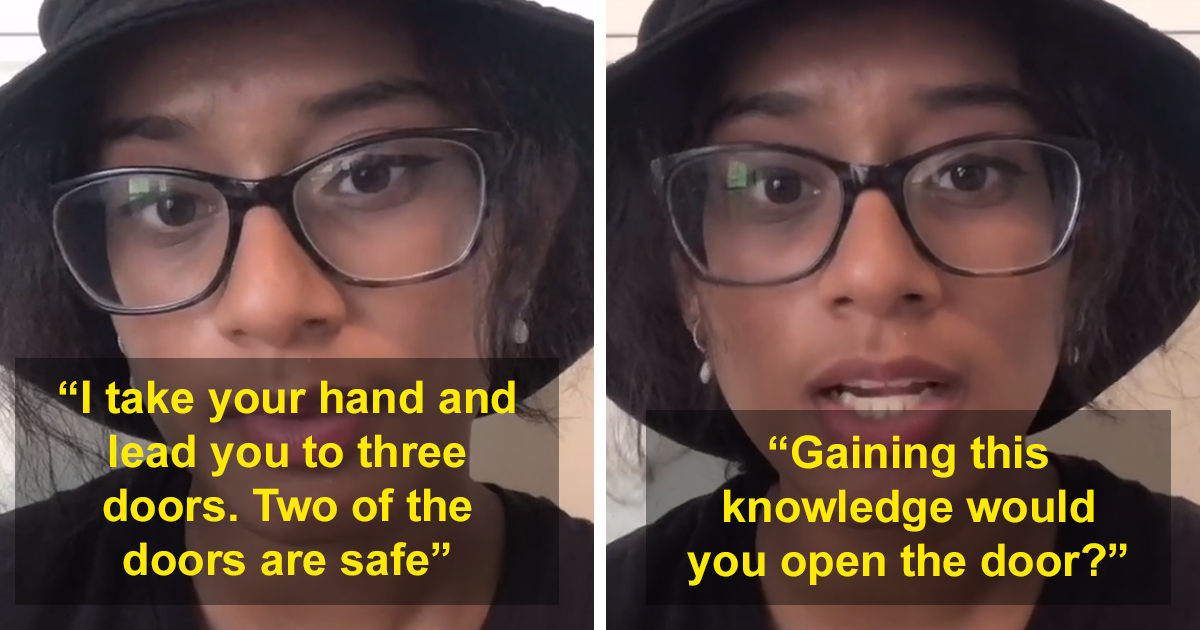
That is why a powerful analogy shared by content creator Prithika Chowdhury resonated so widely. Her point was not that every man is dangerous. Her point was that enough men have behaved badly that women often feel forced to be cautious around men in general. The issue is not universal guilt; it is reasonable risk assessment. And once you understand that distinction, the entire debate becomes much less confusing.
What the “Not All Men” Argument Misses
When women say they are cautious around men, they usually are not saying, “Every man is a villain.” They are saying, “I cannot instantly know which man is safe.” That difference matters. It is the same logic people use in everyday life without taking it personally. We lock doors even though not every person is a burglar. We check reviews even though not every restaurant serves suspicious soup. We wear seat belts even though not every drive ends badly. Nobody screams, “Not all roads!” at the windshield.
The “not all men” response focuses on male innocence instead of female experience. It asks women to pause a conversation about safety in order to reassure men that they are still good people. That is emotionally upside down. If someone says, “I have been bitten by dogs before, so I am careful around unfamiliar dogs,” the helpful response is not, “My dog would never!” The helpful response is, “That makes sense. How can I make you feel comfortable?”
This is the heart of the analogy: women’s caution is not prejudice for sport. It is often learned behavior. It comes from personal experiences, stories from friends, news reports, public health data, workplace harassment policies, and the quiet little survival habits women trade like secret recipes: text me when you get home, hold your keys ready, don’t wear both earbuds, park near the light, pretend you are on the phone, avoid that guy at the party. These habits do not appear out of thin air. Nobody wakes up one morning and thinks, “You know what would be fun? Living like I’m in a low-budget spy movie.”
The Analogy That Makes the Point Click
The most effective way to explain “not all men” is this: imagine a bowl of candy. Most pieces are fine. A few might make you seriously sick. You cannot tell which ones are safe just by looking. Would you casually grab a handful because “not all candy”? Probably not. You would be cautious, even if most of the candy did nothing wrong except sit there looking colorful and innocent.
That is the logic many women apply to unfamiliar men. The problem is not that every man is a threat. The problem is that women are expected to identify the unsafe ones instantly, politely, and without hurting anyone’s feelings. That is an impossible job. Human beings do not walk around with warning labels. If they did, dating apps would be much shorter and family dinners would be much more interesting.
This analogy works because it shifts the conversation from accusation to uncertainty. Women are not claiming supernatural knowledge about every man’s character. They are responding to the fact that the cost of guessing wrong can be frighteningly high. A man may feel offended by suspicion; a woman may fear being harmed, trapped, followed, or humiliated. Those are not equal burdens.
In other words, “not all men” may be factually true, but it is often socially useless. It does not reduce harm. It does not teach better behavior. It does not support survivors. It does not challenge harassment. It only asks for reassurance. And reassurance is not the same thing as accountability.
Why Women’s Caution Is Not an Attack
Some men hear women’s safety concerns and feel personally blamed. That reaction is understandable on a human level, but it is not the end of the conversation. Feeling uncomfortable is not the same as being unfairly harmed. Sometimes discomfort is simply the price of learning something that does not center you.
Women’s caution is often built from repeated patterns. A woman may have been followed in a parking lot, interrupted aggressively at work, pressured on a date, sent unwanted messages online, or told she was “overreacting” when she tried to set a boundary. One event might be dismissed as random. Ten events become a pattern. A lifetime of small calculations becomes a worldview.
That does not mean women hate men. Many women love men, work with men, raise sons, admire fathers, marry husbands, trust brothers, and laugh at dad jokes even when the joke clearly should have been retired in 1998. But loving men in general does not require pretending unsafe behavior does not exist. Care and caution can coexist.
What Data Adds to the Conversation
Statistics do not capture every personal story, but they help explain why this conversation keeps returning. U.S. public health and safety organizations have long documented that sexual harassment, sexual violence, stalking, and intimate partner violence affect large numbers of people, with women facing significant risks in public, private, workplace, and online settings.
CDC materials describe sexual violence and intimate partner violence as serious public health problems. Pew Research Center has reported that women who experience online harassment are more likely than men to say it happened because of their gender. RAINN and NSVRC publish data showing the broad scope of sexual violence and harassment in the United States. The Department of Justice’s Office on Violence Against Women exists because domestic violence, dating violence, sexual assault, and stalking require coordinated public response. EEOC resources also show that harassment remains a serious workplace issue, not just a “people are too sensitive now” issue tossed around by someone who thinks HR stands for “Huge Reaction.”
None of this proves that every man is dangerous. It proves something more practical: the risk is common enough that women’s caution deserves respect. When a problem is widespread, individual innocence does not erase collective responsibility.
Why “Enough Men” Is the Real Point
The phrase “enough men” is often more accurate than “all men.” Enough men have harassed women that women plan routes carefully. Enough men have ignored boundaries that women rehearse polite exits. Enough men have retaliated against rejection that women sometimes soften the word “no” into a paragraph-long customer service email. Enough men have minimized women’s fears that the fears themselves become harder to discuss.
That is why the analogy lands. It gives men a way to understand caution without treating it as hatred. If a risk is unpredictable and the consequences are serious, people adapt. Women adapt constantly. They share locations, choose seats near exits, pretend to know strangers for protection, and scan rooms for safety. That is not drama. That is pattern recognition wearing lip gloss and carrying peppermints.
How Good Men Can Respond Better
If you are a man who genuinely wants to be supportive, the goal is not to announce that you are one of the good ones. The goal is to behave in ways that make the announcement unnecessary. Trust is not a slogan; it is a track record.
Listen Before Defending
When a woman talks about feeling unsafe, resist the urge to debate her wording. Listen to the experience first. Ask what would help. Believe that she is describing her reality, not launching a press conference against your entire gender.
Respect Boundaries Immediately
A boundary is not an opening offer in a negotiation. If someone says no, steps back, stops replying, changes the subject, or looks uncomfortable, respect that signal. The most trustworthy people do not need to be begged into basic consideration.
Challenge Other Men
Men often have influence in spaces where women are not present or not safe speaking up. If a friend makes a degrading joke, pressures someone, brags about ignoring boundaries, or treats women’s fear as comedy, say something. Silence can feel like approval, even when you meant it as “I just wanted the nachos and no conflict.”
Practice Bystander Awareness
Helpful bystanders focus on the person experiencing harm, not on becoming the hero of the scene. Sometimes support means checking in, creating a distraction, standing nearby, calling for help, or calmly naming inappropriate behavior. The goal is safety, not drama.
Why This Conversation Gets So Heated
Part of the tension comes from two groups having two different conversations. Many women are talking about survival, patterns, boundaries, and exhaustion. Some men are talking about reputation, fairness, and personal identity. Both may involve real feelings, but they are not equally urgent.
Imagine someone says, “I’m nervous walking through this neighborhood because several people have been mugged here.” If another person replies, “I live here and I’ve never mugged anyone,” that may be true, but it does not solve the safety concern. The better response is, “I understand why you are cautious. What can make this safer?”
The same applies here. Men do not need to accept false guilt to accept real responsibility. Responsibility does not mean apologizing for existing. It means helping create a culture where harassment is challenged, boundaries are normal, and women do not have to perform Olympic-level politeness just to avoid escalation.
The Difference Between Fear and Hate
One of the biggest misunderstandings in the “not all men” debate is the assumption that caution equals hatred. It does not. Fear is often protective. Hate seeks to dehumanize. A woman crossing the street because she feels unsafe is not declaring a philosophy of male inferiority. She is making a quick decision based on limited information and lived experience.
Men may not enjoy being seen as a possible risk, but women do not enjoy having to make that calculation either. Nobody wins in a culture where trust is damaged. That is precisely why the answer is not defensiveness. The answer is prevention, empathy, and consistent behavior that makes trust easier to build.
Why the Analogy Works for SEO, Social Media, and Real Life
The popularity of the “not all men” analogy shows how powerful simple language can be. People often struggle to understand abstract social issues until those issues are translated into daily logic. The candy bowl analogy, the seat belt comparison, the locked door example, and the unfamiliar dog example all make the same point: caution around potential risk is normal.
That is why this topic spreads so quickly online. It gives people words for something they have felt but could not easily explain. It also invites men to move beyond “I am not the problem” toward “How can I be part of the solution?” That shift is small in wording and huge in meaning.
Specific Experiences That Show Why the Analogy Matters
Consider a woman leaving work late. The parking lot is half-empty, the sky is dark, and a man she does not know is walking behind her. Maybe he is harmless. Maybe he is just going to his car. Maybe he is mentally replaying an argument with his printer. But she cannot know that. So she tightens her grip on her bag, speeds up slightly, checks reflections in car windows, and unlocks her door before she reaches it. If he notices her caution and feels offended, that is unfortunate. But her priority is safety, not managing a stranger’s feelings.
Or picture a college student at a party. A guy keeps standing too close after she moves away. He laughs when she does not laugh. He says she is “too serious” when she rejects a drink. None of those actions alone may look dramatic to someone watching from across the room, but together they create pressure. When she asks a friend to walk with her to the bathroom or help her leave, she is not accusing every man at the party. She is responding to one man’s behavior and to a broader awareness that ignoring early warning signs can be risky.
Now think about online spaces. A woman posts an opinion about sports, gaming, politics, comedy, or literally soup, and the replies turn personal. Some are ordinary disagreement. Others comment on her appearance, mock her gender, or send unwanted messages. When women say they hesitate before posting, hide personal details, or use private accounts, they are not imagining the problem. They are adapting to a digital environment where attention can become uncomfortable very quickly.
Workplaces offer another example. A woman may avoid being alone with a certain coworker because he makes suggestive jokes or comments on her clothes. If she reports it, someone may say, “That’s just how he talks.” If she does not report it, the behavior may continue. If she warns another woman, critics may call it gossip. This is how the burden shifts onto women: notice the pattern, avoid the person, protect others, stay professional, and somehow do all of that without making anyone uncomfortable. Truly, an unpaid internship in emotional logistics.
Even dating shows the same pattern. Many women have learned to meet in public, tell a friend where they are going, arrange their own ride, avoid giving out too much personal information, and watch how someone reacts to small boundaries. A man who responds kindly to a boundary becomes safer. A man who mocks it becomes data. That is the part some people miss: women are often not judging men by fear alone; they are watching behavior in real time.
These experiences are not rare little side quests. They are woven into daily life for many women. The “not all men” analogy matters because it explains why one woman’s caution may look broad even when her judgment is specific. She may not know which man will respect her boundaries, so she protects herself until trust is earned. That is not cruelty. That is common sense with tired feet.
Conclusion: The Better Response Is Empathy, Not Ego
“Not all men” is true, but it is not the finish line. The more useful truth is that enough women have experienced harassment, fear, pressure, or dismissal that caution has become a normal part of their lives. A powerful analogy helps explain this without turning the conversation into a courtroom where every man demands individual acquittal before women are allowed to speak.
The better response is simple: listen, believe, reflect, and act. Good men do not need to center themselves when women discuss safety. They can help by respecting boundaries, challenging harmful behavior, supporting bystander intervention, and making everyday spaces less exhausting to navigate. That is how trust grows. Not through slogans. Not through defensiveness. Through behavior.
So yes, not all men. But enough men have created the need for caution. And if that sentence makes someone uncomfortable, the most mature response is not to argue with the caution. It is to help make the world safer so the caution does not have to work overtime.