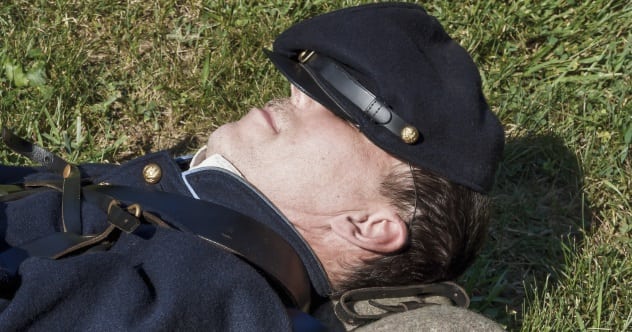
Note: The title is playful. The Medal of Honor is not something anyone “obtains” by clever strategy, lucky networking, or showing up with a coupon code. It is the United States’ highest military decoration for valor, awarded for conspicuous gallantry and intrepidity at the risk of life above and beyond the call of duty. The stories below are “eccentric” because history is eccentric: sometimes courage arrives wearing a doctor’s coat, carrying a drum, refusing to carry a weapon, or standing on a burning tank destroyer while common sense screams, “Absolutely not.”
The Medal of Honor has been awarded across American wars from the Civil War to modern conflicts. Its standards have changed over time, and several early awards were later reviewed, revoked, or restored. Yet the central idea remains stubbornly simple: ordinary people, placed in extraordinary danger, did something so selfless that the nation decided their names should not disappear into paperwork, dust, or the back drawer of military history.
So, let’s walk through ten unusual, surprising, and very real Medal of Honor stories. These are not instructions. They are reminders that courage often refuses to follow the official dress code.
1. Be a Soldier Who Refuses to Carry a Gun
Desmond Doss: the unarmed medic who became impossible to ignore
One of the most unusual Medal of Honor stories belongs to Desmond Thomas Doss, a World War II Army medic and conscientious objector. Doss refused to carry a weapon because of his religious beliefs, which made him look, to some fellow soldiers, like a man who had brought a teacup to a tornado.
Then Okinawa happened. During brutal fighting on the Maeda Escarpment, better known as Hacksaw Ridge, Doss repeatedly exposed himself to enemy fire while helping wounded soldiers. He lowered injured men down a steep cliff, treated the hurt, and kept going when exhaustion would have made a perfectly reasonable person collapse into the nearest crater.
The eccentric part? He proved battlefield courage did not always come from pulling a trigger. Doss earned the Medal of Honor by saving lives while unarmed. In a world obsessed with firepower, he made mercy look stronger than steel.
2. Practice Medicine When the Army Barely Knows What To Do With You
Dr. Mary Edwards Walker: the only woman to receive the Medal of Honor
Dr. Mary Edwards Walker was a Civil War surgeon, a reformer, a prisoner of war, and a woman operating in a military world that was not exactly rolling out the red carpet for female physicians. She worked as a contract surgeon and treated wounded soldiers in an era when antiseptic practice was still developing and professional sexism was in full uniform.
Walker’s Medal of Honor story is unusual not only because she remains the only woman ever awarded the medal, but also because her award was revoked during the 1916–1917 review of Army Medal of Honor awards and later restored in 1977. That is a bureaucratic roller coaster with bayonets attached.
Her path to the Medal of Honor was eccentric because she did not fit the expected mold. She was not a line officer charging a hill. She was a doctor who insisted on serving, treating, and enduring captivity. Her legacy shows that courage can look like stubborn service in a place determined to underestimate you.
3. Join the Coast Guard and Save Marines on a Pacific Beach
Douglas Munro: the Coast Guard’s lone Medal of Honor recipient
Douglas Albert Munro was a Coast Guard signalman during World War II. At Guadalcanal in 1942, he helped lead landing craft in the evacuation of Marines under intense enemy fire near Point Cruz. Munro used his boat as a shield, drawing fire away from the Marines so they could escape.
His final concern reportedly centered on whether the Marines had gotten out. That question tells you nearly everything you need to know about the man.
Munro’s story is eccentric because most people associate the Medal of Honor with the Army, Navy, Marines, or Air Force. Yet here stands a Coast Guardsman, commanding a rescue under fire, becoming the first and only member of the U.S. Coast Guard to receive the Medal of Honor. History has a habit of widening the spotlight when courage earns it.
4. Crash Your Own Plane to Save a Friend
Thomas Hudner: friendship at the Chosin Reservoir
During the Korean War, Navy pilot Thomas J. Hudner Jr. watched fellow aviator Jesse Brown crash-land near the Chosin Reservoir. Brown was trapped in his damaged aircraft. The weather was bitter, enemy forces were near, and rescue seemed close to impossible.
Hudner did something that sounds like a sentence written by someone who does not understand aircraft: he intentionally crash-landed his own plane nearby so he could try to help. He and a helicopter pilot worked to free Brown, but Brown could not be saved. Hudner survived and later received the Medal of Honor for the attempt.
The eccentric angle is not simply the crash landing. It is the refusal to let military procedure, personal safety, or mathematical odds have the final word. Hudner’s story is one of loyalty so fierce it bent logic into a new shape.
5. Be a Teenager Who Throws Himself on Two Grenades
Jack Lucas: too young for common sense, old enough for valor
Jacklyn “Jack” Lucas joined the Marine Corps as a teenager and became one of the youngest Medal of Honor recipients of World War II. On Iwo Jima in 1945, Lucas and fellow Marines were attacked by enemy grenades. Lucas threw himself over one grenade and pulled another beneath him, absorbing the blast to protect the men around him.
He survived. That sentence feels like it needs its own marching band.
Lucas’s Medal of Honor story is eccentric because it combines youth, audacity, and survival against outrageous odds. Many teenagers worry about school, dating, or whether their hair is staging a rebellion. Lucas faced two grenades and chose his comrades’ lives over his own. His story is terrifying, inspiring, and almost too dramatic for fiction.
6. Be “Buffalo Bill” Before the Rulebook Catches Up
William F. Cody: the civilian scout whose medal was taken and restored
William Frederick “Buffalo Bill” Cody is better known as a frontier showman, but before he became a legend in buckskin, he served as a civilian scout attached to the U.S. Army. He received the Medal of Honor in 1872 for gallantry in action during the Indian Campaigns.
Then came the great Medal of Honor review of 1916–1917. Because Cody had been a civilian scout rather than an enlisted service member or officer, his medal was rescinded. Decades later, it was restored to the Medal of Honor Roll in 1989.
This is one of the strangest Medal of Honor paths because it involves not only bravery, but changing standards, legal definitions, and historical reassessment. Cody’s story reminds us that the Medal of Honor has a complicated past. The courage may be clear, while the paperwork arrives wearing muddy boots.
7. Capture Enemy FlagsTwice
Thomas Ward Custer: a double recipient before age thirty
Thomas Ward Custer, younger brother of George Armstrong Custer, earned two Medals of Honor during the Civil War. He was recognized for actions involving the capture of Confederate flags in the final days of the war. Capturing a battle flag was not decorative souvenir hunting; it was dangerous, symbolic, and tactically significant. The flag marked identity, command, and morale.
Custer’s story is eccentric because winning the Medal of Honor once is rare enough. Winning it twice puts a person in a tiny historical club. There have been only a small number of double recipients, and Thomas Custer is among the most memorable.
The lesson? If history gives you one impossible moment, that is already a lot. Custer somehow encountered more than one and ran toward both.
8. Keep Your Drum When Everyone Else Drops Gear
William “Willie” Johnston: the youngest Medal of Honor recipient
William “Willie” Johnston was a drummer boy in the Union Army during the Civil War. During the Seven Days Battles and the Peninsula Campaign, Union troops retreated under terrible conditions. Soldiers threw away equipment to move faster and survive. Johnston, still a child, kept his drum.
That may sound quaint until you remember that a Civil War drummer was not a mascot. Drummers helped communicate commands, maintain order, and steady morale. Johnston’s persistence became a symbol of discipline and courage under pressure. He received the Medal of Honor while still very young and is remembered as the youngest recipient.
His story is eccentric because no modern reader expects a drum to be central to a Medal of Honor story. Yet there it is: a child, a retreat, a battered army, and one drum that refused to be abandoned.
9. Charge Up a Hill, Become President, Receive the Medal a Century Later
Theodore Roosevelt: Rough Rider, president, posthumous recipient
Theodore Roosevelt’s Medal of Honor story sounds like it was assembled by a screenwriter who needed to calm down. Before he became the 26th president of the United States, Roosevelt led the Rough Riders during the Spanish-American War. His actions at San Juan Hill in Cuba became one of the most famous episodes of his public life.
Roosevelt did not receive the Medal of Honor during his lifetime. The award was presented posthumously in 2001, more than a century after the 1898 action. That delay makes his case especially unusual.
The eccentric part is the timeline. Most people do not add “become president, die, wait generations, then receive the nation’s highest military decoration” to a career plan. Roosevelt’s story shows that history sometimes takes the scenic route before it reaches a verdict.
10. Stand on a Burning Tank Destroyer and Keep Fighting
Audie Murphy: the one-man battle position
Audie Murphy became one of the most decorated American soldiers of World War II, and his Medal of Honor action in France is astonishing even by Medal of Honor standards. When his company faced a German attack involving tanks and infantry, Murphy ordered his men to withdraw to safer positions. Then he climbed onto a burning tank destroyer, used its machine gun, and fought off enemy troops while directing artillery fire.
Let us pause for the phrase “burning tank destroyer.” Most people see a burning armored vehicle and think, “That is where I should not be.” Murphy saw a defensive position.
His action helped stop the attack and protect his company. The eccentric element is the sheer contradiction: a wounded soldier, alone, exposed, standing on something that might explode, using it as a platform for resistance. It is the sort of courage that makes adjectives feel underqualified.
Why These Medal of Honor Stories Still Matter
These ten stories stretch across different wars, branches, roles, and eras. Some recipients carried rifles. One refused to carry a weapon. One carried medical supplies. One carried a drum. One landed a plane on purpose in the worst possible place. One became famous enough to headline Wild West shows. One became president. One was a teenager. One represented the Coast Guard. One made a burning vehicle into a fighting position.
That variety matters for SEO, yes, because readers search for Medal of Honor facts, famous Medal of Honor recipients, unusual military heroes, and stories of American valor. But it matters more because it prevents heroism from becoming a cardboard cutout. The Medal of Honor is not awarded to one personality type. It has gone to quiet medics, brash fighters, surgeons, sailors, Marines, soldiers, pilots, scouts, and young people who should have been nowhere near war.
The common thread is not eccentricity. It is selflessness under extreme pressure. The unusual details make the stories memorable, but the moral center is painfully serious: each recipient faced danger and acted for someone else. That is why these accounts still attract readers, students, veterans, historians, and anyone who has ever wondered what courage looks like when there is no time to rehearse.
Experience-Based Reflections: What These Stories Teach Ordinary Readers
Most of us will never face anything like Hacksaw Ridge, Iwo Jima, San Juan Hill, Chosin Reservoir, or the battlefields of the Civil War. Our daily emergencies are usually smaller: a deadline turns feral, a family crisis lands without warning, the car makes a sound like a haunted dishwasher, or someone in a meeting says, “Let’s circle back,” for the eighth time. Still, Medal of Honor stories have a strange way of following us into ordinary life.
The first experience these stories offer is perspective. Reading about Desmond Doss saving wounded soldiers while unarmed makes many modern inconveniences look less apocalyptic. That does not mean our struggles are fake. It means courage has levels, and sometimes remembering the highest examples helps us handle the lower ones with more grace.
The second experience is humility. Medal of Honor recipients often did not describe themselves as superheroes. Many said they were doing their job, helping their friends, or responding to the moment. That humility is important because it pushes back against the loud, self-promotional version of bravery we often see online. Real courage does not always come with a dramatic soundtrack. Sometimes it looks like a medic making one more trip, a pilot refusing to abandon a friend, or a young drummer holding on to the tool that gave others rhythm in chaos.
The third experience is a reminder that preparation matters. None of these people woke up magically heroic. They had training, discipline, beliefs, habits, and loyalties already in place. When the crisis came, those inner structures mattered. For everyday readers, that translates into a useful question: what are we practicing now that might matter later? Patience, honesty, competence, physical fitness, emotional steadiness, and loyalty may not feel cinematic today. Tomorrow, they may be the exact qualities someone else needs from us.
The fourth experience is the importance of moral imagination. These stories ask us to picture ourselves responsible for other people. Doss imagined wounded men as worth saving even under fire. Hudner imagined that a trapped friend deserved a rescue attempt even when the odds were cruel. Walker imagined that her medical skill mattered despite the limits others tried to place on her. Moral imagination is not soft. It is the ability to see human value clearly when fear is trying to fog the glass.
The final experience is gratitude. Medal of Honor history is not entertainment in the shallow sense, even when told with a touch of humor. It is memory work. It asks readers to remember names, actions, and sacrifices that could easily become abstract. When we say “American military heroes,” we should not mean statues or slogans only. We should mean people: Douglas Munro shielding Marines, Jack Lucas protecting comrades from grenades, Audie Murphy refusing to yield, Willie Johnston keeping his drum, Mary Walker insisting on service, and many others whose choices still echo.
In that sense, the “eccentric ways” to receive the Medal of Honor are not really eccentric at all. They are human. They show that courage can come from faith, friendship, duty, outrage, training, stubbornness, compassion, or the simple refusal to leave someone behind. The situations were extraordinary, but the values are portable. We may never be asked to stand on a burning tank destroyer, and frankly, let us all be grateful for that. But we can practice steadiness, service, and loyalty in the smaller battles we actually face.
Conclusion
The Medal of Honor is often described with formal language: gallantry, intrepidity, valor, sacrifice. Those words are accurate, but they can sound polished and distant. The real stories are anything but distant. They are muddy, loud, cold, frightening, improvised, and deeply human.
The ten recipients featured here show that Medal of Honor history is filled with unexpected paths. A conscientious objector became a battlefield legend without a weapon. A woman doctor forced her way into Civil War service. A Coast Guardsman saved Marines. A Navy pilot crash-landed for a friend. A teenager survived two grenades. A civilian scout had his medal revoked and restored. A young officer became a double recipient. A drummer boy became the youngest honoree. A future president waited more than a century for recognition. A soldier climbed onto a burning tank destroyer and fought on.
If there is one lesson, it is this: the Medal of Honor is not about seeking glory. It is about the moment when self-preservation loses an argument with duty. History remembers the medal, but the deeper story is the choice behind it.