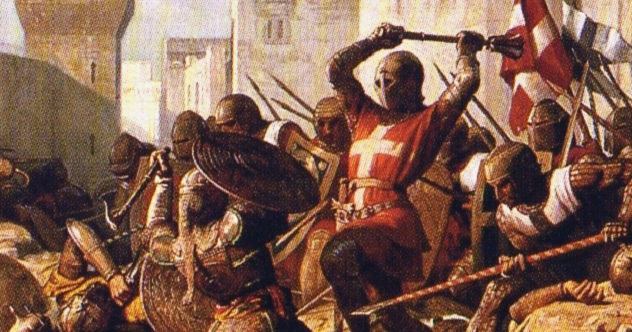
The Crusades lasted far too long to be reduced to a tidy highlight reel. From Pope Urban II’s call in 1095 to the collapse of the last major Crusader stronghold on the Levantine mainland in 1291, generations of Europeans, Byzantines, Turks, Arabs, Kurds, Armenians, Jews, and others were pulled into wars shaped by religion, dynastic politics, trade, diplomacy, geography, and the occasional spectacular failure of medieval logistics.
Still, certain days genuinely changed the direction of Crusades history. A city fell. An army vanished. A treaty succeeded where thousands of swords had failed. Or Crusaders who were supposedly heading toward Muslim-held Jerusalem somehow ended up sacking the greatest Christian city in the eastern Mediterranean. Medieval strategy could be complicated like that.
The following ten pivotal days were selected because each altered the balance of power, the aims of crusading, or the survival of the Crusader states. Together, they show why the history of the Crusades was never a simple story of one civilization advancing while another retreated.
Research support:
1. November 27, 1095: Pope Urban II Calls the First Crusade
Clermont turns pilgrimage into an armed movement
At the Council of Clermont in France, Pope Urban II delivered the appeal traditionally regarded as the beginning of the First Crusade. Byzantine emperor Alexios I Komnenos had sought Western military assistance against Turkish advances in Anatolia. Urban transformed that appeal into something much larger.
He encouraged Western Christians to travel east and assist fellow Christians while pursuing Jerusalem, offering extraordinary spiritual rewards to those who participated for religious reasons.
The response exceeded anything resembling modest expectations. Nobles, knights, clergy, and ordinary people began preparing for the journey. Preachers carried the message through Western Europe, while the enthusiasm surrounding crusading also contributed to horrific attacks on Jewish communities in parts of Europe.
Why was November 27 pivotal? Because warfare, pilgrimage, papal authority, and penitential spirituality were suddenly fused into a movement capable of mobilizing people across kingdoms. There had been Christian-Muslim warfare before Clermont. After Clermont, there was something recognizably called crusading.
Research support:
2. July 15, 1099: Jerusalem Falls to the First Crusade
A nearly impossible expedition achieves its central objective
After years of marching, starvation, sieges, political arguments, and the kind of supply problems that would make a modern logistics manager quietly close a laptop and leave the room, the First Crusaders reached Jerusalem in June 1099.
On July 15, after a siege lasting several weeks, Crusader forces broke into the city.
The victory was followed by mass killing. Medieval Christian sources themselves describe extensive bloodshed involving Muslim inhabitants, while Jewish residents also suffered during the conquest. The event therefore became both the supreme triumph of the First Crusade in Latin Christian memory and a lasting trauma in other historical traditions.
The military consequences were enormous. The conquest led to the creation of the Kingdom of Jerusalem, joining the emerging Latin principalities of Edessa and Antioch and eventually the County of Tripoli. Western European elites were no longer simply visitors or expeditionary soldiers. They had established states that would need castles, armies, taxation, diplomacy, ports, settlers, and continuous reinforcement.
Capturing Jerusalem turned an expedition into a long-term geopolitical experiment.
Research support:
3. December 24, 1144: Edessa Falls to Zengi
The Crusader states discover they are not permanent
The County of Edessa was the first Crusader state established during the First Crusade and the most exposed geographically. On Christmas Eve 1144, forces led by Imad ad-Din Zengi captured its capital after undermining the city’s defenses.
The psychological importance of the loss was almost as great as the territorial damage. For decades, Latin Christian power in the region had survived despite chronic shortages of manpower and frequent disagreements among local rulers. Edessa proved that the political map created after the First Crusade could be reversed.
The shock helped trigger the Second Crusade, preached with enormous enthusiasm and led by King Louis VII of France and King Conrad III of Germany.
That expedition ultimately failed to recover Edessa. Its disastrous attempt to capture Damascus in 1148 further damaged Western prestige and encouraged Muslim rulers who increasingly recognized the advantages of political and military cooperation.
The age in which Crusader expansion looked unstoppable was over.
Research support:
4. July 4, 1187: Saladin Destroys the Crusader Army at Hattin
The most decisive battlefield reversal of the Crusades
If one day deserves the title of the greatest military turning point of the eastern Crusades, July 4, 1187 has a formidable claim.
Saladin, the Ayyubid ruler who had consolidated power across Egypt and much of Syria, confronted the main army of the Kingdom of Jerusalem near the Horns of Hattin. The Crusader forces had marched away from reliable water supplies while facing heat, harassment, exhaustion, and an enemy operating on favorable terrain.
The result was catastrophic.
Most of the Crusader field army was killed or captured. King Guy of Jerusalem became a prisoner. Many leading nobles fell into Saladin’s hands, and the relic regarded by Latin Christians as the True Cross was lost.
More importantly, the kingdom had committed much of its available mobile military strength to one battle. When that army disappeared, numerous castles and cities were left without sufficient defenders.
Hattin illustrates an enduring military principle that remains refreshingly immune to medieval heroics: courage does not manufacture drinking water.
Saladin now possessed the freedom to sweep across much of the Crusader-controlled Levant.
Research support:
5. October 2, 1187: Saladin Takes Jerusalem
Eighty-eight years of Latin rule end
Hattin broke the army. The loss of Jerusalem broke the image of permanent Crusader victory.
After taking numerous towns and fortresses, Saladin besieged Jerusalem in September 1187. Balian of Ibelin organized the city’s defense, but the military situation was increasingly hopeless. Negotiations eventually produced terms of surrender, and Saladin formally took possession on October 2.
The contrast with 1099 was notable. Although captivity, ransom, and hardship accompanied the conquest, Jerusalem did not experience a massacre comparable to the slaughter carried out when the First Crusaders entered the city.
For Latin Christendom, however, losing Jerusalem was devastating. The city represented the spiritual center of the eastern crusading project. Its capture helped generate the Third Crusade, attracting some of Europe’s most famous rulers, including Richard I of England, Philip II of France, and Holy Roman Emperor Frederick Barbarossa.
The conflict had entered its celebrity phase. Unfortunately for the Crusaders, celebrity leadership did not guarantee Jerusalem.
Research support:
6. July 12, 1191: Acre Surrenders to the Third Crusade
Richard the Lionheart helps rescue a coastal foothold
The Third Crusade failed in its headline objective: Jerusalem remained under Saladin’s control. Yet calling the entire expedition meaningless would miss an important strategic recovery.
On July 12, 1191, after a grueling siege lasting nearly two years, Acre surrendered to Crusader forces. Richard the Lionheart and Philip II had arrived only during the final phase, but their troops and resources increased the pressure on the defenders.
Acre became crucial because it gave the remaining Latin states an excellent Mediterranean port and eventually served as the political center of the reduced Kingdom of Jerusalem.
Richard later defeated Saladin’s forces at Arsuf and secured other coastal positions, but he stopped short of attempting a final assault on Jerusalem. The problem was not merely capturing the city. Holding it against Saladin after capture was another matter entirely.
The eventual settlement left Jerusalem under Muslim political control while allowing Christian pilgrimage and preserving a Latin-held coastal corridor.
Acre therefore represented an important change in priorities: survival became more realistic than complete reconquest.
Research support:
7. April 13, 1204: Constantinople Falls to the Fourth Crusade
The Crusaders attack the wrong Christian empire
Few episodes reveal the political complexity of the Crusades better than 1204.
The Fourth Crusade was originally intended to attack Muslim power and ultimately recover Jerusalem. Financial obligations to Venice, dynastic disputes in Byzantium, and escalating political tensions diverted the expedition toward Constantinople.
After fighting beginning on April 12, Crusaders seized effective control of the Byzantine capital on April 13. The city was then subjected to extensive looting and destruction, while a Latin Empire was established on Byzantine territory.
The consequences extended far beyond the immediate sack. Relations between Latin Catholic and Greek Orthodox Christians were poisoned further. Byzantine political strength fractured, even though Greek rulers eventually recovered Constantinople in 1261.
Resources supposedly destined for the Holy Land had instead been used to conquer one of Christianity’s greatest cities.
Strategically, the Fourth Crusade demonstrated how far crusading could drift from its original Jerusalem-centered mission when money, maritime interests, dynastic opportunities, and politics grabbed the steering wheel.
Research support:
8. August 30, 1221: The Fifth Crusade Agrees to Abandon Damietta
Egypt proves that geography gets a vote
By the early 13th century, Crusader strategists increasingly viewed Egypt as the key to recovering Jerusalem. Egypt was wealthy, agriculturally productive, and central to Ayyubid power. Capture Egypt, the theory went, and Jerusalem could potentially be recovered through conquest or negotiation.
The Fifth Crusade captured the Egyptian port of Damietta in 1219 after a long siege. It looked like an extraordinary breakthrough.
Then came the march toward Cairo.
In 1221, Crusader forces advanced during the Nile flood season and found themselves trapped by rising water, poor positioning, logistical problems, and Ayyubid forces. Their strategic situation collapsed.
On August 30, an agreement was reached to return Damietta to Sultan al-Kamil in exchange for safe withdrawal.
Years of recruiting, financing, sailing, fighting, and siege warfare had produced a circular itinerary ending roughly where the expedition started.
The failure nevertheless reinforced an important strategic idea: Egypt mattered enormously. Later Crusades, particularly those led by Louis IX, would try essentially the same approachwith similarly painful results.
Research support:
9. February 18, 1229: Frederick II Regains Jerusalem Without a Major Battle
Diplomacy does what armies repeatedly could not
The Sixth Crusade produced one of the strangest successes in crusading history.
Holy Roman Emperor Frederick II had a famously difficult relationship with the papacy and began his expedition while excommunicated. Yet instead of attempting another enormous military campaign, Frederick negotiated with the Ayyubid sultan al-Kamil.
On February 18, 1229, their agreementoften called the Treaty of Jaffareturned Jerusalem, Bethlehem, and other territory to Christian administration under carefully negotiated conditions while protecting Muslim religious access and control of important sacred spaces.
Jerusalem had effectively been regained through diplomacy.
The arrangement was controversial, fragile, and temporary, but strategically remarkable. It exposed an inconvenient fact for anyone imagining the Crusades purely as nonstop religious warfare: Christian and Muslim rulers negotiated, traded, formed temporary understandings, and pursued pragmatic interests whenever circumstances encouraged them.
Jerusalem would be lost again in 1244, followed shortly by the devastating Crusader defeat at La Forbie. Frederick’s achievement therefore did not reverse the long-term decline of Latin power. It did prove that medieval diplomacy occasionally outperformed medieval siege engines.
Research support:
10. May 18, 1291: Acre Falls to the Mamluks
The mainland Crusader states reach their end
By the late 13th century, the strategic situation had transformed again. The Mamluk Sultanate had replaced Ayyubid power in Egypt and developed an aggressive military policy toward the remaining Crusader enclaves.
Under rulers including Baybars and his successors, Mamluk armies captured or destroyed one Latin position after another. Antioch fell in 1268. Tripoli fell in 1289. Acre was increasingly isolated.
In 1291, Sultan al-Ashraf Khalil launched a major assault on the heavily fortified port. After weeks of siege warfare, Mamluk forces broke through on May 18.
Acre’s fall destroyed the principal remaining center of Latin Christian power on the Levantine mainland. Survivors evacuated toward Cyprus while other remaining coastal positions were rapidly abandoned or captured.
Crusading itself did not magically disappear on May 18. Campaigns continued elsewhere, military orders survived, and proposals for recovering the Holy Land circulated for generations.
But the political system born from the triumph at Jerusalem in 1099 was effectively finished on the mainland.
The great experiment had lasted almost two centuries.
Research support:
What These Pivotal Crusade Days Reveal
Looking at the Crusades through individual turning points reveals something that broad timelines sometimes hide: military success was rarely permanent.
Jerusalem could be conquered in 1099 and lost in 1187. It could be regained diplomatically in 1229 and lost again in 1244. Acre could fall to Saladin, return to Crusader control, become the center of a revived coastal kingdom, and then disappear as a Latin stronghold in 1291.
Political unity mattered enormously. The First Crusaders benefited from divisions among their opponents. Zengi, Nur al-Din, Saladin, and later the Mamluks increasingly demonstrated what coordinated Muslim military power could accomplish. Meanwhile, disagreements among Crusader rulers, European monarchs, Byzantine leaders, Italian maritime republics, military orders, and church authorities repeatedly complicated Western campaigns.
Geography mattered just as much. Water determined Hattin. Mediterranean shipping helped sustain Acre. The Nile helped ruin the Fifth Crusade. Fortifications could preserve a kingdom for years but could not compensate forever for insufficient manpower.
And diplomacy mattered more than the popular image of armored knights tends to suggest. Treaties, trade, ransom negotiations, temporary alliances, and agreements between rivals were part of everyday political survival.
Experiencing the Story Behind the 10 Pivotal Days
Reading the Crusades as human history instead of a scoreboard
One of the most rewarding ways to explore these ten pivotal days is to resist the temptation to read them as a medieval sports season with Christians on one side, Muslims on the other, and a final column marked “wins.”
The closer the history is examined, the messierand more interestingit becomes.
Start with geography. Pull up a map of the eastern Mediterranean and trace the distance from Western Europe to Constantinople, Antioch, Jerusalem, Acre, and Damietta. Suddenly the achievements and disasters become easier to understand. Moving thousands of people and horses across medieval roads and seas was itself an extraordinary undertaking. Armies required enormous quantities of food, fodder, drinking water, timber, ships, money, and replacement animals. A grand spiritual mission still needed somebody to find dinner.
Next, compare Jerusalem with Acre. Jerusalem supplied enormous religious meaning, but Acre offered something every expedition urgently needed: a good port. This helps explain why possession of a coastal corridor could be strategically useful even when the Third Crusade failed to recover the Holy City.
Hattin becomes more vivid when studied from the perspective of landscape rather than simply tactics. Imagine an armored force marching in July heat while enemy cavalry harasses its columns and access to water becomes increasingly uncertain. Suddenly the famous defeat is no longer just a story about commanders making poor decisions. It becomes an experience shaped by exhaustion, thirst, smoke, terrain, and panic.
The Fourth Crusade offers a different kind of historical experience. Follow the expedition’s finances and contractual obligations and the strange diversion toward Constantinople becomes less mysterious. It remains extraordinary, but it also becomes a lesson in how campaigns can acquire momentum independent of their original purpose. Medieval people did not stop having political incentives just because the pope had supplied a religious objective.
Primary sources add another layer. Christian chronicles describing Jerusalem in 1099 and Muslim or Latin accounts surrounding Saladin’s victories show how dramatically perspective influences historical memory. Writers emphasized divine favor, heroism, betrayal, suffering, or moral lessons depending on their communities and purposes.
That makes source comparison essential. Medieval chroniclers were not neutral cameras wearing robes.
Finally, follow what happened after each supposed ending. The fall of Jerusalem in 1187 did not end the Crusader states. The failure of the Third Crusade did not end crusading. Constantinople’s sack did not permanently destroy Byzantium. Frederick II’s diplomatic triumph did not permanently recover Jerusalem. Acre’s fall did not erase crusading ideology.
This is perhaps the most valuable experience of studying the Crusades: realizing that historical turning points rarely feel as tidy to the people living through them as they appear centuries later on a timeline.
Research support:
Conclusion: Ten Days, Nearly Two Centuries of Change
The 10 pivotal days that turned the tide of the Crusades reveal a conflict defined less by a steady march toward victory than by repeated reversals.
Clermont launched a movement. Jerusalem gave that movement its spectacular first victory. Edessa demonstrated that Crusader territory could disappear. Hattin shattered the military balance. Saladin’s capture of Jerusalem triggered another enormous European response. Acre preserved a reduced Latin presence. Constantinople exposed crusading’s political contradictions. Damietta demonstrated the dangers of ambitious strategy without control of geography. Frederick II showed the power of negotiation. Finally, Acre’s destruction in 1291 closed the era of major Latin territorial rule on the Levantine mainland.
For anyone studying Crusades history, the larger lesson is simple: no battle, treaty, ruler, religion, or military order explains the whole story. The Crusades were shaped by faith and fear, but also by ports, rivers, rival kings, merchant fleets, food supplies, family ambitions, fortifications, diplomacy, and human miscalculation.
In other words, medieval history was complicated. It simply wore more chain mail.
Note: This article uses “the Crusades” primarily for the Latin Christian expeditions and Crusader states associated with the eastern Mediterranean between 1095 and 1291. Historians also study a much wider crusading movement extending into Iberia, the Baltic, North Africa, and later centuries. Historical details were synthesized from reputable U.S.-based museum, university, educational, broadcasting, military-history, and reference resources, including the Metropolitan Museum of Art, Fordham University, PBS, the Library of Congress, National Geographic, History, University of Pennsylvania, Yale University Press, Smarthistory, EBSCO, the U.S. Naval Institute, and Encyclopedia.com.