Choosing a dog harness should be simple. Measure the dog, select a size, clip it on, and enjoy a peaceful stroll. Yet many owners discover that harness shopping feels more like buying tailored formalwear for a furry athlete who refuses to stand still.
The best dog harnesses balance comfort, control, durability, and freedom of movement. They should remain secure without rubbing the armpits, pressing on the throat, or rotating sideways whenever your dog spots a squirrel with suspicious intentions.
For this guide to the 11 best dog harnesses 2025 UK, we compared established products using practical criteria such as adjustability, padding, attachment points, visibility, ease of use, and suitability for different body shapes. The list includes everyday walking harnesses, no-pull designs, lightweight options for small dogs, and secure models for adventurous escape artists.
The Best Dog Harnesses in the UK at a Glance
| Harness | Best For | Main Advantage |
|---|---|---|
| Ruffwear Front Range | Best overall | Padded, versatile, and highly adjustable |
| PerfectFit Modular Harness | Unusual body shapes | Interchangeable sections create a customized fit |
| Halti No Pull Harness | Strong pullers | Front control and stop-pull functions |
| Julius-K9 IDC Powerharness | Quick daily walks | Fast fitting and a useful control handle |
| Non-stop Dogwear Line Harness 5.0 | Hiking and active dogs | Ergonomic Y-shaped neck and multiple clips |
| Ruffwear Web Master | Escape artists | Secure design with lift-and-assist handle |
| Blue-9 Balance Harness | Precise adjustment | Six adjustment points and minimal bulk |
| EzyDog Chest Plate Harness | Dogs avoiding overhead harnesses | Step-in design with molded chest support |
| Kurgo Tru-Fit Enhanced Strength | Walking and car journeys | Steel hardware and padded chest plate |
| PetSafe Easy Walk Harness | Leash training | Front attachment redirects forward movement |
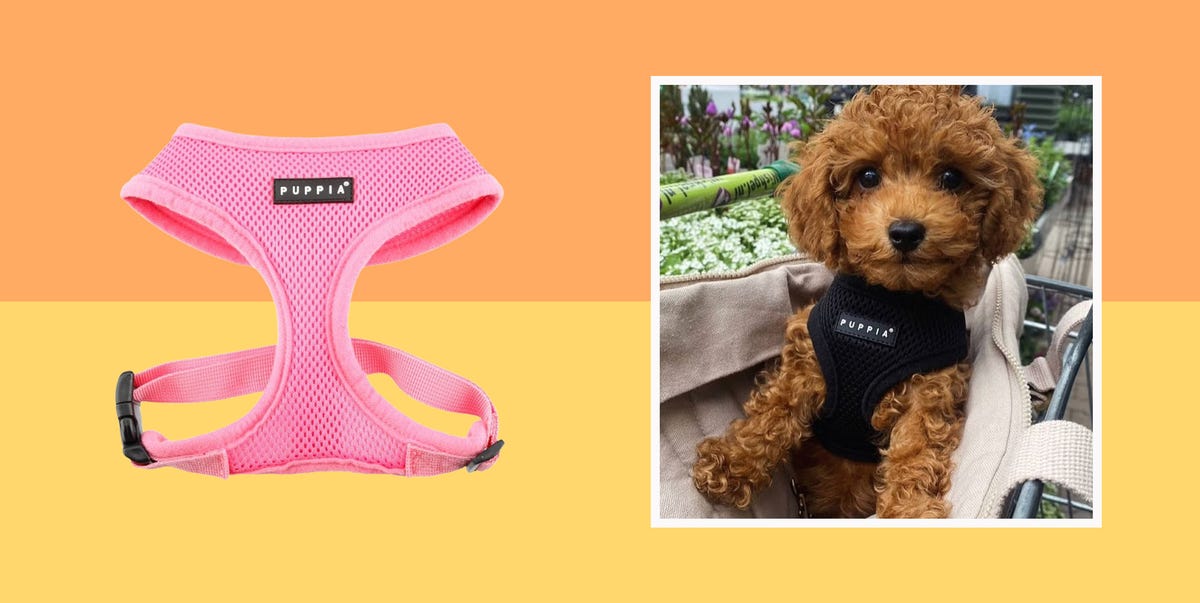
| Puppia Soft Harness | Small dogs | Lightweight, breathable mesh construction |
How We Selected the Best Dog Harnesses
No single harness works perfectly for every dog. A Labrador that enthusiastically tows its owner toward the park needs different equipment from a Chihuahua whose main exercise is relocating between two sofa cushions.
Our selections prioritize:
- Fit and adjustability: The harness should remain stable without restricting the shoulders.
- Comfort: Padding, smooth seams, and appropriate strap placement reduce rubbing.
- Control: Front and rear leash attachments provide options for walking and training.
- Security: Strong buckles and sensible body coverage help prevent accidental escapes.
- Practicality: Reflective details, washable materials, handles, and quick-release buckles add everyday value.
- UK availability: The harnesses are widely available through UK brands, retailers, or distributors.
11 Best Dog Harnesses 2025 UK Reviewed
1. Ruffwear Front Range Dog Harness: Best Overall
The Ruffwear Front Range remains one of the strongest all-around choices for everyday walks, countryside outings, and light hiking. Its foam-padded chest and belly panels spread pressure across a broad area, while four adjustment points help accommodate different builds.
Owners can attach a leash to the aluminum V-ring on the back or use the reinforced front webbing loop when additional steering is needed. Reflective trim improves visibility during dark winter walks, and the small ID pocket prevents tags from performing a metallic drum solo with every step.
Best for: Owners wanting one dependable harness for most daily activities.
Potential drawback: It goes over the head, which may not suit dogs that dislike equipment passing over their ears.
2. PerfectFit Modular Harness: Best for Difficult-to-Fit Dogs
The PerfectFit is not a conventional one-piece harness. It uses separate top, front, and girth sections that can be combined in different sizes. This modular construction makes it especially useful for Greyhounds, Dachshunds, Bulldogs, deep-chested breeds, and dogs whose proportions apparently ignored the standard sizing manual.
The fleece-lined sections feel soft against the coat, and the harness can be unclipped around the neck rather than pulled over the head. Front and rear attachment options also support two-point leash handling.
Best for: Unusual body shapes, sensitive dogs, and owners prioritizing a close fit.
Potential drawback: Selecting three separate components requires more effort than choosing a basic small, medium, or large harness.
3. Halti No Pull Harness: Best for Strong Pullers
The Halti No Pull Harness is intended for dogs that treat an ordinary walk as the qualifying round for a sled race. Its design combines a front control ring with a stop-pull lifting action, giving the handler more influence without applying leash pressure directly to the neck.
A padded chest panel helps keep the harness stable, while adjustable sections allow owners to refine the fit. For greater control, it can be paired with a double-ended training leash connected at the chest and back.
Best for: Strong dogs that pull and owners working on loose-leash skills.
Potential drawback: No-pull equipment manages behavior but does not replace reward-based training.
4. Julius-K9 IDC Powerharness: Best for Fast, Easy Fitting
The Julius-K9 IDC Powerharness is instantly recognizable thanks to its broad body panel, reflective details, and customizable side labels. More importantly, it is exceptionally quick to put on. Slip it over the dog’s head, secure one buckle, and you are ready to go.
A sturdy top handle provides close control near roads, crowds, or unexpected distractions. The water-resistant outer material and skin-friendly lining make it suitable for regular use in unpredictable British weather.
Best for: Busy owners, urban walks, working dogs, and anyone who dislikes wrestling with multiple straps.
Potential drawback: Correct sizing and strap positioning are essential because the broad chest strap may not match every dog’s movement pattern.
5. Non-stop Dogwear Line Harness 5.0: Best for Hiking
Designed by an active-dog equipment specialist, the Line Harness 5.0 combines durable materials with a Y-shaped neckline intended to support natural shoulder movement. It works well for hiking, tracking, long countryside walks, and everyday adventures.
The harness includes a standard back attachment, an under-chest point for a tracking line, and a front connection on many sizes for mild anti-pull control. Reflective detailing improves low-light visibility, while the water-resistant padding does not behave like a bath sponge after every rain shower.
Best for: Active dogs, trail walks, tracking, and owners using long lines.
Potential drawback: The neck section is not fully adjustable, making careful measurement particularly important.
6. Ruffwear Web Master Harness: Best for Escape Artists
Some dogs can reverse out of a standard harness in approximately the time it takes their owner to say, “Wait.” The Ruffwear Web Master addresses this problem with an extended body design and an additional belly strap that sits behind the rib cage.
It also includes a padded handle for lifting or assisting a dog over obstacles. This feature can be useful for senior dogs, three-legged dogs, and adventurous pets navigating steep paths. Multiple adjustment points help create a secure fit, while reflective trim adds visibility.
Best for: Nervous dogs, sighthounds, escape-prone pets, and dogs needing occasional assistance.
Potential drawback: The extra coverage makes it warmer and bulkier than a minimalist walking harness.
7. Blue-9 Balance Harness: Best for Maximum Adjustability
The Blue-9 Balance Harness uses a lightweight strap-based design with six adjustment points. Rather than relying on thick padded panels, it focuses on customizable positioning and freedom of movement.
Front and back leash attachments allow owners to switch between ordinary walking and training configurations. A neck buckle means the harness does not have to pass over the dog’s head, making it convenient for equipment-sensitive pets.
Best for: Growing dogs, narrow or broad builds, and owners who value precise strap adjustment.
Potential drawback: The minimal padding may not appeal to owners who prefer a softer vest-style harness.
8. EzyDog Chest Plate Harness: Best Step-In Harness
The EzyDog Chest Plate Harness uses an EVA foam chest pad that gradually molds to the dog’s shape. Its step-in construction is valuable for dogs that become suspicious the moment an object approaches their head.
Adjustable straps help create a secure fit, and reflective stitching provides additional visibility. The simple two-buckle arrangement is easy to understand, even before the first cup of coffee. A strong back D-ring serves as the main leash connection.
Best for: Dogs that dislike overhead designs and owners wanting a straightforward daily harness.
Potential drawback: It lacks a dedicated front leash ring for substantial anti-pull control.
9. Kurgo Tru-Fit Enhanced Strength Harness: Best for Car and Walking Use
The enhanced-strength Kurgo Tru-Fit combines a broad padded chest plate, five adjustment points, steel nesting buckles, and front and rear leash attachments. It is designed to function as both a walking harness and a vehicle restraint when installed with the supplied hardware and according to the manufacturer’s instructions.
The reinforced construction gives it a reassuringly substantial feel. However, buyers should distinguish this enhanced-strength model from lighter Kurgo walking harnesses, as specifications vary between versions.
Best for: Road trips, owners wanting fewer separate pieces of equipment, and dogs needing a robust harness.
Potential drawback: Steel components make it heavier and less convenient than a lightweight everyday option.
10. PetSafe Easy Walk Harness: Best for Leash Training
The PetSafe Easy Walk has a front chest attachment that redirects the dog when it pulls forward. Its martingale-style chest loop tightens slightly during pulling without placing the main pressure around the throat.
Four adjustment points and two quick-release buckles help owners achieve a closer fit. It is relatively lightweight and less bulky than heavily padded no-pull harnesses, making it a practical training tool for ordinary neighborhood walks.
Best for: Dogs learning loose-leash walking and owners seeking an established front-clip design.
Potential drawback: Incorrect fitting can cause the chest strap to sag or interfere with the front legs.
11. Puppia Soft Harness: Best for Small Dogs
The Puppia Soft Harness is a lightweight mesh option frequently chosen for Chihuahuas, Yorkshire Terriers, Pugs, and other smaller companions. Its breathable polyester fabric feels softer than narrow nylon straps and can be comfortable during warm-weather walks.
An adjustable chest band helps refine the fit, while a rear D-ring provides a simple leash connection. The vest-like shape spreads pressure more broadly than a collar, which can be helpful for delicate small dogs.
Best for: Puppies, toy breeds, and small dogs that do not pull heavily.
Potential drawback: It offers less adjustment and control than the more structured harnesses in this guide.
How to Choose the Right Dog Harness
Measure Your Dog Rather Than Guessing
Breed labels are unreliable sizing tools. Two dogs of the same breed can have very different chest depths, neck widths, and weights. Use a flexible tape to measure the widest part of the rib cage, usually just behind the front legs. Check the neck measurement when the manufacturer requests it.
When a dog falls between sizes, consult the individual brand’s instructions instead of automatically sizing up. A loose harness can rotate or allow escape, while a tight one can rub and restrict movement.
Check the Harness While Your Dog Is Moving
A harness may look perfect while the dog is standing and shift dramatically once walking begins. Watch for gaping around the neck, straps moving into the armpits, twisting panels, shortened steps, or pressure across the throat.
You should generally be able to slide one or two fingers beneath the straps, depending on the dog’s size and coat. The harness should feel secure but not compress the body.
Choose the Right Leash Attachment
A rear clip is convenient for relaxed walking and is less likely to tangle the leash around the legs. A front clip can improve steering when a dog pulls, although it must be positioned correctly to avoid restricting movement.
Harnesses with both attachment points offer the most flexibility. A double-ended leash connected at the front and back can provide balanced control while the dog learns better walking habits.
Do Not Assume Every Harness Is Safe for Car Travel
A durable walking harness is not automatically suitable for restraining a dog in a moving vehicle. Car use involves very different forces. Select a model specifically designed and tested for vehicle restraint, install it exactly as directed, and check the stated weight limits.
Consider Your Dog’s Behavior
Dogs that back away when frightened may need a three-strap escape-resistant harness. Dogs that dislike overhead equipment may prefer a step-in model or a harness with a neck buckle. Strong pullers often benefit from front and rear connections combined with positive-reinforcement training.
Frequently Asked Questions
Are Y-shaped harnesses better for dogs?
A well-fitted Y-shaped harness can leave more space around the shoulders than a straight horizontal chest strap. However, shape alone does not guarantee a good fit. Strap position, adjustment, body proportions, and the dog’s individual movement are equally important.
Can a harness stop a dog from pulling?
A front-clip or no-pull harness can make pulling easier to manage, but it does not teach the complete behavior by itself. Reward the dog for walking beside you, stop moving when the leash becomes tight, and practice in quiet areas before adding distractions.
Should a dog wear its harness all day?
Most walking harnesses should be removed after the walk. Prolonged wear can contribute to rubbing, trapped moisture, matted fur, or accidental snagging. Never leave a harnessed dog unattended unless the product is specifically intended for continuous wear and the environment is safe.
How often should the fit be checked?
Check puppies every week because they can grow surprisingly quickly. Adult dogs should be checked periodically and whenever their weight, coat thickness, or activity level changes. Recheck all adjustments after washing the harness.
Practical Experiences With Dog Harnesses
The most common lesson from long-term harness use is that the “best” model on paper can become completely wrong when placed on a particular dog. A feature-packed harness may receive glowing reviews yet rotate awkwardly on a narrow chest. Meanwhile, an unglamorous strap harness can fit that same dog as though it was custom made.
Overhead designs often create the first practical challenge. Many dogs tolerate them immediately, but sensitive pets may duck, retreat, or attempt to negotiate a formal surrender. Introducing the harness gradually usually works better than chasing the dog around the kitchen with it. Place the harness on the floor, reward investigation, hold treats near the neck opening, and let the dog voluntarily move its nose through. Several short sessions can turn a suspicious object into a predictor of walks and snacks.
Adjustment also takes more time than many owners expect. Straps that look symmetrical do not always sit correctly once the dog moves. After the first fitting, walk around the house and examine the harness from both sides. Then complete a short outdoor walk and inspect the coat and skin. Redness behind the front legs, compressed fur, or repeated scratching usually indicates that something needs to move.
Front clips can make a dramatic difference with enthusiastic pullers, especially when the alternative is being transported down the sidewalk like wheeled luggage. However, owners frequently expect the harness to perform all the training. The best results occur when the equipment is paired with rewards for slack-leash walking. The harness provides manageable control; the training explains what the dog should do instead.
Handles are another feature that may seem unnecessary until the exact moment they become extremely useful. A top handle can help guide a dog past broken glass, steady an older pet on slippery steps, or maintain close control when another dog appears around a corner. The handle should be used for brief assistance rather than routinely suspending the dog’s body weight unless the harness is designed for lifting.
British weather provides its own testing laboratory. Thick padded harnesses can retain mud and take longer to dry, while lightweight strap designs clean quickly but offer less cushioning. Owners walking through woodland, fields, and coastal paths often appreciate water-resistant fabric, rust-resistant hardware, reflective details, and colors that remain visible against grass. A fashionable black harness looks elegant in daylight but can transform a dog into a stealth submarine after sunset.
Escape resistance deserves special attention with newly adopted and nervous dogs. A frightened dog can reverse out of a loose two-strap harness with astonishing efficiency. An extended harness with a third strap behind the rib cage offers additional security, but fit must still be checked carefully. Attaching a safety connector between the harness and collar can provide backup during the settling-in period.
Finally, experienced owners tend to keep more than one harness. A padded everyday model may handle neighborhood walks, while an escape-resistant harness is reserved for travel or unfamiliar environments. An active dog might use a low-profile Y-harness for hiking and a separately certified restraint for car journeys. This is not necessarily excessive. Dogs have different equipment needs just as people do, although dogs are much less interested in organizing theirs neatly by the door.
Final Verdict
The Ruffwear Front Range is the best overall option for most dogs because it combines padding, four-point adjustment, reflective trim, and front and rear leash connections. The PerfectFit Modular Harness is a stronger choice for unusual body shapes, while the Halti No Pull and PetSafe Easy Walk provide useful control for dogs learning better leash manners.
For demanding outdoor use, consider the Non-stop Dogwear Line Harness 5.0. Nervous dogs and accomplished escape artists may be safer in the extended Ruffwear Web Master. Whichever product you select, careful measurement and regular fit checks matter more than fashionable colors, clever branding, or the number of dogs posing heroically on the packaging.
Note: Product specifications, available colors, prices, and UK stock can change. Always consult the manufacturer’s latest sizing chart, inspect the harness for wear, and replace damaged equipment before the next walk.