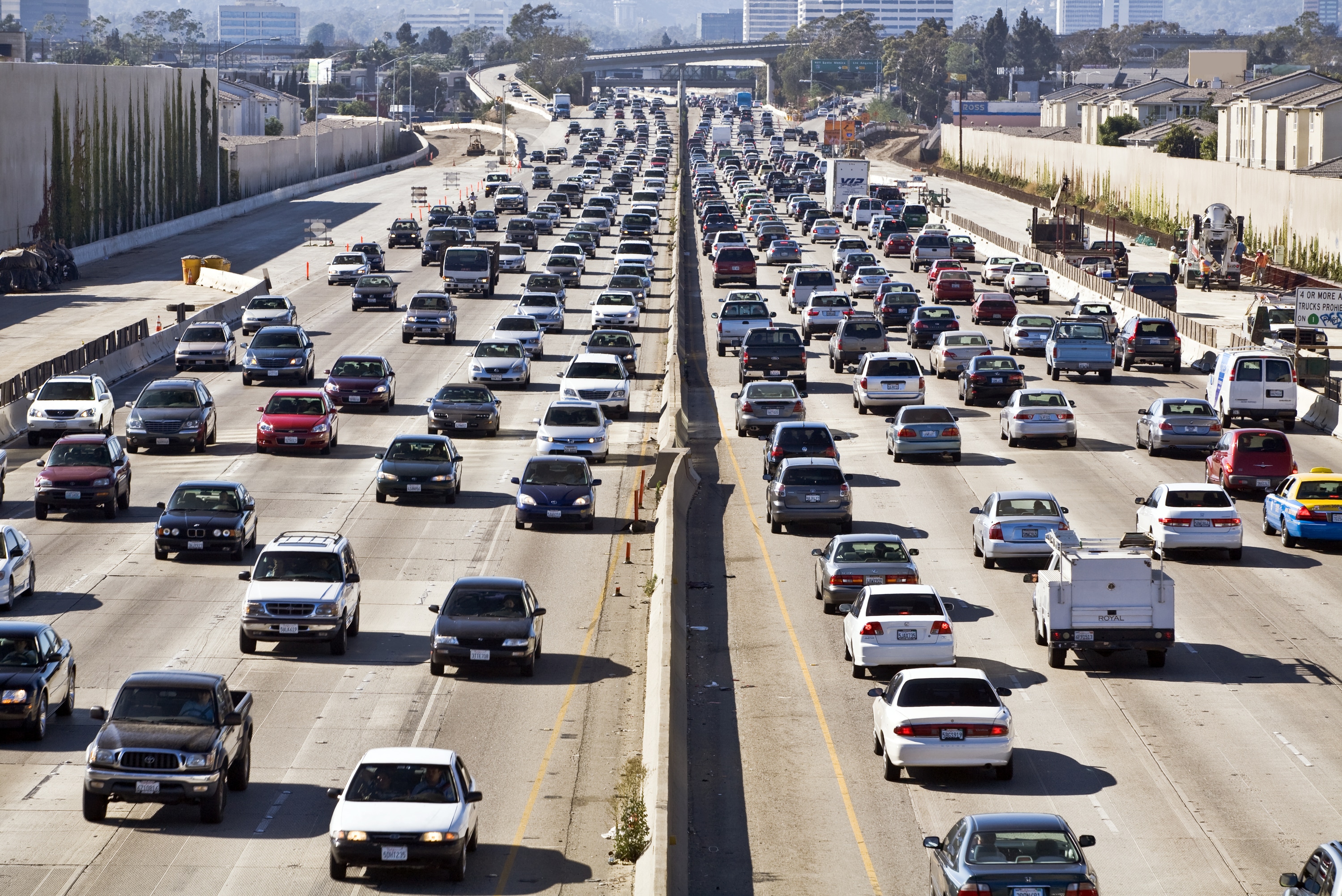
There are few American rituals more universal than sitting in traffic, staring at the brake lights ahead, and wondering whether your car has secretly become your second apartment. Between rising return-to-office schedules, aging infrastructure, sprawling suburbs, delivery vehicles, construction detours, and the occasional driver who treats a zipper merge like a personal attack, traffic congestion remains one of the most expensive everyday problems in the United States.
For personal finance, commuting is not just an annoyance. It is a line item. Longer commute times mean more fuel, more wear and tear, higher maintenance costs, greater parking expenses, lost productivity, and, in some cities, the emotional cost of becoming extremely familiar with the same billboard every morning. The worst traffic cities in America do not all suffer for the same reason. Some are dense and old. Some are sprawling and car-dependent. Some have strong transit but too many people trying to reach the same employment centers at the same time. Others simply have more drivers than road space can reasonably handle.
This guide looks at 14 U.S. cities and metro areas that consistently appear in major traffic, commute time, congestion, and driving-cost rankings. The list is not based on one single metric. Instead, it blends reported hours lost in traffic, average commute times, peak-hour speeds, weekday congestion duration, infrastructure stress, and the real-world experience of getting from Point A to Point B without losing your will to make weekend plans.
How We Chose These Traffic-Heavy Cities
Traffic rankings vary because every study measures congestion differently. INRIX focuses heavily on hours lost in traffic and mobility patterns. TomTom analyzes travel times, speeds, and congestion levels. Census commuting data measures how long workers spend getting to work. Consumer and finance-focused studies often combine commute time, congestion, safety, gas prices, insurance, and maintenance costs.
That is why a city can be “worst” in one ranking but merely “very painful” in another. New York may rank as one of the slowest places to drive, while Los Angeles may dominate daily congestion. Washington, D.C., often stands out for long average commutes. Chicago and Philadelphia have recently climbed in congestion-delay rankings. The takeaway is simple: if a city appears again and again across multiple datasets, drivers there are probably not imagining the pain.
Quick Comparison: 14 Cities With Brutal Traffic and Long Commutes
| City / Metro Area | Why Traffic Is So Bad | Commuter Pain Point |
|---|---|---|
| Chicago, Illinois | High hours lost to congestion, dense downtown corridors, freight traffic | Expressway bottlenecks and unpredictable peak periods |
| New York City, New York | Extreme density, limited road space, bridges and tunnels | Slow speeds and expensive car ownership |
| Philadelphia, Pennsylvania | Old road network, heavy regional commuting, transit disruptions | Slow rush-hour speeds and high delay costs |
| Los Angeles, California | Sprawl, car dependency, massive regional travel demand | Long daily congestion windows |
| Boston, Massachusetts | Historic street layout, narrow roads, intense job-center demand | Downtown gridlock and costly parking |
| Washington, D.C. | Federal job centers, regional commuters, construction, bottlenecks | Some of the longest average commute times |
| San Francisco, California | Limited geography, bridges, high housing costs pushing commuters outward | Long Bay Area commutes and slow city driving |
| Miami, Florida | Rapid growth, tourism, limited east-west routes | Congestion that worsens outside classic rush hour |
| Houston, Texas | Sprawl, freeway dependence, population growth | Long driving distances and rising congestion |
| Atlanta, Georgia | Suburban sprawl, limited rail coverage, heavy highway reliance | Commutes that swing wildly with crashes and weather |
| Seattle, Washington | Water barriers, bridges, tech-job concentration, limited corridors | Regional chokepoints and slow peak-hour movement |
| Honolulu, Hawaii | Island geography, limited highway alternatives, tourism | Few alternate routes when traffic locks up |
| Baltimore, Maryland | Regional commuting, infrastructure disruptions, I-95 pressure | Delay spikes from bridge and corridor disruptions |
| Dallas-Fort Worth, Texas | Fast growth, sprawling job centers, long freeway trips | Distance-heavy commutes and increasing congestion |
1. Chicago, Illinois
Chicago has become one of the most painful cities for traffic congestion in America. The city’s road network carries local commuters, suburban drivers, freight traffic, airport traffic, and visitors all at once. That is a lot of ambition for pavement that already has enough pothole drama to qualify for its own reality show.
Drivers moving toward the Loop often face slowdowns on the Kennedy, Eisenhower, Dan Ryan, and Stevenson expressways. Even when the skyline looks close enough to touch, the final miles can feel like a slow-motion test of patience. Chicago also suffers from weather-related delays, construction seasons that seem to reproduce annually, and traffic patterns that do not always stay politely inside the old 8-to-9 and 5-to-6 rush-hour windows.
For your wallet, Chicago commuting can be rough. More idling means more fuel. Stop-and-go traffic increases brake and tire wear. Parking near downtown can also be expensive enough to make public transit look suddenly glamorous.
2. New York City, New York
New York City traffic is legendary because it combines almost every congestion ingredient possible: dense streets, millions of residents, commuters from multiple states, delivery vehicles, ride-hailing cars, taxis, buses, cyclists, pedestrians, bridges, tunnels, and drivers who believe honking is a language.
The city has strong public transportation, but that does not make driving easy. In many parts of Manhattan, Brooklyn, Queens, and the Bronx, average speeds can crawl. A six-mile trip may take longer than expected, and parking can be both scarce and brutally expensive. The financial cost of driving in New York includes insurance, garage fees, tolls, repairs, and the hidden price of time lost in traffic.
New York has also become a major test case for congestion pricing. The goal is to reduce traffic in the busiest parts of Manhattan, improve travel speeds, and fund transit improvements. Whether you love or hate the policy, it highlights a basic truth: road space in New York is limited, and demand is enormous.
3. Philadelphia, Pennsylvania
Philadelphia does not always get the same national traffic punchlines as Los Angeles or New York, but drivers there know better. The city has an older street grid, dense neighborhoods, narrow corridors, regional commuters, and major highways that can become sluggish with very little warning.
I-76, also known as the Schuylkill Expressway, deserves special mention. It is scenic in the way a dentist’s waiting room can have nice magazines: technically pleasant, but not where you want to spend your morning. The Vine Street Expressway, I-95, and approaches into Center City also create routine delays.
Recent congestion data has placed Philadelphia near the top for hours lost in traffic. That matters financially because drivers face more fuel consumption, higher maintenance, and more time lost from family, exercise, errands, or side hustles. In a personal finance sense, a long commute is not just inconvenient. It quietly steals budget flexibility.
4. Los Angeles, California
Los Angeles traffic is so famous that it practically has its own brand identity. The city’s freeways are cultural landmarks: the 405, the 101, the 10, the 5. Unfortunately, being iconic does not make them fast.
L.A. suffers from massive regional sprawl. People may live far from where they work because housing near job centers is expensive. That means long trips across a wide metro area, often with limited practical alternatives to driving. Even a simple errand can turn into a freeway strategy session worthy of a military map.
Los Angeles also has long congestion windows. Traffic does not always disappear after the morning rush. It can linger through midday, flare up again in the afternoon, and then return for a special encore after a concert, game, airport run, or beach day. For residents, the financial pain includes high gas prices, insurance costs, parking, and vehicle depreciation from constant use.
5. Boston, Massachusetts
Boston is proof that charming historic streets are wonderful for walking tours and less wonderful for modern commuting. The city’s roads were not exactly designed with today’s SUVs, delivery vans, rideshare vehicles, and suburban commuter flows in mind.
The result is a traffic environment full of narrow streets, confusing intersections, aggressive merges, and bottlenecks around bridges, tunnels, and downtown access points. The Massachusetts Turnpike, I-93, Storrow Drive, and the Tobin Bridge can all test a commuter’s emotional suspension system.
Boston also has expensive parking and high living costs, which complicate commute decisions. Some workers live farther from the city to save on housing, only to pay in time, fuel, and stress. Others rely on transit but still face delays and crowding. Either way, the commute can become a major quality-of-life factor.
6. Washington, D.C.
Washington, D.C., has some of the longest average commute times in the country. The reasons are easy to spot: federal offices, regional job centers, high housing costs, commuters from Maryland and Virginia, construction, security closures, bridges, and highways that funnel too many people into too few routes.
The Beltway is infamous, but the real pain often comes from the surrounding network: I-66, I-95, Route 50, the George Washington Parkway, and bridge crossings into the District. A crash, rainstorm, motorcade, or lane closure can turn a normal commute into an unpaid endurance sport.
D.C. also shows why average commute time can be tricky. Some workers use Metro, buses, bikes, scooters, or walking routes. Others drive long distances from outer suburbs. The region has options, but it also has intense demand. For car commuters, costs can include toll lanes, parking, fuel, and plenty of calendar space lost to “running late because traffic existed.”
7. San Francisco, California
San Francisco traffic is shaped by geography. The city is compact, surrounded by water, and connected to the wider Bay Area by bridges and limited corridors. When traffic backs up, there are only so many ways around it. Sometimes the alternate route is simply “regret.”
Bay Area housing costs push many workers farther from job centers, creating long commutes from the East Bay, North Bay, South Bay, and beyond. The Bay Bridge, U.S. 101, I-80, and approaches to downtown can slow dramatically. Even within the city, steep streets, transit lanes, delivery vehicles, and limited parking make driving slow and expensive.
San Francisco also highlights the trade-off between safety and speed. Street redesigns, bike lanes, transit priority, and speed cameras may reduce dangerous driving, but they can also change how drivers experience traffic. For personal finance, the biggest hit is often not just fuel but parking, insurance, bridge tolls, and the cost of living farther away from work.
8. Miami, Florida
Miami traffic has become more intense as the region grows. Population gains, tourism, port activity, construction, and limited route choices all contribute to congestion. Add in sudden storms, event traffic, and drivers who treat turn signals as optional accessories, and you have a commute that can age a person in real time.
The worst traffic often appears on I-95, the Dolphin Expressway, the Palmetto Expressway, and routes connecting Miami Beach, downtown, Brickell, and surrounding suburbs. Miami’s geography also creates bottlenecks because water and dense development limit easy expansion.
For commuters, the financial burden can be significant. Long trips mean fuel costs, tolls, parking, and wear on vehicles. Miami also has a high cost of car ownership when insurance is factored in. A driver trying to save money by living farther from the urban core may discover that the commute eats the savings one tank of gas at a time.
9. Houston, Texas
Houston is enormous, and its traffic reflects that scale. The metro area is built around freeways, long driving distances, and job centers spread across downtown, the Energy Corridor, the Medical Center, the Galleria, and suburban business districts.
Houston’s challenge is not just congestion but distance. A commute may be technically moving, yet still take a long time because the metro area is so spread out. When traffic does grind down on I-10, I-45, U.S. 59, Loop 610, or the Sam Houston Tollway, drivers can spend serious time getting across town.
The personal finance angle is obvious. More miles mean more fuel, more frequent maintenance, faster depreciation, and higher exposure to crash risk. Houston may have more affordable housing than some coastal cities, but a long commute can quietly reduce those savings.
10. Atlanta, Georgia
Atlanta traffic is a classic example of suburban growth outrunning transportation capacity. The metro area expanded outward for decades, creating long commutes from suburbs into job centers. MARTA helps in some corridors, but many residents still rely on cars.
The Downtown Connector, I-285, Georgia 400, I-75, I-85, and I-20 are familiar sources of commuter frustration. Atlanta drivers also know that a single crash can produce delays that ripple across the region like someone dropped a bowling ball into a kiddie pool.
Atlanta’s traffic is especially unpredictable. Some days the commute is merely annoying. Other days it becomes a full narrative arc with conflict, suspense, and a disappointing ending. For households, the costs include gas, insurance, maintenance, and lost time that could otherwise support work, childcare, fitness, or rest.
11. Seattle, Washington
Seattle traffic is shaped by geography and growth. Water, hills, bridges, and limited north-south corridors make traffic management difficult. The city’s tech-driven job growth added travel demand, while housing costs pushed many workers into longer regional commutes.
I-5 is the main artery, and when it clogs, the whole city feels it. SR 520, I-90, the West Seattle Bridge, and routes around Lake Washington can create chokepoints. Rain, which Seattle receives with impressive dedication, can make traffic even slower.
Seattle has made major transit investments, but many commuters still face a difficult choice: pay more to live closer to work, or pay in time by living farther away. Either way, traffic becomes part of the household budget conversation.
12. Honolulu, Hawaii
Honolulu traffic surprises people who imagine island life as all beaches, palm trees, and breezy drives. The reality is that limited land, tourism, military commuting, and few alternate routes can create serious congestion.
Oahu’s road network does not have the same expansion options as mainland metros. When H-1 slows down, drivers cannot simply choose five other freeway routes. Geography sets the rules, and commuters live with them.
Honolulu’s traffic also has a high cost because Hawaii’s cost of living is already elevated. Fuel, repairs, insurance, and time lost in traffic can weigh heavily on household budgets. The emotional math is not great either: paradise feels slightly less paradise-like when you are crawling along at rush hour.
13. Baltimore, Maryland
Baltimore’s traffic problems are tied to regional commuting, port activity, aging infrastructure, and major highway corridors. The city sits along the busy Northeast Corridor, with I-95, I-695, I-83, and other routes carrying local and through traffic.
Infrastructure disruptions can hit Baltimore especially hard. When a major route is affected, drivers may be forced onto already-stressed alternatives. That can turn routine commutes into long delays and increase the cost of moving people and goods through the region.
For commuters, Baltimore can be frustrating because traffic issues are not always limited to the city center. Suburban routes, highway interchanges, and connections toward Washington, D.C., can all create delay. The financial impact includes fuel, repairs, and lost time, especially for workers who cannot shift hours or work remotely.
14. Dallas-Fort Worth, Texas
Dallas-Fort Worth is one of the fastest-growing major metro areas in the country, and traffic has followed the growth. The region has multiple job centers, including downtown Dallas, downtown Fort Worth, Plano, Irving, Arlington, Frisco, and the airport area. That spread creates commutes in many directions, not just suburb-to-downtown.
The region has built a large freeway network, but growth keeps adding pressure. I-35E, I-35W, I-30, I-635, U.S. 75, the Dallas North Tollway, and State Highway 121 can all become slow depending on time, crashes, and construction.
DFW’s traffic is not always as slow as New York or San Francisco on a per-mile basis, but distance matters. A 30-mile commute is still a 30-mile commute, even if parts of it move decently. More miles mean more gas, more oil changes, more tire wear, and more money disappearing into the transportation category.
Why Traffic Is a Personal Finance Problem
1. Time Lost Is Money Lost
If your commute adds 30 minutes each way, five days per week, that is five hours per week. Over a year, it can become more than 250 hours. That is time you could use for overtime, freelance work, exercise, family, sleep, cooking at home, or simply not muttering at a red light.
2. Fuel and Maintenance Add Up
Stop-and-go traffic is hard on a car. Brakes, tires, engines, and transmissions all work harder in congestion. Even small increases in fuel consumption become meaningful when repeated every weekday.
3. Housing Savings Can Be Misleading
Many people move farther from job centers to save on rent or mortgage payments. That can be smart, but only if the commute costs do not erase the savings. Before choosing a cheaper home farther out, calculate fuel, tolls, parking, maintenance, insurance, and the value of your time.
4. Stress Has a Cost Too
Traffic stress can affect sleep, mood, productivity, and health. It may also influence spending. A tired commuter is more likely to order takeout, skip workouts, or pay for convenience. That does not mean traffic single-handedly destroys a budget, but it certainly enjoys helping.
Money-Saving Tips for Surviving a Bad Commute
Use Flexible Hours When Possible
Leaving 30 minutes earlier or later can sometimes cut commute time dramatically. If your employer allows flexible scheduling, test different departure windows for a few weeks and track the results.
Compare Transit, Driving, and Hybrid Options
Do not assume driving is always cheaper or faster. In cities like New York, Boston, Washington, D.C., Chicago, San Francisco, and Seattle, a transit pass may beat the combined cost of parking, fuel, tolls, and stress snacks.
Carpool Strategically
Carpooling can reduce fuel costs, qualify you for HOV lanes, and make the commute more social. Choose partners carefully, though. A carpool buddy who is late every morning is not a transportation solution. That is a sitcom premise.
Maintain Your Vehicle
Good tire pressure, regular oil changes, clean filters, and properly functioning brakes can improve efficiency and reduce repair surprises. In heavy-traffic cities, preventive maintenance is not optional. It is financial self-defense.
Negotiate Remote or Hybrid Work
If your job can be done remotely even one or two days per week, the savings can be substantial. Fewer commute days mean less fuel, less wear, lower parking costs, and more time for life outside the driver’s seat.
Commuter Experiences: What It Feels Like to Live With America’s Worst Traffic
The numbers tell one side of the story, but the daily experience of traffic is what makes these cities memorable. A commuter in Los Angeles may know exactly which lane on the 405 will collapse into chaos near a certain exit, only to be betrayed by a surprise slowdown three miles earlier. A New York driver may budget 25 minutes for a short trip and still arrive late because a delivery truck, a double-parked car, and a construction crew decided to form a temporary alliance. In Chicago, a driver may leave early to beat traffic, only to discover that everyone else had the same brilliant idea.
Long commutes also change household routines. Dinner gets pushed later. Gym plans become “maybe tomorrow.” Parents pay more for extended childcare. Workers arrive home mentally drained before the evening has even started. The commute becomes a hidden tax on energy, not just money. It can also shape where people live, what jobs they accept, and how much salary they need to justify a position.
In Washington, D.C., a commuter might choose between paying for express lanes or gambling on the free route and hoping the Beltway behaves itself. In San Francisco, someone living farther from the city may save on housing but pay bridge tolls, parking fees, and hours of travel time. In Miami, the commute can shift from manageable to miserable because of rain, tourism, or a single clogged causeway. In Houston or Dallas-Fort Worth, the challenge may be distance: the car keeps moving, but the odometer keeps climbing too.
The emotional experience is often the same everywhere. Drivers develop routines to cope. They build podcast queues, audiobooks, playlists, and coffee strategies. Some learn alternate routes so detailed they could teach a graduate seminar in side streets. Others accept that traffic is simply part of the cost of living in an opportunity-rich metro area. That acceptance helps, but it does not make the monthly gas bill any friendlier.
For many commuters, the best solution is not one big fix but several small ones. Working from home on Fridays, leaving before peak congestion, moving closer to transit, joining a carpool, or choosing a job with flexible hours can reduce the burden. Even one less commute per week can make a meaningful difference over a year. In cities with the worst traffic and longest commute times, the goal is not always to eliminate driving completely. Sometimes the win is simply reclaiming a few hours, saving a little money, and arriving home with enough patience left to enjoy the evening.
Conclusion
America’s worst traffic cities are not all bad places to live. In fact, many are economic powerhouses with great jobs, culture, food, schools, entertainment, and opportunity. That is part of the problem: popular places attract people, and people bring cars, delivery demand, construction, and crowded roads.
Still, traffic should be part of every personal finance decision. A higher-paying job may be less attractive if it adds 10 unpaid hours of commuting each week. A cheaper home may not be cheaper after tolls, gas, parking, and maintenance. A car-dependent lifestyle may quietly drain thousands of dollars per year.
The smartest commuters treat time like money because, in traffic, it absolutely is. Whether you live in Chicago, New York, Philadelphia, Los Angeles, Boston, Washington, D.C., San Francisco, Miami, Houston, Atlanta, Seattle, Honolulu, Baltimore, or Dallas-Fort Worth, the best commute strategy is the one that protects your budget, your schedule, and your sanity.