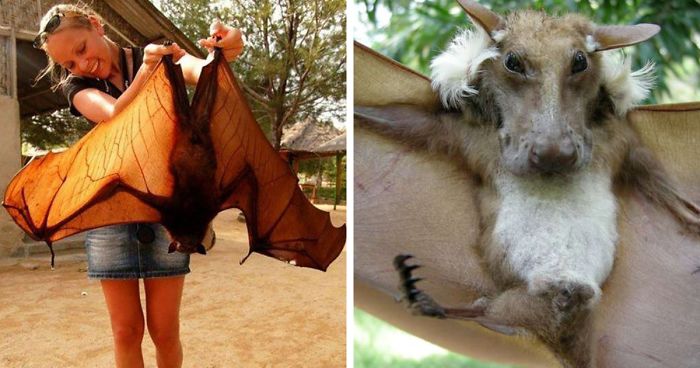
Bats apparently received nature’s permission to experiment. Some have noses shaped like swords, horseshoes, leaves, tubes, or tiny pig snouts. Others wear white fur, orange wings, facial wrinkles, punk-rock crests, or ears so large they could probably receive late-night radio.
These bizarre bat species are not evolutionary accidents. Their unusual features often help them echolocate, catch specialized food, attract mates, hide from predators, or squeeze into unconventional roosts. A face that looks strange to us may function as sophisticated acoustic equipment to a bat.
More than 1,400 bat species live around the world, and they are the only mammals capable of sustained powered flight. Most eat insects, fruit, or nectar. Only three species drink blood, despite what several centuries of dramatic storytelling would have us believe.
Why Do Some Bats Look So Strange?
A bat’s appearance reflects the problems it must solve. Noseleaves can shape outgoing echolocation calls. Oversized ears may capture faint echoes or prey noises. Long snouts reach nectar, huge feet grab fish, and adhesive disks allow certain bats to sleep inside smooth leaves.
Color also matters. White, orange, yellow, and black bats may look flashy in a photograph but blend surprisingly well into flowers, dead leaves, filtered sunlight, or lichen-covered bark. In bat evolution, “bizarre” frequently means “extremely well equipped.”
Bats With Unforgettable Faces
1. Hammer-Headed Fruit Bat
The male hammer-headed fruit bat, Hypsignathus monstrosus, has an enormous rectangular head, inflated lips, and enlarged internal structures that help produce loud honking courtship calls. Native to West and Central Africa, this fruit eater resembles a moose, a gargoyle, and a bat assembled during the same committee meeting.
2. Wrinkle-Faced Bat
Centurio senex has a nearly hairless face covered in complicated folds and grooves. Adult males also possess a furry skin flap beneath the chin that can be raised over the lower face during courtship. It looks like a natural mask designed by someone who considered ordinary wrinkles insufficiently dramatic.
3. Ghost-Faced Bat
The ghost-faced bat, Mormoops megalophylla, has fleshy facial folds, small eyes, broad ears, and a strangely sculpted muzzle. These structures are associated with its specialized echolocation system. It hunts insects from the southwestern United States through Mexico and Central America, looking considerably scarier than its moth-based menu requires.
4. Sword-Nosed Bat
The sword-nosed bat, Lonchorhina aurita, carries a tall, narrow noseleaf that rises from its face like a miniature spear. Found in Central and South America, it uses echolocation to hunt insects in complex forest habitats. Its nose is less a fashion decision than a precision acoustic accessory.
5. Trident Leaf-Nosed Bat
Asellia tridens is named for the three pointed projections on its noseleaf. This insect-eating bat inhabits dry regions across northern Africa and the Middle East, often tolerating extremely hot roosting conditions. Its face looks like it arrived with a tiny built-in crown.
6. Greater Horseshoe Bat
The greater horseshoe bat, Rhinolophus ferrumequinum, has an elaborate horseshoe-shaped structure surrounding its nostrils. The noseleaf helps direct echolocation calls emitted through the nose. When roosting, the bat may wrap its wings around itself, completing a look somewhere between a satellite dish and a velvet dumpling.
7. Diadem Leaf-Nosed Bat
Hipposideros diadema has a broad, complex noseleaf, prominent ears, and pale markings on its dark body. This large insect hunter occurs from Southeast Asia into parts of Australia and the Pacific. Its ornate face demonstrates how far natural selection can take the basic concept of “nose.”
8. Fringe-Lipped Bat
The fringe-lipped bat, Trachops cirrhosus, has wartlike projections and small fleshy bumps around its mouth. It listens for frog mating calls and can capture frogs as well as insects and other small prey. The facial fringe gives it the appearance of having lost an argument with a very small cactus.
9. Heart-Nosed Bat
Cardioderma cor has a heart-shaped noseleaf, enormous joined ears, and a pale body. Native to eastern Africa, it hunts large insects and occasionally small vertebrates. The romantic nose is misleading; this bat is a capable predator rather than a flying Valentine.
10. Greater False Vampire Bat
Despite its name, Megaderma lyra does not drink blood. It has huge ears, a prominent noseleaf, and a broad face suited to locating insects, frogs, lizards, rodents, and other small animals. Its theatrical appearance helped earn the vampire label, but its dining habits are closer to those of a tiny owl.
Bats With Giant Ears, Wild Colors, and Peculiar Noses
11. Townsend’s Big-Eared Bat
The ears of Corynorhinus townsendii can approach the length of its body. When resting, the bat curls them back, although they never become truly inconspicuous. Found across western North America, it uses sensitive hearing and echolocation to pursue moths with impressive precision.
12. Spotted Bat
Euderma maculatum combines three bold white body spots with pinkish wing membranes and ears of almost comical proportions. This North American cliff-roosting species hunts moths and produces relatively low-frequency calls that some people can hear. It looks like a designer bat released as a limited edition.
13. Chapin’s Free-Tailed Bat
Male Chapin’s free-tailed bats, Mops chapini, grow a striking pale crest between their ears. The crest becomes especially noticeable in breeding males and is associated with a scent gland. The result is an insect-eating African bat that appears to have hired a highly confident hairstylist.
14. Eastern Tube-Nosed Bat
Nyctimene robinsoni has nostrils that project forward in two separate tubes. It also possesses spotted wings and large eyes suited to its fruit-eating lifestyle in northeastern Australia. The tubular nose may help keep fruit juice away from the nostrils, which is practical when dinner is especially squishy.
15. Honduran White Bat
The tiny Ectophylla alba has snow-white fur, yellow ears, and a yellow leaf-shaped nose. Groups cut leaf ribs to create tentlike shelters beneath tropical plants. Sunlight filtered through the leaves can cast a green tint over their white coats, providing surprisingly effective camouflage.
16. Painted Bat
The painted bat, Kerivoula picta, wears vivid orange fur and black-and-orange wing membranes. Native to Asia, it often roosts among dried leaves and vegetation where those outrageous colors become useful camouflage. It resembles a Halloween decoration that became biologically operational.
17. Pied Bat
Niumbaha superba, sometimes nicknamed the panda bat, has bold patches of black and creamy white fur. Its striped African appearance is unlike that of most other bats and immediately explains the excitement surrounding rare observations. Nature evidently had a little monochrome paint left over.
18. Yellow-Winged Bat
The yellow-winged bat, Lavia frons, has bright yellow-orange ears, wings, and a matching noseleaf. This African species often rests in trees and shrubs instead of disappearing deep into caves. Its cheerful coloring makes it look less like a creature of darkness and more like a flying tropical flower.
19. Orange Leaf-Nosed Bat
Rhinonicteris aurantia can display brilliant orange fur that contrasts sharply with its dark wings. It lives in caves and rocky environments in northern Australia, emerging to capture insects. In certain light, an entire roost can resemble a collection of airborne tangerines with sonar.
20. Kitti’s Hog-Nosed Bat
Also called the bumblebee bat, Craseonycteris thonglongyai is among the smallest mammals on Earth. Its tiny body, piglike snout, and barely visible tail give it a wonderfully improbable shape. It occupies limestone caves in parts of Thailand and Myanmar and hunts minute insects nearby.
Bats With Bizarre Bodies and Extraordinary Equipment
21. Greater Bulldog Bat
The greater bulldog bat, Noctilio leporinus, has wrinkled lips, long legs, and enormous feet armed with hooked claws. It flies low over water and rakes fish from the surface. Few mammals look prepared for both aerial combat and an emergency fishing tournament, but this one certainly does.
22. Common Vampire Bat
Desmodus rotundus has a short muzzle, heat-sensitive facial structures, sharp incisors, and unusually strong limbs. It feeds primarily on the blood of large mammals and can move skillfully along the ground. Its saliva helps keep blood flowing, making this bizarre bat an impressive biological specialist rather than a supernatural villain.
23. Spectral Bat
The spectral bat, Vampyrum spectrum, is the largest carnivorous bat in the Americas. Its broad wings, long ears, and spear-shaped noseleaf accompany a diet that can include birds, rodents, frogs, and other bats. The scientific name sounds ominous because, for once, the naming committee understood the assignment.
24. Hairless Bat
Cheiromeles torquatus, also called the naked bulldog bat, has mostly bare, dark skin with only limited patches of hair. Skin pockets along its body can hold portions of the folded wings. This large Southeast Asian insect eater looks remarkably like a leather flying machine with its own storage compartments.
25. Naked-Rumped Tomb Bat
The lower body of Taphozous nudiventris is largely hairless, creating a sharp visual contrast with its furred upper half. It occurs across parts of Africa, the Middle East, and South Asia, often roosting in caves, ruins, and tombs. Even its common name sounds ready for a midnight movie poster.
26. Spix’s Disk-Winged Bat
Thyroptera tricolor has suction-cup-like disks on its wrists and ankles. These allow it to cling head-up to the smooth inner surfaces of rolled tropical leaves. Unlike most bats, it does not need to dangle upside down while resting, proving there is more than one acceptable way to be a bat.
27. Madagascar Sucker-Footed Bat
Myzopoda aurita also clings upright inside smooth leaves, but its pads work through wet adhesion rather than true suction. The bat secretes moisture that helps the pads grip. Its large ears and peculiar attachment system make it look like a tiny mammalian tree frog wearing wings.
28. Lesser Bamboo Bat
The lesser bamboo bat, Tylonycteris pachypus, has an unusually flattened skull and body. This shape allows it to enter narrow cracks in bamboo stems, where it rests safely during the day. Even its bones are adapted to a life spent squeezing through openings that look far too small.
29. Proboscis Bat
Rhynchonycteris naso has a long pointed nose, pale stripes down its back, and speckled fur. Groups often roost in orderly lines on exposed trunks or branches near water. Their markings break up the body outline so effectively that a row of bats can resemble patches of lichen.
30. Giant Golden-Crowned Flying Fox
Acerodon jubatus is one of the world’s largest bats, with an immense wingspan and a golden patch of fur around its head. Native to the Philippines, it eats fruit and helps disperse seeds. Despite looking large enough to carry away patio furniture, it is a gentle plant eater.
A Responsible Bat-Watching Experience
A good bat-watching evening often begins before anything happens. You stand near a forest edge, river, bridge, or protected cave entrance while the sky changes from blue to gray. Birds finish their final arguments, insects begin the night shift, and everyone keeps looking at an apparently empty patch of air. Then a dark shape makes a turn no bird could manage.
The first bats may appear ordinary from a distance, but an acoustic detector changes the experience. Calls above the range of human hearing are converted into audible clicks, chirps, and rapid bursts. A guide may explain that different frequencies, rhythms, and call shapes help researchers identify likely species. Suddenly the quiet sky is not quiet at all. It is packed with animals asking the darkness where everything is and receiving immediate answers.
Watching an emergence can be especially memorable. Bats may leave a roost one at a time before the flow becomes a stream. Their silhouettes vary: some have narrow, fast-flight wings, while others use broader wings for maneuvering through vegetation. Large ears may become visible when a bat passes close to the fading light. A flying fox colony creates an entirely different impression because the animals are much larger and may travel with steady, birdlike wingbeats.
The most surprising lesson is that wild bats rarely behave like fictional bats. They do not aim for people’s hair, swirl around visitors for theatrical effect, or pause to deliver sinister monologues. They concentrate on insects, fruiting trees, flowers, water, and the urgent business of being a small mammal outdoors at night. Even bizarre-looking species become less frightening once their features are connected to practical jobs.
Responsible observation requires restraint. Visitors should remain outside restricted roosts, follow local rules, avoid flash photography, keep voices low, and never touch a bat. Entering caves can disturb maternity colonies or wake hibernating animals when they cannot afford to waste stored energy. Gear used underground may also require approved decontamination procedures to reduce the risk of spreading pathogens such as the fungus associated with white-nose syndrome.
A red-filtered flashlight can preserve night vision while reducing disturbance, but it should never be aimed continuously at emerging animals. Binoculars designed for low light are useful, and a notebook encourages observers to record behavior rather than chase photographs. The location, weather, emergence time, flight direction, and nearby plants can all become part of a meaningful wildlife record.
The experience tends to change how people interpret unusual anatomy. A giant noseleaf stops looking like a random ornament and starts looking like an acoustic tool. Adhesive pads suggest a rolled leaf rather than a cave ceiling. Huge feet point toward fish, while a long snout hints at nectar or fruit. The bat’s body becomes a collection of clues.
By the time darkness settles completely, the night may feel more crowded than it did at sunset. Bats cross above the water, vanish between trees, and continue working after observers head home. Seeing them responsibly does not remove their mystery. It replaces invented horror with something better: the realization that evolution has produced flying mammals stranger, smarter, and more varied than almost any fictional monster.
Conclusion: In the Bat World, Weird Works
The strangest-looking bats are often the clearest examples of adaptation. Wrinkled faces manipulate sound or assist courtship. Giant ears detect faint signals. Tubular noses, adhesive feet, flattened bodies, and enormous fishing claws solve specific survival challenges.
Protecting these unusual bats also protects forests, caves, deserts, wetlands, and agricultural landscapes. Whether they consume insects, pollinate flowers, or distribute seeds, bats perform essential ecological work while most humans are asleep. They may look bizarre, but the truly strange idea would be imagining healthy ecosystems without them.