Note: In this article, “obsolete” does not necessarily mean extinct. Some of these objects remain useful, collectible, or beloved by determined grandparents. It means they are no longer the default tools most people reach for in everyday life.
Technological change rarely announces itself with trumpets. One day, everyone is folding a paper map across the steering wheel; the next, a calm digital voice is telling them to make a legal U-turn. Yesterday’s essential household object quietly becomes today’s thrift-store mystery.
Looking at obsolete things is more than an exercise in nostalgia. These objects show how communication, entertainment, work, travel, and shopping have changed. They also remind us that modern convenience was built by replacing dozens of specialized tools with a few connected devicesespecially the smartphone, a tiny rectangle that has eaten half the contents of the average 1990s home.
Here are 40 outdated technologies and everyday objects that prove just how far the world has moved on.
Obsolete Communication Tools
1. Rotary Telephones
Making a call once involved placing a finger in a numbered hole, rotating a plastic dial, and waiting for it to return. Dialing a long number required patience, accuracy, and forearm stamina. Smartphones turned the telephone into a camera, mailbox, map, bank, and occasional actual phone.
2. Public Payphones
Payphones were once essential urban infrastructure. People carried coins specifically for emergency calls and memorized important numbers because there was no contact list in their pocket. Widespread mobile-phone adoption caused public payphones and the calls placed from them to decline dramatically.
3. Printed Telephone Books
Thick residential directories once appeared on doorsteps whether people wanted them or not. Finding someone required knowing the correct city, surname, and spelling. Search engines, online business listings, social networks, and digital contact databases have made printed phone books largely unnecessary.
4. The Yellow Pages
Before online reviews, consumers chose a plumber by opening a giant yellow directory and selecting whichever advertisement looked most confident. A full-page ad suggested prosperity; a tiny listing suggested either modesty or suspiciously low marketing expenses.
5. Pagers
Pagers delivered short numeric or text alerts without offering a convenient way to reply. Receiving “911” meant finding the nearest telephone immediately. Smartphones replaced pagers for most consumers, although some hospitals and other specialized workplaces continue using them because of their simplicity and reliability.
6. Answering Machines
Household answering machines recorded messages onto miniature cassettes or internal memory. Families often stood nearby, listening as a caller left a message and silently debating whether to pick up. Network voicemail and visual voicemail eventually removed the need for a separate blinking box.
7. Fax Machines
Fax machines transformed documents into audio signals and sent them through telephone lines, often producing crooked, faint, or mysteriously incomplete copies. Email attachments, electronic signatures, secure portals, and cloud-based document sharing have replaced faxing in many settings, though a few industries refuse to release it from captivity.
8. Telegrams
Telegrams enabled urgent messages to travel rapidly over long distances long before email or texting. Because senders often paid by the word, messages were famously brief. Instant digital communication has made paid, word-counted telegrams a historical curiosity rather than an everyday service.
Obsolete Office and School Essentials
9. Rolodexes
A Rolodex stored contact information on rotating paper cards. Updating a phone number required finding the right card and rewriting it neatly. Digital address books now synchronize contacts across devices, making the Rolodex more likely to appear in a period drama than on a modern desk.
10. Typewriters
Typewriters created documents without electricity, software subscriptions, or surprise system updates. They also offered no undo button. One misplaced letter could require correction fluid, a fresh sheet of paper, or the quiet acceptance of imperfection.
11. Carbon Paper
Carbon paper allowed typists to produce several copies simultaneously by sandwiching ink-coated sheets between ordinary paper. The abbreviation “cc” in email still preserves the phrase “carbon copy,” even though most younger users have never handled the smudgy material that inspired it.
12. Correction Fluid
Correction fluid covered typing errors with a small patch of white paint. Users waited for it to dry before attempting the letter again, creating documents that sometimes looked as though they had survived a minor blizzard. Digital editing made the process almost instantaneous.
13. Walls of Filing Cabinets
Offices once devoted entire rooms to invoices, contracts, personnel records, and correspondence. Retrieving one document could become an archaeological expedition. Electronic records and searchable cloud storage have reduced the need for paper archives, although secure backups and sensible file organization remain essential.
14. Library Card Catalogs
Finding a library book once meant searching drawers of index cards organized by author, title, or subject. Digital catalogs now let readers search by keyword, filter results, check availability, and reserve materials without flipping through hundreds of cards.
15. Printed Encyclopedia Sets
A multivolume encyclopedia once represented a serious investment in household knowledge. It was useful until a country changed its name, a scientific discovery occurred, or a famous person had the inconsideration to keep living. Online references can be updated continuously.
16. Overhead Projectors
Teachers and office presenters placed transparent sheets on illuminated projectors, sometimes writing on them in real time. The machines were dependable but bulky, hot, and excellent at displaying every accidental marker smear. Digital projectors and interactive screens now dominate presentations.
Obsolete Entertainment and Media
17. Microfiche Readers for Everyday Research
Microfilm and microfiche compressed newspapers and documents into tiny photographic images. Researchers scrolled through reels using specialized readers that could induce motion sickness in under five minutes. Archives still value microfilm for long-term preservation, but everyday research increasingly begins with searchable digital databases.
18. VHS Tapes
VHS tapes brought movies into the home but required substantial shelf space and regular rewinding. Picture quality declined with use, tape could become tangled, and recording over a family wedding with a football game was an ever-present domestic threat.
19. Video Rental Stores
Choosing a movie once required traveling to a store, examining plastic cases, and hoping every copy of the popular new release had not already disappeared. Streaming services replaced much of that ritual with endless scrolling and the modern challenge of spending 45 minutes choosing nothing.
20. Audio Cassettes
Cassette tapes made music portable and allowed listeners to create mixtapes one song at a time. They also hissed, stretched, and occasionally surrendered their magnetic tape to the player. A pencil could rewind or repair them, making it the unofficial cassette-maintenance tool.
21. Portable CD Players
Portable CD players offered clearer sound than cassettes but were not enthusiastic about jogging, potholes, or sudden movement. Anti-skip protection helped, yet music streaming eventually provided millions of songs without requiring anyone to carry a zippered binder full of discs.
22. Burned Mix CDs
Creating a mix CD required selecting songs, arranging them carefully, waiting for the disc to burn, and decorating it with a marker. Playlists now accomplish the same task instantly, although they lack the emotional intensity of receiving a handwritten disc labeled “Summer Songs 3.”
23. Film Cameras as the Everyday Default
Film photography limited users to a fixed number of exposures and offered no immediate preview. Every photograph required commitment. Digital cameras, followed by smartphones, made shooting, reviewing, editing, duplicating, and sharing images nearly effortless.
24. One-Hour Photo Counters
After finishing a roll of film, customers delivered it to a pharmacy, supermarket, or photo shop and waited for prints. The envelope might contain treasured memories, blurry thumbs, or 12 photographs of darkness. Digital images removed most of the suspense.
25. Slide Projectors
Families once documented vacations on photographic slides and projected them onto a wall during long presentations for trapped relatives. The carousel could jam, slides might appear upside down, and audiences learned that politeness had no official time limit.
26. Printed Television Listings
Viewers depended on newspapers or television-listing magazines to learn when programs would air. Missing an episode could mean waiting months for a rerun. On-demand libraries, electronic guides, and recording services have made entertainment schedules far more flexible.
Obsolete Computer Technology
27. Floppy Disks
Floppy disks were once a standard method for storing software and personal files. Their capacity now seems microscopic, yet the floppy-disk shape survives as the familiar “save” icon. Many young users recognize the symbol without recognizing the physical object.
28. Dial-Up Modems
Dial-up internet used a telephone line and produced a sequence of squeals, clicks, and electronic protests while connecting. Incoming calls could interrupt the session. Broadband transformed internet access from a scheduled household event into an always-available utility.
29. CRT Computer Monitors
Cathode-ray tube monitors were deep, heavy, and capable of occupying most of a desk. Moving one required planning and possibly a supportive neighbor. Flat-panel displays delivered larger screens while consuming less space and energy.
30. Computer Mice With Rubber Balls
Older computer mice used a rubber-coated ball to track movement. Dust collected on internal rollers, causing the pointer to behave like it had lost faith in geometry. Users regularly removed and cleaned the ball before optical sensors eliminated the ritual.
31. Functional Screen Savers
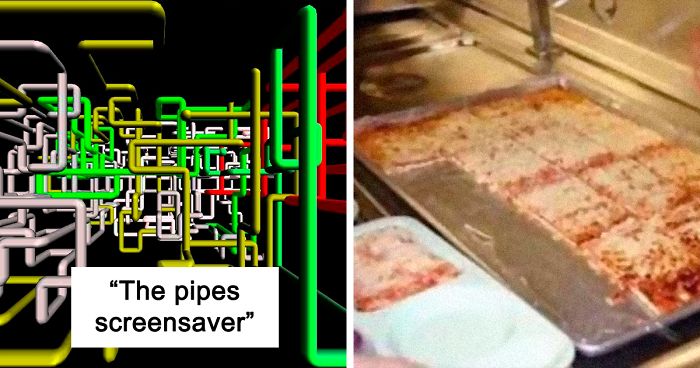
Screen savers originally helped reduce image burn-in on older displays. Flying toasters, bouncing logos, and pipes later became entertainment in their own right. Modern screens generally do not need traditional screen savers, though the term continues as a decorative feature.
32. CD-ROM Encyclopedias
CD-ROM reference products compressed enormous amounts of information onto shiny discs and added animations, audio, and video. They felt futuristic until web search made inserting a disc and waiting for a program to load seem unnecessarily ceremonial.
33. Boxed Computer Software
Software once arrived in a large retail box containing discs, printed manuals, registration cards, and an impressive quantity of air. Downloads, cloud applications, and app stores have largely replaced physical software packaging.
34. Standalone MP3 Players
MP3 players allowed people to carry hundreds or thousands of songs in a pocket. Their reign was influential but relatively brief. Once smartphones gained adequate storage and streaming apps, carrying a separate music device became unnecessary for most listeners.
Obsolete Travel, Shopping, and Household Tools
35. Fold-Out Road Maps
Paper road maps offered a broad view of an entire region and never lost satellite reception. Unfortunately, they were difficult to refold and could not warn drivers about traffic, construction, or a missed exit. Navigation apps made turn-by-turn directions standard.
36. Standalone GPS Devices
Dashboard GPS units were revolutionary because they replaced printed directions and map reading. Smartphones then absorbed their main function while adding real-time traffic, business information, transit routes, and walking directions.
37. Paper Airline Tickets
Airline tickets were once valuable physical documents that travelers guarded carefully. Losing one could become a serious problem. Electronic ticketing and mobile boarding passes moved reservation information into airline databases and passengers’ phones.
38. Traveler’s Checks
Traveler’s checks offered a safer alternative to carrying large quantities of cash. They could be replaced if lost and were accepted by many hotels and businesses. International card networks, ATMs, and digital payment systems greatly reduced their everyday appeal.
39. Manual Credit Card Imprinters
Merchants once placed a credit card and multipart paper form into a metal device, then slid a handle across to copy the raised card details. The machine’s distinctive clunk earned it the nickname “knuckle-buster.” Electronic terminals and contactless payments made it nearly obsolete.
40. Newspaper Classified Ads and Mail-Order Forms
People once searched newspaper columns for jobs, apartments, used cars, and secondhand furniture. They also ordered products by filling out paper forms and mailing checks. Online marketplaces, job platforms, digital stores, and instant payments have compressed both activities into a few taps.
What Living With These Obsolete Things Actually Felt Like
Experiencing these objects was not simply a slower version of modern life. The entire rhythm was different. Communication required planning. Before leaving home, people agreed on a meeting time and location because changing the arrangement later might be impossible. “Meet me outside the theater at seven” was not a suggestion. It was a binding social contract.
Calling someone also involved uncertainty. A household might share one telephone, so contacting a friend could mean speaking to a parent, sibling, or curious grandparent first. If no one answered, the caller either left a message or tried again later. There was no read receipt, online-status indicator, or tiny bubble announcing that the other person was typing.
Entertainment demanded commitment. Renting a movie involved going to a store and choosing from what remained on the shelves. Once the family brought a VHS tape home, everyone was probably watching that film whether they liked it or not. Abandoning it after ten minutes felt wasteful because physical effort and money had already been invested.
Music was more deliberate too. Recording a mixtape meant waiting beside the radio, hoping the announcer would stop talking before the song began. A well-made tape could take hours. The result was not merely a collection of tracks; it was evidence that someone had invested an afternoon in arranging emotions on magnetic ribbon.
Travel rewarded preparation. Drivers studied routes before leaving, wrote turns on paper, and watched for landmarks. Getting lost was common, but it often led to conversations with gas-station attendants, store employees, or pedestrians. Modern navigation is more efficient, though it has largely eliminated the character-building experience of arguing over a map in a moving car.
Photography contained delayed gratification. People took a picture without knowing whether anyone blinked, moved, or wandered out of frame. Days later, a packet of prints revealed the outcome. Because film and processing cost money, people photographed fewer ordinary moments. The surviving images could feel more precious precisely because there were not thousands of nearly identical alternatives.
Office life was physically noisy. Typewriter keys clacked, telephones rang, printers churned, and filing cabinets slammed. Correcting a mistake could require retyping an entire page. Copies had to be created, labeled, distributed, and stored. A document occupied actual space, which encouraged people to think before producing 48 slightly different versions of it.
Research also required a different form of patience. Students consulted encyclopedias, visited libraries, searched card catalogs, and scrolled through microfilm. Finding information took longer, but the journey often exposed them to related subjects. A person looking for one newspaper article might notice five other stories on the same page and accidentally learn something useful.
None of this proves that the past was better. Older tools could be inconvenient, inaccessible, expensive, or maddeningly slow. Modern technology saves time, expands access to information, simplifies communication, and helps people accomplish tasks that once required several businesses and machines.
Still, obsolete things reveal what progress has exchanged as well as what it has gained. Waiting, repairing, remembering, navigating, and choosing were once larger parts of ordinary life. Convenience has removed many small frustrations, but it has also removed some rituals. That is why an old cassette, telephone, or road map can trigger such powerful nostalgia: it represents not only an object, but an entire way of moving through the world.
Conclusion: Today’s Technology Is Tomorrow’s Mystery Object
These 40 obsolete things demonstrate how quickly essential tools can become historical artifacts. A single smartphone now replaces phones, pagers, maps, cameras, music players, calendars, ticket wallets, reference books, and payment devices. That transformation would have sounded ridiculous only a few decades ago.
The amusing part is that the process has not stopped. Future generations may stare at charging cables, physical keyboards, remote controls, and smartphones with the same confusion people now reserve for floppy disks. Progress keeps moving, and eventually every cutting-edge device gets its turn in the nostalgia box.