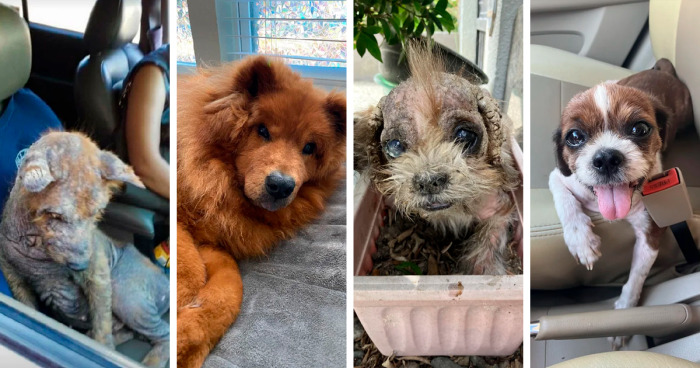
A shelter photograph can capture a dog at the most confusing moment of its life. The ears may be pinned back, the body curled into a corner, and the eyes fixed cautiously on a world that has stopped making sense. Then comes the “after” photo: the same dog sprawled across a couch, wearing a ridiculous birthday hat, or smiling beside the person who finally made home feel permanent.
Dog adoption before-and-after photos are powerful because the changes go far beyond a fuller belly or cleaner coat. They reveal what can happen when medical care, predictable routines, patient training, and ordinary daily affection replace uncertainty. In many transformations, the most striking difference is not physical at all. It is the moment a dog begins to believe that the good things will still be there tomorrow.
That second chance remains urgently important. U.S. shelters recorded approximately 5.8 million dog and cat community intakes during 2025. Although intake declined slightly from the previous year and adoption activity remained strong, shelters continue to face pressure from limited space, veterinary costs, housing problems, and shortages of foster homes.
Why Rescue Dog Transformations Can Be So Dramatic
Shelters work hard to protect animals, but even a well-managed kennel can be noisy and unfamiliar. Dogs encounter new smells, disrupted sleep, changing handlers, barking neighbors, and routines they do not understand. Some shut down and become unusually quiet. Others pace, bark, jump, or appear overexcited. Those behaviors may reflect stress rather than the personality the dog will eventually show at home.
Research into shelter fostering has found that positive human interaction and temporary stays outside the kennel can reduce behavioral and physiological signs of stress. A quiet night in a foster home may give a dog its first uninterrupted rest in weeks while also helping caregivers learn how it behaves in a household.
The transformations below celebrate the visible and emotional milestones commonly documented in rescue dog before-and-after pictures. Every animal recovers differently, so a wagging tail should never be treated as a medical chart. Still, these images remind us that safety has a lookand it is often adorably fluffy.
50 Heartwarming Dog Adoption Before-and-After Moments
Photos 1–10: When Safety Begins to Show on Their Faces
- The Eyes That Finally Look Up: In the shelter, the dog avoids the camera. At home, those same eyes follow its adopter everywhere, especially toward the snack cabinet.
- From Tight Curl to Belly-Up: The before photo shows a dog sleeping in the smallest possible ball. The after photo features four paws in the air and absolutely no concern for personal dignity.
- The Return of the Head Tilt: Caution once kept the dog frozen. Weeks later, one silly word produces the classic head tilt that could persuade a human to surrender an entire rotisserie chicken.
- Ears No Longer Pinned Back: Soft, relaxed ears replace the tense posture seen at intake. The dog is beginning to listen with curiosity instead of scanning for danger.
- A Smile Behind the Fence Becomes a Grin on the Couch: The first expression seems hopeful but uncertain. The second says, “Yes, this sofa belongs to me. You may use the corner.”
- The First Peaceful Nap: The shelter image captures a light, watchful sleep. The home photo shows deep rest, twitching paws, and what appears to be an extremely dramatic squirrel dream.
- A Tail Emerging From Under the Body: A tucked tail gradually rises as confidence grows. Soon it becomes a household object-clearing device operating at coffee-table height.
- From Hiding Behind a Bed to Sleeping on It: Trust transforms the bedroom from a hiding place into a deluxe canine suite complete with pillows the humans mistakenly thought were theirs.
- The First Play Bow: The before photo shows stillness. The after photo captures front paws down, rear end up, and an official invitation to chase someone through the living room.
- The Face of Recognition: Eventually, the dog stops reacting to its adopter as another stranger. Its expression brightens at the familiar voice that now means food, walks, and home.
Photos 11–20: Physical Recovery and the Famous Rescue-Dog Glow-Up
- A Dull Coat Becomes Glossy: Consistent nutrition, veterinary treatment, grooming, and lower stress can gradually reveal colors and markings that were almost invisible in the intake photo.
- Healthy Weight Returns Slowly: Prominent ribs give way to a stronger body under professional guidance. Responsible recovery favors veterinary planning, not an all-you-can-eat welcome-home buffet.
- Skin Begins to Heal: Patchy fur and irritated areas improve after diagnosis and treatment. The after photo celebrates careful medical work as much as affection.
- A Matted Dog Gets a Fresh Start: Beneath an uncomfortable coat is often a completely different-looking animalusually one with enormous eyes and unexpectedly tiny legs.
- Cloudy Uncertainty Turns Into Bright Attention: Better rest and appropriate care can change the entire expression, even when the dog’s age and natural facial features remain the same.
- The Paw-Pad Recovery: Rough or injured paws once made movement difficult. Later, the same dog appears proudly hiking, strolling, or refusing to walk because one raindrop touched the sidewalk.
- Muscle Replaces Weakness: The dog that struggled to stand now races across a yard. Safe conditioning builds gradually through appropriate exercise and veterinary supervision.
- A Senior Dog Looks Younger Without Becoming Young: A comfortable bed, pain management, grooming, and companionship can bring alertness back to an older face without erasing its distinguished gray muzzle.
- The Cone Comes Off: Post-treatment photos often include the least glamorous accessory in veterinary fashion. The final image celebrates healingand freedom from the notorious plastic satellite dish.
- The Adoption-Day Bandana Fits Differently: At first, the dog appears lost inside the cheerful fabric. Months later, it wears another bandana with the confidence of a runway model expecting treats backstage.
Photos 21–30: Discovering the Luxuries of Home
- The First Real Bed: The dog cautiously places one paw on a cushion. The after photo shows it occupying three beds simultaneously through a strategy known only to dogs.
- Learning About Blankets: What begins as suspicion ends with the dog wrapped like a furry burrito, leaving only the nose exposed for essential scent monitoring.
- The Couch Promotion: Floor privileges quickly become sofa privileges. Soon, the adopter is negotiating for six inches of seating with an animal that weighs 28 pounds.
- A Yard Becomes a Kingdom: The first outdoor photo shows cautious exploration. The next captures joyful zoomies, grass-stained paws, and a firm opinion about neighborhood squirrels.
- The First Toy Chosen Independently: Instead of ignoring everything, the dog selects one treasured stuffed animal and carries it from room to room like a highly confidential document.
- Learning That Bowls Refill: Some newly adopted dogs eat anxiously. With routine and professional support when needed, mealtime can become calmer and more predictable.
- From Crate Fear to Voluntary Rest: When introduced positively, a crate may become a quiet retreat rather than a punishment. The door stays open, but the dog chooses to nap inside.
- The Window-Watching Era Begins: A once-withdrawn dog discovers mail carriers, delivery trucks, falling leaves, and at least nine suspicious people who are simply walking past the house.
- The First Car Ride for Fun: Transportation no longer ends at an unfamiliar facility. The after photo shows a secured dog headed toward a trail, beach, park, or drive-through treat.
- A Name Becomes Meaningful: The dog gradually learns that its new name predicts attention and rewards. Soon, it responds perfectlyunless the request involves leaving the park.
Photos 31–40: The Personality That Was Waiting Underneath
- The Quiet Dog Finds Its Voice: Once comfortable, the supposedly silent shelter resident develops an extensive commentary system for dinner delays and closed bathroom doors.
- The Serious Face Reveals a Comedian: The after photo captures upside-down sleeping, toy-stealing, or a tongue that somehow missed the memo about staying inside the mouth.
- A Shy Dog Requests Affection: Instead of retreating from hands, the dog gently nudges an elbow or places a paw on its person to request another round of ear scratches.
- The First Confident Walk: A low, hesitant posture becomes a relaxed stride. Sniffing replaces rushing, and the neighborhood begins to feel familiar rather than overwhelming.
- The Toy Destroyer Appears: A dog that ignored toys at first eventually produces a living-room snowstorm from one stuffed duck. Confidence is beautiful, although the vacuum cleaner may disagree.
- The Social Butterfly Emerges: After careful introductions, the dog begins enjoying compatible canine friends, familiar visitors, or calm outings without being forced into overwhelming situations.
- A Water Dog Discovers Its Calling: The intake photo is solemn. The after photo shows a wet, ecstatic creature launching from a lake and preparing to shake directly beside a dry human.
- The Sunbathing Specialist: Safety allows simple pleasures to appear. One warm rectangle on the floor becomes a daily appointment that must not be disturbed.
- The Food Critic Develops Standards: Early uncertainty is replaced by strong culinary opinions. Plain kibble receives two stars; anything from the adopter’s plate receives immediate approval.
- The Dog Begins Making Choices: Selecting a toy, sleeping spot, walking direction, or trusted person is a quiet sign that the animal feels secure enough to express preferences.
Photos 41–50: When a Rescue Dog Becomes Family
- The First Family Portrait: The dog once photographed alone now sits among people whose clothes are covered in fur and whose faces suggest they could not be happier about it.
- A Child Gains a Gentle Companion: With proper supervision and an appropriate match, the after photo may capture quiet reading time, backyard play, or two partners sharing a snack suspiciously.
- The Resident Dog Accepts a New Sibling: Thoughtful introductions turn cautious sniffing into shared naps, synchronized begging, and an alliance against the vacuum cleaner.
- The Foster Home Becomes Forever: The family planned to help temporarily. Then the dog unpacked its emotional suitcase, claimed a chair, and ruined that plan in the best possible way.
- A Senior Adopter Finds Daily Purpose: Walks, feeding routines, and companionship create a rhythm for both partners. Rescue is not defined by which one needed the other more.
- The Dog Appears in Every Holiday Photo: Once overlooked, the new family member now owns seasonal sweaters, birthday treats, and a stocking larger than everyone else’s.
- The First Anniversary Recreation: Adopters repeat the original intake pose one year later. The background changes, but the biggest difference is the softness in the dog’s body and face.
- A Former Stray Becomes a Bedtime Shadow: The dog that survived alone now checks each room before settling beside the people it has appointed as its permanent pack.
- The Rescue Dog Helps Welcome Another: Some adopted dogs later become calm companions for foster animals, demonstrating household routines and proving that second chances can multiply.
- The Final Photo Needs No Caption: A relaxed dog leans into its person, both looking completely at home. The image says everything: someone chose adoption, and two lives changed direction.
What the Happiest “After” Photos Do Not Show
A beautiful transformation is rarely created by affection alone. It may involve veterinary appointments, parasite treatment, dental care, medication, grooming, housetraining, gradual introductions, and many mornings that begin earlier than any reasonable person believes mornings should begin.
New adopters often hear about the 3-3-3 rule: roughly three days to begin decompressing, three weeks to learn a household routine, and three months to feel established. It is a useful expectation-setting tool, not a stopwatch. Some dogs relax immediately, while fearful, undersocialized, senior, or medically complicated dogs may need much longer.
Temporary setbacks are also normal. A dog may have an accident indoors, bark when left alone, guard a valued item, or become nervous when visitors arrive. Calm management and reward-based training are more productive than punishment. Persistent fear, aggression, appetite changes, diarrhea, pain, or severe separation distress should be discussed with a veterinarian or qualified behavior professional.
How to Help Create a Happy Adoption Story
Choose Compatibility Instead of Appearance Alone
Ask shelter staff about energy level, handling preferences, medical history, known triggers, experience with children, and behavior around other animals. A striking photograph may start the conversation, but lifestyle compatibility is what keeps a dog safely at home. Reputable organizations may arrange meet-and-greets and provide post-adoption training or behavior support.
Make the First Days Quiet and Predictable
Prepare one low-traffic area with water, bedding, safe enrichment, and a comfortable retreat. Maintain the food used by the shelter initially unless a veterinarian recommends otherwise. Keep introductions brief, avoid a parade of visitors, and establish regular times for meals, potty trips, walks, and sleep.
Schedule Veterinary Care and Confirm Identification
Arrange a veterinary examination soon after adoption, particularly if the dog has symptoms or an incomplete health history. Bring shelter records and discuss vaccination, parasite prevention, nutrition, dental health, reproductive status, and any behavioral concerns. Ask the clinic to scan for a microchip and verify that the registry contains your current contact information.
Use Rewards to Build Communication
Reward the behaviors you want with food, praise, play, or access to something the dog enjoys. Positive reinforcement can help with name recognition, housetraining, leash skills, settling, and confidence. It also teaches the dog that paying attention to its new person produces safe, predictable outcomes.
Experience-Based Reflections: What Rescue Transformations Teach Us
People who foster and adopt dogs frequently describe the transformation as a collection of tiny moments rather than one cinematic breakthrough. The first milestone may be almost invisible: the dog drinks water while someone is in the room. Later, it falls asleep without keeping one eye open. Then, one ordinary afternoon, it brings over a toy. None of these events looks dramatic on paper, but each represents a new level of trust.
The experience also teaches adopters to separate progress from perfection. A dog can feel safer and still be frightened by thunder. It can adore its family and remain uncomfortable around strangers. It can master housetraining, experience a stressful change, and have another accident. Recovery is rarely a straight line. The important question is not whether every problem has vanished, but whether the dog has appropriate support and an expanding ability to cope.
Many adopters learn that observing body language is more valuable than trying to force affection. Turning the head away, licking the lips, freezing, lowering the body, or retreating may indicate discomfort. Giving the dog space can strengthen trust faster than insisting on a hug. The breakthrough often arrives when the dog realizes that its signals workthat it can move away without being chased and approach without being grabbed.
Daily routine becomes surprisingly meaningful. Breakfast arrives at roughly the same time. Walks follow familiar streets. The water bowl remains full. People leave and come back. These repetitions may feel boring to humans, but predictability helps an uncertain dog understand that its environment is stable. Eventually, the dog stops monitoring every movement and starts doing wonderfully unproductive things, such as sleeping through an entire video meeting.
Adoption can change the human household just as deeply. A dog creates reasons to walk outside, speak with neighbors, maintain a schedule, and laugh at situations that would otherwise be mildly irritating. The CDC notes that pets can increase opportunities for exercise, outdoor activity, companionship, and social interaction while helping some people manage loneliness and stress. Those benefits vary among individuals, and a pet is not a substitute for professional health care, but the human-animal bond can still be profoundly supportive.
The most lasting lesson may be that rescue is collaborative. Shelter employees stabilize the dog. Volunteers provide walks and enrichment. Foster caregivers reveal household behavior. Veterinary teams treat medical problems. Trainers help families communicate. Donors fund food and care. Adopters continue the work at home. The joyful “after” photo may contain one dog and one family, but an entire community often stands just outside the frame.
And then there is the wonderfully ordinary ending. The dog is no longer introduced primarily as a rescue case. It is simply Rosie, Max, Bean, Luna, or Sir Barks-at-Recycling-Trucks. Its history still matters, but it no longer defines every moment. The greatest transformation is not becoming flawless, photogenic, or endlessly grateful. It is gaining the freedom to become an individuala loved dog with habits, preferences, boundaries, and a permanent place to nap.
Conclusion: Adoption Changes More Than a Photograph
Before-and-after rescue dog photos allow us to see care becoming confidence. A healthier coat may demonstrate successful treatment. A relaxed posture may reflect months of patient routine. A goofy grin may reveal a personality that stress once concealed. Each transformation is different, yet the central message remains consistent: when the right dog meets a prepared and compassionate home, adoption can redirect two lives at once.
Anyone considering adoption should enter the process with both an open heart and a practical plan. Learn about the dog, prepare for adjustment, budget for lifelong care, ask for professional help when needed, and allow trust to develop at the animal’s pace. The result may eventually be a perfect after photo. More importantly, it can be thousands of safe, ordinary days that never need to be photographed to matter.
Note: These gallery-style descriptions reflect common rescue-dog experiences and are not intended to diagnose health or behavioral conditions from appearance. Every adopted dog has an individual history, temperament, recovery timeline, and need for veterinary or behavioral support.